Lit-Sen Chang – författare
Visar alla böcker från författaren Lit-Sen Chang. Handla med fri frakt och snabb leverans.
5 produkter
5 produkter
Inbunden, Engelska, 2013
369 kr
Skickas
Häftad, Engelska, 2011
319 kr
Skickas inom 5-8 vardagar
Häftad, Engelska, 2013
330 kr
Skickas inom 5-8 vardagar
E-bok
Engelska, 2013520 kr
Läs direkt efter köp
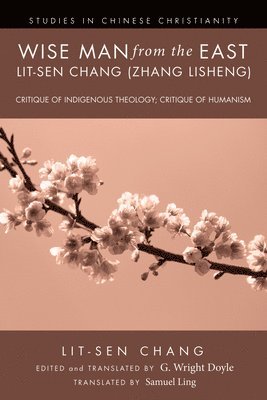
How should Christianity relate to Chinese culture? That question has engaged the minds of both Chinese and Western Christians for several centuries. Lit-sen Chang (1904-1996) was brought up as a Buddhist and educated in the Confucian classics as well as in modern political philosophy. He later delved deeply into Daoism as well. After World War II, he founded Jiangnan University in order to exterminate Christianity and revive Eastern religion. Conversion to Christianity in 1950 radically altered the course of his life. He studied at Gordon-Conwell Theological Seminary and then joined the faculty, teaching missions and writing prolifically on theology and apologetics, especially on the relationship of Christianity to Chinese culture. His Critique of Indigenous Theology and Critique of Humanism are published here in English for the first time, and provide excellent examples of his wide learning, insightful analysis, powerful writing, and firm commitment to historic Christianity.
E-bok
PDF, Engelska, 2011503 kr
Läs direkt efter köp
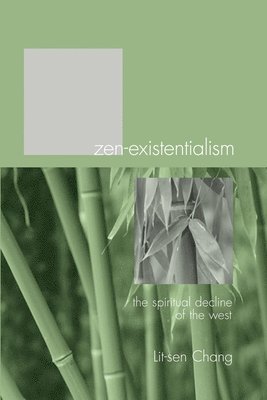
Modern man has found that material achievements are failing him, but in his escape from despair, he has become an easy prey for the deceptive cult of "e;Zen-Existentialism."e; There has emerged a mode of radical "e;New Humanism"e; with its emphasis on "e;human autonomy."e; In place of the God-man appears the "e;man-god."e; There is a search for the "e;world within,"e; the "e;limitless inner space,"e; the "e;expansion of consciousness"e;, and the transcendental experience of "e;Satori."e; First published in 1969, this book prophetically anticipated the growth of New Age developments in the decades to follow. Lit-sen Chang directly spoke to the Hippie movement of his day, which was then seeking various means of transcendence through drugs and eastern mysticism. This book also reflects fifty years of bitter experiences of the author's spiritual pilgrimage and shows how he was miraculously delivered by the grace and power of God from his "e;cul-de-sac."e; Chang writes of the utter futility of the fantasy of the East, analyzes the root causes of the crises in the West, and points out the doom of auto-soterism after his careful diagnosis of the human problem in cultural, philosophical, religious, and theological terms.