Liu Gui-rong Liu – författare
Visar alla böcker från författaren Liu Gui-rong Liu. Handla med fri frakt och snabb leverans.
5 produkter
5 produkter
E-bok
PDF, Engelska, 2003888 kr
Läs direkt efter köp
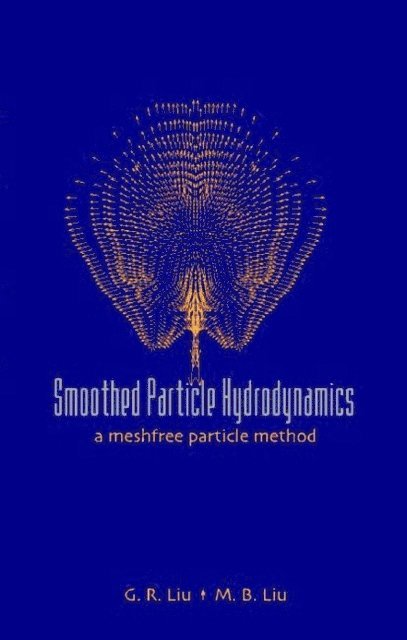
This is the first-ever book on smoothed particle hydrodynamics (SPH) and its variations, covering the theoretical background, numerical techniques, code implementation issues, and many novel and interesting applications.It contains many appealing and practical examples, including free surface flows, high explosive detonation and explosion, underwater explosion and water mitigation of explosive shocks, high velocity impact and penetration, and multiple scale simulations coupled with the molecular dynamics method. An SPH source code is provided, making this a friendly book for readers and SPH users.
E-bok
Engelska, 2013873 kr
Läs direkt efter köp
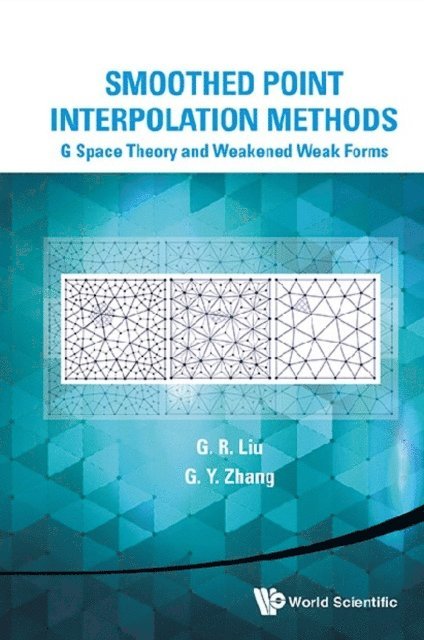
Based on the widely used finite element method (FEM) and the latest Meshfree methods, a next generation of numerical method called Smoothed Point Interpolation Method (S-PIM) has been recently developed. The S-PIM is an innovative and effective combination of the FEM and the meshfree methods, and enables automation in computation, modeling and simulations — one of the most important features of the next generation methods. This important book describes the various S-PIM models in a systematic, concise and easy-to-understand manner. The underlying principles for the next generation of computational methods, G space theory, novel weakened weak (W2) formulations, techniques for shape functions, formulation procedures, and implementation strategies are presented in detail. Numerous examples are provided to demonstrate the efficiency and accuracy of the S-PIM solutions in comparison with the FEM and other existing methods. Effective techniques to compute solution bounds employing both S-PIM and FEM are highlighted to obtain certified solutions with both upper and lower bounds.The book also presents a systematically way to conduct adaptive analysis for solutions of desired accuracy using these bound properties, which is another key feature of the next generation of computational methods. This will benefit researchers, engineers and students who are venturing into new areas of research and computer code development.
E-bok
PDF, Engelska, 20022 906 kr
Läs direkt efter köp
ICSSD 2002 is the second in the series of International Conferences on Structural Stability and Dynamics, which provides a forum for the exchange of ideas and experiences in structural stability and dynamics among academics, engineers, scientists and applied mathematicians. Held in the modern and vibrant city of Singapore, ICSSD 2002 provides a peep at the areas which experts on structural stability and dynamics will be occupied with in the near future. From the technical sessions, it is evident that well-known structural stability and dynamic theories and the computational tools have evolved to an even more advanced stage. Many delegates from diverse lands have contributed to the ICSSD 2002 proceedings, along with the participation of colleagues from the First Asian Workshop on Meshfree Methods and the International Workshop on Recent Advances in Experiments and Computations on Modeling of Heterogeneous Systems. Forming a valuable source for future reference, the proceedings contain 153 papers — including 3 keynote papers and 23 invited papers — contributed by authors from all over the world who are working in advanced multi-disciplinary areas of research in engineering. All these papers are peer-reviewed, with excellent quality, and cover the topics of structural stability, structural dynamics, computational methods, wave propagation, nonlinear analysis, failure analysis, inverse problems, non-destructive evaluation, smart materials and structures, vibration control and seismic responses.The major features of the book are summarized as follows: a total of 153 papers are included with many of them presenting fresh ideas and new areas of research; all papers have been peer-reviewed and are grouped into sections for easy reference; wide coverage of research areas is provided and yet there is good linkage with the central topic of structural stability and dynamics; the methods discussed include those that are theoretical, analytical, computational, artificial, evolutional and experimental; the applications range from civil to mechanical to geo-mechanical engineering, and even to bioengineering.

E-bok
PDF, Engelska, 20021 127 kr
Läs direkt efter köp
This book is a collection of the papers from the proceedings of the 1st Asian Workshop on Meshfree Methods held in conjunction with the 2nd International Conference on Structural Stability & Dynamics (ICSSD02) on 16-18 December 2002 in Singapore. It contains 36 articles covering most of the topics in the rapidly developing areas of meshfree methods and extended finite element methods (X-FEM). These topics include domain discretization, boundary discretization, combined domain/boundary discretization, meshfree particle methods, collocation methods, X-FEM, etc. Papers on issues related to implementation and coding of meshfree methods are also presented. The areas of applications of meshfree methods include solving general partial differential equations, the mechanics of solids and structures, smart material/structures, soil-structures, fracture mechanics, fluid dynamics, impact, penetration, micro-fluidics, etc. In addition, techniques for field variable interpolation, such as the moving least squares (MLS) approximation, the point interpolation method (PIM), and radial PIM are reported.
E-bok
Engelska, 2015773 kr
Läs direkt efter köp
Multi-scale and multi-physics modeling is useful and important for all areas in engineering and sciences. Particle Methods for Multi-Scale and Multi-Physics systematically addresses some major particle methods for modeling multi-scale and multi-physical problems in engineering and sciences. It contains different particle methods from atomistic scales to continuum scales, with emphasis on molecular dynamics (MD), dissipative particle dynamics (DPD) and smoothed particle hydrodynamics (SPH).This book covers the theoretical background, numerical techniques and many interesting applications of the particle methods discussed in this text, especially in: micro-fluidics and bio-fluidics (e.g., micro drop dynamics, movement and suspension of macro-molecules, cell deformation and migration); environmental and geophysical flows (e.g., saturated and unsaturated flows in porous media and fractures); and free surface flows with possible interacting solid objects (e.g., wave impact, liquid sloshing, water entry and exit, oil spill and boom movement). The presented methodologies, techniques and example applications will benefit students, researchers and professionals in computational engineering and sciences.