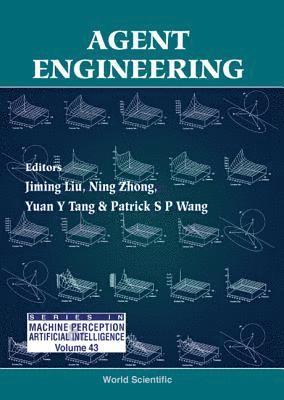
Agent engineering concerns the development of autonomous computational or physical entities capable of perceiving, reasoning, adapting, learning, cooperating and delegating in a dynamic environment. It is one of the most promising areas of research and development in information technology, computer science and engineering.This book addresses some of the key issues in agent engineering: What is meant by “autonomous agents”? How can we build agents with autonomy? What are the desirable capabilities of agents with respect to surviving (they will not die) and living (they will furthermore enjoy their being or existence)? How can agents cooperate among themselves? In order to achieve the optimal performance at the global level, how much optimization at the local, individual level and how much at the global level would be necessary?
This book is a collection of high quality technical papers contributed by active researchers and leading practitioners in intelligent agent technology. It offers a closer look at the state-of-the-art in the development of intelligent agents, and examines in depth the underlying logical, cognitive, physical, and biological foundations as well as the performance characteristics of various approaches in intelligent agent technology. It will stimulate the development of new models, new methodologies, and new tools for building a variety of embodiments of agent-based systems.
Agent engineering concerns the development of autonomous computational or physical entities capable of perceiving, reasoning, adapting, learning, cooperating and delegating in a dynamic environment. It is one of the most promising areas of research and development in information technology, computer science and engineering.This book addresses some of the key issues in agent engineering: What is meant by “autonomous agents”? How can we build agents with autonomy? What are the desirable capabilities of agents with respect to surviving (they will not die) and living (they will furthermore enjoy their being or existence)? How can agents cooperate among themselves? In order to achieve the optimal performance at the global level, how much optimization at the local, individual level and how much at the global level would be necessary?
This book is a collection of high quality technical papers contributed by active researchers and leading practitioners in intelligent agent technology. It offers a closer look at the state-of-the-art in the development of intelligent agents, and examines in depth the underlying logical, cognitive, physical, and biological foundations as well as the performance characteristics of various approaches in intelligent agent technology. It will stimulate the development of new models, new methodologies, and new tools for building a variety of embodiments of agent-based systems.