Livio Gibelli – författare
Visar alla böcker från författaren Livio Gibelli. Handla med fri frakt och snabb leverans.
18 produkter
18 produkter
Inbunden, Engelska, 2019
1 730 kr
Skickas inom 10-15 vardagar
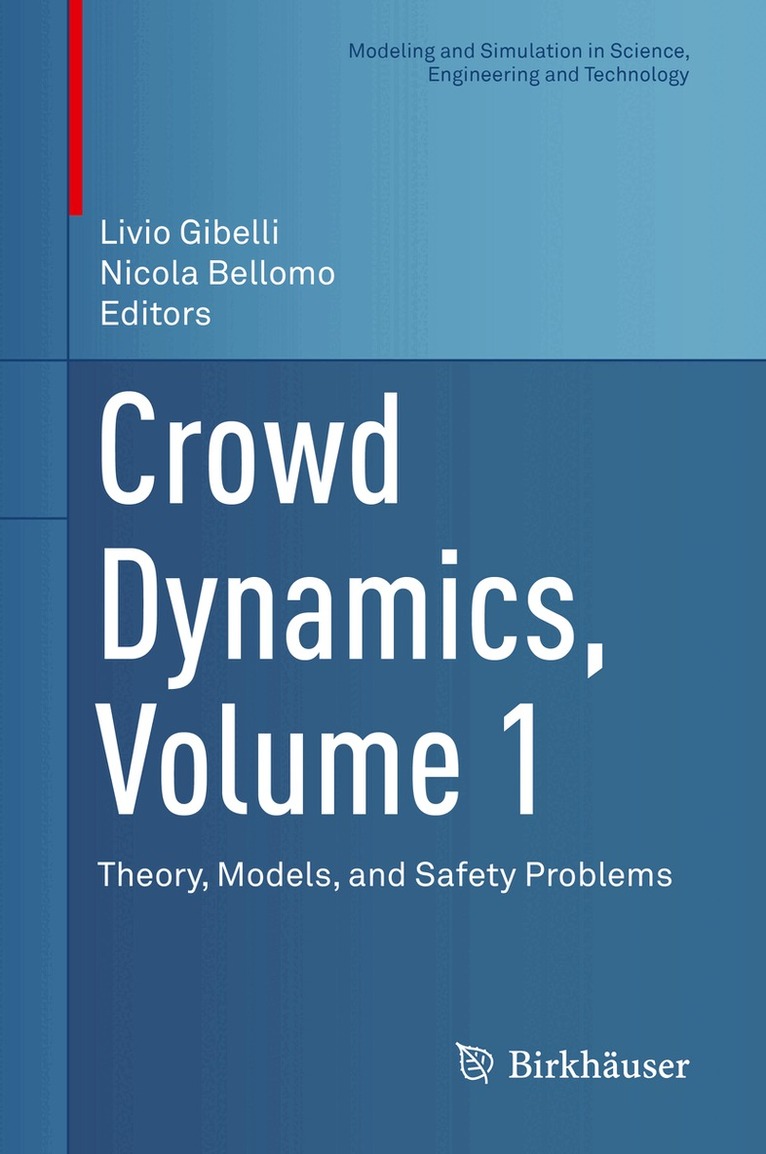
This volume explores the complex problems that arise in the modeling and simulation of crowd dynamics in order to present the state-of-the-art of this emerging field and contribute to future research activities. Experts in various areas apply their unique perspectives to specific aspects of crowd dynamics, covering the topic from multiple angles. These include a demonstration of how virtual reality may solve dilemmas in collecting empirical data; a detailed study on pedestrian movement in smoke-filled environments; a presentation of one-dimensional conservation laws with point constraints on the flux; a collection of new ideas on the modeling of crowd dynamics at the microscopic scale; and others. Applied mathematicians interested in crowd dynamics, pedestrian movement, traffic flow modeling, urban planning, and other topics will find this volume a valuable resource. Additionally, researchers in social psychology, architecture, and engineering may find this information relevant to their work.
E-bok
Engelska, 20192 207 kr
Läs direkt efter köp
This volume explores the complex problems that arise in the modeling and simulation of crowd dynamics in order to present the state-of-the-art of this emerging field and contribute to future research activities. Experts in various areas apply their unique perspectives to specific aspects of crowd dynamics, covering the topic from multiple angles. These include a demonstration of how virtual reality may solve dilemmas in collecting empirical data; a detailed study on pedestrian movement in smoke-filled environments; a presentation of one-dimensional conservation laws with point constraints on the flux; a collection of new ideas on the modeling of crowd dynamics at the microscopic scale; and others. Applied mathematicians interested in crowd dynamics, pedestrian movement, traffic flow modeling, urban planning, and other topics will find this volume a valuable resource. Additionally, researchers in social psychology, architecture, and engineering may find this information relevant to their work.
Inbunden, Engelska, 2020
711 kr
Skickas inom 5-8 vardagar
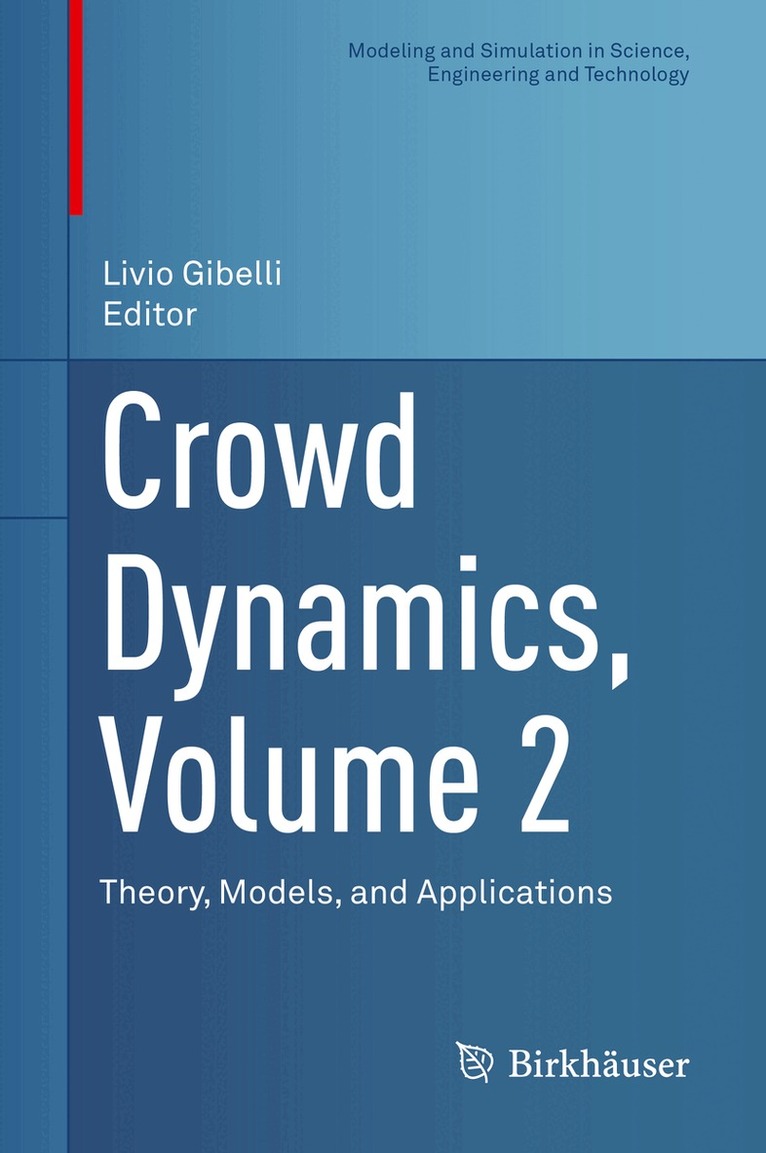
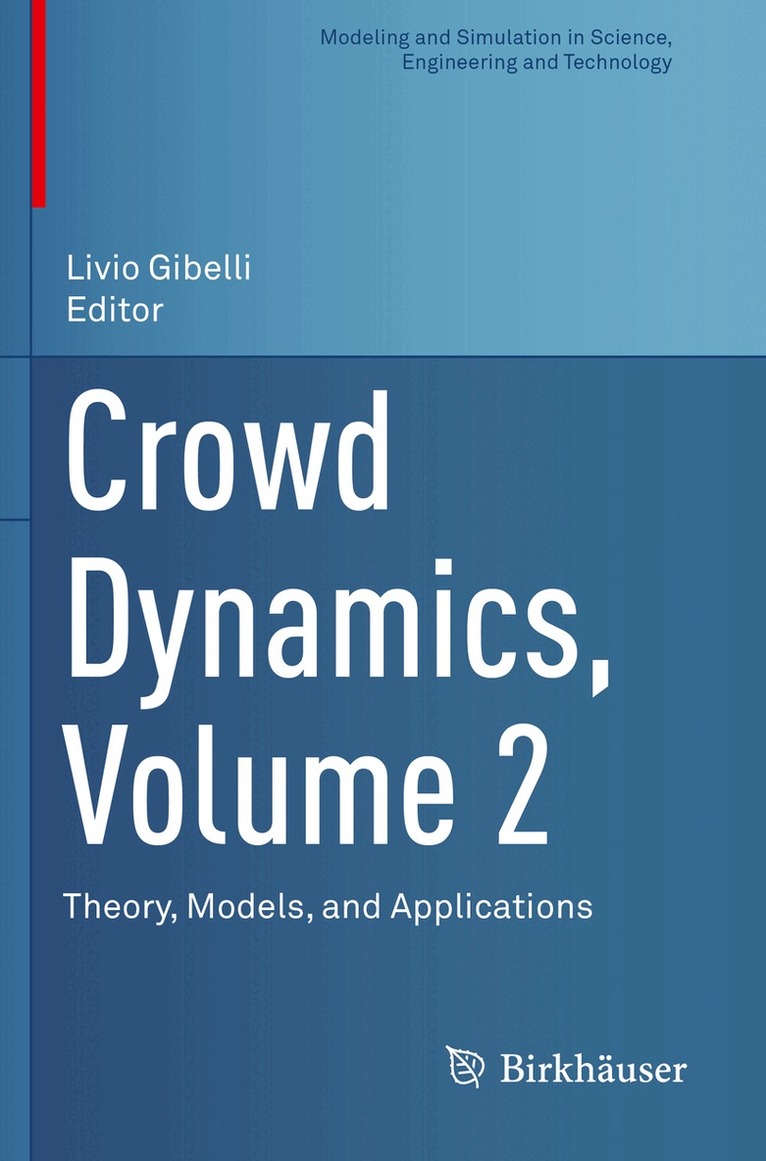
This contributed volume explores innovative research in the modeling, simulation, and control of crowd dynamics. Chapter authors approach the topic from the perspectives of mathematics, physics, engineering, and psychology, providing a comprehensive overview of the work carried out in this challenging interdisciplinary research field. After providing a critical analysis of the current state of the field and an overview of the current research perspectives, chapters focus on three main research areas: pedestrian interactions, crowd control, and multiscale modeling. Specific topics covered in this volume include: crowd dynamics through conservation lawsrecent developments in controlled crowd dynamicsmixed traffic modelinginsights and applications from crowd psychologyCrowd Dynamics, Volume 2 is ideal for mathematicians, engineers, physicists, and other researchers working in therapidly growing field of modeling and simulation of human crowds.
E-bok
Engelska, 20201 575 kr
Läs direkt efter köp
This contributed volume explores innovative research in the modeling, simulation, and control of crowd dynamics. Chapter authors approach the topic from the perspectives of mathematics, physics, engineering, and psychology, providing a comprehensive overview of the work carried out in this challenging interdisciplinary research field. After providing a critical analysis of the current state of the field and an overview of the current research perspectives, chapters focus on three main research areas: pedestrian interactions, crowd control, and multiscale modeling. Specific topics covered in this volume include: crowd dynamics through conservation lawsrecent developments in controlled crowd dynamicsmixed traffic modelinginsights and applications from crowd psychology Crowd Dynamics, Volume 2 is ideal for mathematicians, engineers, physicists, and other researchers working in therapidly growing field of modeling and simulation of human crowds.
Häftad, Engelska, 2021
711 kr
Skickas inom 5-8 vardagar
This contributed volume explores innovative research in the modeling, simulation, and control of crowd dynamics. Chapter authors approach the topic from the perspectives of mathematics, physics, engineering, and psychology, providing a comprehensive overview of the work carried out in this challenging interdisciplinary research field. After providing a critical analysis of the current state of the field and an overview of the current research perspectives, chapters focus on three main research areas: pedestrian interactions, crowd control, and multiscale modeling. Specific topics covered in this volume include: crowd dynamics through conservation lawsrecent developments in controlled crowd dynamicsmixed traffic modelinginsights and applications from crowd psychologyCrowd Dynamics, Volume 2 is ideal for mathematicians, engineers, physicists, and other researchers working in therapidly growing field of modeling and simulation of human crowds.
Inbunden, Engelska, 2022
711 kr
Skickas inom 5-8 vardagar
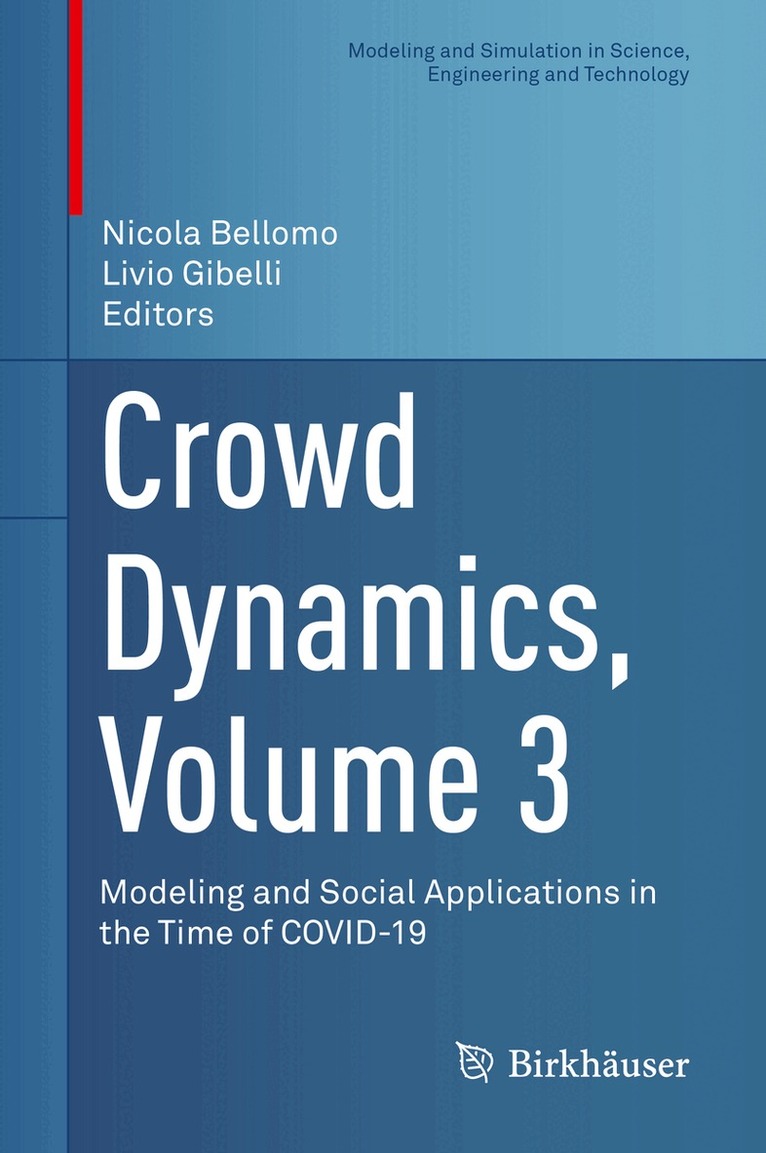
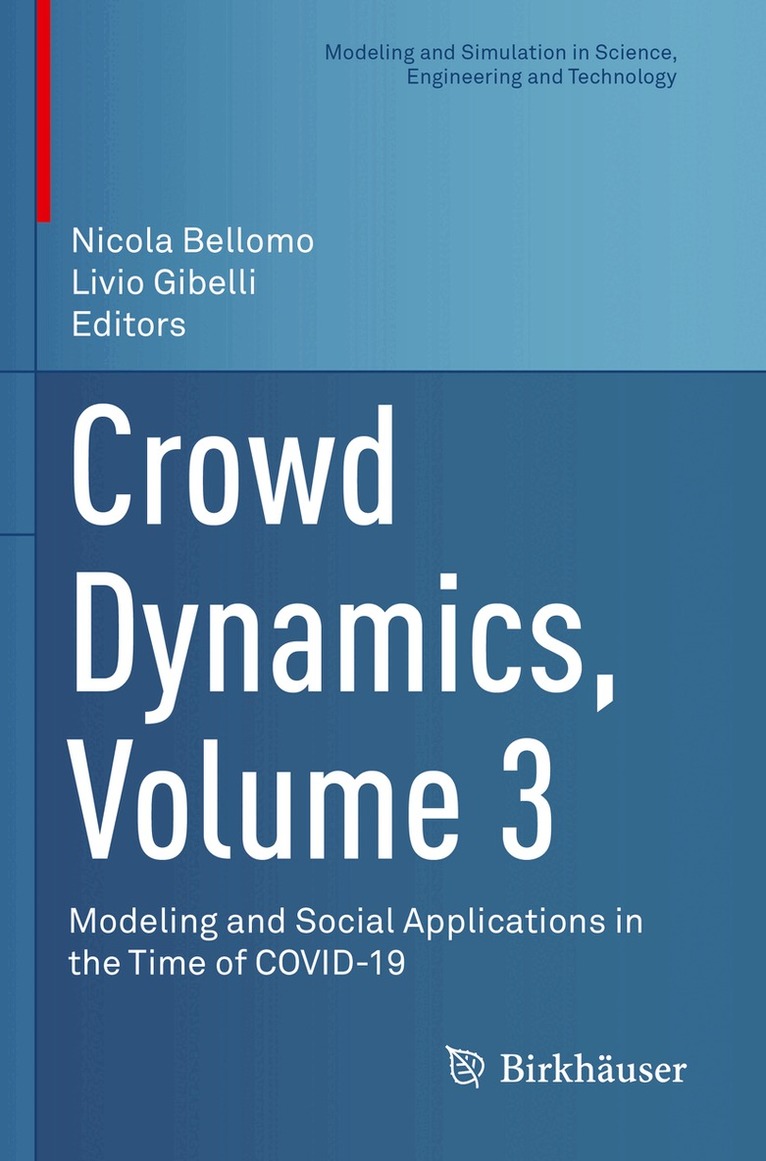
This contributed volume explores innovative research in the modeling, simulation, and control of crowd dynamics. Chapter authors approach the topic from the perspectives of mathematics, physics, engineering, and psychology, providing a comprehensive overview of the work carried out in this challenging interdisciplinary research field. In light of the recent COVID-19 pandemic, special consideration is given to applications of crowd dynamics to the prevention of the spreading of contagious diseases. Some of the specific topics covered in this volume include: - Impact of physical distancing on the evacuation of crowds- Generalized solutions of opinion dynamics models- Crowd dynamics coupled with models for infectious disease spreading- Optimized strategies for leaders in controlling the dynamics of a crowdCrowd Dynamics, Volume 3 is ideal for mathematicians, engineers, physicists, and other researchers working in the rapidly growing field of modeling and simulation of human crowds.
1 575 kr
Läs direkt efter köp
This contributed volume explores innovative research in the modeling, simulation, and control of crowd dynamics. Chapter authors approach the topic from the perspectives of mathematics, physics, engineering, and psychology, providing a comprehensive overview of the work carried out in this challenging interdisciplinary research field. In light of the recent COVID-19 pandemic, special consideration is given to applications of crowd dynamics to the prevention of the spreading of contagious diseases. Some of the specific topics covered in this volume include: - Impact of physical distancing on the evacuation of crowds- Generalized solutions of opinion dynamics models- Crowd dynamics coupled with models for infectious disease spreading- Optimized strategies for leaders in controlling the dynamics of a crowdCrowd Dynamics, Volume 3 is ideal for mathematicians, engineers, physicists, and other researchers working in the rapidly growing field of modeling and simulation of human crowds.
Häftad, Engelska, 2023
711 kr
Skickas inom 5-8 vardagar
This contributed volume explores innovative research in the modeling, simulation, and control of crowd dynamics. Chapter authors approach the topic from the perspectives of mathematics, physics, engineering, and psychology, providing a comprehensive overview of the work carried out in this challenging interdisciplinary research field. In light of the recent COVID-19 pandemic, special consideration is given to applications of crowd dynamics to the prevention of the spreading of contagious diseases. Some of the specific topics covered in this volume include: - Impact of physical distancing on the evacuation of crowds- Generalized solutions of opinion dynamics models- Crowd dynamics coupled with models for infectious disease spreading- Optimized strategies for leaders in controlling the dynamics of a crowdCrowd Dynamics, Volume 3 is ideal for mathematicians, engineers, physicists, and other researchers working in the rapidly growing field of modeling and simulation of human crowds.
Häftad, Engelska, 2020
362 kr
Skickas inom 10-15 vardagar
The contents of this brief Lecture Note are devoted to modeling, simulations, and applications with the aim of proposing a unified multiscale approach accounting for the physics and the psychology of people in crowds. The modeling approach is based on the mathematical theory of active particles, with the goal of contributing to safety problems of interest for the well-being of our society, for instance, by supporting crisis management in critical situations such as sudden evacuation dynamics induced through complex venues by incidents.
E-bok
PDF, Engelska, 2022443 kr
Läs direkt efter köp
The contents of this brief Lecture Note are devoted to modeling, simulations, and applications with the aim of proposing a unified multiscale approach accounting for the physics and the psychology of people in crowds. The modeling approach is based on the mathematical theory of active particles, with the goal of contributing to safety problems of interest for the well-being of our society, for instance, by supporting crisis management in critical situations such as sudden evacuation dynamics induced through complex venues by incidents.
Inbunden, Engelska, 2023
1 515 kr
Skickas inom 10-15 vardagar
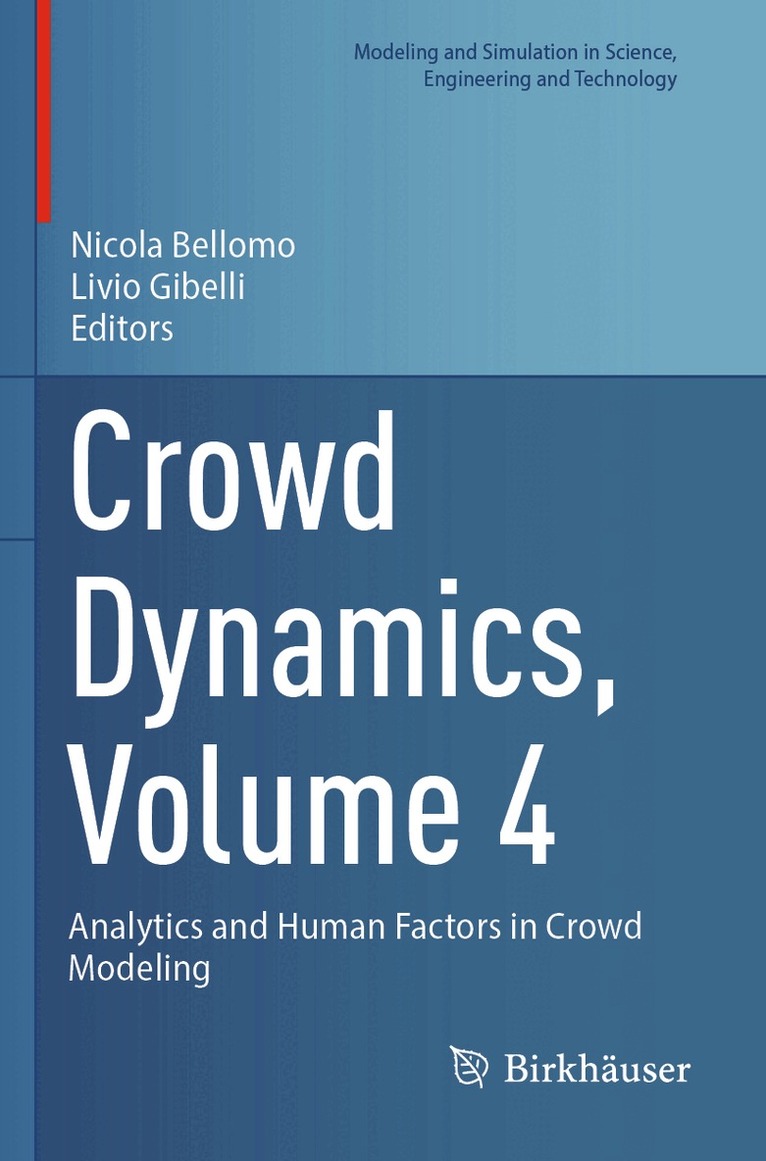
This contributed volume explores innovative research in the modeling, simulation, and control of crowd dynamics. Chapter authors approach the topic from the perspectives of mathematics, physics, engineering, and psychology, providing a comprehensive overview of the work carried out in this challenging interdisciplinary research field. The volume begins with an overview of analytical problems related to crowd modeling. Attention is then given to the importance of considering the social and psychological factors that influence crowd behavior – such as emotions, communication, and decision-making processes – in order to create reliable models. Finally, specific features of crowd behavior are explored, including single-file traffic, passenger movement, modeling multiple groups in crowds, and the interplay between crowd dynamics and the spread of disease.Crowd Dynamics, Volume 4 is ideal for mathematicians, engineers, physicists, and other researchers working in the rapidly growing field of modeling and simulation of human crowds.
E-bok
Engelska, 20231 891 kr
Läs direkt efter köp
This contributed volume explores innovative research in the modeling, simulation, and control of crowd dynamics. Chapter authors approach the topic from the perspectives of mathematics, physics, engineering, and psychology, providing a comprehensive overview of the work carried out in this challenging interdisciplinary research field. The volume begins with an overview of analytical problems related to crowd modeling. Attention is then given to the importance of considering the social and psychological factors that influence crowd behavior – such as emotions, communication, and decision-making processes – in order to create reliable models. Finally, specific features of crowd behavior are explored, including single-file traffic, passenger movement, modeling multiple groups in crowds, and the interplay between crowd dynamics and the spread of disease.Crowd Dynamics, Volume 4 is ideal for mathematicians, engineers, physicists, and other researchers working in the rapidly growing field of modeling and simulation of human crowds.
Häftad, Engelska, 2024
1 515 kr
Skickas inom 10-15 vardagar
This contributed volume explores innovative research in the modeling, simulation, and control of crowd dynamics. Chapter authors approach the topic from the perspectives of mathematics, physics, engineering, and psychology, providing a comprehensive overview of the work carried out in this challenging interdisciplinary research field. The volume begins with an overview of analytical problems related to crowd modeling. Attention is then given to the importance of considering the social and psychological factors that influence crowd behavior – such as emotions, communication, and decision-making processes – in order to create reliable models. Finally, specific features of crowd behavior are explored, including single-file traffic, passenger movement, modeling multiple groups in crowds, and the interplay between crowd dynamics and the spread of disease.Crowd Dynamics, Volume 4 is ideal for mathematicians, engineers, physicists, and other researchers working in the rapidly growing field of modeling and simulation of human crowds.
Inbunden, Engelska, 2026
1 515 kr
Skickas inom 10-15 vardagar
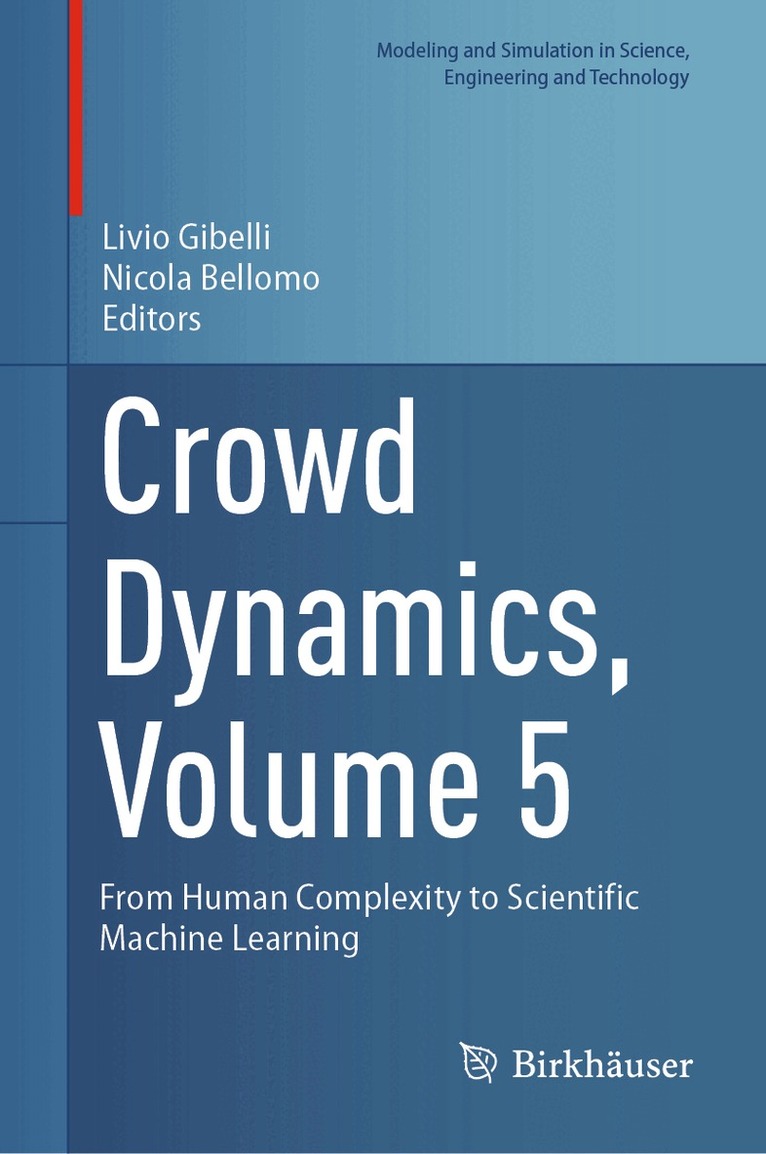
This contributed volume explores innovative research in the modeling, simulation, and control of crowd dynamics. Chapter authors approach the topic from the perspectives of mathematics, physics, engineering, and psychology, providing a comprehensive overview of the work carried out in this challenging interdisciplinary research field. The volume begins by focusing on modeling at the macroscopic and microscopic scales, with chapters demonstrating how stress conditions evolve in time and space and influence pedestrian dynamics, particularly regarding high density patterns. Different aspects of behavioral dynamics are considered in the following chapters, which explore how mathematical models can incorporate parameters that capture shifts in people’s mental states. The final two chapters go beyond the usual modeling-based assumptions, discussing how control problems can be developed using drones to guide crowds and methods for interpreting crowd behavior using artificial intelligence, respectively.Crowd Dynamics, Volume 5 is ideal for mathematicians, engineers, physicists, and other researchers working in the rapidly growing field of modeling and simulation of human crowds.
E-bok
Engelska, 20261 891 kr
Läs direkt efter köp
This contributed volume explores innovative research in the modeling, simulation, and control of crowd dynamics. Chapter authors approach the topic from the perspectives of mathematics, physics, engineering, and psychology, providing a comprehensive overview of the work carried out in this challenging interdisciplinary research field. The volume begins by focusing on modeling at the macroscopic and microscopic scales, with chapters demonstrating how stress conditions evolve in time and space and influence pedestrian dynamics, particularly regarding high density patterns. Different aspects of behavioral dynamics are considered in the following chapters, which explore how mathematical models can incorporate parameters that capture shifts in people’s mental states. The final two chapters go beyond the usual modeling-based assumptions, discussing how control problems can be developed using drones to guide crowds and methods for interpreting crowd behavior using artificial intelligence, respectively.Crowd Dynamics, Volume 5 is ideal for mathematicians, engineers, physicists, and other researchers working in the rapidly growing field of modeling and simulation of human crowds.
Inbunden, Engelska, 2017
976 kr
Skickas inom 10-15 vardagar
This monograph aims to lay the groundwork for the design of a unified mathematical approach to the modeling and analysis of large, complex systems composed of interacting living things. Drawing on twenty years of research in various scientific fields, it explores how mathematical kinetic theory and evolutionary game theory can be used to understand the complex interplay between mathematical sciences and the dynamics of living systems. The authors hope this will contribute to the development of new tools and strategies, if not a new mathematical theory.The first chapter discusses the main features of living systems and outlines a strategy for their modeling. The following chapters then explore some of the methods needed to potentially achieve this in practice. Chapter Two provides a brief introduction to the mathematical kinetic theory of classical particles, with special emphasis on the Boltzmann equation; the Enskog equation,mean field models, and Monte Carlo methods are also briefly covered. Chapter Three uses concepts from evolutionary game theory to derive mathematical structures that are able to capture the complexity features of interactions within living systems. The book then shifts to exploring the relevant applications of these methods that can potentially be used to derive specific, usable models. The modeling of social systems in various contexts is the subject of Chapter Five, and an overview of modeling crowd dynamics is given in Chapter Six, demonstrating how this approach can be used to model the dynamics of multicellular systems. The final chapter considers some additional applications before presenting an overview of open problems. The authors then offer their own speculations on the conceptual paths that may lead to a mathematical theory of living systems hoping to motivate future research activity in the field.A truly unique contribution to the existing literature, A Quest Toward a Mathematical Theory of Living Systems is an important book that will no doubt have a significant influence on the future directions of the field. It will be of interest to mathematical biologists, systems biologists, biophysicists, and other researchers working on understanding the complexities of living systems.
E-bok
Engelska, 20171 258 kr
Läs direkt efter köp
This monograph aims to lay the groundwork for the design of a unified mathematical approach to the modeling and analysis of large, complex systems composed of interacting living things. Drawing on twenty years of research in various scientific fields, it explores how mathematical kinetic theory and evolutionary game theory can be used to understand the complex interplay between mathematical sciences and the dynamics of living systems. The authors hope this will contribute to the development of new tools and strategies, if not a new mathematical theory.The first chapter discusses the main features of living systems and outlines a strategy for their modeling. The following chapters then explore some of the methods needed to potentially achieve this in practice. Chapter Two provides a brief introduction to the mathematical kinetic theory of classical particles, with special emphasis on the Boltzmann equation; the Enskog equation,mean field models, and Monte Carlo methods are also briefly covered. Chapter Three uses concepts from evolutionary game theory to derive mathematical structures that are able to capture the complexity features of interactions within living systems. The book then shifts to exploring the relevant applications of these methods that can potentially be used to derive specific, usable models. The modeling of social systems in various contexts is the subject of Chapter Five, and an overview of modeling crowd dynamics is given in Chapter Six, demonstrating how this approach can be used to model the dynamics of multicellular systems. The final chapter considers some additional applications before presenting an overview of open problems. The authors then offer their own speculations on the conceptual paths that may lead to a mathematical theory of living systems hoping to motivate future research activity in the field.A truly unique contribution to the existing literature, A Quest Toward a Mathematical Theory of Living Systems is an important book that will no doubt have a significant influence on the future directions of the field. It will be of interest to mathematical biologists, systems biologists, biophysicists, and other researchers working on understanding the complexities of living systems.
Häftad, Engelska, 2018
976 kr
Skickas inom 10-15 vardagar
This monograph aims to lay the groundwork for the design of a unified mathematical approach to the modeling and analysis of large, complex systems composed of interacting living things. Drawing on twenty years of research in various scientific fields, it explores how mathematical kinetic theory and evolutionary game theory can be used to understand the complex interplay between mathematical sciences and the dynamics of living systems. The authors hope this will contribute to the development of new tools and strategies, if not a new mathematical theory.The first chapter discusses the main features of living systems and outlines a strategy for their modeling. The following chapters then explore some of the methods needed to potentially achieve this in practice. Chapter Two provides a brief introduction to the mathematical kinetic theory of classical particles, with special emphasis on the Boltzmann equation; the Enskog equation,mean field models, and Monte Carlo methods are also briefly covered. Chapter Three uses concepts from evolutionary game theory to derive mathematical structures that are able to capture the complexity features of interactions within living systems. The book then shifts to exploring the relevant applications of these methods that can potentially be used to derive specific, usable models. The modeling of social systems in various contexts is the subject of Chapter Five, and an overview of modeling crowd dynamics is given in Chapter Six, demonstrating how this approach can be used to model the dynamics of multicellular systems. The final chapter considers some additional applications before presenting an overview of open problems. The authors then offer their own speculations on the conceptual paths that may lead to a mathematical theory of living systems hoping to motivate future research activity in the field.A truly unique contribution to the existing literature, A Quest Toward a Mathematical Theory of Living Systems is an important book that will no doubt have a significant influence on the future directions of the field. It will be of interest to mathematical biologists, systems biologists, biophysicists, and other researchers working on understanding the complexities of living systems.