Liz Jackson – författare
2 132 kr
Skickas inom 10-15 vardagar
2 193 kr
Skickas inom 10-15 vardagar
624 kr
Skickas inom 10-15 vardagar
624 kr
Skickas inom 10-15 vardagar
541 kr
Skickas inom 10-15 vardagar
2 132 kr
Skickas inom 10-15 vardagar
Methodology and Philosophy of Collective Writing
An Educational Philosophy and Theory Reader Volume X
571 kr
Skickas inom 10-15 vardagar
Methodology and Philosophy of Collective Writing
An Educational Philosophy and Theory Reader Volume X
2 193 kr
Skickas inom 10-15 vardagar
2 193 kr
Skickas inom 10-15 vardagar
2 405 kr
Skickas inom 10-15 vardagar
684 kr
Skickas inom 10-15 vardagar
735 kr
Läs direkt efter köp
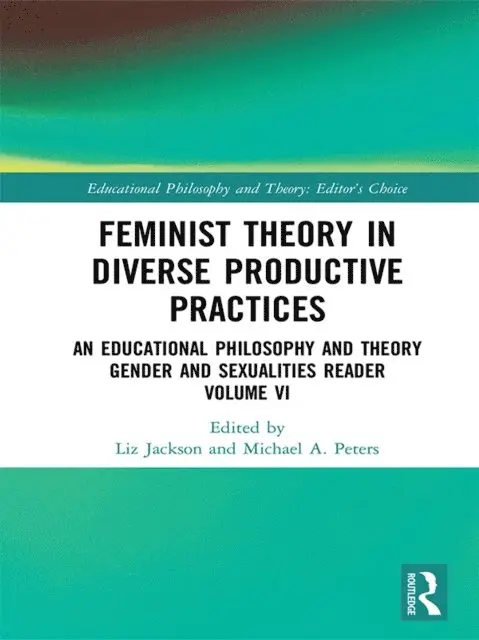
Feminist Theory in Diverse Productive Practices is the second of two volumes examining gender and feminist theory in Educational Philosophy and Theory. This collection explores the difference that gender and sexual identities make both to theorizing and working in education and other fields. As the articles contained in this text span nearly 40 years of scholarship related to these issues, this volume sheds light on how feminist, gender, and sexuality theory has evolved within and beyond the field of philosophy of education over time.
Key themes explored in the book include women’s ways of knowing, the challenges women (and girls) face in taking up professional employment across diverse fields historically and today, and how feminist and related theories can enable women in professional development roles to empower each other. The book tells a rich story of how gender and sexuality theory has been brought to bear on discussions of educational practice in diverse fields over decades of publication of Educational Philosophy and Theory.
Feminist Theory in Diverse Productive Practices will be key reading for academics, researchers and postgraduate students in the fields of philosophy of education, philosophy, education, educational theory, post-structural theory, and the policy and politics of education.
735 kr
Läs direkt efter köp
Feminist Theory in Diverse Productive Practices is the second of two volumes examining gender and feminist theory in Educational Philosophy and Theory. This collection explores the difference that gender and sexual identities make both to theorizing and working in education and other fields. As the articles contained in this text span nearly 40 years of scholarship related to these issues, this volume sheds light on how feminist, gender, and sexuality theory has evolved within and beyond the field of philosophy of education over time.
Key themes explored in the book include women’s ways of knowing, the challenges women (and girls) face in taking up professional employment across diverse fields historically and today, and how feminist and related theories can enable women in professional development roles to empower each other. The book tells a rich story of how gender and sexuality theory has been brought to bear on discussions of educational practice in diverse fields over decades of publication of Educational Philosophy and Theory.
Feminist Theory in Diverse Productive Practices will be key reading for academics, researchers and postgraduate students in the fields of philosophy of education, philosophy, education, educational theory, post-structural theory, and the policy and politics of education.
621 kr
Läs direkt efter köp
Education about living in society and in the world is a vital task of schools. Yet such civic education is not always critically examined, and few among us have been encouraged to reflect on our civic education experiences. Around the world, one’s civic education most often looks like a black box. How it works is unclear. When human harm, violence, and oppression can be seen in a wide variety of contexts, it is worth critically examining civic education. Could it be that civic education is not playing a helpful role in society? Can it be done differently and better? As one reflects on the contemporary social world, it is helpful to examine the assumptions surrounding education for living together, to think about current modes and possible alternatives. Otherwise, one might end up promoting allegiance to civic and partisan entities which are themselves black boxes (the ‘nation’, the ‘people’), failing to notice when and how what goes on in civic education is morally questionable.
This book aims to elucidate some of the black box of civic education, and focuses on some of its main operations across contexts. Offering a new framework for students and academics, this book questions existing thinking and shifts the focus of attention from the right balance to strike between local, national, and global allegiances to the more fundamental question of what counts as ‘local’, ‘national’, and ‘global’, and what might be involved in cultivating allegiances to them. It looks at allegiance to not just transnational but also sub-global ‘civilisations’ and it problematises the notion of the ‘local community’ in new ways.
This book is the 2020 AESA Critics'' Choice Book Award Winner.
25 kr
Läs direkt efter köp
Education about living in society and in the world is a vital task of schools. Yet such civic education is not always critically examined, and few among us have been encouraged to reflect on our civic education experiences. Around the world, one’s civic education most often looks like a black box. How it works is unclear. When human harm, violence, and oppression can be seen in a wide variety of contexts, it is worth critically examining civic education. Could it be that civic education is not playing a helpful role in society? Can it be done differently and better? As one reflects on the contemporary social world, it is helpful to examine the assumptions surrounding education for living together, to think about current modes and possible alternatives. Otherwise, one might end up promoting allegiance to civic and partisan entities which are themselves black boxes (the ‘nation’, the ‘people’), failing to notice when and how what goes on in civic education is morally questionable.
This book aims to elucidate some of the black box of civic education, and focuses on some of its main operations across contexts. Offering a new framework for students and academics, this book questions existing thinking and shifts the focus of attention from the right balance to strike between local, national, and global allegiances to the more fundamental question of what counts as ‘local’, ‘national’, and ‘global’, and what might be involved in cultivating allegiances to them. It looks at allegiance to not just transnational but also sub-global ‘civilisations’ and it problematises the notion of the ‘local community’ in new ways.
This book is the 2020 AESA Critics'' Choice Book Award Winner.
710 kr
Läs direkt efter köp
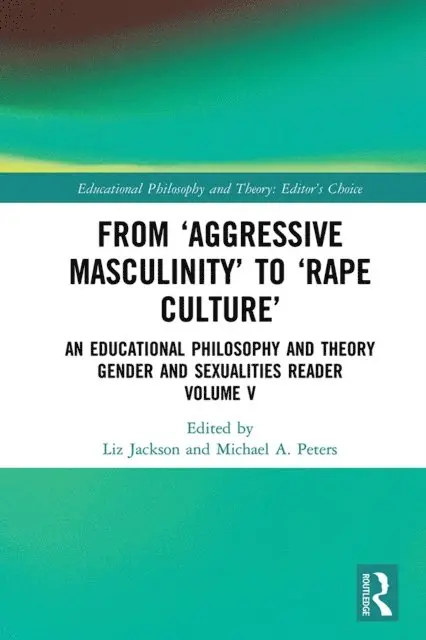
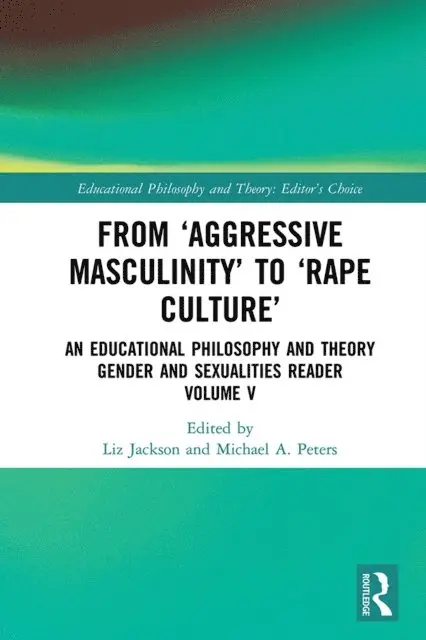
From ‘Aggressive Masculinity’ to ‘Rape Culture’ is the fifth volume in this series and explores the relationship between gender and sex roles and socialisation and education, foregrounding issues of inequity and different forms of oppression in various contexts. It tells a rich story of transformation of a field over nearly half a century, in relation to the theorisation of gender and sexuality in educational philosophy and theory. The transformation of this field is mapped on to broader social trends during the same period, enabling a better understanding of the potential role of educational philosophy and theory in developing feminist, queer, and related veins of scholarship in the future.
The collection of texts focuses on a wide range of topics, including nature versus nurture and the debate over whether gender and sex roles are natural or based upon culture and socialisation, gender and sexual binaries, and how power is organised and circulates within educational spaces (including possibly online spaces) with regard to enabling or disrupting sexually oppressive or violently gendered social conditions. Other important trends include Internet activism and the use of intersectional theory, postcolonial theory, and global studies approaches.
From ‘Aggressive Masculinity’ to ‘Rape Culture’ will be key reading for academics, researchers and postgraduate students in the fields of philosophy of education, philosophy, education, educational theory, post-structural theory, the policy and politics of education, and the pedagogy of education.
735 kr
Läs direkt efter köp
From ‘Aggressive Masculinity’ to ‘Rape Culture’ is the fifth volume in this series and explores the relationship between gender and sex roles and socialisation and education, foregrounding issues of inequity and different forms of oppression in various contexts. It tells a rich story of transformation of a field over nearly half a century, in relation to the theorisation of gender and sexuality in educational philosophy and theory. The transformation of this field is mapped on to broader social trends during the same period, enabling a better understanding of the potential role of educational philosophy and theory in developing feminist, queer, and related veins of scholarship in the future.
The collection of texts focuses on a wide range of topics, including nature versus nurture and the debate over whether gender and sex roles are natural or based upon culture and socialisation, gender and sexual binaries, and how power is organised and circulates within educational spaces (including possibly online spaces) with regard to enabling or disrupting sexually oppressive or violently gendered social conditions. Other important trends include Internet activism and the use of intersectional theory, postcolonial theory, and global studies approaches.
From ‘Aggressive Masculinity’ to ‘Rape Culture’ will be key reading for academics, researchers and postgraduate students in the fields of philosophy of education, philosophy, education, educational theory, post-structural theory, the policy and politics of education, and the pedagogy of education.
730 kr
Läs direkt efter köp
Marking the fiftieth anniversary of the Educational Philosophy and Theory journal, this book brings together the work of over 200 international scholars, who seek to address the question: ‘What happened to postmodernism in educational theory after its alleged demise?’.
Declarations of the death knell of postmodernism are now quite commonplace. Scholars in various disciples have suggested that, if anything, postmodernism is at an end and has been dead and buried for some time. An age dominated by playfulness, hybridity, relativism and the fragmentary self has given way to something else—as yet undefined. The lifecycle of postmodernism started with Derrida’s 1966 seminal paper ‘Structure, Sign and Play in the Discourse of the Human Sciences’; its peak years were 1973–1989; followed by uncertainty and reorientation in the 1990s; and the aftermath and beyond (McHale, 2015). What happened after 2001? This collection provides responses by over 200 scholars to this question who also focus on what comes after postmodernism in educational theory.
This book was originally published as a special issue of the journal Educational Philosophy and Theory.
730 kr
Läs direkt efter köp
Marking the fiftieth anniversary of the Educational Philosophy and Theory journal, this book brings together the work of over 200 international scholars, who seek to address the question: ‘What happened to postmodernism in educational theory after its alleged demise?’.
Declarations of the death knell of postmodernism are now quite commonplace. Scholars in various disciples have suggested that, if anything, postmodernism is at an end and has been dead and buried for some time. An age dominated by playfulness, hybridity, relativism and the fragmentary self has given way to something else—as yet undefined. The lifecycle of postmodernism started with Derrida’s 1966 seminal paper ‘Structure, Sign and Play in the Discourse of the Human Sciences’; its peak years were 1973–1989; followed by uncertainty and reorientation in the 1990s; and the aftermath and beyond (McHale, 2015). What happened after 2001? This collection provides responses by over 200 scholars to this question who also focus on what comes after postmodernism in educational theory.
This book was originally published as a special issue of the journal Educational Philosophy and Theory.
27 kr
Läs direkt efter köp
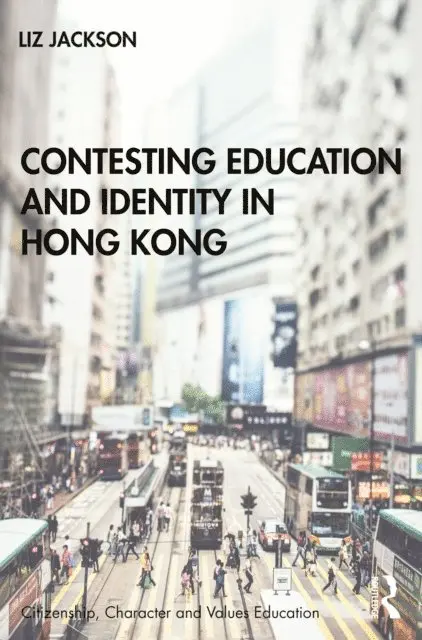
This text examines the intersection of youth civic engagement, identity, and protest in Hong Kong, through the lens of education. It explores how education and identity have been protested in Hong Kong, historically and today, and the mark that such contestations have left on education. Many people, particularly outside Hong Kong, were astonished by youth participation in the Umbrella Movement of 2013–2014, and the anti-extradition law protests in 2019. These protests have caused people to consider what has changed in Hong Kong over time, and what education has to do with youth civic engagement and political expression.
This book provides an academic, theoretically oriented perspective on the intersection of youth identity and education in Hong Kong. Coming from an educational (and philosophical) orientation, Jackson focuses on areas where greater understanding, and greater potential agreement, might be developed, when it comes to education.
This book will be of interest to educational policy makers, curriculum specialists, and educational scholars and students in liberal studies, social studies, civic education, comparative and international education, multicultural education, and youth studies.
622 kr
Läs direkt efter köp
This text examines the intersection of youth civic engagement, identity, and protest in Hong Kong, through the lens of education. It explores how education and identity have been protested in Hong Kong, historically and today, and the mark that such contestations have left on education. Many people, particularly outside Hong Kong, were astonished by youth participation in the Umbrella Movement of 2013–2014, and the anti-extradition law protests in 2019. These protests have caused people to consider what has changed in Hong Kong over time, and what education has to do with youth civic engagement and political expression.
This book provides an academic, theoretically oriented perspective on the intersection of youth identity and education in Hong Kong. Coming from an educational (and philosophical) orientation, Jackson focuses on areas where greater understanding, and greater potential agreement, might be developed, when it comes to education.
This book will be of interest to educational policy makers, curriculum specialists, and educational scholars and students in liberal studies, social studies, civic education, comparative and international education, multicultural education, and youth studies.
Methodology and Philosophy of Collective Writing
An Educational Philosophy and Theory Reader Volume X
649 kr
Läs direkt efter köp
This multi-authored collection covers the methodology and philosophy of collective writing. It is based on a series of articles written by the authors in Educational Philosophy and Theory, Open Review of Educational Research and Knowledge Cultures to explore the concept of collective writing. This tenth volume in the Editor''s Choice series provides insights into the philosophy of academic writing and peer review, peer production, collective intelligence, knowledge socialism, openness, open science and intellectual commons. This collection represents the development of the philosophy, methodology and philosophy of collective writing developed in the last few years by members of the Editors’ Collective (EC), who also edit, review and contribute to Educational Philosophy and Theory (EPAT), as well as to PESA Agora, edited by Tina Besley, and Access, edited by Nina Hood, two PESA ‘journals’ recently developed by EC members. This book develops the philosophy, methodology and pedagogy of collective writing as a new mode of academic writing as an alternative to the normal academic article. The philosophy of collective writing draws on a new mode of academic publishing that emphasises the metaphysics of peer production and open review along with the main characteristics of openness, collaboration, co-creation and co-social innovation, peer review and collegiality that have become a praxis for the self-reflection emphasising the subjectivity of writing, sometimes called self-writing. This collection, under the EPAT series Editor’s Choice, draws on a group of members of the Editors’ Collective,who constitute a network of editors, reviewers and authors who established the organisation to further the aims of innovation in academic writing and publishing. It provides discussion and examples of the philosophy, methodology and pedagogy of collective writing. Split into three sections: Introduction, Openness and Projects, this volume offers an introduction to the philosophy and methodology of collective writing. It will be of interest to scholars in philosophy of education and those interested in the process of collective writing.
Methodology and Philosophy of Collective Writing
An Educational Philosophy and Theory Reader Volume X
673 kr
Läs direkt efter köp
This multi-authored collection covers the methodology and philosophy of collective writing. It is based on a series of articles written by the authors in Educational Philosophy and Theory, Open Review of Educational Research and Knowledge Cultures to explore the concept of collective writing. This tenth volume in the Editor''s Choice series provides insights into the philosophy of academic writing and peer review, peer production, collective intelligence, knowledge socialism, openness, open science and intellectual commons. This collection represents the development of the philosophy, methodology and philosophy of collective writing developed in the last few years by members of the Editors’ Collective (EC), who also edit, review and contribute to Educational Philosophy and Theory (EPAT), as well as to PESA Agora, edited by Tina Besley, and Access, edited by Nina Hood, two PESA ‘journals’ recently developed by EC members. This book develops the philosophy, methodology and pedagogy of collective writing as a new mode of academic writing as an alternative to the normal academic article. The philosophy of collective writing draws on a new mode of academic publishing that emphasises the metaphysics of peer production and open review along with the main characteristics of openness, collaboration, co-creation and co-social innovation, peer review and collegiality that have become a praxis for the self-reflection emphasising the subjectivity of writing, sometimes called self-writing. This collection, under the EPAT series Editor’s Choice, draws on a group of members of the Editors’ Collective,who constitute a network of editors, reviewers and authors who established the organisation to further the aims of innovation in academic writing and publishing. It provides discussion and examples of the philosophy, methodology and pedagogy of collective writing. Split into three sections: Introduction, Openness and Projects, this volume offers an introduction to the philosophy and methodology of collective writing. It will be of interest to scholars in philosophy of education and those interested in the process of collective writing.
686 kr
Läs direkt efter köp
This volume examines the place of Marxist theory in the history of the journal Educational Philosophy and Theory, primarily through the selection and exploration of typical and significant articles exploring Marxist-related themes in the journal over time. The title, From Radical Marxism to Knowledge Socialism, reflects this historical approach. In the 1960s and 1970s, Marxism was considered to be a radical, extreme ‘political’ theory, while western liberalism and a free-market economy were largely taken for granted as natural phenomena, in western philosophy of education and in the journal. More recently, educational theorists have begun to explore trends related to the neoliberal age. Paradoxically, such trends include the move toward knowledge socialism, which decenters the normative presuppositions of knowledge capitalism as the latest iteration of western liberalism.
The volume begins with an introductory chapter that examines the history of Marxism in western philosophy and philosophy of education. The rest of the book features works selected from the journal that further illustrate the evolution of Marxist theoretical perspectives in the field over time. This collection thus gives a sense of the range and extent of Marxist-inspired thinking in educational philosophy and theory.
This book will be of interest to students and scholars of educational philosophy and theory and others who are interested in exploring in depth the evolution of key themes in this field over time, including liberalism, ideology, Marxism, neoliberalism, knowledge construction, capitalist and socialist schooling, and other aspects of economic analysis in education.
662 kr
Läs direkt efter köp
This volume examines the place of Marxist theory in the history of the journal Educational Philosophy and Theory, primarily through the selection and exploration of typical and significant articles exploring Marxist-related themes in the journal over time. The title, From Radical Marxism to Knowledge Socialism, reflects this historical approach. In the 1960s and 1970s, Marxism was considered to be a radical, extreme ‘political’ theory, while western liberalism and a free-market economy were largely taken for granted as natural phenomena, in western philosophy of education and in the journal. More recently, educational theorists have begun to explore trends related to the neoliberal age. Paradoxically, such trends include the move toward knowledge socialism, which decenters the normative presuppositions of knowledge capitalism as the latest iteration of western liberalism.
The volume begins with an introductory chapter that examines the history of Marxism in western philosophy and philosophy of education. The rest of the book features works selected from the journal that further illustrate the evolution of Marxist theoretical perspectives in the field over time. This collection thus gives a sense of the range and extent of Marxist-inspired thinking in educational philosophy and theory.
This book will be of interest to students and scholars of educational philosophy and theory and others who are interested in exploring in depth the evolution of key themes in this field over time, including liberalism, ideology, Marxism, neoliberalism, knowledge construction, capitalist and socialist schooling, and other aspects of economic analysis in education.
706 kr
Läs direkt efter köp
This book explores Marxism and related political-economic theory, and its implications for education around the world, as seen in the history of the journal Educational Philosophy and Theory. As such, it illustrates the evolution of political-economic changes across societies, as they have been brought to bear within the academic field and in the journal, through the exploration of typical and noteworthy articles examining political-economic themes over time.
In the early decades of Educational Philosophy and Theory, only a few works can be found focused on Marx’s work, Marxism, and related themes. However, since the mid-1990s, Educational Philosophy and Theory has published many articles focused on neoliberalism and educational responses to theories and policies based on political-economic perspectives. This collection serves to showcase this work, exploring the way Marxist, neoliberal and other related political-economic theories have been applied to educational discussions among philosophers and theorists of education in the history of Educational Philosophy and Theory.
As a collection, this book provides a glimpse of a dramatically changing world, and changing scholarly responses to it, during the late nineteenth and early twentieth centuries. This collection can therefore be useful to scholars interested in better understanding how changes to the political economy have intersected with those in education over time, as well as the diverse ways scholars have approached and reacted to a shifting landscape, considering views ranging from Marxist to Post-Marxist, to neoliberal, and beyond.
706 kr
Läs direkt efter köp
This book explores Marxism and related political-economic theory, and its implications for education around the world, as seen in the history of the journal Educational Philosophy and Theory. As such, it illustrates the evolution of political-economic changes across societies, as they have been brought to bear within the academic field and in the journal, through the exploration of typical and noteworthy articles examining political-economic themes over time.
In the early decades of Educational Philosophy and Theory, only a few works can be found focused on Marx’s work, Marxism, and related themes. However, since the mid-1990s, Educational Philosophy and Theory has published many articles focused on neoliberalism and educational responses to theories and policies based on political-economic perspectives. This collection serves to showcase this work, exploring the way Marxist, neoliberal and other related political-economic theories have been applied to educational discussions among philosophers and theorists of education in the history of Educational Philosophy and Theory.
As a collection, this book provides a glimpse of a dramatically changing world, and changing scholarly responses to it, during the late nineteenth and early twentieth centuries. This collection can therefore be useful to scholars interested in better understanding how changes to the political economy have intersected with those in education over time, as well as the diverse ways scholars have approached and reacted to a shifting landscape, considering views ranging from Marxist to Post-Marxist, to neoliberal, and beyond.
688 kr
Läs direkt efter köp
This book critically considers what various Asian philosophies can contribute to a more substantive discourse on sustainability education and educational philosophy.
The contributors examine how ‘east’ and ‘west’ interact in educational philosophy and practice in Asian contexts. As a collection, they provide a broad view of Asian sustainability thinking that is not dominated by Confucianism, Buddhism, Islam, and post-colonialism, but rather which regards these themes—and other frameworks for sustainable education—as dynamic aspects of Asian contexts, both historically and today. As such, the book invites readers to consider the challenges and opportunities for theorising of sustainability in the philosophy of education, while also critically engaging with the way in which ‘Asia’ and ‘east’ are typically understood.
Of interest to those researchers in Asian conceptions of sustainability, this book highlights a series of potential insights in relation to the often-foregrounded perspectives of Global North and western-based frameworks.
The chapters were originally published in Educational Philosophy and Theory.
706 kr
Läs direkt efter köp
This book critically considers what various Asian philosophies can contribute to a more substantive discourse on sustainability education and educational philosophy.
The contributors examine how ‘east’ and ‘west’ interact in educational philosophy and practice in Asian contexts. As a collection, they provide a broad view of Asian sustainability thinking that is not dominated by Confucianism, Buddhism, Islam, and post-colonialism, but rather which regards these themes—and other frameworks for sustainable education—as dynamic aspects of Asian contexts, both historically and today. As such, the book invites readers to consider the challenges and opportunities for theorising of sustainability in the philosophy of education, while also critically engaging with the way in which ‘Asia’ and ‘east’ are typically understood.
Of interest to those researchers in Asian conceptions of sustainability, this book highlights a series of potential insights in relation to the often-foregrounded perspectives of Global North and western-based frameworks.
The chapters were originally published in Educational Philosophy and Theory.
706 kr
Läs direkt efter köp
This book examines the importance, possibilities, and complexities of the university as an ethical academy. Universities may be seen as an evolving network of ethical systems that govern teaching, research, service, and administration. However, the university system is changing: adding new rules, new ways of working, and new ideas to its repertoire of operations. The theories that we have traditionally employed may be now put up for questioning and examination. Universities now comprise a spectacularly large body of regulations and policies, both internal and external, that cover issues from cheating, human subject research, academic integrity, research on animals, environmental ethics, and the ethics of sexual harassment. These interconnected ecological systems of ethics have not emerged in one rational process but rather reflect the ongoing historical and dynamic development of law and ethics in relation to the creation of new values. This has played out in a particular political and ideological environment, which has produced the university as a set of practices and beliefs and a particular set of rationalities. This book was originally published as a special issue of the journal Educational Philosophy and Theory.