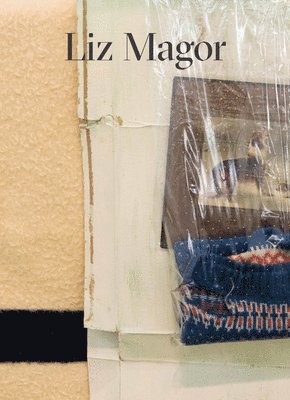
In 2019, the Renaissance Society at the University of Chicago and the Carpenter Center for the Visual Arts, Harvard University co-organized an exhibition of a newly commissioned body of work by the Canadian artist Liz Magor. The accompanying publication, Liz Magor: BLOWOUT, is the artist’s first US catalog in ten years, and it features thorough photographic documentation of the new work, commissioned texts by Mitch Speed and Sheila Heti, and a conversation between the artist and curators Dan Byers and Solveig Øvstebø.For more than four decades, Magor’s practice has quietly dramatized the relationships that develop among objects, and she describes this body of work as “a collection of tiny and intense narratives.” Each written contribution responds in its own way to Magor’s new installations, which feature altered stuffed toys, bits of paper, and rat skins—sculptural “agents,” in the artist’s words—suspended in transparent Mylar box forms, and thirty-two pairs of secondhand shoes, each displayed within its own box amidst elaborate embellishments.
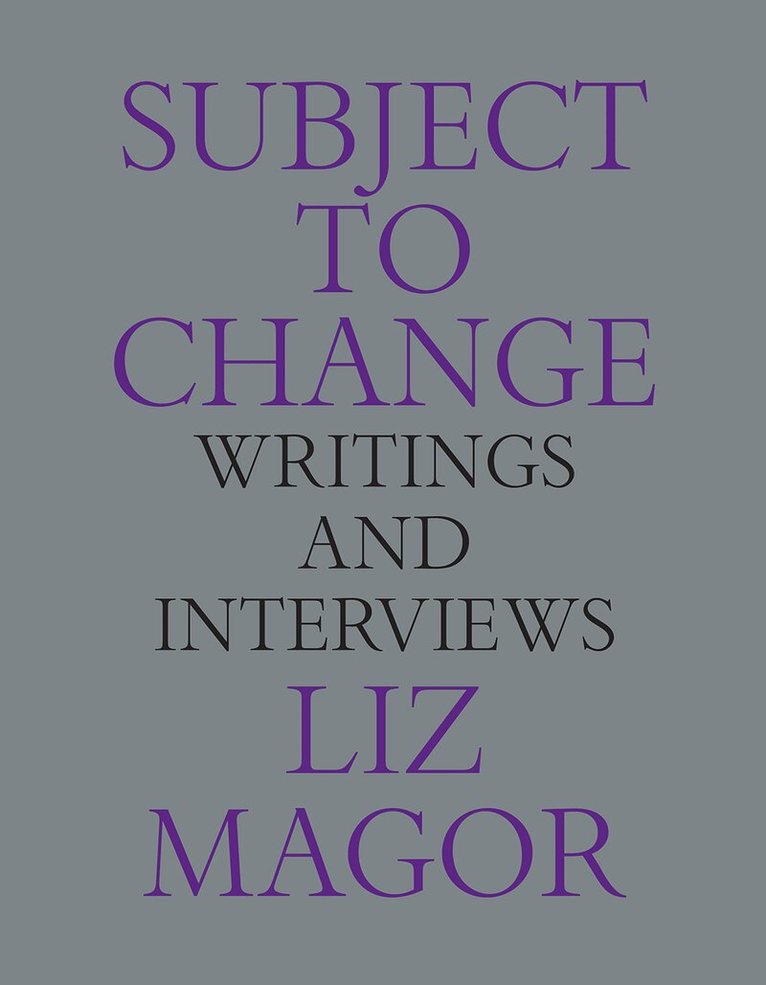
Subject to Change presents catalogue statements, essays, interviews, lecture notes, communications with gallerists and authors, and unpublished and out-of-print writings by Liz Magor, one of the most important contemporary artists of the last fifty years. As a writer, Magor uses narrative to make sense of her work, but she also turns and returns to themes over her career including subject/object relations and transformations; artist education and training; consumption and commodification; human attachment and relationships; and complexities of time, place, and situation, particularly her own as a feminist artist in a settler colonial society. This book is essential reading for anyone interested in Magor's practice, as well as the history of Canadian art since the 1970s.
Liz Magor (born 1948) is one of the most important Canadian artists of her generation and certainly Canada’s most influential sculptor of the past three decades. This publication offers an in-depth exploration of Magor’s sculpture and installation work, produced over the course of 40 years, emphasizing the thematic and emotional range of Magor’s practice.From the mental and physical contexts of retail consumerism to the spaces of the museum, to the private, interior worlds of addiction and desire, Magor’s oeuvre has consistently combined a high level of conceptual and procedural rigor with an intense investigation of materials, ranging from twigs and textiles to rubber and polymerized gypsum. This publication includes an interview with the artist and contributions by Dan Adler, Heike Munder, Bettina Steinbrügge, Ian Carr Harris, Géraldine Gourbe, Trevor Mahovsky, Isabelle Pauwels, Chris Sharpe and Corin Sworn.
In 2019, the Renaissance Society at the University of Chicago and the Carpenter Center for the Visual Arts, Harvard University co-organized an exhibition of a newly commissioned body of work by the Canadian artist Liz Magor. The accompanying publication, Liz Magor: BLOWOUT, is the artist’s first US catalog in ten years, and it features thorough photographic documentation of the new work, commissioned texts by Mitch Speed and Sheila Heti, and a conversation between the artist and curators Dan Byers and Solveig Øvstebø.For more than four decades, Magor’s practice has quietly dramatized the relationships that develop among objects, and she describes this body of work as “a collection of tiny and intense narratives.” Each written contribution responds in its own way to Magor’s new installations, which feature altered stuffed toys, bits of paper, and rat skins—sculptural “agents,” in the artist’s words—suspended in transparent Mylar box forms, and thirty-two pairs of secondhand shoes, each displayed within its own box amidst elaborate embellishments.
Subject to Change presents catalogue statements, essays, interviews, lecture notes, communications with gallerists and authors, and unpublished and out-of-print writings by Liz Magor, one of the most important contemporary artists of the last fifty years. As a writer, Magor uses narrative to make sense of her work, but she also turns and returns to themes over her career including subject/object relations and transformations; artist education and training; consumption and commodification; human attachment and relationships; and complexities of time, place, and situation, particularly her own as a feminist artist in a settler colonial society. This book is essential reading for anyone interested in Magor's practice, as well as the history of Canadian art since the 1970s.
Liz Magor (born 1948) is one of the most important Canadian artists of her generation and certainly Canada’s most influential sculptor of the past three decades. This publication offers an in-depth exploration of Magor’s sculpture and installation work, produced over the course of 40 years, emphasizing the thematic and emotional range of Magor’s practice.From the mental and physical contexts of retail consumerism to the spaces of the museum, to the private, interior worlds of addiction and desire, Magor’s oeuvre has consistently combined a high level of conceptual and procedural rigor with an intense investigation of materials, ranging from twigs and textiles to rubber and polymerized gypsum. This publication includes an interview with the artist and contributions by Dan Adler, Heike Munder, Bettina Steinbrügge, Ian Carr Harris, Géraldine Gourbe, Trevor Mahovsky, Isabelle Pauwels, Chris Sharpe and Corin Sworn.