Liz Moor - Böcker
Visar alla böcker från författaren Liz Moor. Handla med fri frakt och snabb leverans.
6 produkter
6 produkter
679 kr
Skickas inom 7-10 vardagar
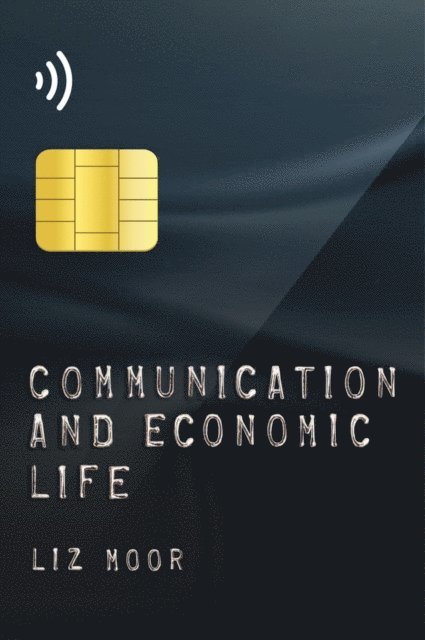
When we talk about media and the economy, 'the economy' is usually understood as the macro economy or GDP, while 'the media' usually refers to television and print news, or the digital output of mainstream news providers. But communication about money and the economy in everyday life is far more wide-ranging than this. It is also changing: opportunities to discuss economic matters – whether public or personal – have proliferated online, while new payment systems and shopping platforms embed economic behaviour more deeply into communications infrastructures.Challenging earlier narrow definitions, this ambitious book offers a new framework for thinking about the role of communication in our economic lives. Foregrounding the broader category of communicative practices, the book understands economic life not only in terms of the macro economy, but more sociologically as a set of processes of providing for material wants and needs. How we talk about these wants and needs, and our means for meeting them, is how we come to understand our economic lives as meaningful. The book explores how our economic lives are constructed communicatively in a variety of modes that move through, but also exceed, mass media – from the symbolism of credit cards to the language used by economists, and from social media promotion to debates in online forums.Communication and Economic Life is a vital resource for students and scholars in media and communications and sociology, and for anyone interested in how we talk about economic lives.
240 kr
Skickas inom 7-10 vardagar
When we talk about media and the economy, 'the economy' is usually understood as the macro economy or GDP, while 'the media' usually refers to television and print news, or the digital output of mainstream news providers. But communication about money and the economy in everyday life is far more wide-ranging than this. It is also changing: opportunities to discuss economic matters – whether public or personal – have proliferated online, while new payment systems and shopping platforms embed economic behaviour more deeply into communications infrastructures.Challenging earlier narrow definitions, this ambitious book offers a new framework for thinking about the role of communication in our economic lives. Foregrounding the broader category of communicative practices, the book understands economic life not only in terms of the macro economy, but more sociologically as a set of processes of providing for material wants and needs. How we talk about these wants and needs, and our means for meeting them, is how we come to understand our economic lives as meaningful. The book explores how our economic lives are constructed communicatively in a variety of modes that move through, but also exceed, mass media – from the symbolism of credit cards to the language used by economists, and from social media promotion to debates in online forums.Communication and Economic Life is a vital resource for students and scholars in media and communications and sociology, and for anyone interested in how we talk about economic lives.
1 703 kr
Skickas inom 10-15 vardagar
Brands and logos are all around us - from the clothes we wear and the objects we buy, to the advertisements which cover our cities and the celebrities created by the media. We regard the brand as a new phenomenon, something born with the consumer society, but branding was born with civilization, its earliest examples dating to the Roman Empire.Branding is now a growing industry, applied not only to commodities but to charities, cities, the worlds of sport and entertainment, even government initiatives. Such is the ubiquity and power of branding that it is increasingly taken as a sign of the commodification of everyday life and the rapacity of corporate power. Examining the brand in history, the growth of national and global brands, the changing approaches of the branding industry and the exploration of new spaces for advertising, The Rise of Brands analyses exactly how brands develop and operate in contemporary society.
475 kr
Skickas inom 10-15 vardagar
Brands and logos are all around us - from the clothes we wear and the objects we buy, to the advertisements which cover our cities and the celebrities created by the media. We regard the brand as a new phenomenon, something born with the consumer society, but branding was born with civilization, its earliest examples dating to the Roman Empire.Branding is now a growing industry, applied not only to commodities but to charities, cities, the worlds of sport and entertainment, even government initiatives. Such is the ubiquity and power of branding that it is increasingly taken as a sign of the commodification of everyday life and the rapacity of corporate power. Examining the brand in history, the growth of national and global brands, the changing approaches of the branding industry and the exploration of new spaces for advertising, The Rise of Brands analyses exactly how brands develop and operate in contemporary society.
544 kr
Skickas inom 10-15 vardagar
Design and other creative industries not only shape our lives in numerous ways, providing 'cultural' goods such as films, music and magazines, but also shape the look and feel of everyday objects and spaces. The creative industries are also important economically; governments and businesses now make considerable efforts to manage creativity for a range of political and economic ends.Does the management of design conflict with traditional ideas of creative freedom and autonomy? How do government policies and business priorities influence the day-to-day practices of designers? And how far have the processes and purpose of creative work been changed by its new centrality to business and government? Bringing together case studies and material from a range of industries and contexts, as well as a series of interviews with practitioners, Design and Creativity provides a cutting-edge account of key trends in the creative industries at the start of the twenty-first century.
1 520 kr
Skickas inom 10-15 vardagar
Design and other creative industries not only shape our lives in numerous ways, providing 'cultural' goods such as films, music and magazines, but also shape the look and feel of everyday objects and spaces. The creative industries are also important economically; governments and businesses now make considerable efforts to manage creativity for a range of political and economic ends.Does the management of design conflict with traditional ideas of creative freedom and autonomy? How do government policies and business priorities influence the day-to-day practices of designers? And how far have the processes and purpose of creative work been changed by its new centrality to business and government? Bringing together case studies and material from a range of industries and contexts, as well as a series of interviews with practitioners, Design and Creativity provides a cutting-edge account of key trends in the creative industries at the start of the twenty-first century.