Lluis Ribas de Pouplana - Böcker
Visar alla böcker från författaren Lluis Ribas de Pouplana. Handla med fri frakt och snabb leverans.
3 produkter
3 produkter
1 819 kr
Skickas inom 7-10 vardagar
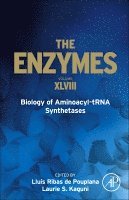
Biology of Aminoacyl-tRNA Synthetases, Volume 48 in The Enzymes series, highlights new advances in the field, with this new volume presenting interesting chapters on A narrative about our work on the endless frontier of editing, The puzzling evolution of aminoacyl-tRNA synthetases, Structural basis of the tRNA recognition by aminoacyl-tRNA synthetases, Catalytic strategies of aminoacyl-tRNA synthetases, Trans-editing by aminoacyl-tRNA synthetase-like editing domains, Adaptive and maladaptive mistranslation arising from aminoacyl-tRNA synthetases, Non-canonical inputs and outputs of tRNA aminoacylation, Structure and function of multi-tRNA synthetase complexes, Mitochondrial aminoacyl-tRNA synthetases, Non-canonical functions of human cytoplasmic tyrosyl-, tryptophanyl- and other aminoacyl-tRNA synthetases, and much more. Provides the authority and expertise of leading contributors from an international board of authors Presents the latest release in The Enzymes series
1 588 kr
Skickas inom 10-15 vardagar
Early Thoughts on RNA and the Origin of Life The full impact of the essential role of the nucleic acids in biological systems was forcefully demonstrated by the research community in the 1950s. Although Avery and his collaborators had identified DNA as the genetic material responsible for the transformation of bacteria in 1944, it was not until the early 1950s that the Hershey-Chase experiments provided a more direct demonstration of this role. Finally, the structural DNA double helix proposed by Watson and Crick in 1953 clearly created a structural frame work for the role of DNA as both information carrier and as a molecule that could undergo the necessary replication needed for daughter cells. Research continued by Kornberg and his colleagues in the mid-1950s emphasized the biochemistry and enzymology of DNA replication. At the same time, there was a growing interest in the role of RNA. The 1956 dis covery by David Davies and myself showed that polyadenylic acid and polyuridylic acid could form a double-helical RNA molecule but that it differed somewhat from DN A A large number of experiments were subsequendy carried out with synthetic polyribonucleotides which illustrated that RNA could form even more complicated helical structures in which the specificity of hydrogen bonding was the key element in determining the molecular conformation. Finally, in I960,1 could show that it was possible to make a hybrid helix.
1 585 kr
Skickas inom 10-15 vardagar
The Genetic Code and the Origin of Life celebrates the 50th anniversary of the discovery of the double helix. This book combines two complementary approaches to address the question of the development of the Genetic Code. The first chapters provide general perspectives into the most important features of the evolution of life and the code. The rest of the chapters provide detailed analyses on the features and evolution of independent components of the code. Thus the book combines a general overview with detailed descriptions. This volume provides a general reference for the academic audience interested in evolution and, simultaneously, consolidates our most detailed knowledge on the biological characteristics of the components of the genetic code.