Lois Wright - Böcker
Visar alla böcker från författaren Lois Wright. Handla med fri frakt och snabb leverans.
4 produkter
4 produkter
469 kr
Skickas inom 10-15 vardagar
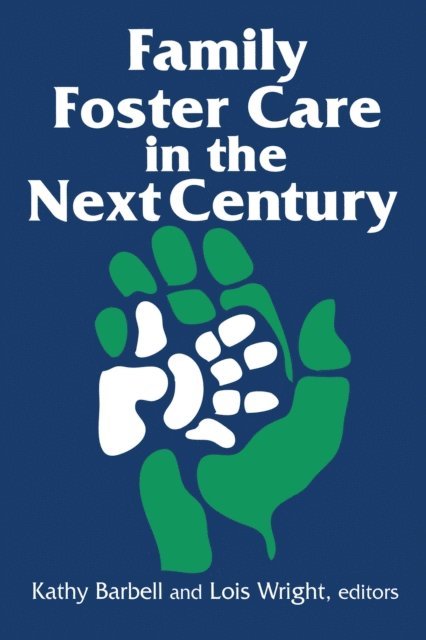
Family foster care is supposed to provide temporary protection and nurturing for children experiencing maltreatment. Although it has long been a critical service for millions of children in the United States, the increased attention given to this service in the last two decades has focused more on its inability to achieve its intended outcomes than on its successes. However, as social and political trends and new legislation reshape child welfare, policymakers and service providers continue to offer innovative policy and practice options for this child welfare service. Though use of the service has changed, family foster care remains important. Responding to a widespread sense of the "drifting" of children in care, Congress passed the Adoption Assistance and Child Welfare Act of 1980. This legislation became a key factor shaping the current status of family foster care. Its goal was to reduce reliance on out-of-home care and encourage use of preventive and reunification services; it also mandated that agencies engage in planning efforts for permanent solutions for foster children. Yet, despite federal mandates and funding, the child welfare system has continued to struggle to provide the level of services needed for children to reduce the amount of time children remain in temporary foster care. The latest response to these problems, the Adoption and Safe Families Act of 1997, established unequivocally that safety, permanency, and well-being were national goals for children in the child welfare system. To comply with the law, public and private agencies are required to initiate significant program and practice changes in the coming years to improve permanency outcomes and child well-being in family foster care. The central theme of the volume is accountability for outcomes, certainly a current driving force in child welfare as well as in other public and private service fields. This volume will be of interest to all concerned with the social welfare of children and families at the end of the twentieth century. Kathy Barbell is director of Foster Care of the Child Welfare League of America, Washington, DC. Lois Wright is assistant dean at the College of Social Work, University of South Carolina, Columbia.
1 449 kr
Skickas inom 7-10 vardagar
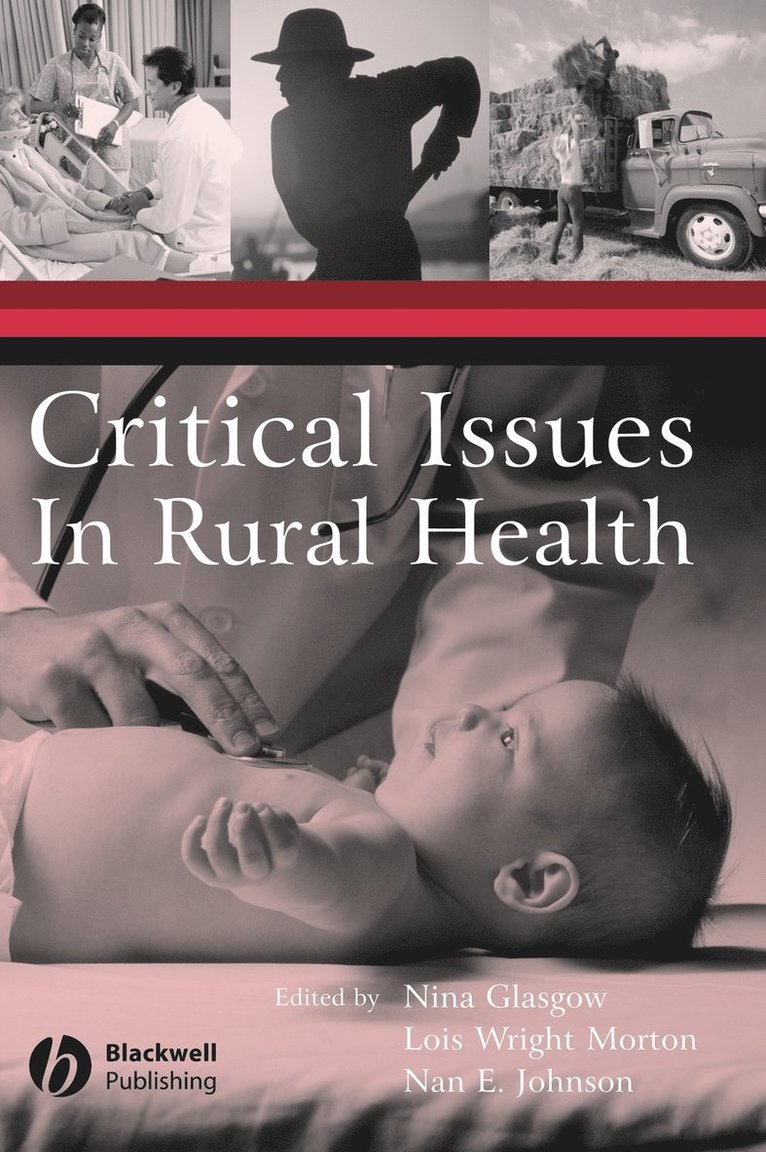
A large sector of the United States (U.S.) population. About 22 percent of Americans, approximately 55 million people, are considered “rural” residents. Rural people have a unique set of health issues; they experience social, cultural, and economic disadvantages that can increase their risk for adverse health consequences. The first text of its kind, Critical Issues in Rural Health, provides comprehensive sociological study of rural health and health care trends in the United States, by examining the health and well-being of rural populations at all stages of life. Editors Glasgow, Morton, and Johnson present integrative reviews of theory and research on rural health issues, with the most up-to-date statistics of empirical research. This informative and groundbreaking text goes beyond the scope of previous studies and emphasizes differences between rural and urban areas in health and health care. Surprisingly little research has examined the differences in disability and morality rates by residence or degree of rurality-this book does. In additon, contributing authors report on the impact of age or life stage, race and ethnicity, social class, rural occupations, and community structure on various health issues.
263 kr
Skickas inom 3-6 vardagar
1 325 kr
Skickas inom 10-15 vardagar
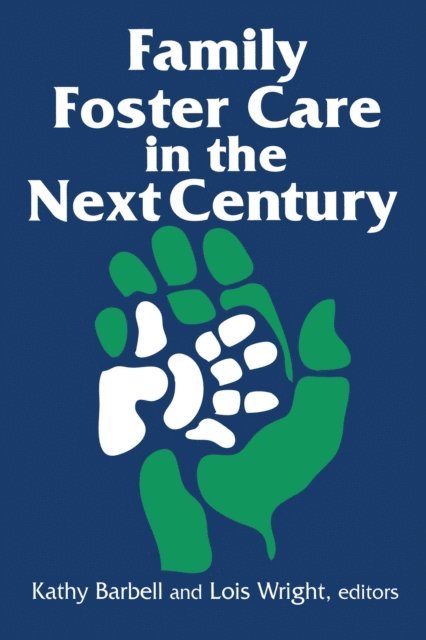
Family foster care is supposed to provide temporary protection and nurturing for children experiencing maltreatment. Although it has long been a critical service for millions of children in the United States, the increased attention given to this service in the last two decades has focused more on its inability to achieve its intended outcomes than on its successes. However, as social and political trends and new legislation reshape child welfare, policymakers and service providers continue to offer innovative policy and practice options for this child welfare service. Though use of the service has changed, family foster care remains important. Responding to a widespread sense of the "drifting" of children in care, Congress passed the Adoption Assistance and Child Welfare Act of 1980. This legislation became a key factor shaping the current status of family foster care. Its goal was to reduce reliance on out-of-home care and encourage use of preventive and reunification services; it also mandated that agencies engage in planning efforts for permanent solutions for foster children. Yet, despite federal mandates and funding, the child welfare system has continued to struggle to provide the level of services needed for children to reduce the amount of time children remain in temporary foster care. The latest response to these problems, the Adoption and Safe Families Act of 1997, established unequivocally that safety, permanency, and well-being were national goals for children in the child welfare system. To comply with the law, public and private agencies are required to initiate significant program and practice changes in the coming years to improve permanency outcomes and child well-being in family foster care. The central theme of the volume is accountability for outcomes, certainly a current driving force in child welfare as well as in other public and private service fields. This volume will be of interest to all concerned with the social welfare of children and families at the end of the twentieth century. Kathy Barbell is director of Foster Care of the Child Welfare League of America, Washington, DC. Lois Wright is assistant dean at the College of Social Work, University of South Carolina, Columbia.