Lonna Rae Atkeson – författare
Visar alla böcker från författaren Lonna Rae Atkeson. Handla med fri frakt och snabb leverans.
6 produkter
6 produkter
E-bok
PDF, Engelska, 20181 816 kr
Läs direkt efter köp
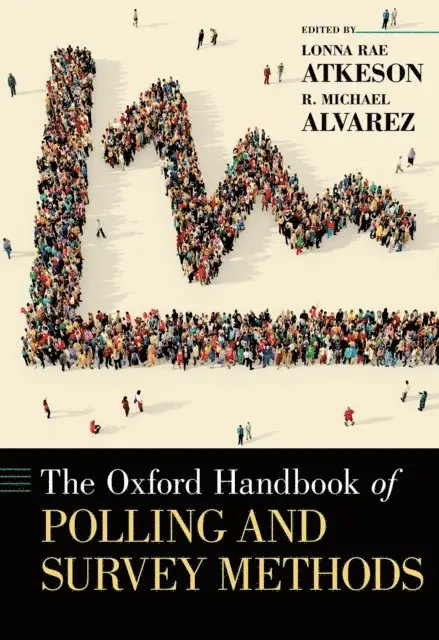
The methodologies used to study public opinion are now in flux. The primary polling method of the last half-century, the telephone survey, is rapidly becoming obsolete as a data collection method. At the same time, new methods of contacting potential respondents and obtaining their response are appearing, providing a variety of options for scholars and practitioners. Generally speaking, we are moving from a polling world that was largely interviewer driven over the phone and face-to-face to predominantly interviewer driven self-administered poll environments, New methods of data collection, however, must still deal with fundamental questions to polling methodology and total survey error including sampling, selection bias, non-response error, poststratification weighting, and questionnaire design features. The Oxford Handbook on Polling and Survey Methods brings together a unique mixture of academics and practitioners, from various backgrounds, academic disciplines, and experiences. In some sense, this is reflective of the interdisciplinary nature of the polling and survey industry: polls and surveys are widely used in academia, government, and the private sector. Designing, implementing, and analyzing high quality, accurate, and cost-effective polls and surveys requires a combination of skills and methodological perspectives. Despite the well-publicized issues that have cropped up in recent political polling, a great deal is known today about how to collect high quality polling and survey data even in complex and difficult environments. Divided into four main sections, the Handbook draws on the existing research and explores data collection methods. It then addresses data analysis and the methods available for combining polling data with other types of data. The next section covers analytic issues, including the new approaches to studying public opinion (ie social media, the analysis of open-ended questions using text analytic tools, and data imputation). The final section focuses on the presentation of polling results, an area where there is a great deal of innovation.A comprehensive overview of the topic, this volume highlights current polling trends provides ideas for the development of new and better approaches for measuring, modeling, and visualizing public opinion and social behavior.
E-bok
Engelska, 20181 752 kr
Läs direkt efter köp
The methodologies used to study public opinion are now in flux. The primary polling method of the last half-century, the telephone survey, is rapidly becoming obsolete as a data collection method. At the same time, new methods of contacting potential respondents and obtaining their response are appearing, providing a variety of options for scholars and practitioners. Generally speaking, we are moving from a polling world that was largely interviewer driven over the phone and face-to-face to predominantly interviewer driven self-administered poll environments, New methods of data collection, however, must still deal with fundamental questions to polling methodology and total survey error including sampling, selection bias, non-response error, poststratification weighting, and questionnaire design features. The Oxford Handbook on Polling and Survey Methods brings together a unique mixture of academics and practitioners, from various backgrounds, academic disciplines, and experiences. In some sense, this is reflective of the interdisciplinary nature of the polling and survey industry: polls and surveys are widely used in academia, government, and the private sector. Designing, implementing, and analyzing high quality, accurate, and cost-effective polls and surveys requires a combination of skills and methodological perspectives. Despite the well-publicized issues that have cropped up in recent political polling, a great deal is known today about how to collect high quality polling and survey data even in complex and difficult environments. Divided into four main sections, the Handbook draws on the existing research and explores data collection methods. It then addresses data analysis and the methods available for combining polling data with other types of data. The next section covers analytic issues, including the new approaches to studying public opinion (ie social media, the analysis of open-ended questions using text analytic tools, and data imputation). The final section focuses on the presentation of polling results, an area where there is a great deal of innovation.A comprehensive overview of the topic, this volume highlights current polling trends provides ideas for the development of new and better approaches for measuring, modeling, and visualizing public opinion and social behavior.
Inbunden, Engelska, 2012
1 285 kr
Skickas inom 7-10 vardagar
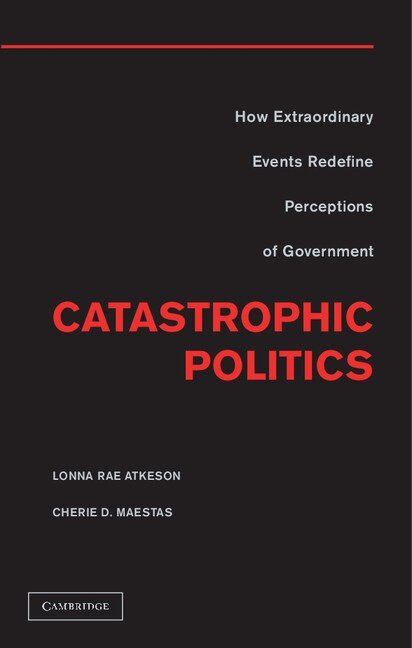
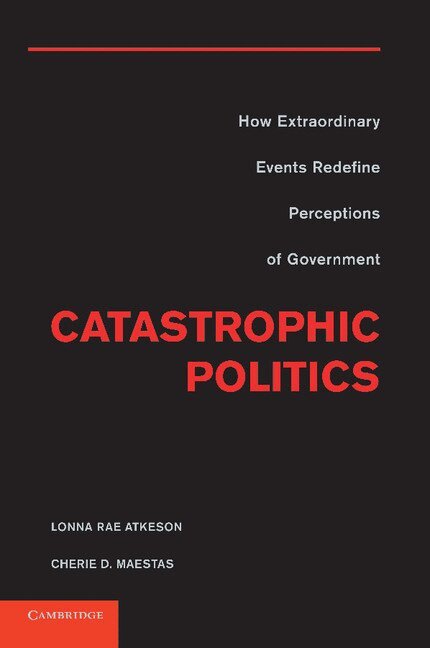
Shocking moments in society create an extraordinary political environment that permits political and opinion changes that are unlikely during times of normal politics. Strong emotions felt by the public during catastrophes - even if experienced only vicariously through media coverage - are a powerful motivator of public opinion and activism. This is particularly true when emotional reactions coincide with attributing blame to governmental agencies or officials. By examining public opinion during one extraordinary event, the aftermath of Hurricane Katrina, Lonna Rae Atkeson and Cherie D. Maestas show how media information interacts with emotion in shaping a wide range of political opinions about government and political leaders. Catastrophic events bring citizens together, provide common experiences and information, and create opinions that transcend traditional political boundaries. These moments encourage citizens to re-examine their understanding of government, its leaders and its role in a society from a less partisan perspective.
Inbunden, Engelska, 2012
1 070 kr
Skickas inom 7-10 vardagar
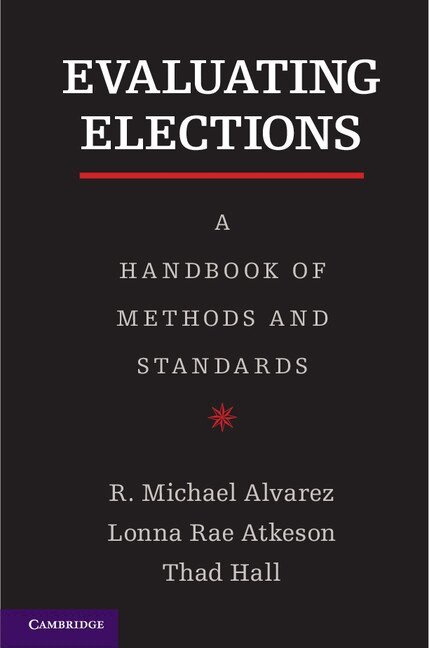
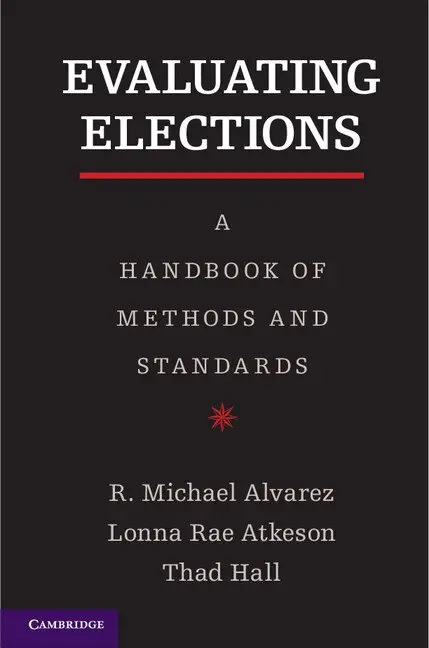
In competitive and contested democratic elections, insuring integrity is critical. Evaluating Elections shows why systematic analysis and reporting of election performance is important and how data-driven performance management can be used by election officials to improve elections. The authors outline how performance management systems can function in elections and their benefits for voters, candidates and political parties. Journalists, election administrators and even candidates often ask whether recent elections were run well, whether there were problems in the administration of a particular state's elections and how well elections were run across the country. The authors explain that such questions are difficult to answer because of the complexity of election administration and because there is currently no standard or accepted framework to assess the general quality of an election.
Häftad, Engelska, 2014
464 kr
Skickas inom 7-10 vardagar
Shocking moments in society create an extraordinary political environment that permits political and opinion changes that are unlikely during times of normal politics. Strong emotions felt by the public during catastrophes - even if experienced only vicariously through media coverage - are a powerful motivator of public opinion and activism. This is particularly true when emotional reactions coincide with attributing blame to governmental agencies or officials. By examining public opinion during one extraordinary event, the aftermath of Hurricane Katrina, Lonna Rae Atkeson and Cherie D. Maestas show how media information interacts with emotion in shaping a wide range of political opinions about government and political leaders. Catastrophic events bring citizens together, provide common experiences and information, and create opinions that transcend traditional political boundaries. These moments encourage citizens to re-examine their understanding of government, its leaders and its role in a society from a less partisan perspective.
Häftad, Engelska, 2012
333 kr
Skickas inom 7-10 vardagar
In competitive and contested democratic elections, insuring integrity is critical. Evaluating Elections shows why systematic analysis and reporting of election performance is important and how data-driven performance management can be used by election officials to improve elections. The authors outline how performance management systems can function in elections and their benefits for voters, candidates and political parties. Journalists, election administrators and even candidates often ask whether recent elections were run well, whether there were problems in the administration of a particular state's elections and how well elections were run across the country. The authors explain that such questions are difficult to answer because of the complexity of election administration and because there is currently no standard or accepted framework to assess the general quality of an election.