Lord Mawuko-Yevugah – författare
Visar alla böcker från författaren Lord Mawuko-Yevugah. Handla med fri frakt och snabb leverans.
10 produkter
10 produkter
Häftad, Engelska, 2017
749 kr
Skickas inom 10-15 vardagar
All over the world, there is growing concern about the ramifications of globalization, late-modernity and general global social and economic restructuring on the lives and futures of young people. Bringing together a wide body of research to reflect on youth responses to social change in Africa, this volume shows that while young people in the region face extraordinary social challenges in their everyday lives, they also continue to devise unique ways to reinvent their difficult circumstances and prosper in the midst of seismic global and local social changes. Contributors from Africa and around the world cover a wide range of topics on African youth cultures, exploring the lives of young people not necessarily as victims, but as active social players in the face of a shifting, late-modernist civilization. With empirical cases and varied theoretical approaches, the book offers a timely scholarly contribution to debates around globalization and its implications and impacts for Africa's youth.
Häftad, Engelska, 2016
801 kr
Skickas inom 10-15 vardagar
Global development actors such as the World Bank and the International Monetary Fund claim that the shift to the poverty reduction strategy framework and emphasis on local participation address the social cost of earlier adjustment programs and help put aid-receiving countries back in control of their own development agenda. Drawing on the case of Ghana, Lord Mawuko-Yevugah argues that this shift and the emphasis on partnerships between donors and poor countries, local participation, and country ownership simultaneously represents a substantive departure from earlier versions of neo-liberalism and an attempt by global development actors and local governing and social elites to justify, and legitimize the neo-liberal policy paradigm. This book shows how the new architecture of aid has important implications in three distinct but related ways: the discursive construction and production of post-colonial societies; the changing focus of Western aid and development policy interventions; and the reproduction of the politics of inclusive exclusion. The author provides detailed and original research on the new development paradigm and develops a critical theoretical approach to re-think conventional analyses of the new discourses on aid whilst offering a fresh, alternative interpretation of changes in international aid relations.
E-bok
Engelska, 2016892 kr
Läs direkt efter köp
Global development actors such as the World Bank and the International Monetary Fund claim that the shift to the poverty reduction strategy framework and emphasis on local participation address the social cost of earlier adjustment programs and help put aid-receiving countries back in control of their own development agenda. Drawing on the case of Ghana, Lord Mawuko-Yevugah argues that this shift and the emphasis on partnerships between donors and poor countries, local participation, and country ownership simultaneously represents a substantive departure from earlier versions of neo-liberalism and an attempt by global development actors and local governing and social elites to justify, and legitimize the neo-liberal policy paradigm. This book shows how the new architecture of aid has important implications in three distinct but related ways: the discursive construction and production of post-colonial societies; the changing focus of Western aid and development policy interventions; and the reproduction of the politics of inclusive exclusion. The author provides detailed and original research on the new development paradigm and develops a critical theoretical approach to re-think conventional analyses of the new discourses on aid whilst offering a fresh, alternative interpretation of changes in international aid relations.
E-bok
PDF, Engelska, 2016892 kr
Läs direkt efter köp
Global development actors such as the World Bank and the International Monetary Fund claim that the shift to the poverty reduction strategy framework and emphasis on local participation address the social cost of earlier adjustment programs and help put aid-receiving countries back in control of their own development agenda. Drawing on the case of Ghana, Lord Mawuko-Yevugah argues that this shift and the emphasis on partnerships between donors and poor countries, local participation, and country ownership simultaneously represents a substantive departure from earlier versions of neo-liberalism and an attempt by global development actors and local governing and social elites to justify, and legitimize the neo-liberal policy paradigm. This book shows how the new architecture of aid has important implications in three distinct but related ways: the discursive construction and production of post-colonial societies; the changing focus of Western aid and development policy interventions; and the reproduction of the politics of inclusive exclusion. The author provides detailed and original research on the new development paradigm and develops a critical theoretical approach to re-think conventional analyses of the new discourses on aid whilst offering a fresh, alternative interpretation of changes in international aid relations.
860 kr
Läs direkt efter köp
All over the world, there is growing concern about the ramifications of globalization, late-modernity and general global social and economic restructuring on the lives and futures of young people. Bringing together a wide body of research to reflect on youth responses to social change in Africa, this volume shows that while young people in the region face extraordinary social challenges in their everyday lives, they also continue to devise unique ways to reinvent their difficult circumstances and prosper in the midst of seismic global and local social changes. Contributors from Africa and around the world cover a wide range of topics on African youth cultures, exploring the lives of young people not necessarily as victims, but as active social players in the face of a shifting, late-modernist civilization. With empirical cases and varied theoretical approaches, the book offers a timely scholarly contribution to debates around globalization and its implications and impacts for Africa''s youth.
E-bok
PDF, Engelska, 2016860 kr
Läs direkt efter köp
All over the world, there is growing concern about the ramifications of globalization, late-modernity and general global social and economic restructuring on the lives and futures of young people. Bringing together a wide body of research to reflect on youth responses to social change in Africa, this volume shows that while young people in the region face extraordinary social challenges in their everyday lives, they also continue to devise unique ways to reinvent their difficult circumstances and prosper in the midst of seismic global and local social changes. Contributors from Africa and around the world cover a wide range of topics on African youth cultures, exploring the lives of young people not necessarily as victims, but as active social players in the face of a shifting, late-modernist civilization. With empirical cases and varied theoretical approaches, the book offers a timely scholarly contribution to debates around globalization and its implications and impacts for Africa''s youth.
Inbunden, Engelska, 2014
2 249 kr
Skickas inom 10-15 vardagar
Global development actors such as the World Bank and the International Monetary Fund claim that the shift to the poverty reduction strategy framework and emphasis on local participation address the social cost of earlier adjustment programs and help put aid-receiving countries back in control of their own development agenda. Drawing on the case of Ghana, Lord Mawuko-Yevugah argues that this shift and the emphasis on partnerships between donors and poor countries, local participation, and country ownership simultaneously represents a substantive departure from earlier versions of neo-liberalism and an attempt by global development actors and local governing and social elites to justify, and legitimize the neo-liberal policy paradigm. This book shows how the new architecture of aid has important implications in three distinct but related ways: the discursive construction and production of post-colonial societies; the changing focus of Western aid and development policy interventions; and the reproduction of the politics of inclusive exclusion. The author provides detailed and original research on the new development paradigm and develops a critical theoretical approach to re-think conventional analyses of the new discourses on aid whilst offering a fresh, alternative interpretation of changes in international aid relations.
Inbunden, Engelska, 2015
2 249 kr
Skickas inom 10-15 vardagar
All over the world, there is growing concern about the ramifications of globalization, late-modernity and general global social and economic restructuring on the lives and futures of young people. Bringing together a wide body of research to reflect on youth responses to social change in Africa, this volume shows that while young people in the region face extraordinary social challenges in their everyday lives, they also continue to devise unique ways to reinvent their difficult circumstances and prosper in the midst of seismic global and local social changes. Contributors from Africa and around the world cover a wide range of topics on African youth cultures, exploring the lives of young people not necessarily as victims, but as active social players in the face of a shifting, late-modernist civilization. With empirical cases and varied theoretical approaches, the book offers a timely scholarly contribution to debates around globalization and its implications and impacts for Africa's youth.
Häftad, Engelska, 2013
197 kr
Skickas inom 5-8 vardagar
E-bok
Engelska, 201338 kr
Läs direkt efter köp
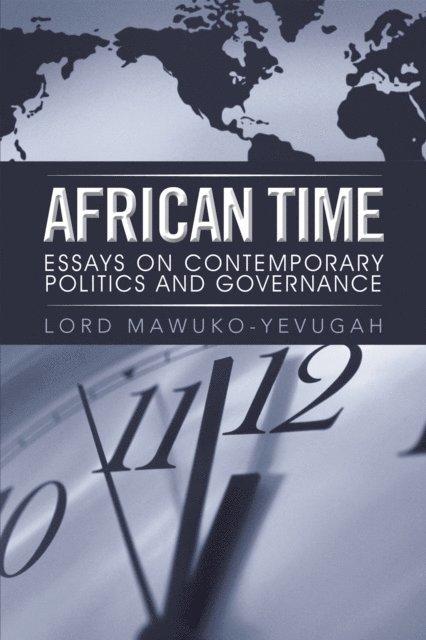
In this wide-ranging collection of essays, Mawuko-Yevugah explores the challenges of political reform and democratic governance in Africa at the beginning of the 21st Century, focusing largely on Ghanas experience. The inspiration for the title of the collection, AFRICAN TIME, comes from Kwame Nkrumahs pan-African optimism as well as from recent discourses around African Renaissance, Africas Century, Africa Rising, etc. At Ghanas founding in 1957, Nkrumah proclaimed: Our independence is meaningless unless it is linked up to the total liberation of the African continent. Today, from now on, there is a new African in the worldThat new African is ready to fight his own battles and show that after all, the black man is capable of managing his own affairs. That historic declaration, Mawuko-Yevugah argues, did not only set the tone and direction for Ghanas pan-African foreign policy but it has also made the country a reference point for Africas postcolonial tragedy in the form of political instability and economic decay. Exploring Ghanas recent strides in democratic consolidation within the context of fresh attempts to reinvent pan-Africanism and mainstream good governance on the continental development agenda, this book offers incisive, critical and a rare reflection on the changing landscape of contemporary African politics and governance through the eyes of a political journalist.