Lorenz M. Lüthi – författare
Visar alla böcker från författaren Lorenz M. Lüthi. Handla med fri frakt och snabb leverans.
10 produkter
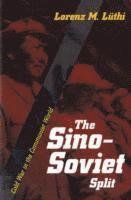
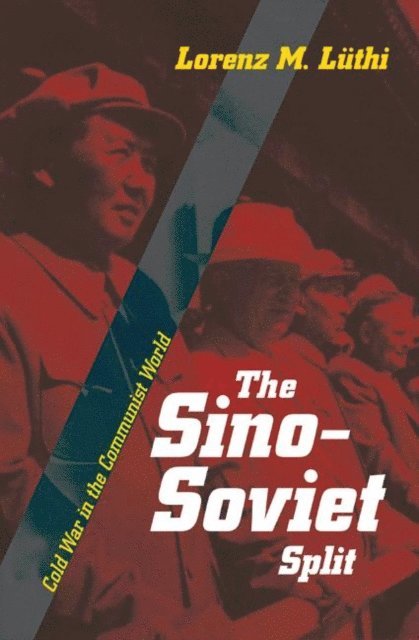
Sino-Soviet Split
Cold War in the Communist World
Häftad, 2008
792 kr
Lägg i varukorg
A decade after the Soviet Union and the People's Republic of China established their formidable alliance in 1950, escalating public disagreements between them broke the international communist movement apart. In The Sino-Soviet Split, Lorenz Luthi tells the story of this rupture, which became one …
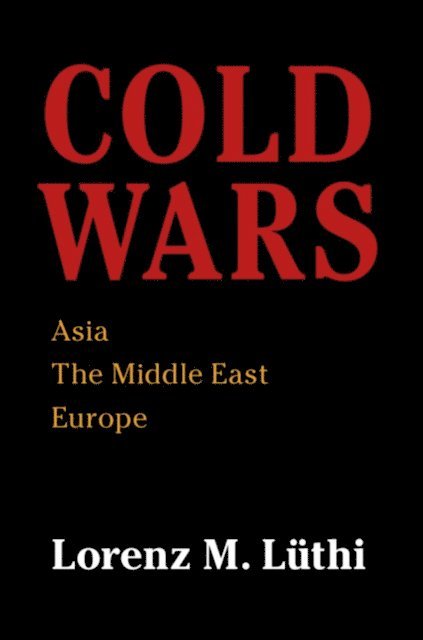
Cold Wars
Asia, the Middle East, Europe
E-bok, 2020
526 kr
Lägg i varukorg
What was the Cold War that shook world politics for the second half of the twentieth century? Standard narratives focus on Soviet-American rivalry as if the superpowers were the exclusive driving forces of the international system. Lorenz M. Lüthi offers a radically different account, restoring …
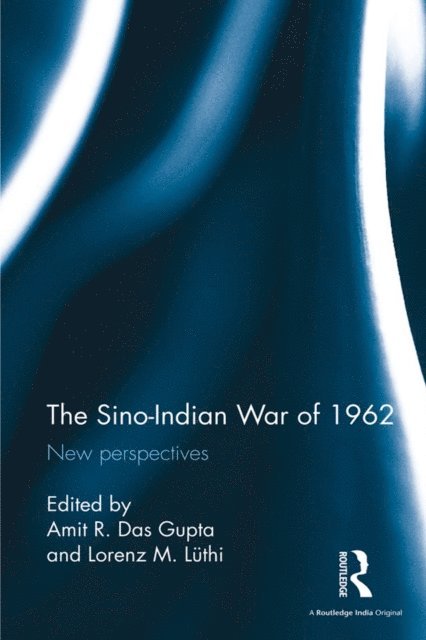
Sino-Indian War of 1962
New perspectives
Av Amit R. Das Gupta, Lorenz M. Lüthi
Häftad, 2019
747 kr
Lägg i varukorg
The Sino-Indian border war of 1962 forms a major landmark in South Asian, Asian and Cold War history. Among others, it resulted in an unresolved conflict permanently hindering rapprochement between China and India, the establishment of the Sino-Pakistani axis, the deepening of the Sino-Soviet split …
Cold Wars
Asia, the Middle East, Europe
E-bok, 2020
537 kr
Lägg i varukorg
What was the Cold War that shook world politics for the second half of the twentieth century? Standard narratives focus on Soviet-American rivalry as if the superpowers were the exclusive driving forces of the international system. Lorenz M. Lüthi offers a radically different account, restoring …
Sino-Indian War of 1962
New perspectives
Av Amit R. Das Gupta, Lorenz M. Lüthi
Inbunden, 2016
2826 kr
Lägg i varukorg
The Sino-Indian border war of 1962 forms a major landmark in South Asian, Asian and Cold War history. Among others, it resulted in an unresolved conflict permanently hindering rapprochement between China and India, the establishment of the Sino-Pakistani axis, the deepening of the Sino-Soviet split …
Sino-Indian War of 1962
New perspectives
Av Lorenz M. Luthi, Amit R. Das Gupta
E-bok, 2016
881 kr
Lägg i varukorg
The Sino-Indian border war of 1962 forms a major landmark in South Asian, Asian and Cold War history. Among others, it resulted in an unresolved conflict permanently hindering rapprochement between China and India, the establishment of the Sino-Pakistani axis, the deepening of the Sino-Soviet split …
Sino-Indian War of 1962
New perspectives
Av Lorenz M. Luthi, Amit R. Das Gupta
E-bok, 2016
910 kr
Lägg i varukorg
The Sino-Indian border war of 1962 forms a major landmark in South Asian, Asian and Cold War history. Among others, it resulted in an unresolved conflict permanently hindering rapprochement between China and India, the establishment of the Sino-Pakistani axis, the deepening of the Sino-Soviet split …
Sino-Soviet Split
Cold War in the Communist World
E-bok, 2010
663 kr
Lägg i varukorg
A decade after the Soviet Union and the People''s Republic of China established their formidable alliance in 1950, escalating public disagreements between them broke the international communist movement apart. In The Sino-Soviet Split , Lorenz Lüthi tells the story of this rupture, which became one …