Lori D. Patton – författare
589 kr
Läs direkt efter köp
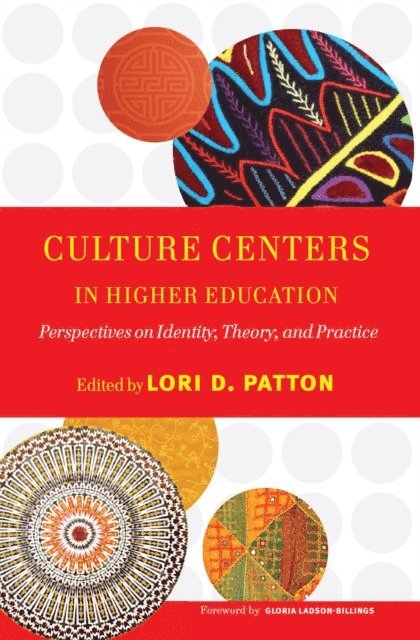
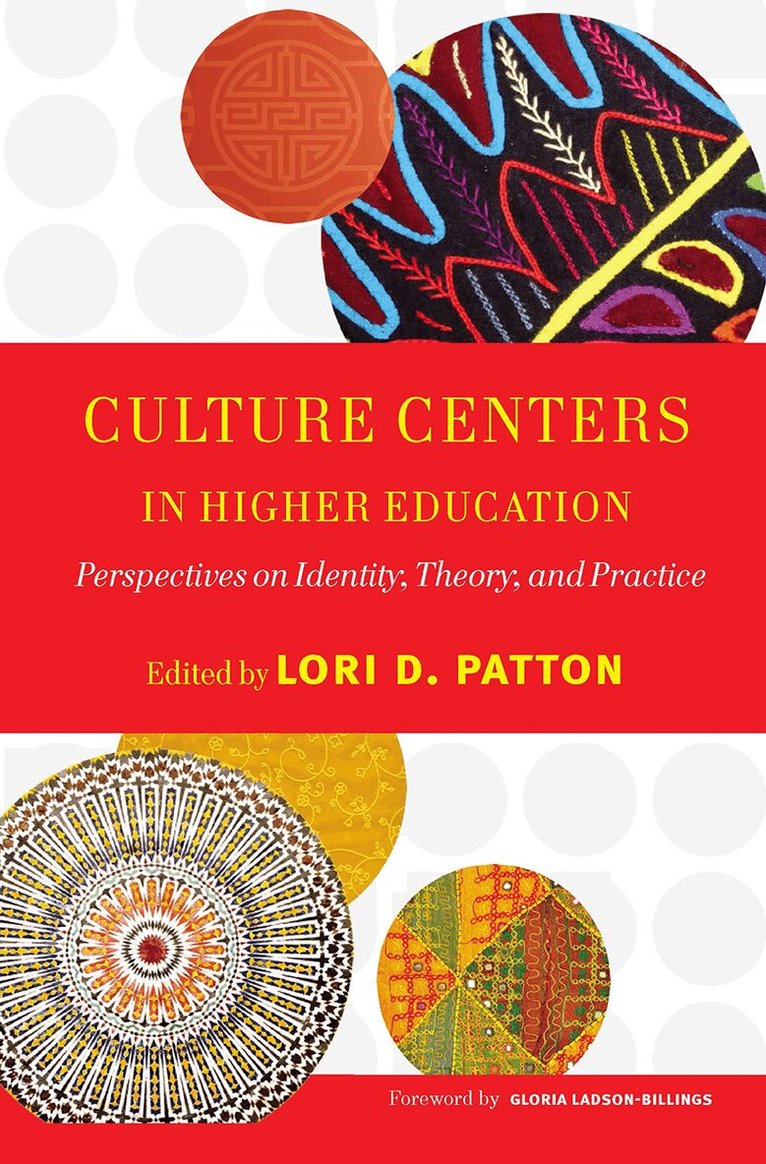
Are cultural centers ethnic enclaves of segregation, or safe havens that provide minority students with social support that promotes persistence and retention?Though Black cultural centers boast a 40-year history, there is much misinformation about them and the ethnic counterparts to which they gave rise. Moreover, little is known about their historical roots, current status, and future prospects. The literature has largely ignored the various culture center models, and the role that such centers play in the experiences of college students. This book fills a significant void in the research on ethnic minority cultural centers, offers the historic background to their establishment and development, considers the circumstances that led to their creation, examines the roles they play on campus, explores their impact on retention and campus climate, and provides guidelines for their management in the light of current issues and future directions.In the first part of this volume, the contributors provide perspectives on culture centers from the point of view of various racial/ethnic identity groups, Latina/o, Asian, American Indian, and African American. Part II offers theoretical perspectives that frame the role of culture centers from the point of view of critical race theory, student development theory, and a social justice framework. Part III focuses specifically on administrative and practice-oriented themes, addressing such issues as the relative merits of full- and part-time staff, of race/ethnic specific as opposed to multicultural centers, relations with the outside community, and integration with academic and student affairs to support the mission of the institution. For administrators and student affairs educators who are unfamiliar with these facilities, and want to support an increasingly diverse student body, this book situates such centers within the overall strategy of improving campus climate, and makes the case for sustaining them. Where none as yet exist, this book offers a rationale and blueprint for creating such centers. For leaders of culture centers this book constitutes a valuable tool for assessing their viability, improving their performance, and ensuring their future relevance – all considerations of increased importance when budgets and resources are strained. This book also provides a foundation for researchers interested in further investigating the role of these centers in higher education.
568 kr
Läs direkt efter köp
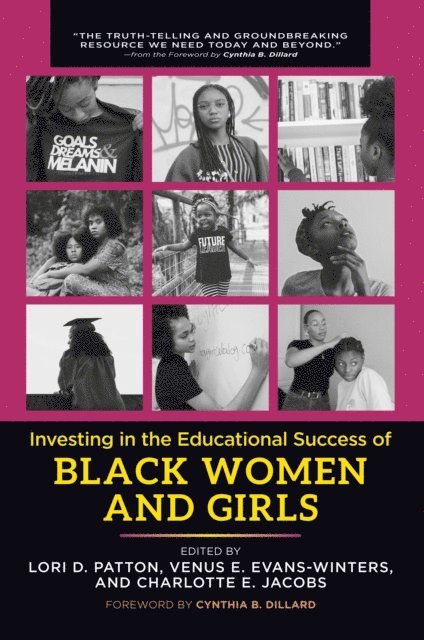
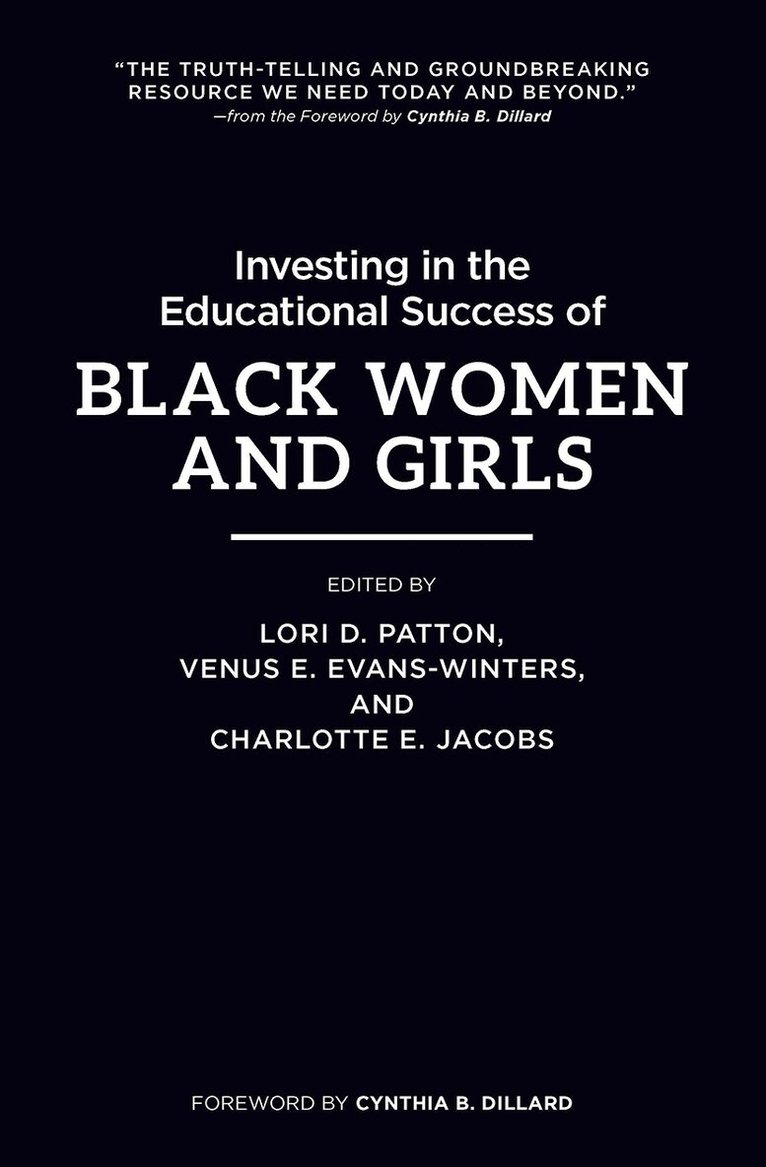
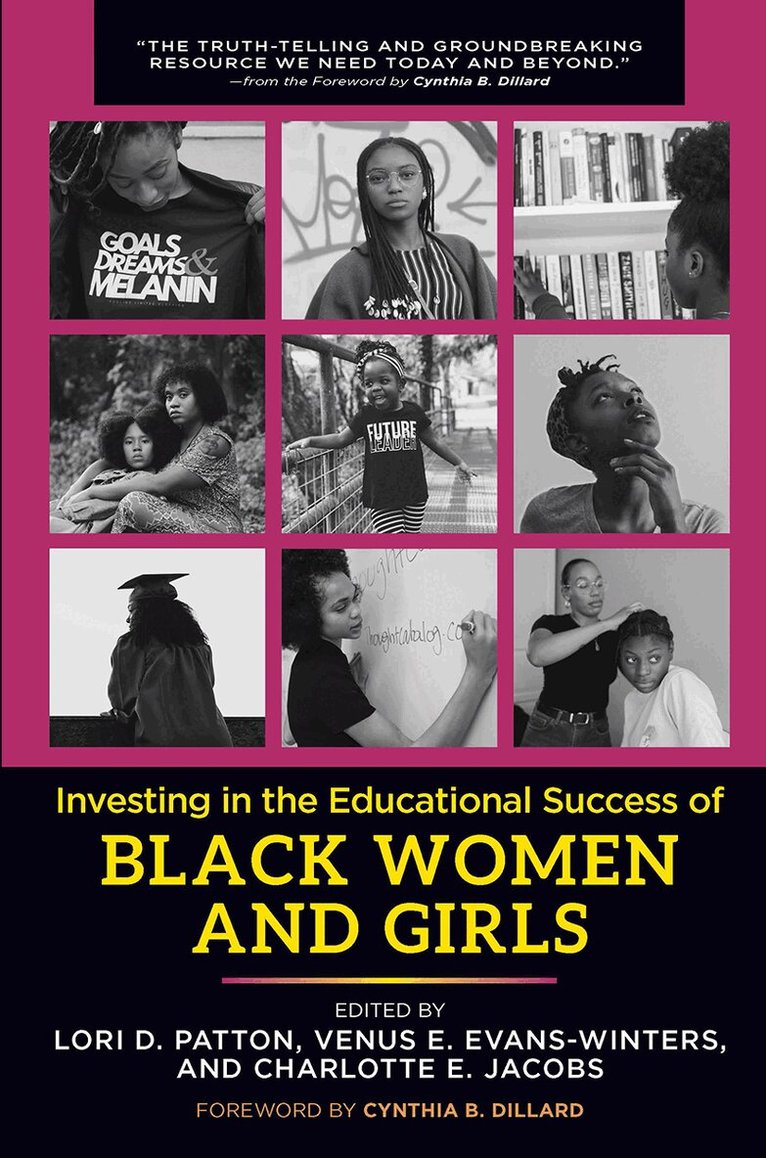
“In the powerful essays that make up Investing in the Educational Success of Black Women and Girls, Black women and girls are listened to, appreciated and valued in recognition of the unrelenting challenges to our existence in a world that continues to be committed to stifling our voices. What these authors know intimately is that such stifling is not because what Black women and girls are saying isn’t important: It is precisely because it is. This book names the challenges Black women and girls continue to experience as we pursue our education and offers implications and recommendations for practitioners, teachers, administrators, and policymakers. [It] needs to be read widely and deeply studied as much for its formations and beautiful representations of Black women and girls as its recommendations. It is the truth-telling we need today and a groundbreaking resource we need today and beyond.”—Cynthia B. Dillard (Nana Mansa II of Mpeasem, Ghana), Athens, Georgia; and Cape Coast, Central Region, GhanaWhile figures on Black women and girls’ degree attainment suggest that as a group they are achieving in society, the reality is that their experiences are far from monolithic, that the educational system from early on and through college imposes barriers and inequities, pushing many out of school, criminalizing their behavior, and leading to a high rate of incarceration.The purpose of this book is to illuminate scholarship on Black women and girls throughout the educational pipeline. The contributors--all Black women educators, scholars, and advocates--name the challenges Black women and girls face while pursuing their education as well as offer implications and recommendations for practitioners, policymakers, teachers, and administrators to consider in ensuring the success of Black women and girls.This book is divided into four sections, each identifying the barriers Black girls and women encounter at the stages of their education and offering strategies to promote their success and agency within and beyond educational contexts.In Part One, the contributors explore the importance of mattering for Black girls in terms of redefining success and joy; centering Black girl literacy pedagogies that encourage them to thrive; examining how to make STEM more accessible to them; and recounting how Black girls’ emotions and emotional literacy can either disempower them or promote their sense of agency to navigate educational contexts.Part Two uncovers the violence directed toward and the criminalization of Black women and girls, and how they are situated in educational and justice systems that collude to fail them. The contributors address incarceration and the process of rehabilitation and reentry; the outcomes of disciplinary action in schools on women who pursue college; and describe how the erasure and disregard of Black women and girls leaves them absent from the educational policies that deeply affect their lives and wellbeing.Part Three focuses on how Black women are left to navigate without resources that could make their collegiate pathways smoother; covers how hair politics impact their acceptance in college leadership roles, particularly at HBCUs; illuminates the importance of social/emotional and mental health for Black undergraduate women and the lack of adequate resources; and explores how women with disabilities navigate higher education.The final part of this book describes transformative approaches to supporting the educational needs of Black women and girls, including the use of a politicized ethic of care, intergenerational love and dialogue, and constructing communities, including digital environments, to ensure they thrive through their education and beyond.
589 kr
Läs direkt efter köp
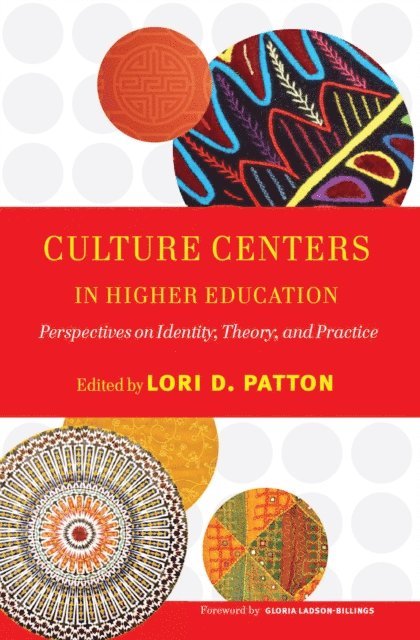
Are cultural centers ethnic enclaves of segregation, or safe havens that provide minority students with social support that promotes persistence and retention?Though Black cultural centers boast a 40-year history, there is much misinformation about them and the ethnic counterparts to which they gave rise. Moreover, little is known about their historical roots, current status, and future prospects. The literature has largely ignored the various culture center models, and the role that such centers play in the experiences of college students. This book fills a significant void in the research on ethnic minority cultural centers, offers the historic background to their establishment and development, considers the circumstances that led to their creation, examines the roles they play on campus, explores their impact on retention and campus climate, and provides guidelines for their management in the light of current issues and future directions.In the first part of this volume, the contributors provide perspectives on culture centers from the point of view of various racial/ethnic identity groups, Latina/o, Asian, American Indian, and African American. Part II offers theoretical perspectives that frame the role of culture centers from the point of view of critical race theory, student development theory, and a social justice framework. Part III focuses specifically on administrative and practice-oriented themes, addressing such issues as the relative merits of full- and part-time staff, of race/ethnic specific as opposed to multicultural centers, relations with the outside community, and integration with academic and student affairs to support the mission of the institution. For administrators and student affairs educators who are unfamiliar with these facilities, and want to support an increasingly diverse student body, this book situates such centers within the overall strategy of improving campus climate, and makes the case for sustaining them. Where none as yet exist, this book offers a rationale and blueprint for creating such centers. For leaders of culture centers this book constitutes a valuable tool for assessing their viability, improving their performance, and ensuring their future relevance – all considerations of increased importance when budgets and resources are strained. This book also provides a foundation for researchers interested in further investigating the role of these centers in higher education.
588 kr
Läs direkt efter köp
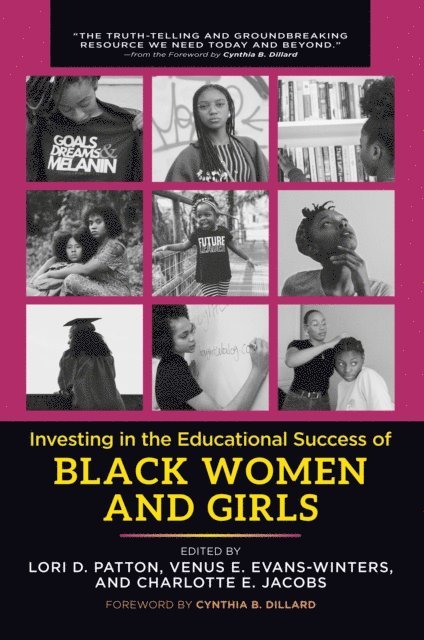
“In the powerful essays that make up Investing in the Educational Success of Black Women and Girls, Black women and girls are listened to, appreciated and valued in recognition of the unrelenting challenges to our existence in a world that continues to be committed to stifling our voices. What these authors know intimately is that such stifling is not because what Black women and girls are saying isn’t important: It is precisely because it is. This book names the challenges Black women and girls continue to experience as we pursue our education and offers implications and recommendations for practitioners, teachers, administrators, and policymakers. [It] needs to be read widely and deeply studied as much for its formations and beautiful representations of Black women and girls as its recommendations. It is the truth-telling we need today and a groundbreaking resource we need today and beyond.”—Cynthia B. Dillard (Nana Mansa II of Mpeasem, Ghana), Athens, Georgia; and Cape Coast, Central Region, GhanaWhile figures on Black women and girls’ degree attainment suggest that as a group they are achieving in society, the reality is that their experiences are far from monolithic, that the educational system from early on and through college imposes barriers and inequities, pushing many out of school, criminalizing their behavior, and leading to a high rate of incarceration.The purpose of this book is to illuminate scholarship on Black women and girls throughout the educational pipeline. The contributors--all Black women educators, scholars, and advocates--name the challenges Black women and girls face while pursuing their education as well as offer implications and recommendations for practitioners, policymakers, teachers, and administrators to consider in ensuring the success of Black women and girls.This book is divided into four sections, each identifying the barriers Black girls and women encounter at the stages of their education and offering strategies to promote their success and agency within and beyond educational contexts.In Part One, the contributors explore the importance of mattering for Black girls in terms of redefining success and joy; centering Black girl literacy pedagogies that encourage them to thrive; examining how to make STEM more accessible to them; and recounting how Black girls’ emotions and emotional literacy can either disempower them or promote their sense of agency to navigate educational contexts.Part Two uncovers the violence directed toward and the criminalization of Black women and girls, and how they are situated in educational and justice systems that collude to fail them. The contributors address incarceration and the process of rehabilitation and reentry; the outcomes of disciplinary action in schools on women who pursue college; and describe how the erasure and disregard of Black women and girls leaves them absent from the educational policies that deeply affect their lives and wellbeing.Part Three focuses on how Black women are left to navigate without resources that could make their collegiate pathways smoother; covers how hair politics impact their acceptance in college leadership roles, particularly at HBCUs; illuminates the importance of social/emotional and mental health for Black undergraduate women and the lack of adequate resources; and explores how women with disabilities navigate higher education.The final part of this book describes transformative approaches to supporting the educational needs of Black women and girls, including the use of a politicized ethic of care, intergenerational love and dialogue, and constructing communities, including digital environments, to ensure they thrive through their education and beyond.
928 kr
Läs direkt efter köp
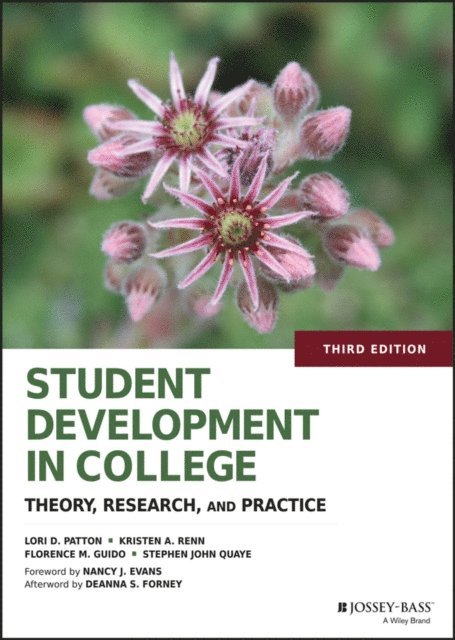
THE ESSENTIAL STUDENT DEVELOPMENT REFERENCE, UPDATED WITH CUTTING-EDGE THEORY AND PRACTICE
Student Development in College is the go-to resource for student affairs, and is considered a key reference for those most committed to conscious and intentional student affairs practice. This third edition includes new chapters on social class, disability, and emerging identity theories, with expanded coverage of faith and gender identity. A new framework provides guidance for facilitating dialogues about theory, teaching theory, and the importance of educators as consumers of theory. Discussion questions conclude each chapter and vignettes are woven throughout to provide practical context for theory. Learning activities in the appendix promote comprehension and application of theory.
Get updated on the latest in student development theory and application Consider both the psychosocial and cognitive aspects of identity Learn strategies for difficult dialogues, and the importance of reflection Adopt an integrated, holistic approach to complex student development issuesStudent Development in College is the ideal resource for today''s multifaceted student affairs role.
"With five new or expanded chapters and critical updates throughout the text, this third edition expertly presents the complex, multifaceted, and continually evolving nature of the theories that inform scholars and professionals in their research and practice with college students. These authors, consummately aware of the needs of emerging and continuing student affairs professionals, have crafted a text that will be both eminently practical and intellectually engaging for graduate students, professionals, and faculty alike." Dafina-Lazarus Stewart, associate professor, higher education and student affairs, Bowling Green State University
"This third edition of Student Development in College beautifully presents the theoretical terrain of student development by honoring the foundational theories upon which the field was developed and foregrounding newer theories with brand new content and fresh perspectives. The result is a text that is comprehensive, sophisticated, and accessibleand one that is attuned to the contemporary realities of the complexities of student development." Susan R. Jones, professor, higher education and student affairs, The Ohio State University
832 kr
Skickas inom 5-8 vardagar
954 kr
Läs direkt efter köp
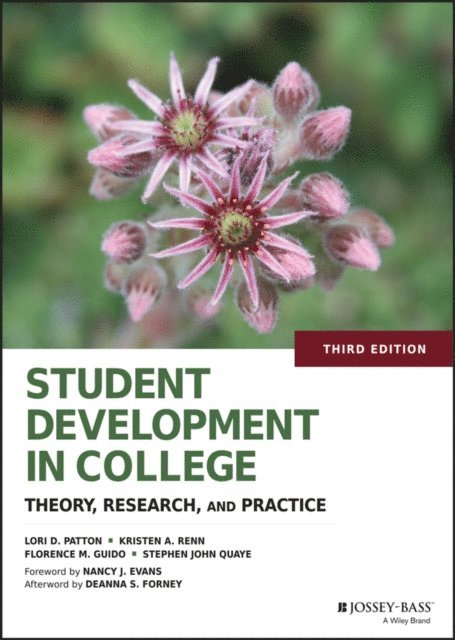
THE ESSENTIAL STUDENT DEVELOPMENT REFERENCE, UPDATED WITH CUTTING-EDGE THEORY AND PRACTICE
Student Development in College is the go-to resource for student affairs, and is considered a key reference for those most committed to conscious and intentional student affairs practice. This third edition includes new chapters on social class, disability, and emerging identity theories, with expanded coverage of faith and gender identity. A new framework provides guidance for facilitating dialogues about theory, teaching theory, and the importance of educators as consumers of theory. Discussion questions conclude each chapter and vignettes are woven throughout to provide practical context for theory. Learning activities in the appendix promote comprehension and application of theory.
Get updated on the latest in student development theory and application Consider both the psychosocial and cognitive aspects of identity Learn strategies for difficult dialogues, and the importance of reflection Adopt an integrated, holistic approach to complex student development issuesStudent Development in College is the ideal resource for today''s multifaceted student affairs role.
"With five new or expanded chapters and critical updates throughout the text, this third edition expertly presents the complex, multifaceted, and continually evolving nature of the theories that inform scholars and professionals in their research and practice with college students. These authors, consummately aware of the needs of emerging and continuing student affairs professionals, have crafted a text that will be both eminently practical and intellectually engaging for graduate students, professionals, and faculty alike." Dafina-Lazarus Stewart, associate professor, higher education and student affairs, Bowling Green State University
"This third edition of Student Development in College beautifully presents the theoretical terrain of student development by honoring the foundational theories upon which the field was developed and foregrounding newer theories with brand new content and fresh perspectives. The result is a text that is comprehensive, sophisticated, and accessibleand one that is attuned to the contemporary realities of the complexities of student development." Susan R. Jones, professor, higher education and student affairs, The Ohio State University
2 888 kr
Skickas inom 10-15 vardagar
693 kr
Skickas inom 10-15 vardagar
784 kr
Läs direkt efter köp
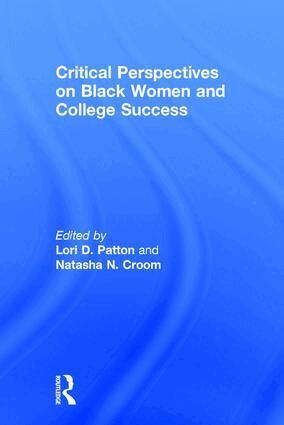
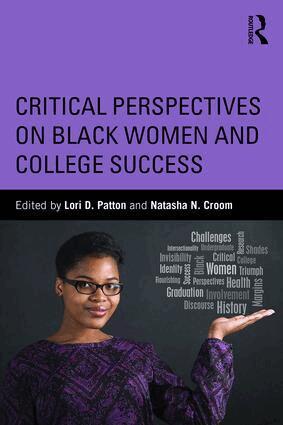
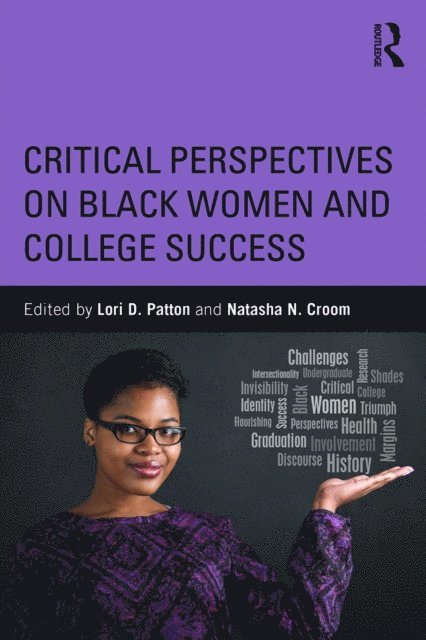
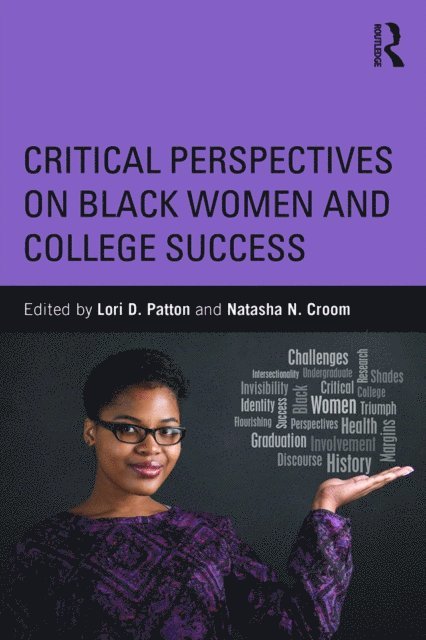
In this comprehensive volume, research-based chapters examine the experiences that have shaped college life for Black undergraduate women, and invite readers to grapple with the current myths and definitions that are shaping the discourses surrounding them. Chapter authors ask valuable questions that are critical for advancing the participation and success of Black women in higher education settings and also provide actionable recommendations to enhance their educational success. Perspectives about Black undergraduate women from various facets of the higher education spectrum are included, sharing their experiences in academic and social settings, issues of identity, intersectionality, and the services and support systems that contribute to their success in college, and beyond. Presenting comprehensive, theoretically grounded, and thought-provoking scholarship, Critical Perspectives on Black Women and College Success is a definitive resource for scholarship and research on Black undergraduate women.
784 kr
Läs direkt efter köp
In this comprehensive volume, research-based chapters examine the experiences that have shaped college life for Black undergraduate women, and invite readers to grapple with the current myths and definitions that are shaping the discourses surrounding them. Chapter authors ask valuable questions that are critical for advancing the participation and success of Black women in higher education settings and also provide actionable recommendations to enhance their educational success. Perspectives about Black undergraduate women from various facets of the higher education spectrum are included, sharing their experiences in academic and social settings, issues of identity, intersectionality, and the services and support systems that contribute to their success in college, and beyond. Presenting comprehensive, theoretically grounded, and thought-provoking scholarship, Critical Perspectives on Black Women and College Success is a definitive resource for scholarship and research on Black undergraduate women.
1 214 kr
Skickas inom 5-8 vardagar
460 kr
Skickas inom 5-8 vardagar
2 366 kr
Skickas inom 10-15 vardagar
501 kr
Skickas inom 10-15 vardagar
2 366 kr
Skickas inom 10-15 vardagar
528 kr
Skickas inom 10-15 vardagar
313 kr
Skickas inom 5-8 vardagar
1 285 kr
Skickas inom 5-8 vardagar