
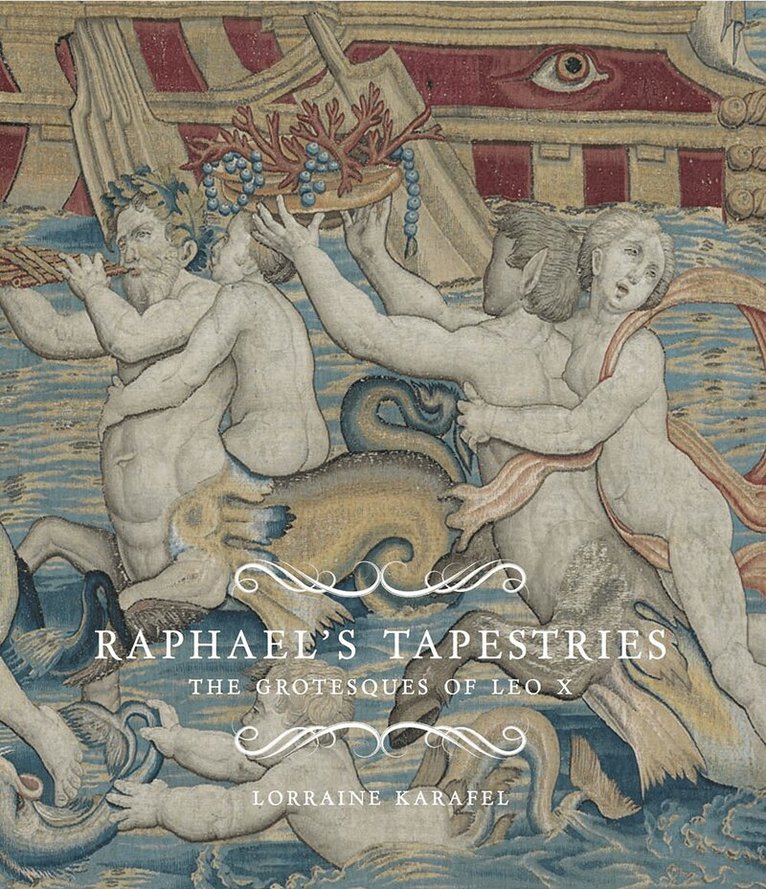
Around 1515, Raphael (1483-1520) designed a set of tapestries for Leo X, the first Medici pope. Each was sumptuously woven in gold, silver, and silk, and depicted scenes from classical mythology with inventive grotesques. Now lost, these spectacular, grand-scale textiles are reconstructed in Raphael’s Tapestries and set among a series of unprecedented decorative projects that Pope Leo commissioned from the artist. Likely produced by the Brussels weaver Pieter van Aelst, the tapestries pioneered a new all’antica style analogous with contemporary painted and sculpted interior programs. Tapestries played a central role at Leo’s court, as spectacle and as propaganda, and the Grotesques of Leo X would inform tapestry design for the next three centuries. Their beauty and complexity rivaled those of contemporary painting, and their luxurious materials made them highly prized. With this new study, the Grotesques take their rightful place as Renaissance masterworks and as documents of the fervent humanist culture of early 16th-century Rome.
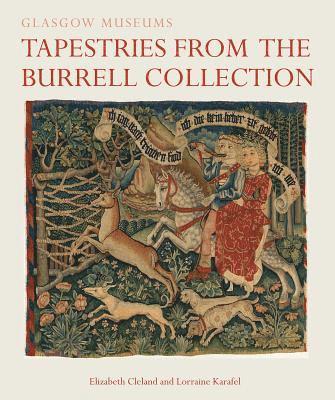
Lavishly illustrated, this book presents comprehensive entries for each of the tapestries in the Burrell CollectionNew research by an international team of experts details how, where, when and why these tapestries were made. By analysing their raw materials and identifying the quirks of their weavers’ techniques, by exploring their subject matter and design sources, occasionally linking them with named designers and weavers, and by discussing their original patrons and owners, each of the entries unveils the unique treasures within the Burrell’s tapestry collection.This is an informative survey of medieval, Renaissance and early modern European tapestries, including key examples from all the major production centres, celebrating the medium’s significance and appeal for its original audiences. The collection’s remarkable survival, remaining together as a group, also provides an unparalleled opportunity to enjoy the tastes, and the opportunities, available to an enlightened early twentieth-century collector such as Burrell, acquiring his tapestries during one of the most intense and exciting eras of modern collecting history.The catalogue is prefaced by an essay on Burrell as a collector of tapestries and another on the history of the maintenance and care of tapestries. Appendices provide details of the dealers from whom Burrell bought the tapestries and on other noted collectors amongst his contemporaries. Illustrated conservation essays, a full bibliography and an index complete the volume.The resulting work provides a record of a major collection which will become a benchmark for future research and interpretation of tapestries of the period.
Around 1515, Raphael (1483-1520) designed a set of tapestries for Leo X, the first Medici pope. Each was sumptuously woven in gold, silver, and silk, and depicted scenes from classical mythology with inventive grotesques. Now lost, these spectacular, grand-scale textiles are reconstructed in Raphael’s Tapestries and set among a series of unprecedented decorative projects that Pope Leo commissioned from the artist. Likely produced by the Brussels weaver Pieter van Aelst, the tapestries pioneered a new all’antica style analogous with contemporary painted and sculpted interior programs. Tapestries played a central role at Leo’s court, as spectacle and as propaganda, and the Grotesques of Leo X would inform tapestry design for the next three centuries. Their beauty and complexity rivaled those of contemporary painting, and their luxurious materials made them highly prized. With this new study, the Grotesques take their rightful place as Renaissance masterworks and as documents of the fervent humanist culture of early 16th-century Rome.
Lavishly illustrated, this book presents comprehensive entries for each of the tapestries in the Burrell CollectionNew research by an international team of experts details how, where, when and why these tapestries were made. By analysing their raw materials and identifying the quirks of their weavers’ techniques, by exploring their subject matter and design sources, occasionally linking them with named designers and weavers, and by discussing their original patrons and owners, each of the entries unveils the unique treasures within the Burrell’s tapestry collection.This is an informative survey of medieval, Renaissance and early modern European tapestries, including key examples from all the major production centres, celebrating the medium’s significance and appeal for its original audiences. The collection’s remarkable survival, remaining together as a group, also provides an unparalleled opportunity to enjoy the tastes, and the opportunities, available to an enlightened early twentieth-century collector such as Burrell, acquiring his tapestries during one of the most intense and exciting eras of modern collecting history.The catalogue is prefaced by an essay on Burrell as a collector of tapestries and another on the history of the maintenance and care of tapestries. Appendices provide details of the dealers from whom Burrell bought the tapestries and on other noted collectors amongst his contemporaries. Illustrated conservation essays, a full bibliography and an index complete the volume.The resulting work provides a record of a major collection which will become a benchmark for future research and interpretation of tapestries of the period.