LorraineByrne Bodley – författare
Visar alla böcker från författaren . Handla med fri frakt och snabb leverans.
7 produkter
7 produkter
Häftad, Engelska, 2016
383 kr
Skickas inom 10-15 vardagar
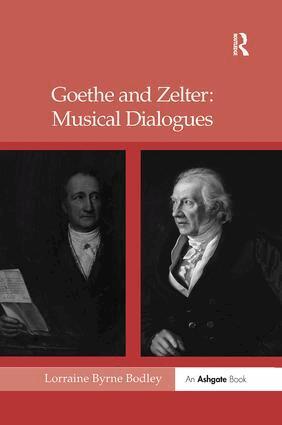
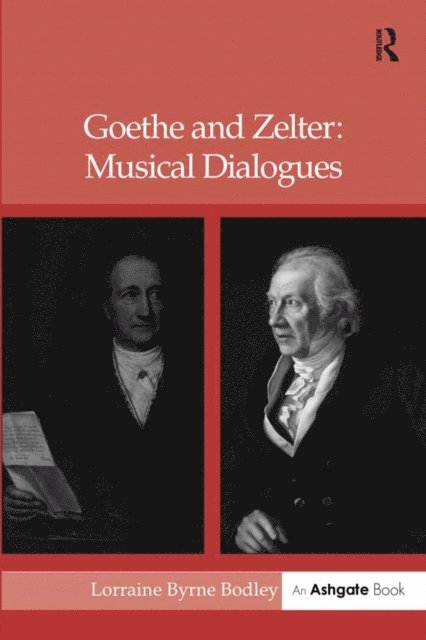
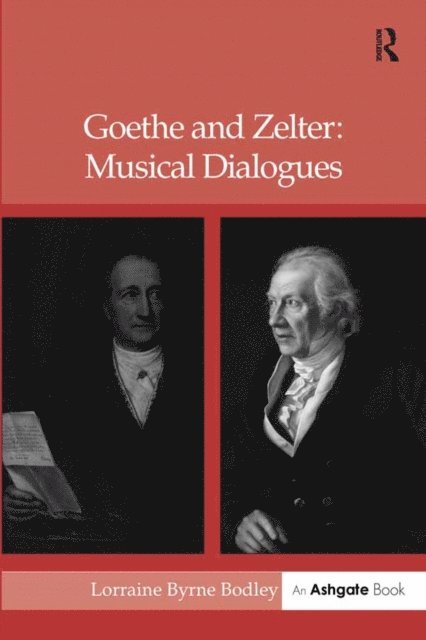
Goethe and Zelter spent a staggering 33 years corresponding or in the case of each artist, over two thirds of their lives. Zelter's position as director of the Sing-Akademie zu Berlin and Goethe's location in Weimar resulted in a wide-ranging correspondence. Goethe's letters offer a chronicle of his musical development, from the time of his journey to Italy to the final months of his life. Zelter's letters retrace his path as stonemason to Professor of Music in Berlin. The 891 letters that passed between these artists provide an important musical record of the music performed in public concerts in Berlin and in the private and semi-public soirées of the Weimar court. Their letters are those of men actively engaged in the musical developments of their time. The legacy contains a wide spectrum of letters, casual and thoughtfully composed, spontaneous and written for publication, rich with the details of Goethe's and Zelter's musical lives. Through Zelter, Goethe gained access to the professional music world he craved and became acquainted with the prodigious talent of Felix Mendelssohn. A single letter from Zelter might bear a letter from Felix Mendelssohn to another recipient of the same family, reflecting a certain community in the Mendelssohn household where letters were not considered private but shared with others in a circle of friends or family. Goethe recognized the value of such correspondence: he complains when his friend is slow to send letters in return for those written to him by the poet, a complaint common in this written culture where letters provided news, introductions, literary and musical works. This famous correspondence contains a medley of many issues in literature, art, and science; but the main focus of this translation is the music dialogues of these artists.
Inbunden, Engelska, 2009
846 kr
Skickas inom 10-15 vardagar
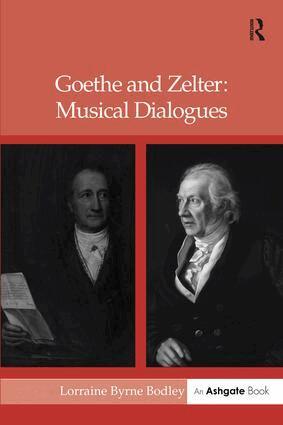
Goethe and Zelter spent a staggering 33 years corresponding or in the case of each artist, over two thirds of their lives. Zelter's position as director of the Sing-Akademie zu Berlin and Goethe's location in Weimar resulted in a wide-ranging correspondence. Goethe's letters offer a chronicle of his musical development, from the time of his journey to Italy to the final months of his life. Zelter's letters retrace his path as stonemason to Professor of Music in Berlin. The 891 letters that passed between these artists provide an important musical record of the music performed in public concerts in Berlin and in the private and semi-public soirées of the Weimar court. Their letters are those of men actively engaged in the musical developments of their time. The legacy contains a wide spectrum of letters, casual and thoughtfully composed, spontaneous and written for publication, rich with the details of Goethe's and Zelter's musical lives. Through Zelter, Goethe gained access to the professional music world he craved and became acquainted with the prodigious talent of Felix Mendelssohn. A single letter from Zelter might bear a letter from Felix Mendelssohn to another recipient of the same family, reflecting a certain community in the Mendelssohn household where letters were not considered private but shared with others in a circle of friends or family. Goethe recognized the value of such correspondence: he complains when his friend is slow to send letters in return for those written to him by the poet, a complaint common in this written culture where letters provided news, introductions, literary and musical works. This famous correspondence contains a medley of many issues in literature, art, and science; but the main focus of this translation is the music dialogues of these artists.
Häftad, Engelska, 2019
802 kr
Skickas inom 10-15 vardagar
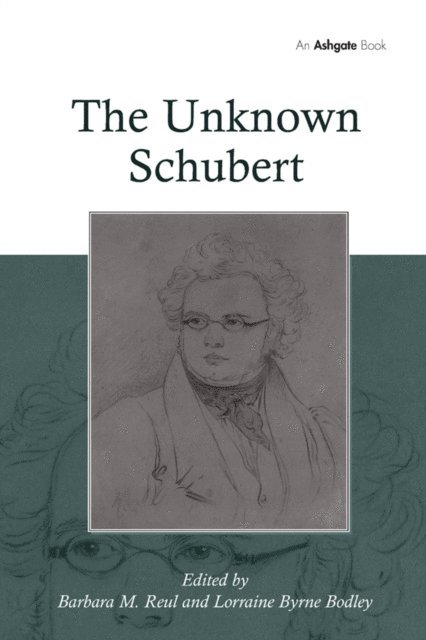
Franz Schubert (1797-1828) is now rightly recognized as one of the greatest and most original composers of the nineteenth century. His keen understanding of poetry and his uncanny ability to translate his profound understanding of human nature into remarkably balanced compositions marks him out from other contemporaries in the field of song. Schubert was one of the first major composers to devote so much time to song and his awareness that this genre was not rated highly in the musical hierarchy did not deter him, throughout a short but resolute and hard-working career, from producing songs that invariably arrest attention and frequently strike a deeply poetic note. Schubert did not emerge as a composer until after his death, but during his short lifetime his genius flowered prolifically and diversely. His reputation was first established among the aristocracy who took the art music of Vienna into their homes, which became places of refuge from the musical mediocrity of popular performance. More than any other composer, Schubert steadily graced Viennese musical life with his songs, piano music and chamber compositions. Throughout his career he experimented constantly with technique and in his final years began experiments with form. The resultant fascinating works were never performed in his lifetime, and only in recent years have the nature of his experiments found scholarly favor. In The Unknown Schubert contributors explore Schubert's radical modernity from a number of perspectives by examining both popular and neglected works. Chapters by renowned scholars describe the historical context of his work, its relation to the dominant artistic discourses of the early nineteenth century, and Schubert's role in the paradigmatic shift to a new perception of song. This valuable book seeks to bring Franz Schubert to life, exploring his early years as a composer of opera, his later years of ill-health when he composed in the shadow of death, and his efforts to reflect in his music his own profound inner experience.
E-bok
Engelska, 2017952 kr
Läs direkt efter köp
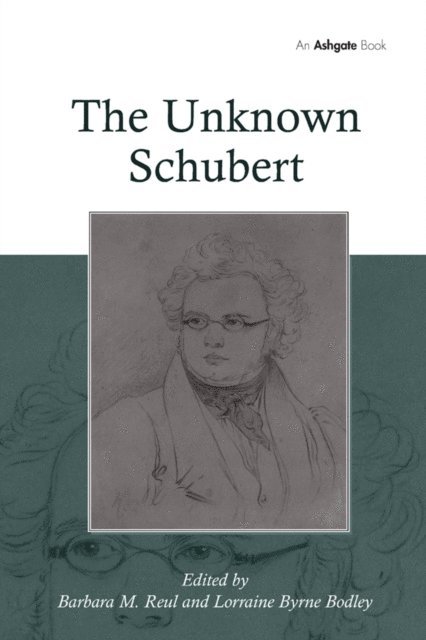
Franz Schubert (1797-1828) is now rightly recognized as one of the greatest and most original composers of the nineteenth century. His keen understanding of poetry and his uncanny ability to translate his profound understanding of human nature into remarkably balanced compositions marks him out from other contemporaries in the field of song. Schubert was one of the first major composers to devote so much time to song and his awareness that this genre was not rated highly in the musical hierarchy did not deter him, throughout a short but resolute and hard-working career, from producing songs that invariably arrest attention and frequently strike a deeply poetic note. Schubert did not emerge as a composer until after his death, but during his short lifetime his genius flowered prolifically and diversely. His reputation was first established among the aristocracy who took the art music of Vienna into their homes, which became places of refuge from the musical mediocrity of popular performance. More than any other composer, Schubert steadily graced Viennese musical life with his songs, piano music and chamber compositions. Throughout his career he experimented constantly with technique and in his final years began experiments with form. The resultant fascinating works were never performed in his lifetime, and only in recent years have the nature of his experiments found scholarly favor. In The Unknown Schubert contributors explore Schubert''s radical modernity from a number of perspectives by examining both popular and neglected works. Chapters by renowned scholars describe the historical context of his work, its relation to the dominant artistic discourses of the early nineteenth century, and Schubert''s role in the paradigmatic shift to a new perception of song. This valuable book seeks to bring Franz Schubert to life, exploring his early years as a composer of opera, his later years of ill-health when he composed in the shadow of death, and his efforts to reflect i
E-bok
PDF, Engelska, 2017952 kr
Läs direkt efter köp
Franz Schubert (1797-1828) is now rightly recognized as one of the greatest and most original composers of the nineteenth century. His keen understanding of poetry and his uncanny ability to translate his profound understanding of human nature into remarkably balanced compositions marks him out from other contemporaries in the field of song. Schubert was one of the first major composers to devote so much time to song and his awareness that this genre was not rated highly in the musical hierarchy did not deter him, throughout a short but resolute and hard-working career, from producing songs that invariably arrest attention and frequently strike a deeply poetic note. Schubert did not emerge as a composer until after his death, but during his short lifetime his genius flowered prolifically and diversely. His reputation was first established among the aristocracy who took the art music of Vienna into their homes, which became places of refuge from the musical mediocrity of popular performance. More than any other composer, Schubert steadily graced Viennese musical life with his songs, piano music and chamber compositions. Throughout his career he experimented constantly with technique and in his final years began experiments with form. The resultant fascinating works were never performed in his lifetime, and only in recent years have the nature of his experiments found scholarly favor. In The Unknown Schubert contributors explore Schubert''s radical modernity from a number of perspectives by examining both popular and neglected works. Chapters by renowned scholars describe the historical context of his work, its relation to the dominant artistic discourses of the early nineteenth century, and Schubert''s role in the paradigmatic shift to a new perception of song. This valuable book seeks to bring Franz Schubert to life, exploring his early years as a composer of opera, his later years of ill-health when he composed in the shadow of death, and his efforts to reflect i
E-bok
Engelska, 2017450 kr
Läs direkt efter köp
Goethe and Zelter spent a staggering 33 years corresponding or in the case of each artist, over two thirds of their lives. Zelter''s position as director of the Sing-Akademie zu Berlin and Goethe''s location in Weimar resulted in a wide-ranging correspondence. Goethe''s letters offer a chronicle of his musical development, from the time of his journey to Italy to the final months of his life. Zelter''s letters retrace his path as stonemason to Professor of Music in Berlin. The 891 letters that passed between these artists provide an important musical record of the music performed in public concerts in Berlin and in the private and semi-public soir of the Weimar court. Their letters are those of men actively engaged in the musical developments of their time. The legacy contains a wide spectrum of letters, casual and thoughtfully composed, spontaneous and written for publication, rich with the details of Goethe''s and Zelter''s musical lives. Through Zelter, Goethe gained access to the professional music world he craved and became acquainted with the prodigious talent of Felix Mendelssohn. A single letter from Zelter might bear a letter from Felix Mendelssohn to another recipient of the same family, reflecting a certain community in the Mendelssohn household where letters were not considered private but shared with others in a circle of friends or family. Goethe recognized the value of such correspondence: he complains when his friend is slow to send letters in return for those written to him by the poet, a complaint common in this written culture where letters provided news, introductions, literary and musical works. This famous correspondence contains a medley of many issues in literature, art, and science; but the main focus of this translation is the music dialogues of these artists.
E-bok
PDF, Engelska, 2017450 kr
Läs direkt efter köp
Goethe and Zelter spent a staggering 33 years corresponding or in the case of each artist, over two thirds of their lives. Zelter''s position as director of the Sing-Akademie zu Berlin and Goethe''s location in Weimar resulted in a wide-ranging correspondence. Goethe''s letters offer a chronicle of his musical development, from the time of his journey to Italy to the final months of his life. Zelter''s letters retrace his path as stonemason to Professor of Music in Berlin. The 891 letters that passed between these artists provide an important musical record of the music performed in public concerts in Berlin and in the private and semi-public soir of the Weimar court. Their letters are those of men actively engaged in the musical developments of their time. The legacy contains a wide spectrum of letters, casual and thoughtfully composed, spontaneous and written for publication, rich with the details of Goethe''s and Zelter''s musical lives. Through Zelter, Goethe gained access to the professional music world he craved and became acquainted with the prodigious talent of Felix Mendelssohn. A single letter from Zelter might bear a letter from Felix Mendelssohn to another recipient of the same family, reflecting a certain community in the Mendelssohn household where letters were not considered private but shared with others in a circle of friends or family. Goethe recognized the value of such correspondence: he complains when his friend is slow to send letters in return for those written to him by the poet, a complaint common in this written culture where letters provided news, introductions, literary and musical works. This famous correspondence contains a medley of many issues in literature, art, and science; but the main focus of this translation is the music dialogues of these artists.