Louis J. Thibodeaux - Böcker
Visar alla böcker från författaren Louis J. Thibodeaux. Handla med fri frakt och snabb leverans.
3 produkter
3 produkter
Del 110 - Environmental Science and Technology: A Wiley-Interscience Series of Textsand Monographs
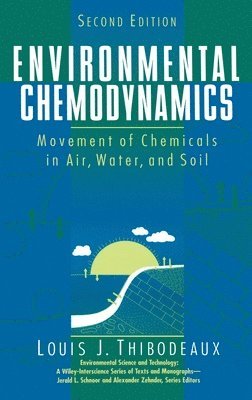
Environmental Chemodynamics
Movement of Chemicals in Air, Water, and Soil
Inbunden, Engelska, 1996
2 041 kr
Skickas inom 7-10 vardagar
What happens to a chemical once it enters the natural environment?How do its physical and chemical properties influence itstransport, persistence, and partitioning in the biosphere? How donatural forces influence its distribution? How are the answers tothese questions useful in making toxicological and epidemiologicalforecasts? Environmental Chemodynamics, Second Edition introduces readers tothe concepts, tools, and techniques currently used to answer theseand other critical questions about the fate and transport ofchemicals in the natural environment. Like its critically acclaimedpredecessor, its main focus is on the mechanisms and rates ofmovement of chemicals across the air/soil, soil/water, andwater/air interfaces, and on how natural processes work to mobilizechemicals near and across interfaces--information vital toperforming human and ecological risk assessments. Also consistent with the first edition, EnvironmentalChemodynamics, Second Edition is organized to accommodate readersof every level of experience. The first section is devoted totheoretical underpinnings and includes discussions of mass balance,thermodynamics, transport science concepts, and more. The secondsection concentrates on practical aspects, including the movementbetween bed-sediment and water, movement between soil and air, andintraphase chemical behavior. This revised and updated edition of Louis J. Thibodeaux's 1979classic features new or expanded coverage of:* Equilibrium models for environmental compartments* Dry deposition of particles and vapors onto water and soilsurfaces* Chemical profiles in rivers and estuaries, particles and porousmedia* Fate and transport in the atmospheric boundary layer and withinsubterranean media* Chemical exchange between water column and bed-sediment* Intraphase chemical transport and fate This Second Edition of Environmental Chemodynamics also includestwice as many references and 50% more exercises and practiceproblems.
682 kr
Skickas inom 10-15 vardagar
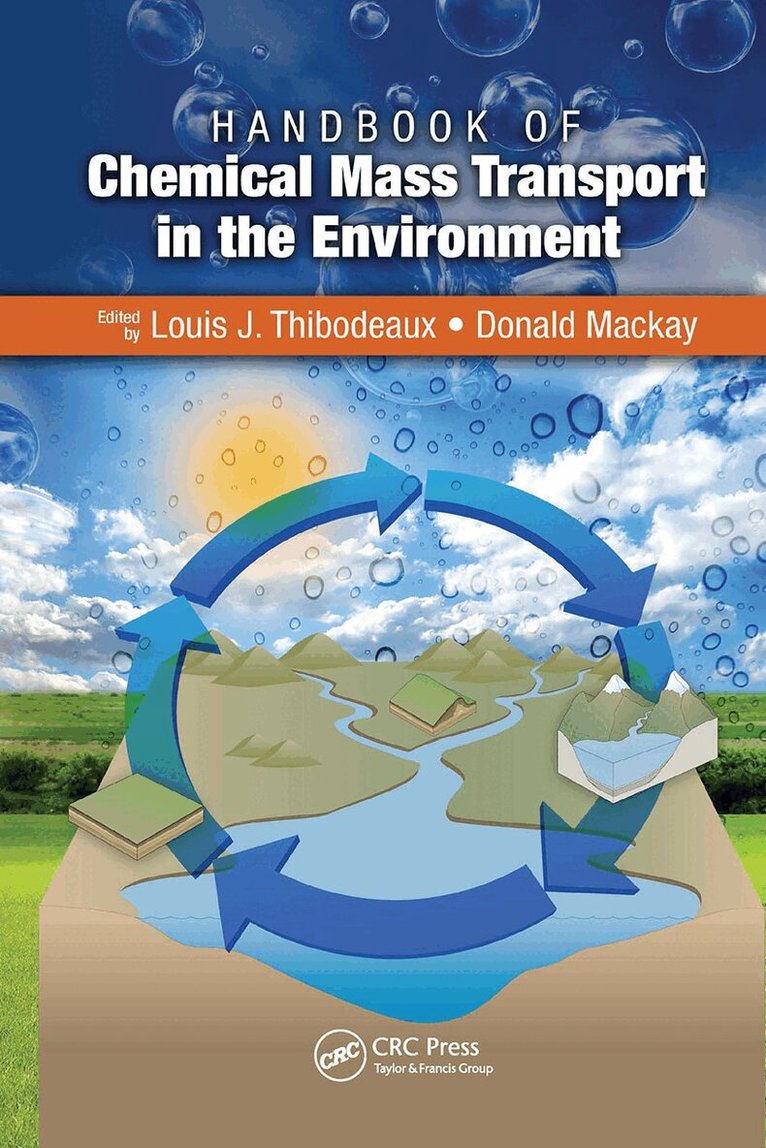
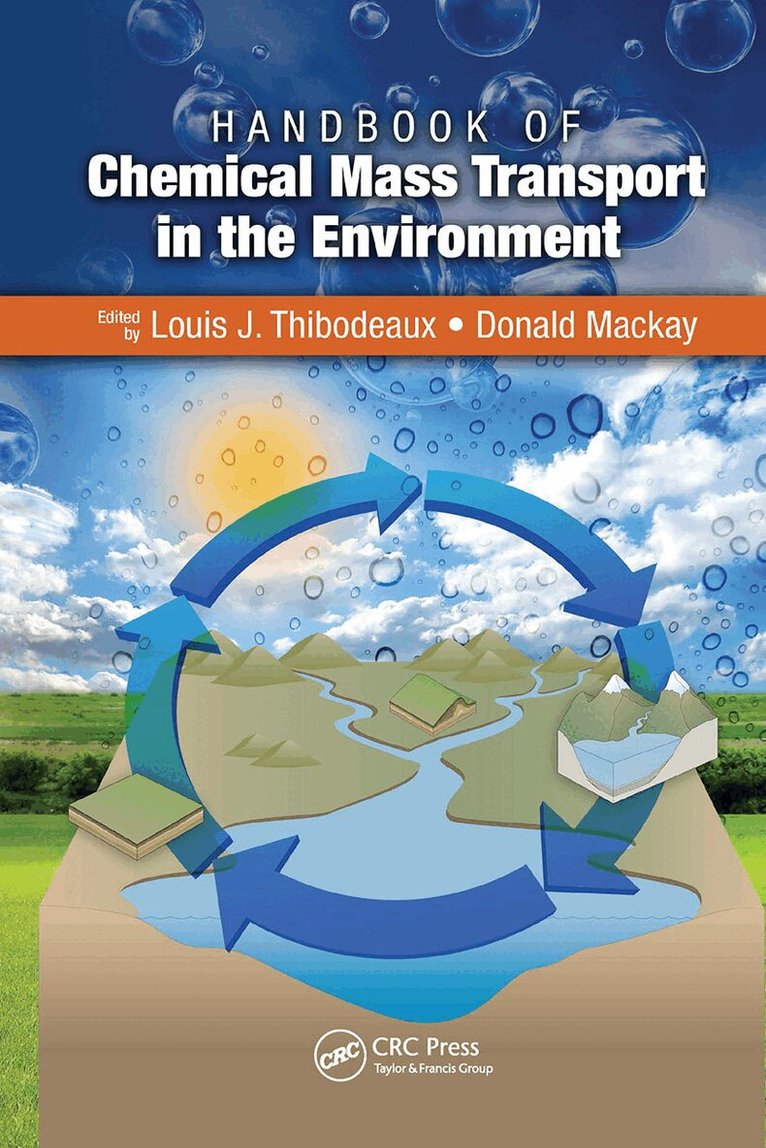
A comprehensive account of the state of the science of environmental mass transportEdited by Louis J. Thibodeaux and Donald Mackay, renowned experts in this field, the Handbook of Chemical Mass Transport in the Environment covers those processes which are critically important for assessing chemical fate, exposure, and risk. In a comprehensive and authoritative format, this unique handbook provides environmental chemists, geoscientists, engineers, and modelers with the essential capabilities to understand and quantify transport. In addition, it offers a one-stop resource on environmental mass transfer and mass transport coefficient estimation methods for all genres. The book begins by discussing mass transport fundamentals from an environmental perspective. It introduces the concept of mobility — key to environmental fate, since transport must occur prior to any reaction or partitioning within the natural multimedia compartments. The fugacity approach to environmental mass transfer and the conventional approach are examined. This is followed by a description of the individual mass transport processes and the appropriate flux equations required for a quantitative expression. The editors have identified 41 individual processes believed to be the most environmentally significant, which form the basis for the remainder of the book Using a consistent format for easy reference, each chapter:Introduces the specific processes Provides a detailed qualitative description Presents key theoretical mathematical formulations Describes field or laboratory measurements of transport parametersGives data tables and algorithms for numerical estimates Offers a guide for users familiar with the process who are seeking a direct pathway to obtain the numerical coefficientsPresents computed example problems, case studies and/or exercises with worked-through solutions and answersThe final chapter presents the editors’ insight into future needs and emerging priorities. Accessible and relevant to a broad range of science and engineering users, this volume captures the state of the transport science and practice in this critical area.
2 711 kr
Skickas inom 10-15 vardagar
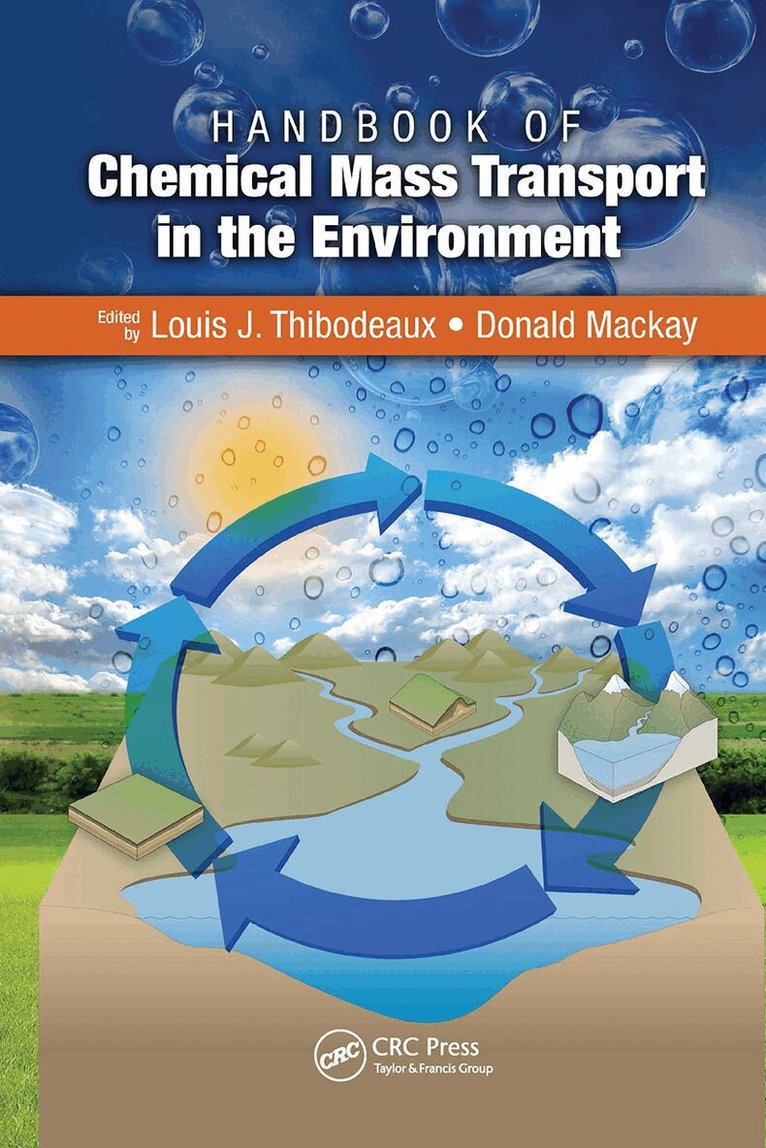
A comprehensive account of the state of the science of environmental mass transportEdited by Louis J. Thibodeaux and Donald Mackay, renowned experts in this field, the Handbook of Chemical Mass Transport in the Environment covers those processes which are critically important for assessing chemical fate, exposure, and risk. In a comprehensive and authoritative format, this unique handbook provides environmental chemists, geoscientists, engineers, and modelers with the essential capabilities to understand and quantify transport. In addition, it offers a one-stop resource on environmental mass transfer and mass transport coefficient estimation methods for all genres. The book begins by discussing mass transport fundamentals from an environmental perspective. It introduces the concept of mobility — key to environmental fate, since transport must occur prior to any reaction or partitioning within the natural multimedia compartments. The fugacity approach to environmental mass transfer and the conventional approach are examined. This is followed by a description of the individual mass transport processes and the appropriate flux equations required for a quantitative expression. The editors have identified 41 individual processes believed to be the most environmentally significant, which form the basis for the remainder of the book Using a consistent format for easy reference, each chapter: Introduces the specific processes Provides a detailed qualitative description Presents key theoretical mathematical formulations Describes field or laboratory measurements of transport parametersGives data tables and algorithms for numerical estimates Offers a guide for users familiar with the process who are seeking a direct pathway to obtain the numerical coefficientsPresents computed example problems, case studies and/or exercises with worked-through solutions and answersThe final chapter presents the editors’ insight into future needs and emerging priorities. Accessible and relevant to a broad range of science and engineering users, this volume captures the state of the transport science and practice in this critical area.