Louise Arthur – författare
Visar alla böcker från författaren Louise Arthur. Handla med fri frakt och snabb leverans.
2 produkter
2 produkter
E-bok
Engelska, 201678 kr
Läs direkt efter köp
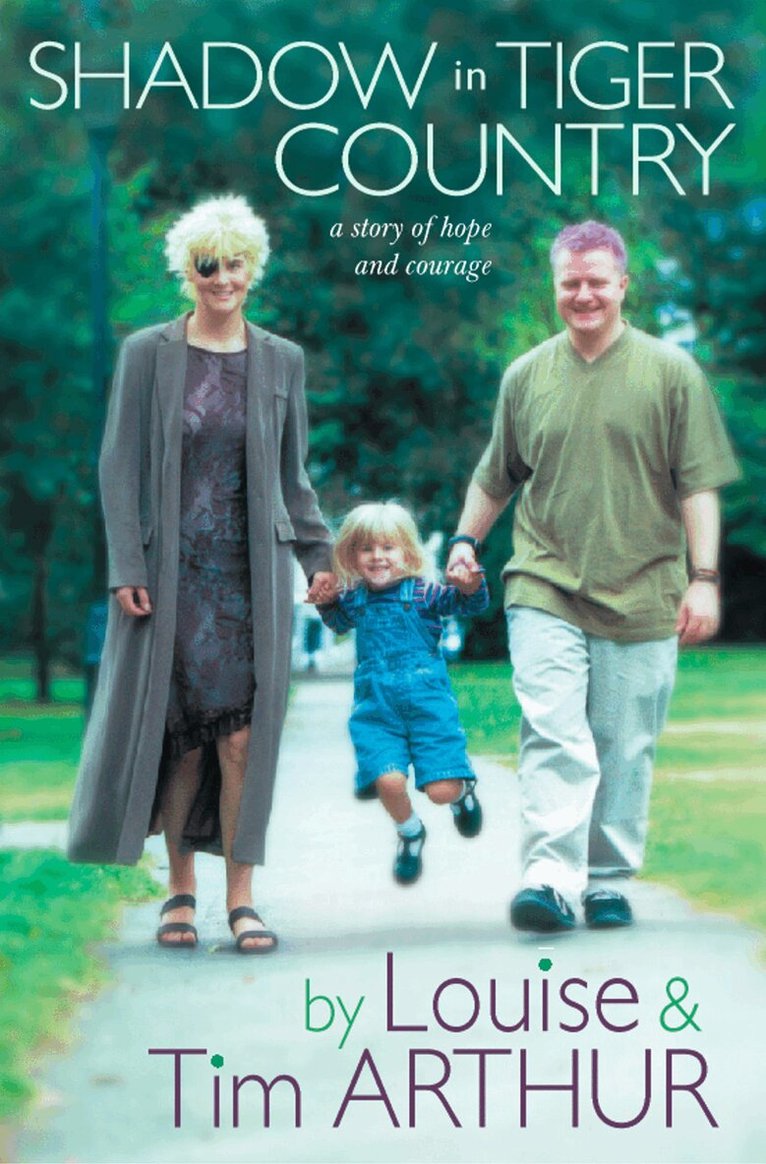
The extraordinary diary and memoir of just under one year in a woman’s life.Louise Arthur was diagnosed in February 1999 as terminally ill with a malignant brain tumour. It was inoperable. She was then 28, had been married to Tim for 5 years: and they have a 4 year old daughter.After reading Ruth Picardie’s book, Louise decided to write her diary – named Shadow Diary – on the web. She started in April – it was frank, poignant, funny, brilliantly observed. Tim also contributed – occasionally – and showed what life was like for him, for their love together. By June 1999, the ‘hits’ to the web site were running at 1,000 a day: she started a column in the Daily Mail: and Channel 4 decided to do a documentary on her.On January 11, 2000, Louise Arthur died.Shadow in Tiger Country contains selections from both Louise’s and Tim’s contributions to the Shadow Diary, but has also been written by Tim since her death, and includes samples of both Louise’s earlier writing and her photographs.
Inbunden, Engelska, 1998
1 791 kr
Skickas inom 5-8 vardagar
Forest policy involves a complex balance of governmental, social and industrial objectives in an environment where the forests and the institutions are also constantly changing. Across the various forestry jurisdictions there is a wide variety of policy models that have evolved in response to specific societal demands, institutional structures and forest environments. This book is an examination of forest policy in a selection of major forestry jurisdictions, primarily the major competitors in world softwood markets. These include the United States, British Columbia, Alberta, New Zealand, Sweden, Finland, Chile and Russia. These regions represent systems operating with natural forests, plantation forests, initial forest endowments, second/third generation forests, public forestland ownership, private forestland ownership, open markets, highly structured markets, and various responses to sustainability. For each jurisdiction a brief overview to the economy, the contribution of forestry, the resource base, the composition of the forest industry and the major stakeholders is provided. The policy discussions include forest management, timber pricing and export policy, environmental standards, land ownership and use, and the institutional setting relating to government agencies, taxation, labour and capital. Comment is provided on the evolution of the existing policy structure and the chapters finish with an evaluation and prognosis for the jurisdiction. This book is a valuable reference source for forest policy practitioners, students of forestry and political economy and industrial decision-makers seeking to position their business in global forestry.