Louise E. Buck – författare
Visar alla böcker från författaren Louise E. Buck. Handla med fri frakt och snabb leverans.
5 produkter
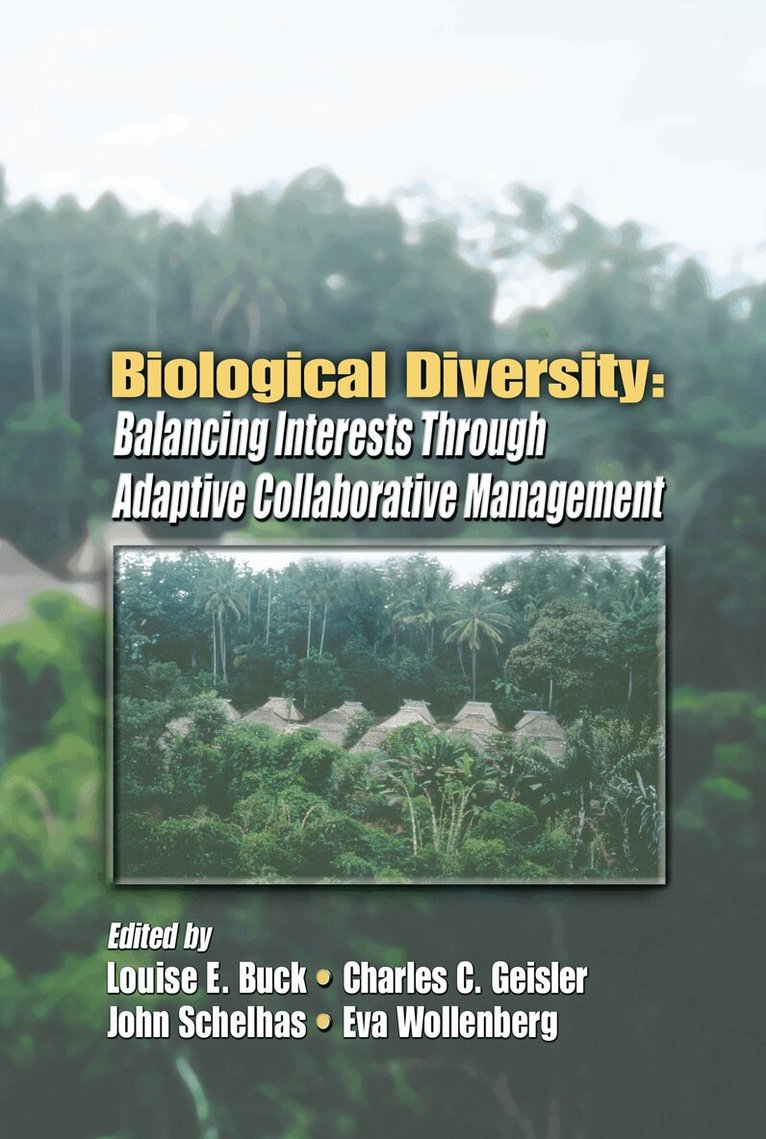
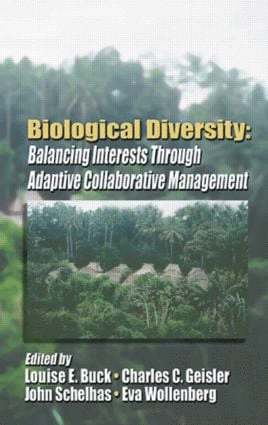
Biological Diversity
Balancing Interests Through Adaptive Collaborative Management
Av Louise E. Buck, Charles C. Geisler m. fl.
Häftad, 2019
1009 kr
Lägg i varukorg
We live in a world of wide pendulum swings regarding management policies for protected areas, particularly as they affect the involvement of local people in management. Such swings can be polarizing and halt on-the-ground progress. There is a need to find ways to protect biodiversity while creating …
Biological Diversity
Balancing Interests Through Adaptive Collaborative Management
Av Eva Wollenberg, John Schelhas m. fl.
E-bok, 2001
1169 kr
Lägg i varukorg
We live in a world of wide pendulum swings regarding management policies for protected areas, particularly as they affect the involvement of local people in management. Such swings can be polarizing and halt on-the-ground progress. There is a need to find ways to protect biodiversity while creating …
Biological Diversity
Balancing Interests Through Adaptive Collaborative Management
Av Eva Wollenberg, John Schelhas m. fl.
E-bok, 2001
1195 kr
Lägg i varukorg
We live in a world of wide pendulum swings regarding management policies for protected areas, particularly as they affect the involvement of local people in management. Such swings can be polarizing and halt on-the-ground progress. There is a need to find ways to protect biodiversity while creating …
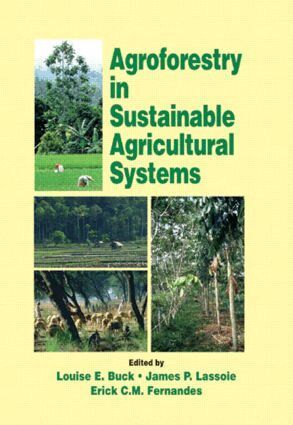
Agroforestry in Sustainable Agricultural Systems
Av Louise E. Buck, James P. Lassoie m. fl.
Inbunden, 1998
2504 kr
Lägg i varukorg
Agroforestry in Sustainable Agricultural Systems examines the environmental and social conditions that affect the roles and performance of trees in field- and forest-based agricultural production systems. Various types of ecological settings for agroforestry are analyzed within temperate and …
Biological Diversity
Balancing Interests Through Adaptive Collaborative Management
Av Louise E. Buck, Charles C. Geisler m. fl.
Inbunden, 2001
1459 kr
Tillfälligt slut
We live in a world of wide pendulum swings regarding management policies for protected areas, particularly as they affect the involvement of local people in management. Such swings can be polarizing and halt on-the-ground progress. There is a need to find ways to protect biodiversity while creating …