Lu Cheng - Böcker
Visar alla böcker från författaren Lu Cheng. Handla med fri frakt och snabb leverans.
4 produkter
4 produkter
433 kr
Skickas inom 10-15 vardagar
Most policy makers readily acknowledge the economic, environmental, and social benefits of moving freight and passengers by waterways. However, why do many countries struggle to develop and revive their inland waterways transportation (IWT)? One reason is because of the dearth of successful examples of IWT revival. Besides the United States and Europe, which have been relatively successful, the experience of many emerging countries has been a tale of intensive use followed by total collapse of the IWT sector. However, the combination of societal, economic, and environmental imperatives is motivating a rethink as countries look to develop sustainable transportation systems and curb greenhouse gas emissions from the transport sector. China's experience has similarities to the experience of many countries and offers valuable lessons. This report is the result of an in-depth retrospective study of IWT in China and fills a gap in global knowledge.China went from an IWT system that carried fewer than 150 million tons in 1978, to carrying 3.74 billion tons of cargo in 2018--six times more than either the European Union or the United States. China now has the busiest IWT system in the world. China's leadership in IWT development started with years of investment in infrastructure that transformed low-grade waterways, allowing larger vessels to use the waterways and resulting in higher transport efficiency and lower cost. China invested in the development of skills and technical know-how. To date there are 127,000km of inland waterways in China, which have high-quality navigability and a good safety record. During the period of rapid economic development China also adopted or developed internationally recognized technical innovations for river classification, vessel replacement, navigation technology, and environmental protection. What China achieved can be informative to other countries. Further, how and why China improved its inland waterways for transportation is especially relevant and provides valuable lessons.
433 kr
Skickas inom 10-15 vardagar
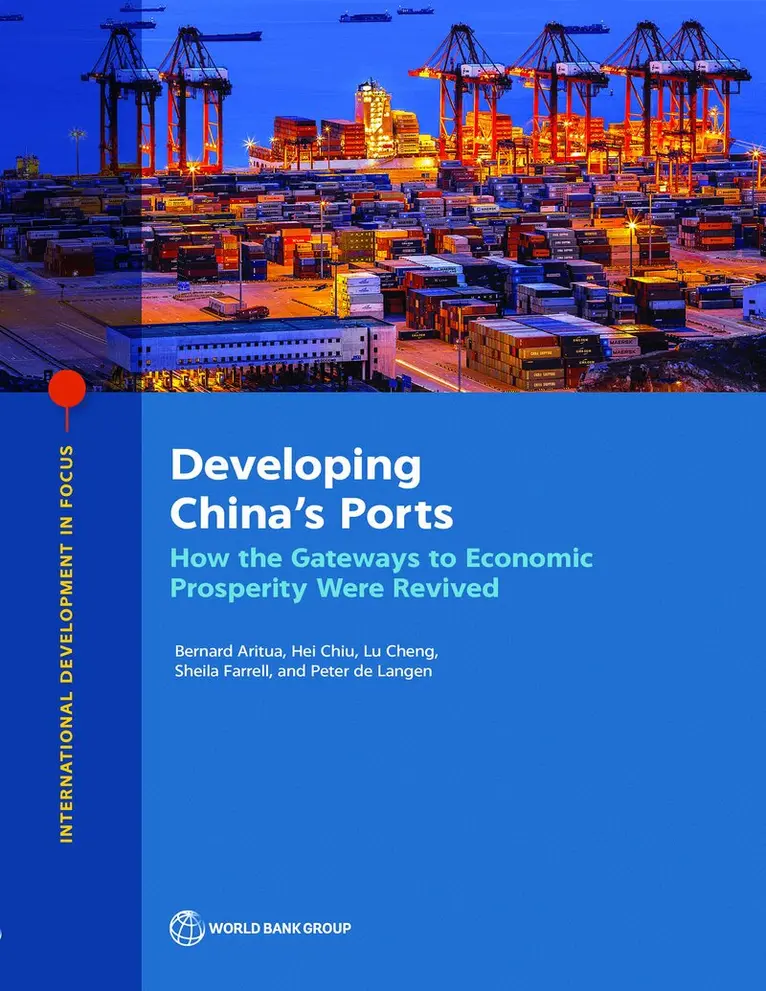
How can countries develop their ports to become gateways for economic prosperity? Despite being endowed with natural coastlines, many countries in Africa and Asia have struggled to translate this competitive advantage into vehicles for economic transformation. What China achieved can be informative.
Del 15276 - Lecture Notes in Computer Science
Computational Intelligence Methods for Bioinformatics and Biostatistics
19th International Meeting, CIBB 2024, Benevento, Italy, September 4–6, 2024, Revised Selected Papers
Häftad, Engelska, 2025
705 kr
Skickas inom 10-15 vardagar
This volume LNCS 15276 constitutes the revised selected papers of the 19th International Meeting on Computational Intelligence Methods for Bioinformatics and Biostatistics, CIBB 2024, held in Benevento, Italy, during September 4–6, 2024. The 24 full papers and 3 short papers were carefully reviewed and selected from 28 submissions.
1 132 kr
Skickas inom 5-8 vardagar
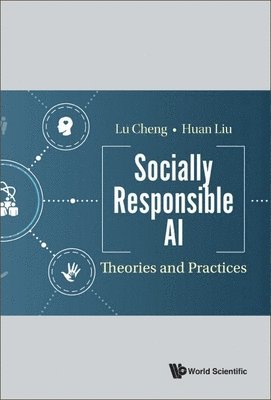
In the current era, people and society have grown increasingly reliant on artificial intelligence (AI) technologies. AI has the potential to drive us towards a future in which all of humanity flourishes. It also comes with substantial risks for oppression and calamity. In response, researchers and organizations have been working to publish principles and develop AI regulations for the responsible use of AI in consequential application domains. However, these theoretically formulated principles and regulations also need to be turned into actionable algorithms to materialize AI for good.This book introduces a unified perspective of Socially Responsible AI to help bridge conceptual AI principles to responsible AI practice. It begins with an interdisciplinary definition of socially responsible AI and the AI responsibility pyramid. Existing efforts seeking to materialize the mainstream responsible AI principles are then presented. The book also discusses how to leverage advanced AI techniques to address the challenging societal issues through Protecting, Informing, and Preventing, and concludes with open problems and challenges.This book serves as a convenient entry point for researchers, practitioners, and students to understand the problems and challenges of socially responsible AI, and to identify how their areas of expertise can contribute to making AI socially responsible.