Lu Yilong – författare
4 725 kr
Skickas inom 10-15 vardagar
2 007 kr
Skickas inom 10-15 vardagar
2 007 kr
Skickas inom 10-15 vardagar
687 kr
Läs direkt efter köp
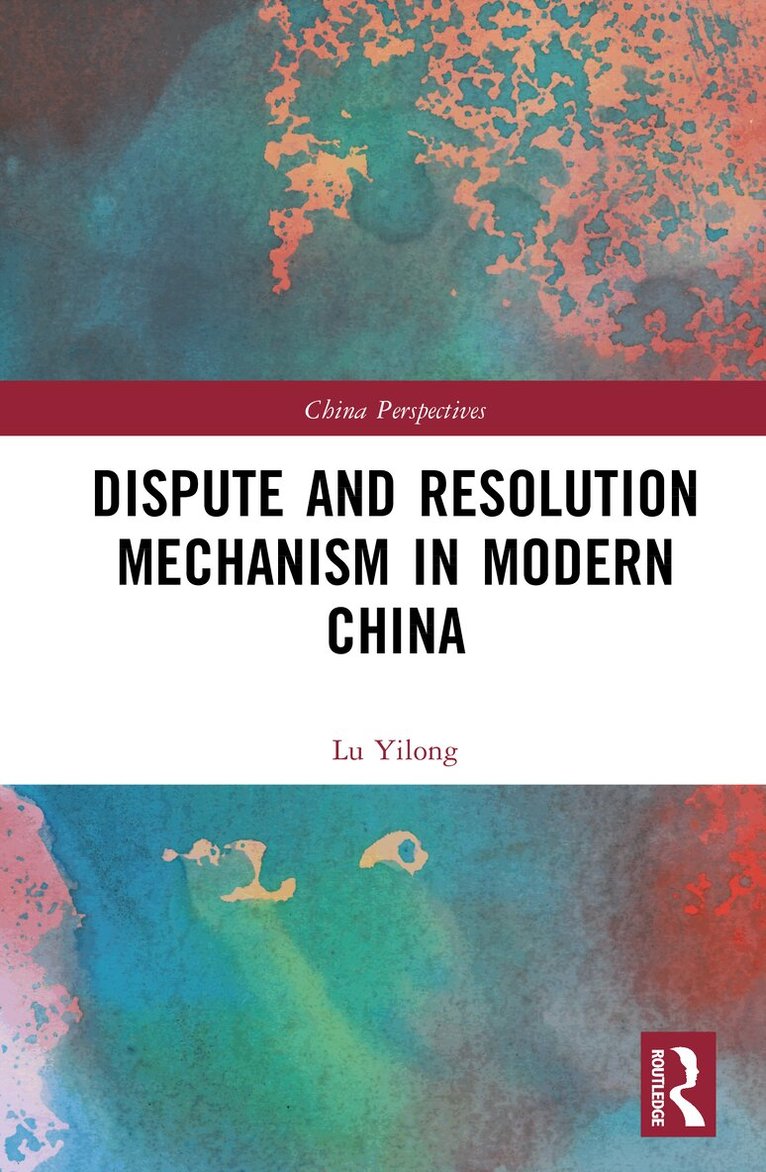
As the second volume of a two-volume set on dispute resolution in modern China, this book presents an in-depth analysis of various disputes in modern China, exploring different experiences of dispute resolution and their implications.
Through a series of case studies ranging from civil disputes, land-related conflicts, rural transportation accidents, and inter-ethnic social contradictions, this volume offers a nuanced examination of dispute resolution in contemporary China. Each chapter presents specific scenarios, ranging from family conflicts to civil disputes to farmers'' contradictions with the government. The author employs various theoretical frameworks, including alienation theory and the risk society perspective, to analyze these disputes and their resolutions. The book highlights the importance of using diverse resolution methods beyond the legal approach, the unintended consequences of legal intervention, and the need to build safety valves in multi-ethnic areas to maintain social harmony.
This title will appeal to scholars, students, and policymakers in the fields of law, sociology, and Chinese studies, especially those interested in understanding the intersection of law and society, social change, and governance in modern China.
687 kr
Läs direkt efter köp
As the second volume of a two-volume set on dispute resolution in modern China, this book presents an in-depth analysis of various disputes in modern China, exploring different experiences of dispute resolution and their implications.
Through a series of case studies ranging from civil disputes, land-related conflicts, rural transportation accidents, and inter-ethnic social contradictions, this volume offers a nuanced examination of dispute resolution in contemporary China. Each chapter presents specific scenarios, ranging from family conflicts to civil disputes to farmers'' contradictions with the government. The author employs various theoretical frameworks, including alienation theory and the risk society perspective, to analyze these disputes and their resolutions. The book highlights the importance of using diverse resolution methods beyond the legal approach, the unintended consequences of legal intervention, and the need to build safety valves in multi-ethnic areas to maintain social harmony.
This title will appeal to scholars, students, and policymakers in the fields of law, sociology, and Chinese studies, especially those interested in understanding the intersection of law and society, social change, and governance in modern China.
687 kr
Läs direkt efter köp
The first of a two-volume set on dispute resolution in China, this book explores the landscape of disputes and risks in modern China, analyzing dispute resolution mechanisms and social impacts.
Drawing on extensive social survey data, the author examines different types of disputes that occur in both rural and urban China. This volume summarizes 20 types of disputes in rural China, including their incidence and resolution, while also examining social contradictions and disputes in urban areas. Through theoretical frameworks such as dispute pyramid theory, law mobilization theory, and legality theory, the book provides deep insights into the complexities of conflict resolution in a rapidly changing society. Importantly, it emphasizes the importance of co-governance in conflict resolution and the development of risk control mechanisms for building a harmonious society.
This title will appeal to scholars, students, and policymakers in the fields of law, sociology, and Chinese studies, especially those interested in understanding the intersection of law and society, social change, and governance in modern China.
687 kr
Läs direkt efter köp
The first of a two-volume set on dispute resolution in China, this book explores the landscape of disputes and risks in modern China, analyzing dispute resolution mechanisms and social impacts.
Drawing on extensive social survey data, the author examines different types of disputes that occur in both rural and urban China. This volume summarizes 20 types of disputes in rural China, including their incidence and resolution, while also examining social contradictions and disputes in urban areas. Through theoretical frameworks such as dispute pyramid theory, law mobilization theory, and legality theory, the book provides deep insights into the complexities of conflict resolution in a rapidly changing society. Importantly, it emphasizes the importance of co-governance in conflict resolution and the development of risk control mechanisms for building a harmonious society.
This title will appeal to scholars, students, and policymakers in the fields of law, sociology, and Chinese studies, especially those interested in understanding the intersection of law and society, social change, and governance in modern China.