Luca Tacconi - Böcker
Visar alla böcker från författaren Luca Tacconi. Handla med fri frakt och snabb leverans.
6 produkter
6 produkter
1 610 kr
Skickas inom 7-10 vardagar
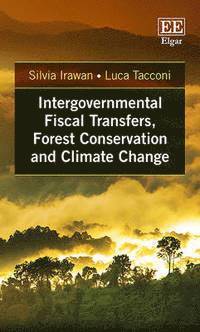
Intergovernmental fiscal transfers (IFTs) are an innovative way to create incentives for local public actors to support conservation. This book contributes to the debate about how to conserve tropical forests by implementing mechanisms for reducing deforestation and forest degradation (REDD+).With Indonesia as a case study, the authors adopt an interdisciplinary approach, drawing on political science, economics, and public policy. They consider the theoretical justification, as well as the wider political and administrative context for developing the design of IFTs for conservation.Students and scholars looking at conservation, ecological economics, decentralisation, forest policy and climate change will find this book to be of interest. It will also be of considerable use to policy-makers and practitioners working on forest policy, particularly those implementing REDD+.
1 921 kr
Skickas inom 10-15 vardagar
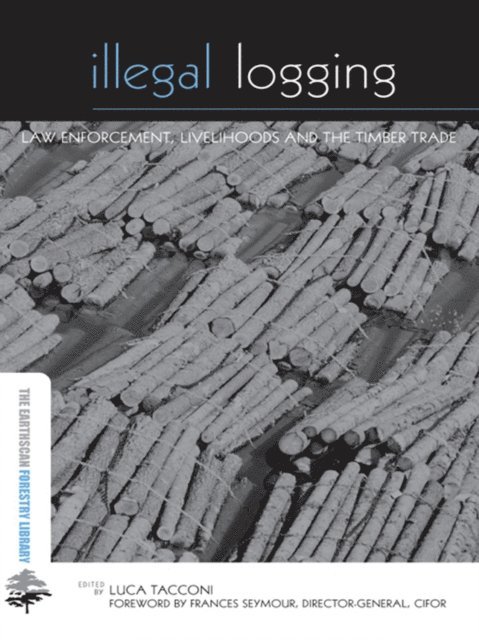
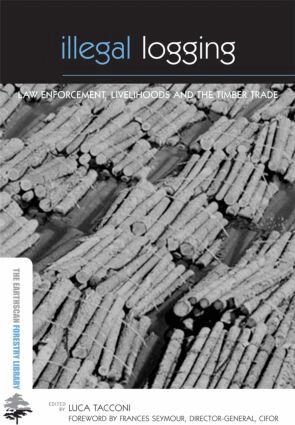
'This book carefully blends conceptual insights with extensive empirical evidence to navigate the reader through an issue that is still poorly understood [and is] a valuable reference for the development practitioner to understand the fundamental causes of illegal logging, its myriad consequences and the policy choices available to address the problem' Nalin Kishor, Forest Law Enforcement and Governance Coordinator, The World Bank'An excellent resource for those working to conserve and sustainably manage forests worldwide. It offers an extensive and comprehensive study of illegal logging, bringing together the knowledge and views of experts who examine its roots and social, economic and environmental implications. One of its important contributions is to show that, unless coupled with reform of forestry regulations to take into account local people, law enforcement to curb illegal logging can negatively impact them. Therefore, any effective and fair approach to the problem needs to involve governments, forestry operators and local communities alike' Gonzalo Oviedo, Senior Social Policy Advisor, IUCN In many countries illegal logging now accounts for a large share of the harvest. Once cut, illegal logs feed an insatiable demand for exotic hardwoods in developed and developing countries. The result has been loss of both revenue and biodiversity, and consequently the issue has risen to the top of the global forest policy agenda as one of the major threats to forests, and donors and national governments are starting to develop initiatives to control illegal logging. Yet for such a massive illegal trade, there is surprisingly limited knowledge available as to the major causes of illegal logging and its impacts on biodiversity, people and livelihoods and national economies, and thus plenty of speculation and action without evidence. It is clear that while illegal logging does have negative impacts, it also, controversially, and perhaps paradoxically, benefits many stakeholders, including local communities. This book, written by the world's foremost experts, examines the key issues including law and enforcement, supply and demand, corruption, forest certification, poverty, local livelihoods, international trade and biodiversity conservation. It includes key case studies from forest-rich hotspots in North, South and Central America, equatorial Africa and Indonesia. While there are clearly no easy answers, this book sorts fact from fiction and explores the many dimensions of the causes, impacts and implications for forests, people, livelihoods and forest policy.Published with CIFOR
854 kr
Skickas inom 10-15 vardagar
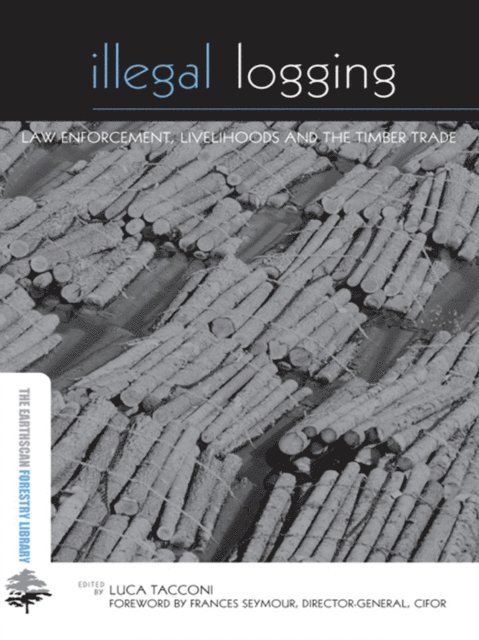
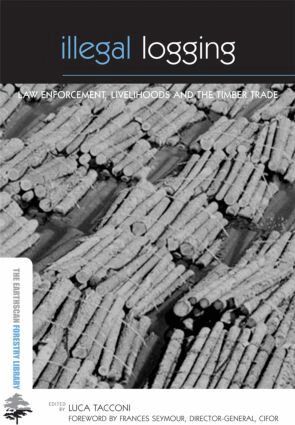
'This book carefully blends conceptual insights with extensive empirical evidence to navigate the reader through an issue that is still poorly understood [and is] a valuable reference for the development practitioner to understand the fundamental causes of illegal logging, its myriad consequences and the policy choices available to address the problem' Nalin Kishor, Forest Law Enforcement and Governance Coordinator, The World Bank'An excellent resource for those working to conserve and sustainably manage forests worldwide. It offers an extensive and comprehensive study of illegal logging, bringing together the knowledge and views of experts who examine its roots and social, economic and environmental implications. One of its important contributions is to show that, unless coupled with reform of forestry regulations to take into account local people, law enforcement to curb illegal logging can negatively impact them. Therefore, any effective and fair approach to the problem needs to involve governments, forestry operators and local communities alike' Gonzalo Oviedo, Senior Social Policy Advisor, IUCN In many countries illegal logging now accounts for a large share of the harvest. Once cut, illegal logs feed an insatiable demand for exotic hardwoods in developed and developing countries. The result has been loss of both revenue and biodiversity, and consequently the issue has risen to the top of the global forest policy agenda as one of the major threats to forests, and donors and national governments are starting to develop initiatives to control illegal logging. Yet for such a massive illegal trade, there is surprisingly limited knowledge available as to the major causes of illegal logging and its impacts on biodiversity, people and livelihoods and national economies, and thus plenty of speculation and action without evidence. It is clear that while illegal logging does have negative impacts, it also, controversially, and perhaps paradoxically, benefits many stakeholders, including local communities. This book, written by the world's foremost experts, examines the key issues including law and enforcement, supply and demand, corruption, forest certification, poverty, local livelihoods, international trade and biodiversity conservation. It includes key case studies from forest-rich hotspots in North, South and Central America, equatorial Africa and Indonesia. While there are clearly no easy answers, this book sorts fact from fiction and explores the many dimensions of the causes, impacts and implications for forests, people, livelihoods and forest policy.Published with CIFOR
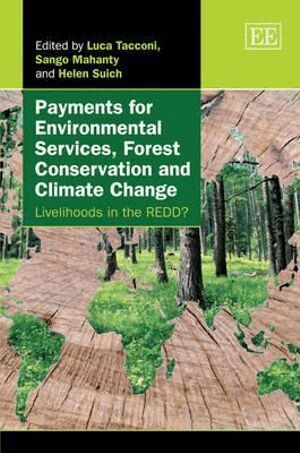
Payments for Environmental Services, Forest Conservation and Climate Change
Livelihoods in the REDD?
Inbunden, Engelska, 2010
1 866 kr
Skickas inom 7-10 vardagar
This resourceful book draws on several case studies to derive implications for the design of Payment for Environmental Services (PES) schemes that are very relevant to current climate change negotiations and the implementation of Reduced Emissions from Deforestation and forest Degradation (REDD) schemes at the national level. With its focus on livelihoods, the book also provides important lessons that are relevant to the design of PES schemes focusing on environmental services other than carbon conservation. Drawing practical lessons for the design of activities aimed at reducing deforestation and forest degradation while benefiting rural people, this book will appeal to academics, practitioners and students involved in the fields of environment and natural resource management, forestry and development studies. This insightful study is accessible also to non-experts in presenting the key issues faced in avoiding deforestation and benefiting livelihoods.
Biodiversity and Ecological Economics
Participatory Approaches to Resource Management
Inbunden, Engelska, 2000
1 886 kr
Skickas inom 7-10 vardagar
It is vital that we adopt interdisciplinary approaches such as ecological economics to gain an understanding of the values that determine human interaction with, and use and abuse of, the environment. This book is a model of applied ecological economics. It presents an accessible introduction to the subject while at the same time broadening its theoretical basis by introducing a post-positivist, participatory method. The theoretical framework is applied to case studies in biodiversity conservation, drawn from around the world and a range of different ecosystems. The book is a suitable textbook for students of ecological economics and an ideal introduction for scientists and environmentalists needing to understand the role of economics in ecology and conservation.
Biodiversity and Ecological Economics
Participatory Approaches to Resource Management
Häftad, Engelska, 2000
495 kr
Tillfälligt slut
It is vital that we adopt interdisciplinary approaches such as ecological economics to gain an understanding of the values that determine human interaction with, and use and abuse of, the environment. This book is a model of applied ecological economics. It presents an accessible introduction to the subject while at the same time broadening its theoretical basis by introducing a post-positivist, participatory method. The theoretical framework is applied to case studies in biodiversity conservation, drawn from around the world and a range of different ecosystems. The book is a suitable textbook for students of ecological economics and an ideal introduction for scientists and environmentalists needing to understand the role of economics in ecology and conservation.