Lúcio Rennó - Böcker
Visar alla böcker från författaren Lúcio Rennó. Handla med fri frakt och snabb leverans.
6 produkter
6 produkter
298 kr
Skickas inom 7-10 vardagar
How voting behavior in Latin America is influenced by social networks and everyday communication among peersIn Latin America’s new democracies, political parties and mass partisanship are not deeply entrenched, leaving many votes up for grabs during election campaigns. In a typical presidential election season, between one-quarter and one-half of all voters—figures unheard of in older democracies—change their voting intentions across party lines in the months before election day. Advancing a new theory of Latin American voting behavior, Persuasive Peers argues that political discussions within informal social networks among family members, friends, neighbors, coworkers, and acquaintances explain this volatility and exert a major influence on final voting choices.Relying on unique survey and interview data from Latin America, the authors show that weakly committed voters defer to their politically knowledgeable peers, creating vast amounts of preference change as political campaigns unfold. Peer influences also matter for unwavering voters, who tend to have social contacts that reinforce their voting intentions. Social influence increases political conformity among voters within neighborhoods, states, and even entire regions, and the authors illustrate how party machines use the social topography of electorates to buy off well-connected voters who can magnify the impact of the payoff.Persuasive Peers demonstrates how everyday communication shapes political outcomes in Latin America’s less-institutionalized democracies.
1 046 kr
Skickas inom 7-10 vardagar
How voting behavior in Latin America is influenced by social networks and everyday communication among peersIn Latin America’s new democracies, political parties and mass partisanship are not deeply entrenched, leaving many votes up for grabs during election campaigns. In a typical presidential election season, between one-quarter and one-half of all voters—figures unheard of in older democracies—change their voting intentions across party lines in the months before election day. Advancing a new theory of Latin American voting behavior, Persuasive Peers argues that political discussions within informal social networks among family members, friends, neighbors, coworkers, and acquaintances explain this volatility and exert a major influence on final voting choices.Relying on unique survey and interview data from Latin America, the authors show that weakly committed voters defer to their politically knowledgeable peers, creating vast amounts of preference change as political campaigns unfold. Peer influences also matter for unwavering voters, who tend to have social contacts that reinforce their voting intentions. Social influence increases political conformity among voters within neighborhoods, states, and even entire regions, and the authors illustrate how party machines use the social topography of electorates to buy off well-connected voters who can magnify the impact of the payoff.Persuasive Peers demonstrates how everyday communication shapes political outcomes in Latin America’s less-institutionalized democracies.
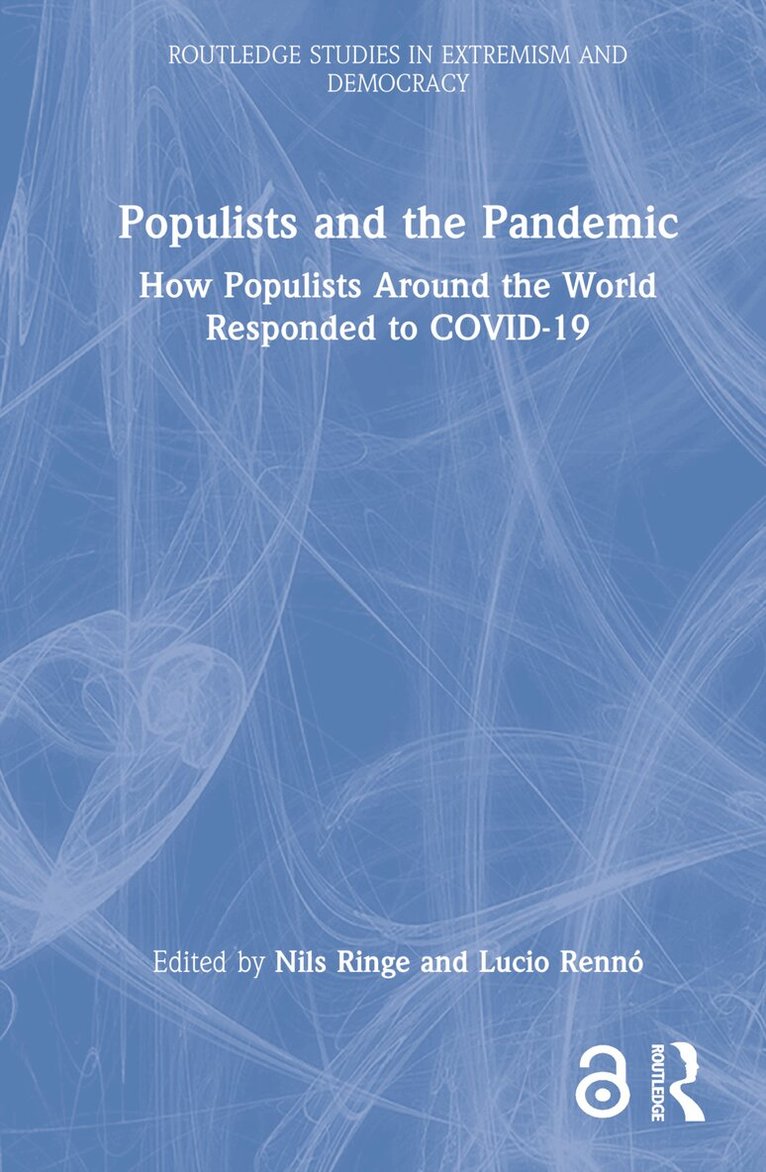
Populists and the Pandemic
How Populists Around the World Responded to COVID-19
Inbunden, Engelska, 2022
2 088 kr
Skickas inom 10-15 vardagar
Populists and the Pandemic examines the responses of populist political actors and parties in 22 countries around the globe to the COVID-19 pandemic, in terms of their attitudes, rhetoric, mobilization repertoires, and policy proposals.The responses of some populist leaders have received much public attention, as they denied the severity of the public health crisis, denigrated experts and data, looked for scapegoats, encouraged protests, questioned the legitimacy of liberal institutions, spread false information, and fueled conspiracies. But how widespread are those particular reactions? How much variation is there? What explains the variation that does exist? This volume considers these questions through critical analysis of countries in the Americas, Europe, Asia, and Africa, by leading experts with deep knowledge of their respective cases. Some chapters focus on populist parties, others on charismatic populist leaders. Some countries examined are democracies, others autocracies. Some populists are left wing, others right wing. Some populists are in government, others in opposition. This variation allows for a panoramic consideration of factors that systematically influence or mediate populist responses to the pandemic. The book thus makes a unique contribution to our understanding of the intersection between two of the most pressing social and political challenges of our time.The book will be of interest to all those researching populism, extremism, and political parties and those more broadly interested in political science, public policy, sociology, communications, and economics.The Open Access version of this book, available at www.taylorfrancis.com, has been made available under a Creative Commons Attribution-Non Commercial-No Derivatives 4.0 license. Thanks to the support of libraries working with Knowledge Unlatched www.knowledgeunlatched.org
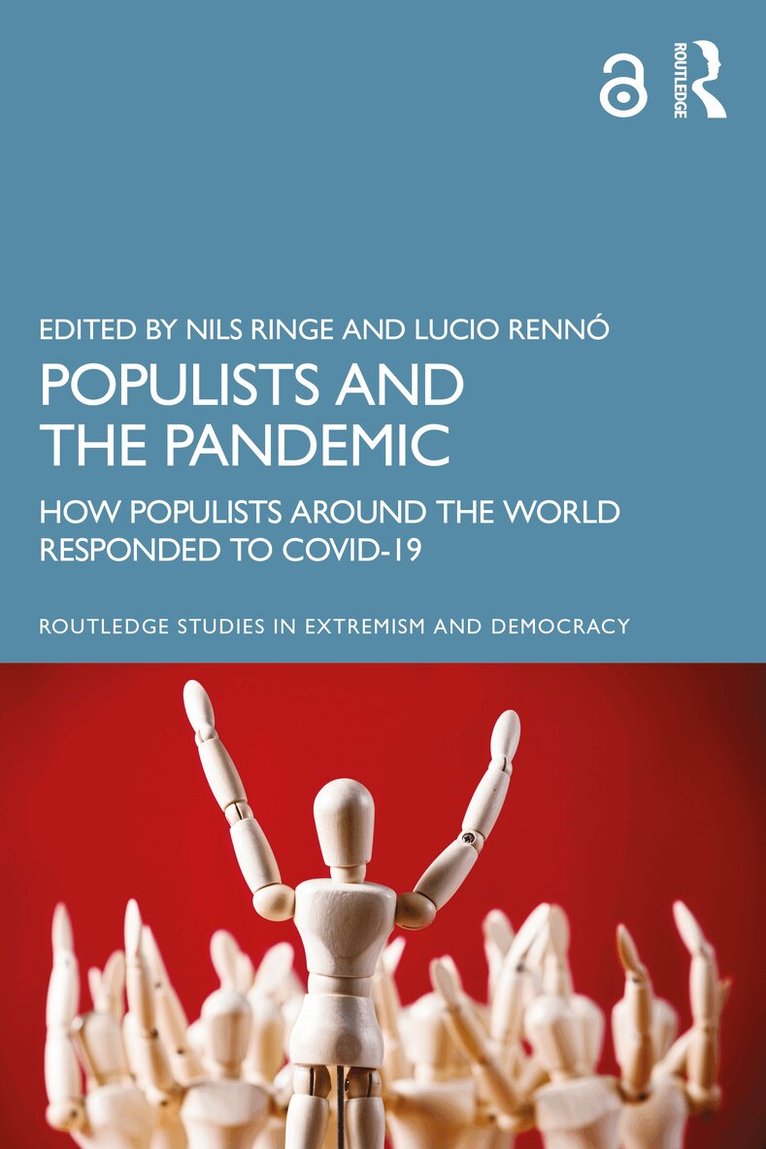
Populists and the Pandemic
How Populists Around the World Responded to COVID-19
Häftad, Engelska, 2022
563 kr
Skickas inom 10-15 vardagar
Populists and the Pandemic examines the responses of populist political actors and parties in 22 countries around the globe to the COVID-19 pandemic, in terms of their attitudes, rhetoric, mobilization repertoires, and policy proposals.The responses of some populist leaders have received much public attention, as they denied the severity of the public health crisis, denigrated experts and data, looked for scapegoats, encouraged protests, questioned the legitimacy of liberal institutions, spread false information, and fueled conspiracies. But how widespread are those particular reactions? How much variation is there? What explains the variation that does exist? This volume considers these questions through critical analysis of countries in the Americas, Europe, Asia, and Africa, by leading experts with deep knowledge of their respective cases. Some chapters focus on populist parties, others on charismatic populist leaders. Some countries examined are democracies, others autocracies. Some populists are left wing, others right wing. Some populists are in government, others in opposition. This variation allows for a panoramic consideration of factors that systematically influence or mediate populist responses to the pandemic. The book thus makes a unique contribution to our understanding of the intersection between two of the most pressing social and political challenges of our time.The book will be of interest to all those researching populism, extremism, and political parties and those more broadly interested in political science, public policy, sociology, communications, and economics.The Open Access version of this book, available at www.taylorfrancis.com, has been made available under a Creative Commons Attribution-Non Commercial-No Derivatives 4.0 license. Thanks to the support of libraries working with Knowledge Unlatched www.knowledgeunlatched.org
1 393 kr
Skickas inom 5-8 vardagar
557 kr
Skickas inom 5-8 vardagar