Lucy C. M. M. Jackson – författare
Visar alla böcker från författaren Lucy C. M. M. Jackson. Handla med fri frakt och snabb leverans.
7 produkter
7 produkter
E-bok
PDF, Engelska, 20191 205 kr
Läs direkt efter köp
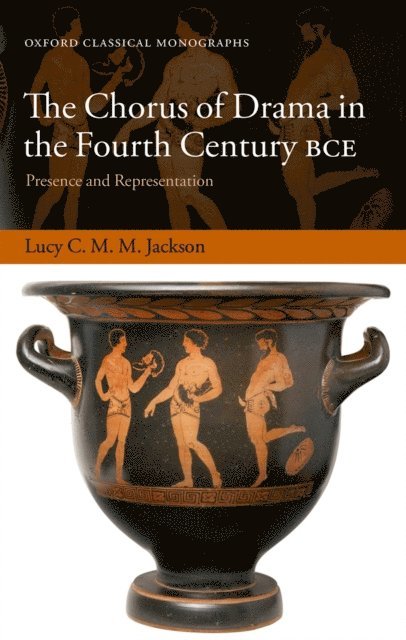
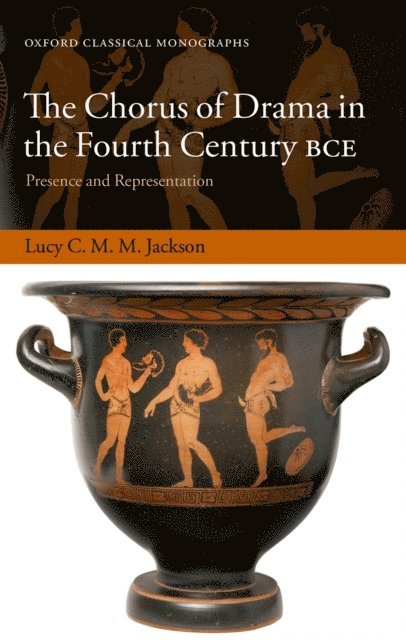
The Chorus of Drama in the Fourth Century BCE seeks to upend conventional thinking about the development of drama from the fifth to the fourth centuries and to provide a new way of talking and thinking about the choruses of drama after the deaths of Euripides and Sophocles. Set in the context of a theatre industry extending far beyond the confines of the City Dionysia and the city of Athens, the identity of choral performers and the significance of theircontribution to the shape and meaning of drama in the later Classical period (c.400-323) as a whole is an intriguing and under-explored area of enquiry. This volume draws together the fourth-century historical, material, dramatic, literary, and philosophical sources that attest to the activity and quality ofdramatic choruses and, having considered the positive evidence for dramatic choral activity, provides a radical rethinking of two oft-cited yet ill-understood phenomena that have traditionally supported the idea that the chorus of drama ''declined'' in the fourth century: the inscription of χοŕο*u~ µε´λο*s in papyri and manuscripts in place of fully written-out choral odes, and Aristotle''s invocation of embolima (Poetics 1456a25-32).It also explores the important role of influential fourth-century authors such as Plato, Demosthenes, and Xenophon, as well as artistic representations of choruses on fourth-century monuments, in shaping later scholars'' understanding of the dramatic chorus throughout the Classical period, reaching conclusions that have significant implications for the broaderstory we wish to tell about Attic drama and its most enigmatic and fundamental element, the chorus.
E-bok
Engelska, 20191 205 kr
Läs direkt efter köp
The Chorus of Drama in the Fourth Century BCE seeks to upend conventional thinking about the development of drama from the fifth to the fourth centuries and to provide a new way of talking and thinking about the choruses of drama after the deaths of Euripides and Sophocles. Set in the context of a theatre industry extending far beyond the confines of the City Dionysia and the city of Athens, the identity of choral performers and the significance of theircontribution to the shape and meaning of drama in the later Classical period (c.400-323) as a whole is an intriguing and under-explored area of enquiry. This volume draws together the fourth-century historical, material, dramatic, literary, and philosophical sources that attest to the activity and quality ofdramatic choruses and, having considered the positive evidence for dramatic choral activity, provides a radical rethinking of two oft-cited yet ill-understood phenomena that have traditionally supported the idea that the chorus of drama ''declined'' in the fourth century: the inscription of χοŕο*u~ µε´λο*s in papyri and manuscripts in place of fully written-out choral odes, and Aristotle''s invocation of embolima (Poetics 1456a25-32).It also explores the important role of influential fourth-century authors such as Plato, Demosthenes, and Xenophon, as well as artistic representations of choruses on fourth-century monuments, in shaping later scholars'' understanding of the dramatic chorus throughout the Classical period, reaching conclusions that have significant implications for the broaderstory we wish to tell about Attic drama and its most enigmatic and fundamental element, the chorus.
Inbunden, Engelska, 2019
1 498 kr
Skickas inom 5-8 vardagar
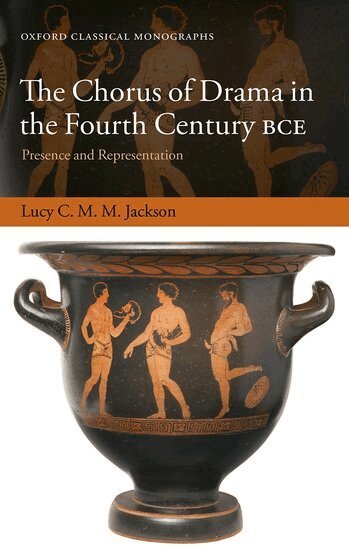
The Chorus of Drama in the Fourth Century BCE seeks to upend conventional thinking about the development of drama from the fifth to the fourth centuries and to provide a new way of talking and thinking about the choruses of drama after the deaths of Euripides and Sophocles. Set in the context of a theatre industry extending far beyond the confines of the City Dionysia and the city of Athens, the identity of choral performers and the significance of their contribution to the shape and meaning of drama in the later Classical period (c.400-323) as a whole is an intriguing and under-explored area of enquiry. This volume draws together the fourth-century historical, material, dramatic, literary, and philosophical sources that attest to the activity and quality of dramatic choruses and, having considered the positive evidence for dramatic choral activity, provides a radical rethinking of two oft-cited yet ill-understood phenomena that have traditionally supported the idea that the chorus of drama 'declined' in the fourth century: the inscription of χοŕο*u~ με´ λο*s in papyri and manuscripts in place of fully written-out choral odes, and Aristotle's invocation of embolima (Poetics 1456a25-32). It also explores the important role of influential fourth-century authors such as Plato, Demosthenes, and Xenophon, as well as artistic representations of choruses on fourth-century monuments, in shaping later scholars' understanding of the dramatic chorus throughout the Classical period, reaching conclusions that have significant implications for the broader story we wish to tell about Attic drama and its most enigmatic and fundamental element, the chorus.
Inbunden, Engelska, 2023
1 914 kr
Skickas inom 5-8 vardagar
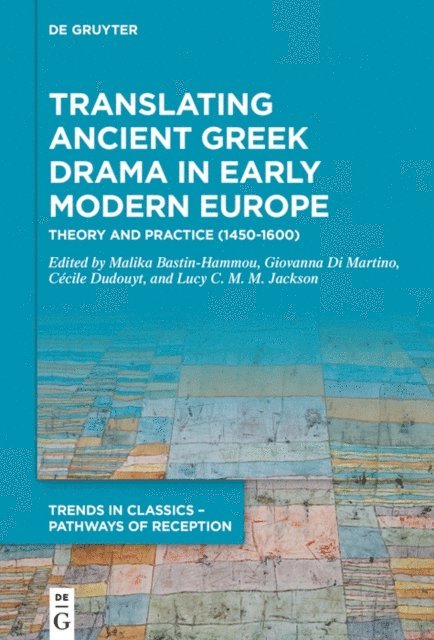
No detailed description available for "Translating Ancient Greek Drama in Early Modern Europe".
E-bok
PDF, Engelska, 20231 851 kr
Läs direkt efter köp
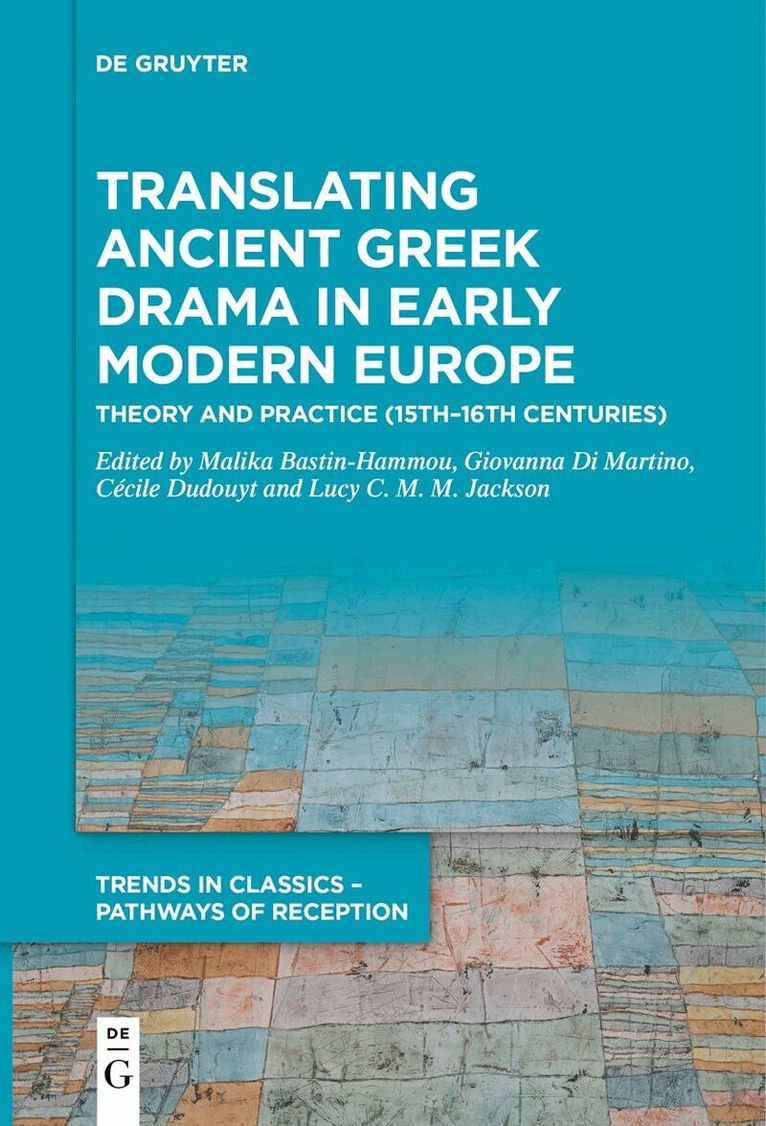
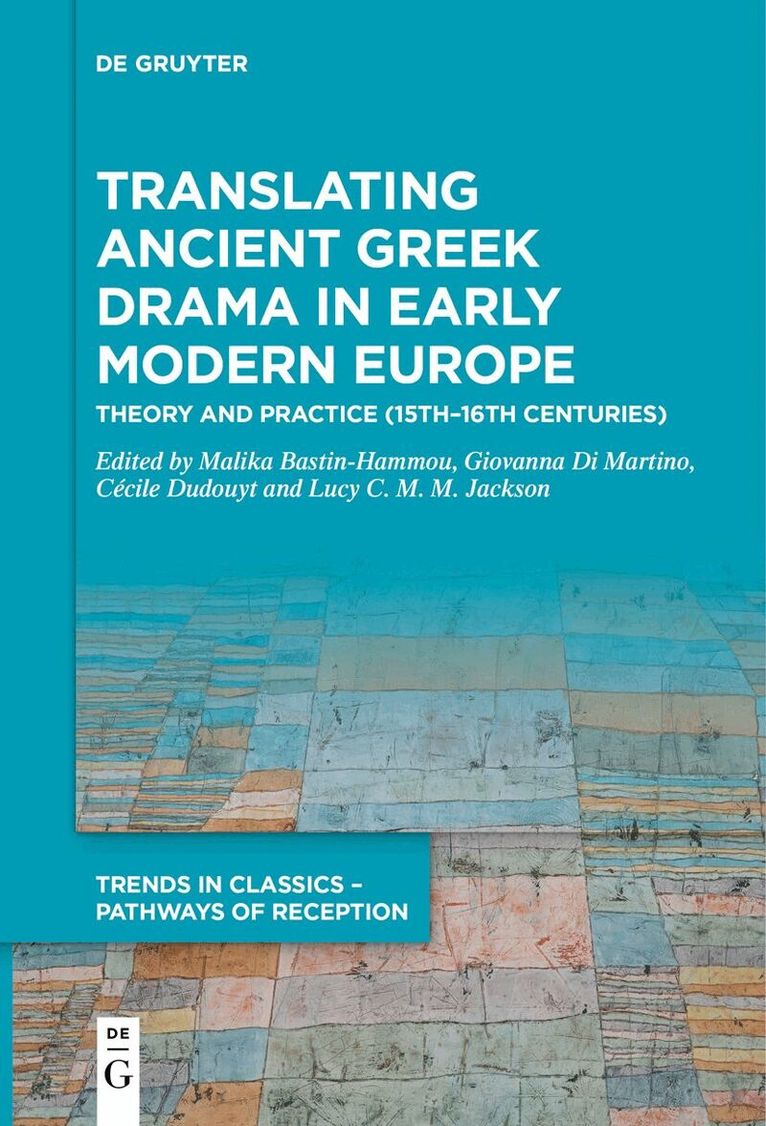
The volume brings together contributions on 15th and 16th century translation throughout Europe (in particular Italy, France, Spain, Portugal, Germany, and England).Whilst studies of the reception of ancient Greek drama in this period have generally focused on one national tradition, this book widens the geographical and linguistic scope so as to approach it as a European phenomenon. Latin translations are particularly emblematic of this broader scope: translators from all over Europe latinised Greek drama and, as they did so, developed networks of translators and practices of translation that could transcend national borders. The chapters collected here demonstrate that translation theory and practice did not develop in national isolation, but were part of a larger European phenomenon, nourished by common references to Biblical and Greco-Roman antiquities, and honed by common religious and scholarly controversies. In addition to situating these texts in the wider context of the reception of Greek drama in the early modern period, this volume opens avenues for theoretical debate about translation practices and discourses on translation, and on how they map on to twenty-first-century terminology.
E-bok
Engelska, 20231 851 kr
Läs direkt efter köp
The volume brings together contributions on 15th and 16th century translation throughout Europe (in particular Italy, France, Spain, Portugal, Germany, and England).Whilst studies of the reception of ancient Greek drama in this period have generally focused on one national tradition, this book widens the geographical and linguistic scope so as to approach it as a European phenomenon. Latin translations are particularly emblematic of this broader scope: translators from all over Europe latinised Greek drama and, as they did so, developed networks of translators and practices of translation that could transcend national borders. The chapters collected here demonstrate that translation theory and practice did not develop in national isolation, but were part of a larger European phenomenon, nourished by common references to Biblical and Greco-Roman antiquities, and honed by common religious and scholarly controversies. In addition to situating these texts in the wider context of the reception of Greek drama in the early modern period, this volume opens avenues for theoretical debate about translation practices and discourses on translation, and on how they map on to twenty-first-century terminology.
Del 5 - Trends in Classics – Pathways of Reception
Translating Ancient Greek Drama in Early Modern Europe
Theory and Practice (15th–16th Centuries)
Häftad, Engelska, 2024
261 kr
Skickas inom 3-6 vardagar
No detailed description available for "Translating Ancient Greek Drama in Early Modern Europe".