Ludger Schwienhorst-Schonberger – författare
Visar alla böcker från författaren Ludger Schwienhorst-Schonberger. Handla med fri frakt och snabb leverans.
4 produkter
4 produkter
E-bok
PDF, Tyska, 20132 171 kr
Läs direkt efter köp
E-bok
PDF, Tyska, 20132 318 kr
Läs direkt efter köp
E-bok
PDF, Tyska, 2020215 kr
Läs direkt efter köp
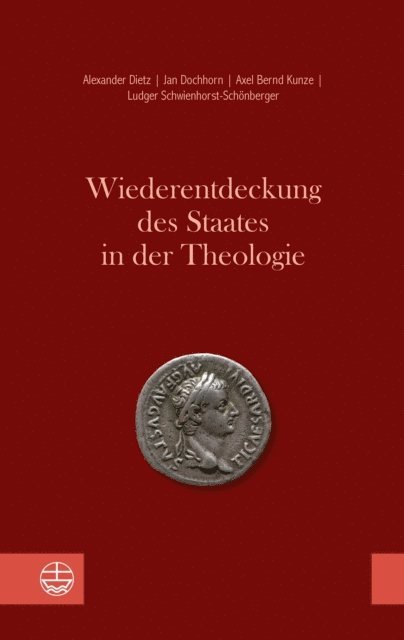
Fragen zur Zukunft des Nationalstaats, des Rechtsstaats, des Sozialstaats und des demokratischen Staats bestimmen derzeit die öffentlichen Debatten. Während Kirche und Theologie in der Vergangenheit dem Staat oft zu unkritisch gegenüberstanden, hat sich in den letzten Jahrzehnten eine theologische Staatsvergessenheit und teilweise sogar Staatsverachtung verfestigt. Dies entspricht aktuellen gesellschaftlichen und wissenschaftlichen Trends. Vor dem Hintergrund dieser Krise des Staates ist kritisch zu erörtern, in welchem Verhältnis Staatlichkeit, partikulare Identität und das christliche Wirklichkeitsverständnis zueinander stehen. Dazu leisten die Autoren dieses Bandes Beiträge in exegetischer und ethischer Perspektive.[Rediscovering State in Theology]Questions prevalent in modern political debate have more to do with state than generally estimated: Democracy, welfare, rule of law and national sovereignty are to a large degree interdependent, and all these themes are related to statehood. In the remote past, church and theology have been comparably uncritical towards statehood. However, this attitude has changed dramatically in the last decennia leading to distance, negligence and even disdain of the state. Theology here follows predominant trends in research and societal debate. In the present crisis of state, however, there are good reasons to reorientate. Theology has to consider critically, how statehood, particular identity and a Christian worldview can be related to each other. In the present volume, authors from different denominational background and different fields of research (mainly Biblical studies and Christian ethics) open up the field for discussion.
E-bok
PDF, Tyska, 2013620 kr
Läs direkt efter köp
Religious traditions tend to consider a purely cognitive understanding of their holy scriptures as being insufficient. Different spiritual exercises function as preparation for grasping the deeper meaning of the texts. The oldest forms of interpretation are connected to ritual, meditation and prayer.On the other hand, quite early on, a process of differentiation began to separate interpretation and spiritual practice. Important sections of the explanation of authoritative texts were being relocated within institutions of higher education. This resulted in a tension between religious reading and scientific reading.This volume brings together an array of specialists who analyze the relation between spiritual practice and the scientific reading of holy texts in Hinduism, Buddhism and Christianity. In addition to detailed historical analyses, particular attention is paid to the significance of contemplative exegesis in contemporary Christian theology.