Ludovico Alcorta – författare
Visar alla böcker från författaren Ludovico Alcorta. Handla med fri frakt och snabb leverans.
11 produkter
11 produkter
E-bok
PDF, Engelska, 2013642 kr
Läs direkt efter köp
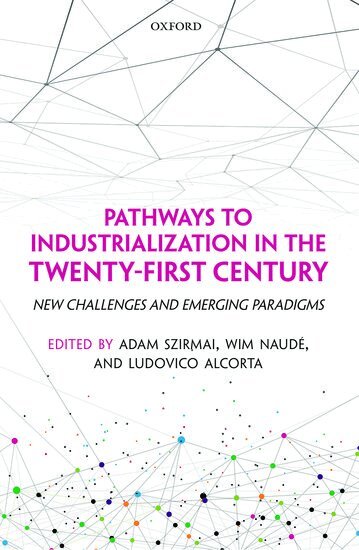
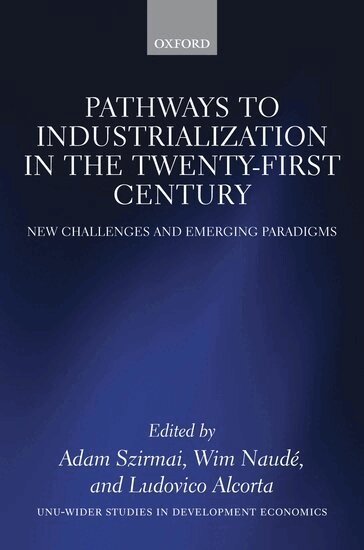
Over the last two centuries, the experiences of the first wave of industrialized countries in Europe and the US, and the more recent experiences of the East Asian Tigers, Indonesia, Malaysia, Thailand, China, India, and Vietnam, have illustrated the transformative nature of industrialization. There are reasons to believe that industrialization will continue to be one of the major engines of growth, transformation, and socioeconomic development. Industrial developmentenables a more rapid advancement toward developed country living standards. But many challenges remain, and new challenges have arisen. These include: integration into global value chains; the shrinking of policy space in the present international order; the rise of the Asian driver economies; newopportunities provided by resource-based industrialization; the accelerating pace of technological change in manufacturing; how to deal with jobless growth in manufacturing; creating adequate systems of financial intermediation; and how to respond to the threats of global warming and climate change.Under present conditions it may be more difficult than ever for the poorer developing countries to foster industrial development and structural change. They face a more complex, and daunting set of circumstances than the developing countries that embarked on industrialization after 1950. These changing and challenging circumstances require new thinking, and in particular new paradigms to guide researchers, policy makers, and international development organizations in the future.The book includes chapters on the experiences of Africa, Latin America, China, and Indonesia, as wells as thematic chapters on structural change, jobless growth, the evolution of industrial policy, and the challenges of environmental sustainability and climate change. It provides a timely analysis of the circumstances and challenges facing developing countries in industrialization, and offer fresh ideas for new paradigms to carry forward industrial policy in the future.
E-bok
PDF, Engelska, 20211 822 kr
Läs direkt efter köp
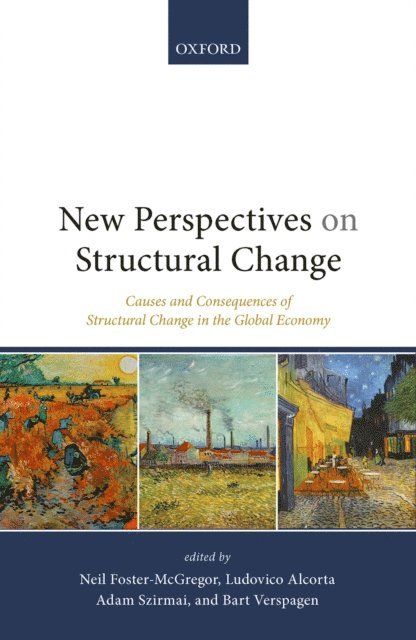
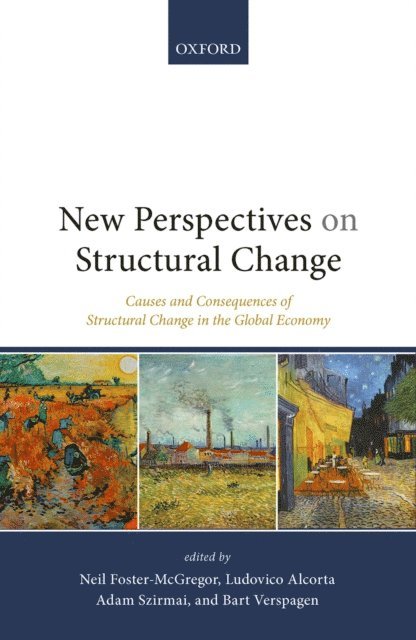
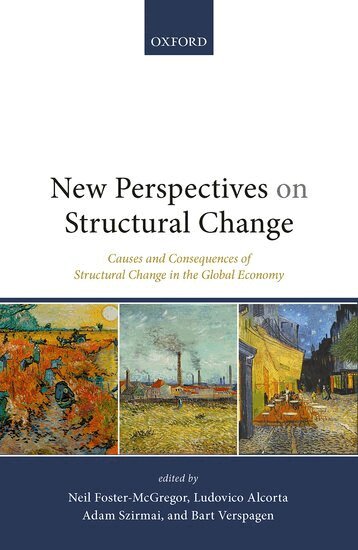
New Perspectives on Structural Change is a comprehensive edited volume that outlines both the historical roots and state-of-the-art debates on the role of structural change in the process of economic development, including both orthodox and heterodox perspectives and contributions from prominent scholars in this field. The volume consists of four main sections. The first section covers the theoretical foundations of the structural change literature. The second section presents an empirical overview of the major trends of structural change, using up-to-date data sources and methods. The third section presents a broad ranging empirical analysis of the drivers of structural change. The fourth section examines how processes such as inclusive growth, poverty reduction, productive employment, the global income distribution, and environmental sustainability are affected by structural change, and how they can be influenced by policy.
E-bok
Engelska, 20211 888 kr
Läs direkt efter köp
New Perspectives on Structural Change is a comprehensive edited volume that outlines both the historical roots and state-of-the-art debates on the role of structural change in the process of economic development, including both orthodox and heterodox perspectives and contributions from prominent scholars in this field. The volume consists of four main sections. The first section covers the theoretical foundations of the structural change literature. The second section presents an empirical overview of the major trends of structural change, using up-to-date data sources and methods. The third section presents a broad ranging empirical analysis of the drivers of structural change. The fourth section examines how processes such as inclusive growth, poverty reduction, productive employment, the global income distribution, and environmental sustainability are affected by structural change, and how they can be influenced by policy.
Häftad, Engelska, 2017
763 kr
Skickas inom 7-10 vardagar
Over the last two centuries, the experiences of the first wave of industrialized countries in Europe and the US, and the more recent experiences of the East Asian Tigers, Indonesia, Malaysia, Thailand, China, India, and Vietnam, have illustrated the transformative nature of industrialization. There are reasons to believe that industrialization will continue to be one of the major engines of growth, transformation, and socioeconomic development. Industrial development enables a more rapid advancement toward developed country living standards. But many challenges remain, and new challenges have arisen. These include: integration into global value chains; the shrinking of policy space in the present international order; the rise of the Asian driver economies; new opportunities provided by resource-based industrialization; the accelerating pace of technological change in manufacturing; how to deal with jobless growth in manufacturing; creating adequate systems of financial intermediation; and how to respond to the threats of global warming and climate change. Under present conditions it may be more difficult than ever for the poorer developing countries to foster industrial development and structural change. They face a more complex, and daunting set of circumstances than the developing countries that embarked on industrialization after 1950. These changing and challenging circumstances require new thinking, and in particular new paradigms to guide researchers, policy makers, and international development organizations in the future. The book includes chapters on the experiences of Africa, Latin America, China, and Indonesia, as wells as thematic chapters on structural change, jobless growth, the evolution of industrial policy, and the challenges of environmental sustainability and climate change. It provides a timely analysis of the circumstances and challenges facing developing countries in industrialization, and offer fresh ideas for new paradigms to carry forward industrial policy in the future.
Inbunden, Engelska, 2021
2 215 kr
Skickas inom 5-8 vardagar
New Perspectives on Structural Change is a comprehensive edited volume that outlines both the historical roots and state-of-the-art debates on the role of structural change in the process of economic development, including both orthodox and heterodox perspectives and contributions from prominent scholars in this field. The volume consists of four main sections. The first section covers the theoretical foundations of the structural change literature. The second section presents an empirical overview of the major trends of structural change, using up-to-date data sources and methods. The third section presents a broad ranging empirical analysis of the drivers of structural change. The fourth section examines how processes such as inclusive growth, poverty reduction, productive employment, the global income distribution, and environmental sustainability are affected by structural change, and how they can be influenced by policy.
Inbunden, Engelska, 2013
2 105 kr
Skickas inom 7-10 vardagar
Over the last two centuries, the experiences of the first wave of industrialized countries in Europe and the US, and the more recent experiences of the East Asian Tigers, Indonesia, Malaysia, Thailand, China, India, and Vietnam, have illustrated the transformative nature of industrialization. There are reasons to believe that industrialization will continue to be one of the major engines of growth, transformation, and socioeconomic development. Industrial development enables a more rapid advancement toward developed country living standards. But many challenges remain, and new challenges have arisen. These include: integration into global value chains; the shrinking of policy space in the present international order; the rise of the Asian driver economies; new opportunities provided by resource-based industrialization; the accelerating pace of technological change in manufacturing; how to deal with jobless growth in manufacturing; creating adequate systems of financial intermediation; and how to respond to the threats of global warming and climate change.Under present conditions it may be more difficult than ever for the poorer developing countries to foster industrial development and structural change. They face a more complex, and daunting set of circumstances than the developing countries that embarked on industrialization after 1950. These changing and challenging circumstances require new thinking, and in particular new paradigms to guide researchers, policy makers, and international development organizations in the future. The book includes chapters on the experiences of Africa, Latin America, China, and Indonesia, as wells as thematic chapters on structural change, jobless growth, the evolution of industrial policy, and the challenges of environmental sustainability and climate change. It provides a timely analysis of the circumstances and challenges facing developing countries in industrialization, and offer fresh ideas for new paradigms to carry forward industrial policy in the future.
Inbunden, Engelska, 1998
1 975 kr
Skickas inom 10-15 vardagar
This book examines the extent of, and motives for, the diffusion of flexible automation (FA) at global level and then turns to the local and firm level, bringing together in-depth studies of sixty-two firms in Brazil, India, Mexico, Thailand, Turkey and Venezuela. Research focuses on the impact of computer-numerically-controlled machine tools on scale and scope by exploring changes in lot sizes and product variety (product scale and scope), total plant output (plant scale) and total firm output (firm scale). Barriers to setting up FA-based operations are discussed, as are factors which may affect a decision to locate in a developing country. The contributed studies reveal a relatively slow diffusion of FA in developing countries and it is demonstrated that while FA possibly increases scope, it also requires that plant output be increased in order to maintain efficiency. Alcorta concludes that the location in developing countries will probably only be viable for large domestic firms, multinationals seeking to relocate simple but labour intensive assembly processes and firms in countries with significant domestic markets.This work is unique in addressing the scale and scope issues in developing countries and in the wealth of information regarding machine tools which it provides. The data provided in the appendix includes official United Nations data, previously unpublished. This will be of use for all research into trends in the use of machine tools.
Inbunden, Engelska, 2010
1 383 kr
Skickas inom 10-15 vardagar
This reissue, first published in 1984, presents a study of the key phenomenon of global banking, carried out from special financial centres in underdeveloped countries, which contributed heavily to the contemporary debt crisis. This book gathers together previously disparate and unpublished data to give a detailed picture of the scope and the effects of transnational banking in the new international financial centres which have largely been set up since 1970.
Häftad, Engelska, 2013
470 kr
Skickas inom 10-15 vardagar
This reissue, first published in 1984, presents a study of the key phenomenon of global banking, carried out from special financial centres in underdeveloped countries, which contributed heavily to the contemporary debt crisis. This book gathers together previously disparate and unpublished data to give a detailed picture of the scope and the effects of transnational banking in the new international financial centres which have largely been set up since 1970.
E-bok
Engelska, 2003797 kr
Läs direkt efter köp
This book examines the extent of, and motives for, the diffusion of flexible automation (FA) at global level and then turns to the local and firm level, bringing together in-depth studies of sixty-two firms in Brazil, India, Mexico, Thailand, Turkey and Venezuela. Research focuses on the impact of computer-numerically-controlled machine tools on scale and scope by exploring changes in lot sizes and product variety (product scale and scope), total plant output (plant scale) and total firm output (firm scale). Barriers to setting up FA-based operations are discussed, as are factors which may affect a decision to locate in a developing country. The contributed studies reveal a relatively slow diffusion of FA in developing countries and it is demonstrated that while FA possibly increases scope, it also requires that plant output be increased in order to maintain efficiency. Alcorta concludes that the location in developing countries will probably only be viable for large domestic firms, multinationals seeking to relocate simple but labour intensive assembly processes and firms in countries with significant domestic markets.This work is unique in addressing the scale and scope issues in developing countries and in the wealth of information regarding machine tools which it provides. The data provided in the appendix includes official United Nations data, previously unpublished. This will be of use for all research into trends in the use of machine tools.
E-bok
PDF, Engelska, 2003797 kr
Läs direkt efter köp
This book examines the extent of, and motives for, the diffusion of flexible automation (FA) at global level and then turns to the local and firm level, bringing together in-depth studies of sixty-two firms in Brazil, India, Mexico, Thailand, Turkey and Venezuela. Research focuses on the impact of computer-numerically-controlled machine tools on scale and scope by exploring changes in lot sizes and product variety (product scale and scope), total plant output (plant scale) and total firm output (firm scale). Barriers to setting up FA-based operations are discussed, as are factors which may affect a decision to locate in a developing country. The contributed studies reveal a relatively slow diffusion of FA in developing countries and it is demonstrated that while FA possibly increases scope, it also requires that plant output be increased in order to maintain efficiency. Alcorta concludes that the location in developing countries will probably only be viable for large domestic firms, multinationals seeking to relocate simple but labour intensive assembly processes and firms in countries with significant domestic markets.This work is unique in addressing the scale and scope issues in developing countries and in the wealth of information regarding machine tools which it provides. The data provided in the appendix includes official United Nations data, previously unpublished. This will be of use for all research into trends in the use of machine tools.