Thepaperscollectedin thisvolumewerepresentedatthe ?fth EuropeanWo- shoponCase-BasedReasoning(EWCBR2K)heldTrento,Italy.EWCBR2K was the last episode of a series of very successful meetings held previously in Kaiserslautern (1993), Paris (1994), Lausanne (1996) and Dublin (1998) that traditionally attract European and international researchers and practitioners in case-basedreasoning. Case-based reasoning is a recent ?eld of research with a long history of - plications. The organization of the volume is consistent with this vision of the ?eld and, afteran initial partdevotedto the invited papers,the twomain parts containresearchandapplicationpapersrespectively.The overallresultisa r- resentative snapshot of current researchand state-of-the-artapplications. The meritforthisvolumegoestotheauthorsofthepapers,theProgramCommittee andalltheadditionalreviewerswhosecombinede?ortproducedthishigh-quality scienti?c work.The organizers would like to thank all the people who contributed to the success of the workshop: in particular, Francesco Ricci who originally proposed to have EWCBR2K in Italy; Fausto Giunchiglia, Paolo Traverso and Oliviero Stock who backed the proposal and assured the institutional committment of ITC-irst and University of Trento; Paolo Avesani, Mehmet Goeker and Michel Manago who developed the traditional industrial-day into the ?rst edition of Innovative Customer Centered Applications (ICCA), a co-located event with a focused target on industry people; Giampaolo Avancini, Sara Beatrici, Morena Carli, Carola Dori, Alessandro Tuccio, of ITC-IRST and Fabrizio Di Bartolo of UniversityoftheEasternPiedmontwhoweree?ective,professionalandfriendly whileprovidingtechnicalandadministrativesupportfortheorganizationofthe event. We would like to o?er thanks for the support provided by EWCBR-98, MLNET,theItalianAssociationforArti?cialIntelligence(AI*IA)andthe- partmentofAdvancedSciencesandTechnologies(DISTA)oftheUniversityof EasternPiedmont(Universit' adelPiemonteOrientale"A.Avogadro").Aspecial thanktotheinvitedspeakersBarrySmythandQiangYangandtoallthechairs ofthesessionsand?nally,toSpringer-Verlagfortheirhelpandtheirenthusiastic agreementon the publication of this volume.
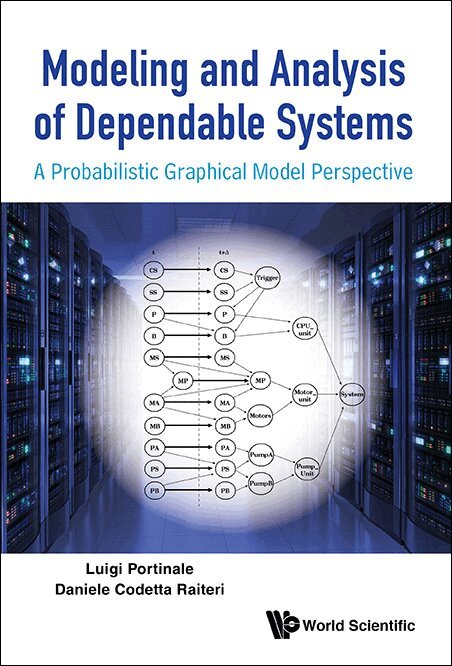
The monographic volume addresses, in a systematic and comprehensive way, the state-of-the-art dependability (reliability, availability, risk and safety, security) of systems, using the Artificial Intelligence framework of Probabilistic Graphical Models (PGM). After a survey about the main concepts and methodologies adopted in dependability analysis, the book discusses the main features of PGM formalisms (like Bayesian and Decision Networks) and the advantages, both in terms of modeling and analysis, with respect to classical formalisms and model languages.Methodologies for deriving PGMs from standard dependability formalisms will be introduced, by pointing out tools able to support such a process. Several case studies will be presented and analyzed to support the suitability of the use of PGMs in the study of dependable systems.
Thepaperscollectedin thisvolumewerepresentedatthe ?fth EuropeanWo- shoponCase-BasedReasoning(EWCBR2K)heldTrento,Italy.EWCBR2K was the last episode of a series of very successful meetings held previously in Kaiserslautern (1993), Paris (1994), Lausanne (1996) and Dublin (1998) that traditionally attract European and international researchers and practitioners in case-basedreasoning. Case-based reasoning is a recent ?eld of research with a long history of - plications. The organization of the volume is consistent with this vision of the ?eld and, afteran initial partdevotedto the invited papers,the twomain parts containresearchandapplicationpapersrespectively.The overallresultisa r- resentative snapshot of current researchand state-of-the-artapplications. The meritforthisvolumegoestotheauthorsofthepapers,theProgramCommittee andalltheadditionalreviewerswhosecombinede?ortproducedthishigh-quality scienti?c work.The organizers would like to thank all the people who contributed to the success of the workshop: in particular, Francesco Ricci who originally proposed to have EWCBR2K in Italy; Fausto Giunchiglia, Paolo Traverso and Oliviero Stock who backed the proposal and assured the institutional committment of ITC-irst and University of Trento; Paolo Avesani, Mehmet Goeker and Michel Manago who developed the traditional industrial-day into the ?rst edition of Innovative Customer Centered Applications (ICCA), a co-located event with a focused target on industry people; Giampaolo Avancini, Sara Beatrici, Morena Carli, Carola Dori, Alessandro Tuccio, of ITC-IRST and Fabrizio Di Bartolo of UniversityoftheEasternPiedmontwhoweree?ective,professionalandfriendly whileprovidingtechnicalandadministrativesupportfortheorganizationofthe event. We would like to o?er thanks for the support provided by EWCBR-98, MLNET,theItalianAssociationforArti?cialIntelligence(AI*IA)andthe- partmentofAdvancedSciencesandTechnologies(DISTA)oftheUniversityof EasternPiedmont(Universit' adelPiemonteOrientale"A.Avogadro").Aspecial thanktotheinvitedspeakersBarrySmythandQiangYangandtoallthechairs ofthesessionsand?nally,toSpringer-Verlagfortheirhelpandtheirenthusiastic agreementon the publication of this volume.
The monographic volume addresses, in a systematic and comprehensive way, the state-of-the-art dependability (reliability, availability, risk and safety, security) of systems, using the Artificial Intelligence framework of Probabilistic Graphical Models (PGM). After a survey about the main concepts and methodologies adopted in dependability analysis, the book discusses the main features of PGM formalisms (like Bayesian and Decision Networks) and the advantages, both in terms of modeling and analysis, with respect to classical formalisms and model languages.Methodologies for deriving PGMs from standard dependability formalisms will be introduced, by pointing out tools able to support such a process. Several case studies will be presented and analyzed to support the suitability of the use of PGMs in the study of dependable systems.