Luisa T. Schneider – författare
Visar alla böcker från författaren Luisa T. Schneider. Handla med fri frakt och snabb leverans.
6 produkter
Love and Violence in Sierra Leone
Mediating Intimacy after Conflict
Inbunden, 2025
1493 kr
Lägg i varukorg
In the decades following the civil war that took place in Sierra Leone between 1991 and 2002, new laws were passed to rebuild the state, and to prevent rape, teenage pregnancy and domestic violence. In this ethnography, Luisa T. Schneider explores the intricate semantic, empirical and socio-legal …
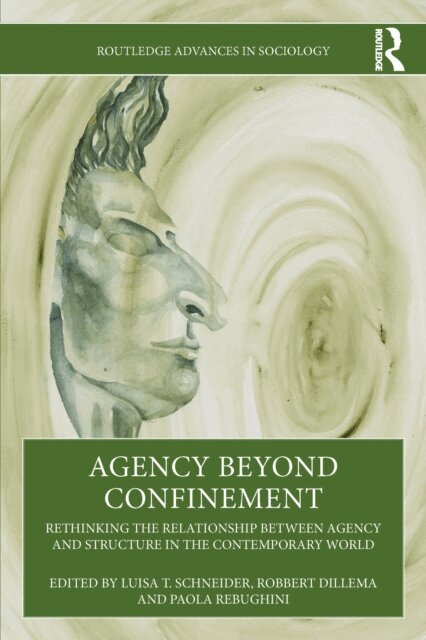
Agency Beyond Confinement
Rethinking the Relationship Between Agency and Structure in the Contemporary World
Av Paola Rebughini, Robbert Dillema m. fl.
E-bok, 2026
813 kr
Lägg i varukorg
What does it mean to be confined and what forms of life, resistance, and care emerge in response? Agency Beyond Confinement rethinks the social life of confinement by refusing binaries: structure vs. agency, reform vs. resistance, care vs. control.Across prisons, homes, gardens, seas, and cities, …
Agency Beyond Confinement
Rethinking the Relationship Between Agency and Structure in the Contemporary World
Av Paola Rebughini, Robbert Dillema m. fl.
E-bok, 2026
813 kr
Lägg i varukorg
What does it mean to be confined and what forms of life, resistance, and care emerge in response? Agency Beyond Confinement rethinks the social life of confinement by refusing binaries: structure vs. agency, reform vs. resistance, care vs. control.Across prisons, homes, gardens, seas, and cities, …
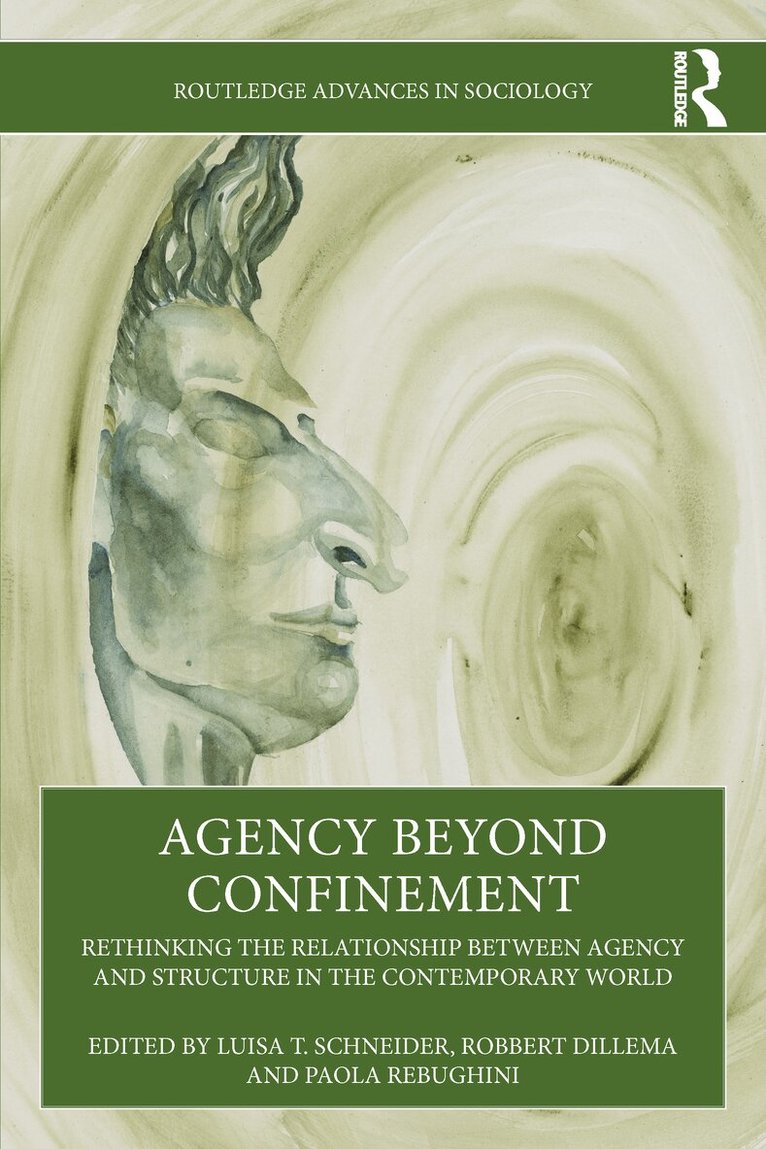
Agency Beyond Confinement
Rethinking the Relationship Between Agency and Structure in the Contemporary World
Av Luisa T Schneider, Robbert Dillema m. fl.
Inbunden, 2026
2504 kr
Lägg i varukorg
What does it mean to be confined and what forms of life, resistance, and care emerge in response? Agency Beyond Confinement rethinks the social life of confinement by refusing binaries: structure vs. agency, reform vs. resistance, care vs. control.Across prisons, homes, gardens, seas, and cities, …