Luke O'Sullivan – författare
Visar alla böcker från författaren Luke O'Sullivan. Handla med fri frakt och snabb leverans.
14 produkter
Correspondence of Jeremy Bentham
Volume 12: July 1824 to June 1828
Av The late Catherine Fuller, Luke O'Sullivan
E-bok, 2006
2378 kr
Lägg i varukorg
This twelfth volume of Correspondence contains authoritative and fully annotated texts of all known letters sent both to and from Bentham between July 1824 and June 1828. The 301 letters, most of which have never before been published, have been collected from archives, public and private, in …
The Correspondence of Jeremy Bentham
Volume 12: July 1824 to June 1828
Av Luke O'Sullivan, The late Catherine Fuller
Inbunden, 2006
3999 kr
Lägg i varukorg
This twelfth volume of Correspondence contains authoritative and fully annotated texts of all known letters sent both to and from Bentham between July 1824 and June 1828. The 301 letters, most of which have never before been published, have been collected from archives, public and private, in …
What is History? And Other Essays
Selected Writings
Av Michael Oakeshott, Luke O'Sullivan
Inbunden, 2004
815 kr
Lägg i varukorg
This highly readable new collection of thirty pieces by Michael Oakeshott, almost all of which are previously unpublished, covers every decade of his intellectual career, and adds significantly to his contributions to the philosophy of historical understanding and political philosophy, as well as …
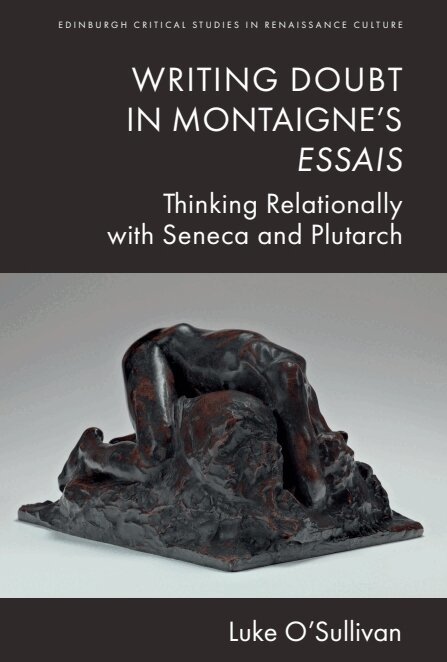
Writing Doubt in Montaigne's Essais
Thinking Relationally with Seneca and Plutarch
Inbunden, 2024
2270 kr
Lägg i varukorg
Doubtful Writing offers a major reassessment of philosophical uncertainty in one of the early modern period's foremost doubters. It argues that Montaigne's engagement, his endless 'commerce' with two dogmatists, Seneca and Plutarch, produced a radical new mode of doubtful writing; one with which …
Writing Doubt in Montaigne's Essais
Thinking Relationally with Seneca and Plutarch
Häftad, 2026
289 kr
Lägg i varukorg
Doubtful Writing offers a major reassessment of philosophical uncertainty in one of the early modern period's foremost doubters. It argues that Montaigne's engagement, his endless 'commerce' with two dogmatists, Seneca and Plutarch, produced a radical new mode of doubtful writing; one with which …
Categories
A Study of a Concept in Western Philosophy and Political Thought
Inbunden, 2024
1901 kr
Lägg i varukorg
In ancient and modern Western thought, the problem of the nature of categories has been inseparable from arguments about the nature of selfhood; about how knowledge is organised; about how power should be distributed; and about how history should be understood. For Plato, Forms belonging to a …
Categories
A Study of a Concept in Western Philosophy and Political Thought
Häftad, 2026
303 kr
Lägg i varukorg
In ancient and modern Western thought, the problem of the nature of categories has been inseparable from arguments about the nature of selfhood; about how knowledge is organised; about how power should be distributed; and about how history should be understood. For Plato, Forms belonging to a …
Vocabulary of a Modern European State
Essays and Reviews 1953-1988
Av Michael Oakeshott, Luke O'Sullivan
Inbunden, 2008
426 kr
Lägg i varukorg
The Vocabulary of a Modern European State is the companion volume to The Concept of a Philosophical Jurisprudence and completes the enterprise of gathering together Oakeshott's previously scattered essays and reviews. As with all the other volumes in the series it contains an entirely new editorial …
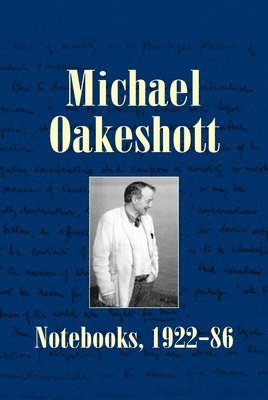
Michael Oakeshott: Notebooks, 1922-86
Av Michael Oakeshott, Luke O'Sullivan
Inbunden, 2014
1307 kr
Lägg i varukorg
From the 1920s to the 1980s Oakeshott filled dozens of notebooks with his private reflections, both personal and intellectual. Their contents range from aphorisms to miniature essays, forming a unique record of his intellectual trajectory over his entire career. This volume makes them accessible in …
Lectures in the History of Political Thought
Av Michael Oakeshott, Luke O'Sullivan
Häftad, 2007
292 kr
Lägg i varukorg
Oakeshott's memorable lectures on the history of political thought, delivered each year at the London School of Economics, will now be available in print for the first time as Volume II of his Selected Writings. Based on manuscripts in the LSE archive for 1966–67, the last year of Oakeshott’s …
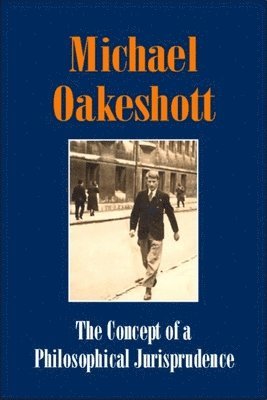
Concept of a Philosophical Jurisprudence
Av Michael Oakeshott, Luke O'Sullivan
Häftad, 2009
458 kr
Lägg i varukorg
This volume brings together for the first time over a hundred of Oakeshott's essays and reviews, written between 1926 and 1951, that until now have remained scattered through a variety of scholarly journals, periodicals and newspapers. A new editorial introduction explains how these pieces, …
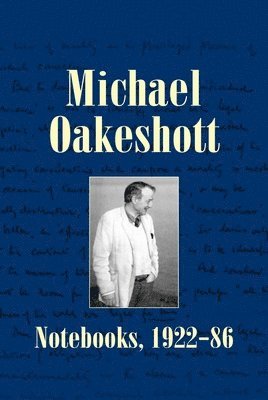
Michael Oakeshott: Notebooks, 1922-86
Av Michael Oakeshott, Luke O'Sullivan
Häftad, 2017
356 kr
Lägg i varukorg
From the 1920s to the 1980s Oakeshott filled dozens of notebooks with his private reflections, both personal and intellectual. Their contents range from aphorisms to miniature essays, forming a unique record of his intellectual trajectory over his entire career. This volume makes them accessible in …
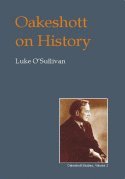
Oakeshott on History
Inbunden, 2003
435 kr
Tillfälligt slut
This book challenges the common view that Michael Oakeshott was mainly important as a political philosopher by offering the first comprehensive study of his ideas on history. It argues that Oakeshott's writings on the philosophy of history mark him out as the most successful of the philosophers who …
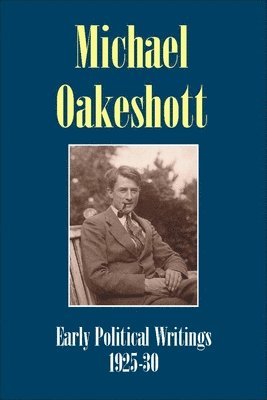
Michael Oakeshott: Early Political Writings 1925-30
A discussion of some matters preliminary to the study of political philosophy' and 'The philosophical approach to politics
Av Michael Oakeshott, Luke O'Sullivan
Inbunden, 2010
421 kr
Tillfälligt slut
Michael Oakeshott (1901-90) made his reputation as a political philosopher, but for a long time it seemed as if he had little interest in politics before 1945. His major pre-war work, Experience and its Modes (1933) was an examination of the nature of philosophy and its relation to other forms of …