
Lutzky Ursula Lutzky – författare
Visar alla böcker från författaren Lutzky Ursula Lutzky. Handla med fri frakt och snabb leverans.
2 produkter
2 produkter
E-bok
Engelska, 20191 304 kr
Läs direkt efter köp
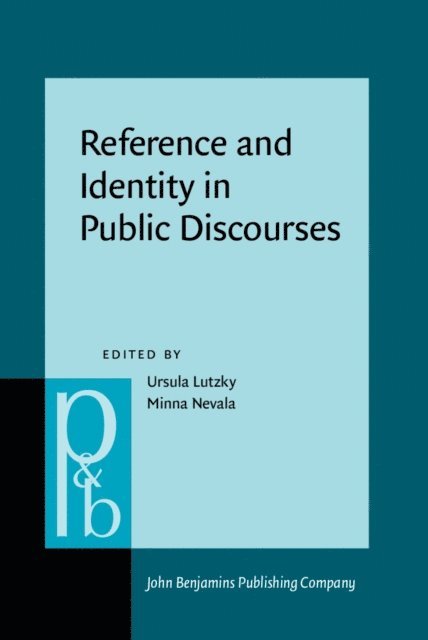
This volume explores the concepts of reference and identity in public discourses. Its contributions study discourse-specific reference and labelling patterns, both from a historical and present-day perspective, and discuss their impact on self- and other-representation in the construction of identity. They combine multiple methodological approaches, including corpus-based quantitative as well as qualitative ones, and apply them to a range of text types that are or were (intended to be) public, such as letters, newspapers, parliamentary debates, and online communication in the form of reader comments, discussion pages, and tweets. In addition to English, the languages studied include Polish as well as European and Latin American Spanish. The volume is aimed at researchers from different research paradigms in linguistics and related disciplines, such as media communication or the social and cultural sciences, who are interested in the interplay of reference and identity.
E-bok
PDF, Engelska, 20121 258 kr
Läs direkt efter köp
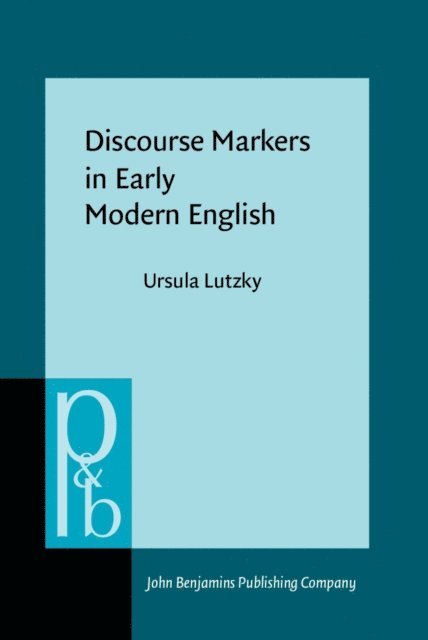
This volume provides new insights into the nature of the Early Modern English discourse markers marry, well and why through the analysis of three corpora (A Corpus of English Dialogues, 1560-1760, the Parsed Corpus of Early English Correspondence, and the Penn-Helsinki Parsed Corpus of Early Modern English). By combining both quantitative and qualitative approaches in the study of pragmatic markers, innovative findings are reached about their distribution throughout the period 1500-1760, their attestation in different speech-related text types as well as similarities and differences in their functions. Additionally, this work engages in a sociopragmatic study, based on the sociopragmatically annotated Drama Corpus of almost a quarter of a million words, to enhance our understanding about their use by characters of different social status and gender. This volume therefore constitutes an essential piece of the puzzle in our attempt to gain a full picture of discourse marker use.This book won the 2014 ESSE book award in English Language and Linguistics