Lydia Amir – författare
Visar alla böcker från författaren Lydia Amir. Handla med fri frakt och snabb leverans.
12 produkter
Legacy of Nietzsche's Philosophy of Laughter
Bataille, Deleuze, and Rosset
Av Lydia Amir
E-bok, 2021
762 kr
Lägg i varukorg
This book investigates the role of humor in the good life, specifically as discussed by three prominent French intellectuals who were influenced by Nietzsche''s thought: Georges Bataille, Gilles Deleuze, and Clément Rosset. Lydia Amir begins by discussing Nietzsche’s reception in France, and she …
Legacy of Nietzsche's Philosophy of Laughter
Bataille, Deleuze, and Rosset
Av Lydia Amir
E-bok, 2021
762 kr
Lägg i varukorg
This book investigates the role of humor in the good life, specifically as discussed by three prominent French intellectuals who were influenced by Nietzsche''s thought: Georges Bataille, Gilles Deleuze, and Clément Rosset. Lydia Amir begins by discussing Nietzsche’s reception in France, and she …
Legacy of Nietzsche’s Philosophy of Laughter
Bataille, Deleuze, and Rosset
Av Lydia Amir
Häftad, 2024
649 kr
Lägg i varukorg
This book investigates the role of humor in the good life, specifically as discussed by three prominent French intellectuals who were influenced by Nietzsche's thought: Georges Bataille, Gilles Deleuze, and Clément Rosset. Lydia Amir begins by discussing Nietzsche’s reception in France, and she …
Legacy of Nietzsche’s Philosophy of Laughter
Bataille, Deleuze, and Rosset
Av Lydia Amir
Inbunden, 2021
2519 kr
Lägg i varukorg
This book investigates the role of humor in the good life, specifically as discussed by three prominent French intellectuals who were influenced by Nietzsche's thought: Georges Bataille, Gilles Deleuze, and Clément Rosset. Lydia Amir begins by discussing Nietzsche’s reception in France, and she …
Philosophy, Humor, and the Human Condition
Taking Ridicule Seriously
Av Lydia Amir
Inbunden, 2020
880 kr
Lägg i varukorg
This book presents an original worldview, Homo risibilis, wherein self-referential humor is proposed as the path leading from a tragic view of life to a liberating embrace of human ridicule. Humor is presented as a conceptual tool for holding together contradictions and managing the unresolvable …
Philosophy, Humor, and the Human Condition
Taking Ridicule Seriously
Av Lydia Amir
E-bok, 2019
1141 kr
Lägg i varukorg
This book presents an original worldview, Homo risibilis, wherein self-referential humor is proposed as the path leading from a tragic view of life to a liberating embrace of human ridicule. Humor is presented as a conceptual tool for holding together contradictions and managing the unresolvable …
Philosophy, Humor, and the Human Condition
Taking Ridicule Seriously
Av Lydia Amir
Häftad, 2021
880 kr
Lägg i varukorg
This book presents an original worldview, Homo risibilis, wherein self-referential humor is proposed as the path leading from a tragic view of life to a liberating embrace of human ridicule. Humor is presented as a conceptual tool for holding together contradictions and managing the unresolvable …
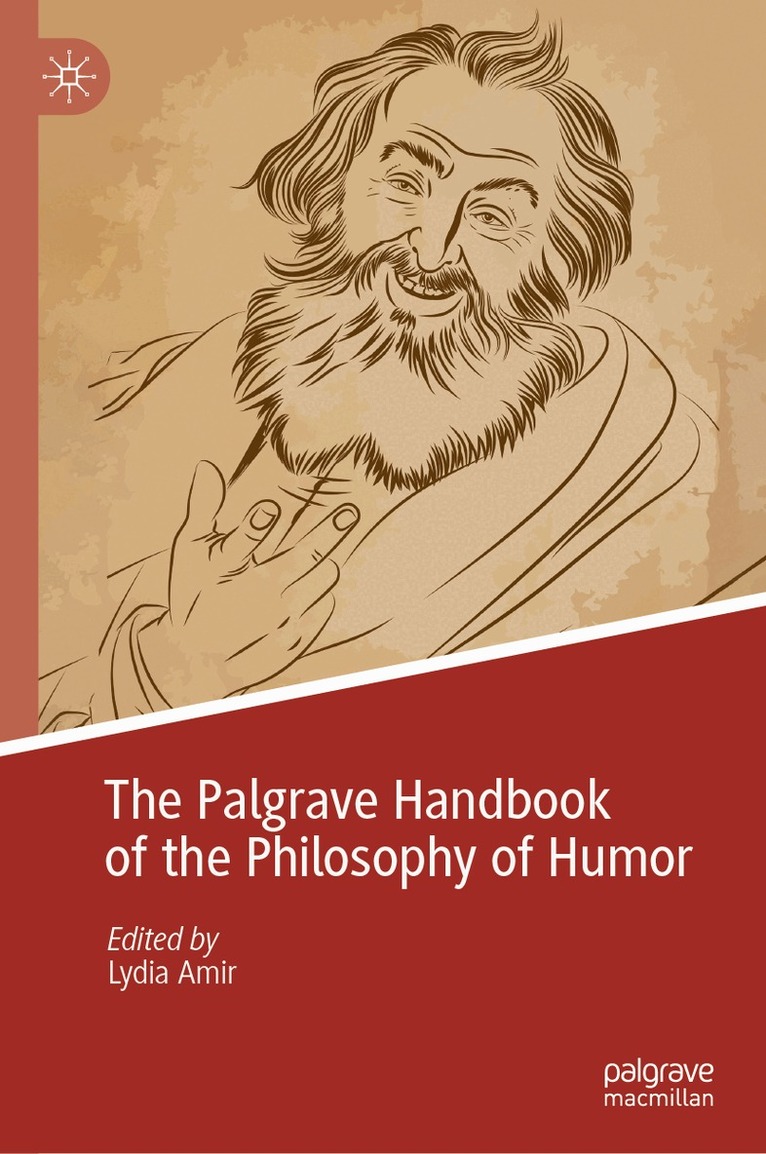
Palgrave Handbook of the Philosophy of Humor
Av Lydia Amir
Inbunden, 2026
3280 kr
Kommande
The Palgrave Handbook of the Philosophy of Humor gathers the best scholars in this now well-established field in order to fill a significant lacuna: to provide an accurate explanation of philosophers’ attitudes toward humor as an umbrella term, both historically and thematically. To that purpose, …
Palgrave Handbook of the Philosophy of Humor
Av Lydia Amir
E-bok, 2026
3978 kr
Lägg i varukorg
The Palgrave Handbook of the Philosophy of Humor gathers the best scholars in this now well-established field in order to fill a significant lacuna: to provide an accurate explanation of philosophers’ attitudes toward humor as an umbrella term, both historically and thematically. To that purpose, …
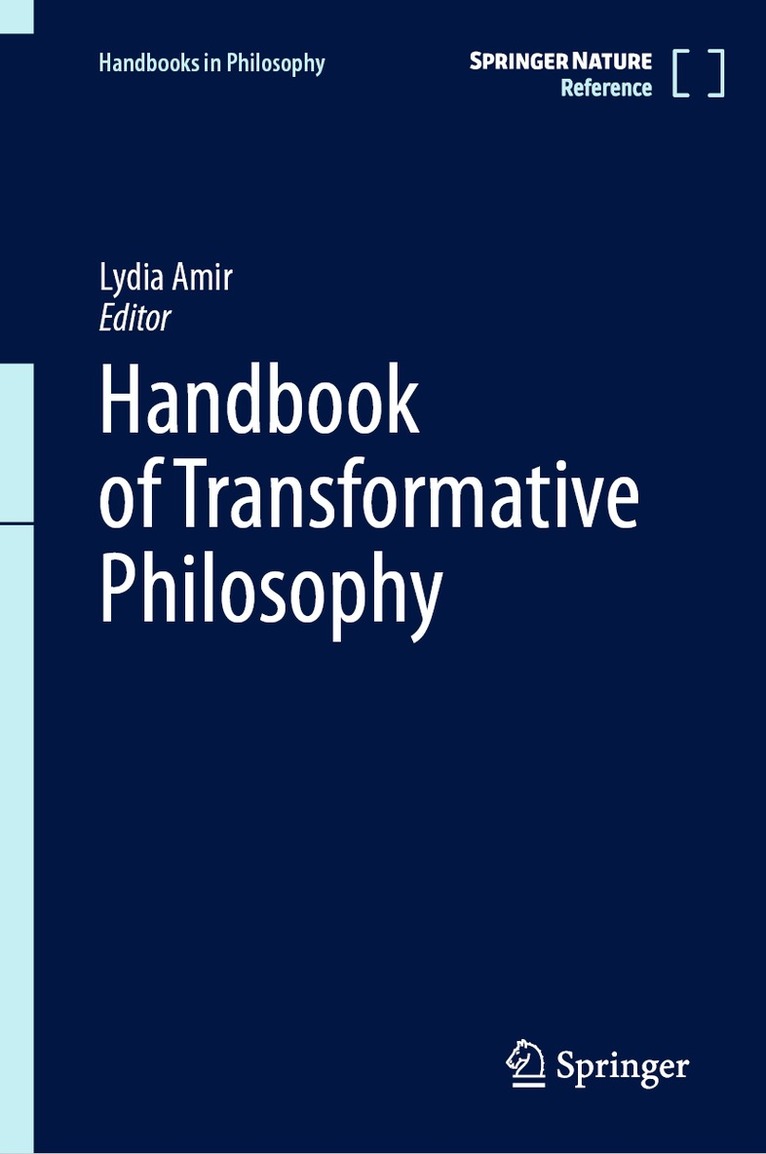
Handbook of Transformative Philosophy
Av Lydia Amir
Inbunden, 2026
2734 kr
Lägg i varukorg
The Handbook offers a theoretical and practical guide to transformative philosophies, drawing on past theories still viable today and on contemporary approaches which prioritize key transformative notions. Bringing together international top scholars, this handbook breaks ground in its scope and …
Handbook of Transformative Philosophy
Av Lydia Amir
E-bok, 2026
3508 kr
Lägg i varukorg
The Handbook offers a theoretical and practical guide to transformative philosophies, drawing on past theories still viable today and on contemporary approaches which prioritize key transformative notions. Bringing together international top scholars, this handbook breaks ground in its scope and …
Philosophy and the Comic
Ten Traditions from Antiquity to Postmodernism
Av Lydia Amir
Inbunden, 2028
1863 kr
Kommande
Contrary to common opinion, philosophy’s relations with the comic are profound and complex, yet surprisingly understudied. Amir conceptualizes the relations that philosophy entertains with the comic in ten traditions, eight dating from antiquity and two from modern and postmodern times. She …