Lyn Mikel Brown - Böcker
Visar alla böcker från författaren Lyn Mikel Brown. Handla med fri frakt och snabb leverans.
5 produkter
5 produkter
301 kr
Skickas inom 3-6 vardagar
310 kr
Skickas inom 10-15 vardagar
Two fourteen-year-old girls, fed up with the "Hooters" shirts worn by their male classmates, design their own rooster logo: "Cocks: Nothing to crow about." Seventeen-year-old April Schuldt, unmarried, pregnant, and cheated out of her election as homecoming queen by squeamish school administrators, disrupts a pep rally with a protest that engages the whole school.Where are spirited girls like these in the popular accounts of teenage girlhood, that supposed wasteland of depression, low self-esteem, and passive victimhood? This book, filled with the voices of teenage girls, corrects the misperceptions that have crept into our picture of female adolescence. Based on the author's yearlong conversation with white junior-high and middle-school girls--from the working poor and the middle class--Raising Their Voices allows us to hear how girls adopt some expectations about gender but strenuously resist others, how they use traditionally feminine means to maintain their independence, and how they recognize and resist pressures to ignore their own needs and wishes.With a psychologist's sensitivity and an anthropologist's attention to cultural variations, Lyn Brown makes provocative observations about individual differences in the girls' experiences and attitudes, and shows how their voices are shaped and constrained by class--with working-class girls more willing to be openly angry than their middle-class peers, and yet more likely to denigrate themselves and attribute their failures to personal weakness.A compelling and timely corrective to conventional wisdom, this book attunes our hearing to the true voices of teenage girls: determined, confused, amusing, touching, feisty, and clear.
823 kr
Skickas inom 10-15 vardagar
Offers a developmental explanation for girlfighting and pathways to build girl alliesFor some time, reality TV, talk shows, soap-operas, and sitcoms have turned their spotlights on women and girls who thrive on competition and nastiness. Few fairytales lack the evil stepmother, wicked witch, or jealous sister. Even cartoons feature mean and sassy girls who only become sweet and innocent when adults appear. And recently, popular books and magazines have turned their gaze away from ways of positively influencing girls' independence and self-esteem and towards the topic of girls' meanness to other girls. What does this say about the way our culture views girlhood? How much do these portrayals affect the way girls view themselves?In Girlfighting, psychologist and educator Lyn Mikel Brown scrutinizes the way our culture nurtures and reinforces this sort of meanness in girls. She argues that the old adage "girls will be girls"—gossipy, competitive, cliquish, backstabbing— and the idea that fighting is part of a developmental stage or a rite-of-passage, are not acceptable explanations. Instead, she asserts, girls are discouraged from expressing strong feelings and are pressured to fulfill unrealistic expectations, to be popular, and struggle to find their way in a society that still reinforces gender stereotypes and places greater value on boys. Under such pressure, in their frustration and anger, girls (often unconsciously) find it less risky to take out their fears and anxieties on other girls instead of challenging the ways boys treat them, the way the media represents them, or the way the culture at large supports sexist practices.Girlfighting traces the changes in girls' thoughts, actions and feelings from childhood into young adulthood, providing the developmental understanding and theoretical explanation often lacking in other conversations. Through interviews with over 400 girls of diverse racial, economic, and geographic backgrounds, Brown chronicles the labyrinthine journey girls take from direct and outspoken children who like and trust other girls, to distrusting and competitive young women. She argues that this familiar pathway can and should be interrupted and provides ways to move beyond girlfighting to build girl allies and to support coalitions among girls.By allowing the voices of girls to be heard, Brown demonstrates the complex and often contradictory realities girls face, helping us to better understand and critique the socializing forces in their lives and challenging us to rethink the messages we send them.
352 kr
Skickas inom 7-10 vardagar
Offers a developmental explanation for girlfighting and pathways to build girl alliesFor some time, reality TV, talk shows, soap-operas, and sitcoms have turned their spotlights on women and girls who thrive on competition and nastiness. Few fairytales lack the evil stepmother, wicked witch, or jealous sister. Even cartoons feature mean and sassy girls who only become sweet and innocent when adults appear. And recently, popular books and magazines have turned their gaze away from ways of positively influencing girls' independence and self-esteem and towards the topic of girls' meanness to other girls. What does this say about the way our culture views girlhood? How much do these portrayals affect the way girls view themselves?In Girlfighting, psychologist and educator Lyn Mikel Brown scrutinizes the way our culture nurtures and reinforces this sort of meanness in girls. She argues that the old adage "girls will be girls"—gossipy, competitive, cliquish, backstabbing— and the idea that fighting is part of a developmental stage or a rite-of-passage, are not acceptable explanations. Instead, she asserts, girls are discouraged from expressing strong feelings and are pressured to fulfill unrealistic expectations, to be popular, and struggle to find their way in a society that still reinforces gender stereotypes and places greater value on boys. Under such pressure, in their frustration and anger, girls (often unconsciously) find it less risky to take out their fears and anxieties on other girls instead of challenging the ways boys treat them, the way the media represents them, or the way the culture at large supports sexist practices.Girlfighting traces the changes in girls' thoughts, actions and feelings from childhood into young adulthood, providing the developmental understanding and theoretical explanation often lacking in other conversations. Through interviews with over 400 girls of diverse racial, economic, and geographic backgrounds, Brown chronicles the labyrinthine journey girls take from direct and outspoken children who like and trust other girls, to distrusting and competitive young women. She argues that this familiar pathway can and should be interrupted and provides ways to move beyond girlfighting to build girl allies and to support coalitions among girls.By allowing the voices of girls to be heard, Brown demonstrates the complex and often contradictory realities girls face, helping us to better understand and critique the socializing forces in their lives and challenging us to rethink the messages we send them.
326 kr
Skickas inom 7-10 vardagar
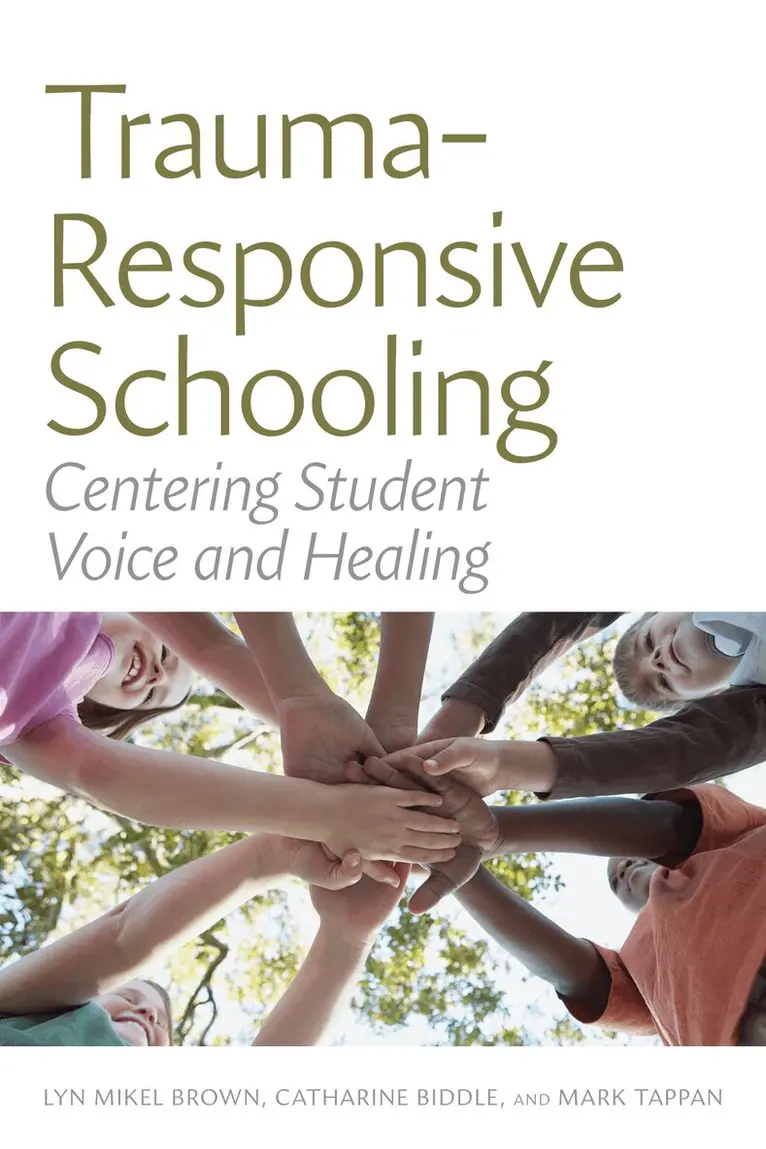
Trauma-Responsive Schooling outlines a novel approach to transforming American schools through student-centered, trauma-informed practices.The book chronicles the use of an innovative educational model, Trauma-Responsive Equitable Education (TREE), as part of a multiyear research project in two elementary schools in rural Maine. In this model, Lyn Mikel Brown, Catharine Biddle, and Mark Tappan endorse whole-school change, encouraging educators to upend traditional classroom power dynamics by listening foremost to student voices, validating student experiences, and promoting student agency.The authors provide complex real-life examples of student involvement in the creation and implementation of trauma-responsive and equitable practices. Their work offers readers concrete, actionable examples of such practices, which include supporting the whole child by promoting social and emotional learning (SEL) as well as academic achievement; providing access to basic needs such as food, clothing, and health care; and meeting the instructional requirements of dual-language learners.Many rural schools in the United States experience low student achievement and high absenteeism rates as their geographically isolated communities struggle with poverty, substance abuse, and other significant stressors. Yet, as the authors demonstrate, supportive learning environments, even in under-resourced rural schools, are able to mitigate adversity, stress, and trauma—and thus promote healing.This heartening work illustrates that, when educators and school leaders put student needs and interests at the core of school life, long-lasting change for all students is possible.