Lynn Horton – författare
Visar alla böcker från författaren Lynn Horton. Handla med fri frakt och snabb leverans.
5 produkter
5 produkter
282 kr
Skickas inom 3-6 vardagar
387 kr
Skickas inom 7-10 vardagar
Drawing on testimonies from contra collaborators and ex-combatants, as well as pro-Sandinista peasants, this book presents a dynamic account of the growing divisions between peasants from the area of Quilalí who took up arms in defense of revolutionary programs and ideals such as land reform and equality and those who opposed the FSLN.Peasants in Arms details the role of local elites in organizing the first anti-Sandinista uprising in 1980 and their subsequent rise to positions of field command in the contras. Lynn Horton explores the internal factors that led a majority of peasants to turn against the revolution and the ways in which the military draft, and family and community pressures reinforced conflict and undermined mid-decade FSLN policy shifts that attempted to win back peasant support.
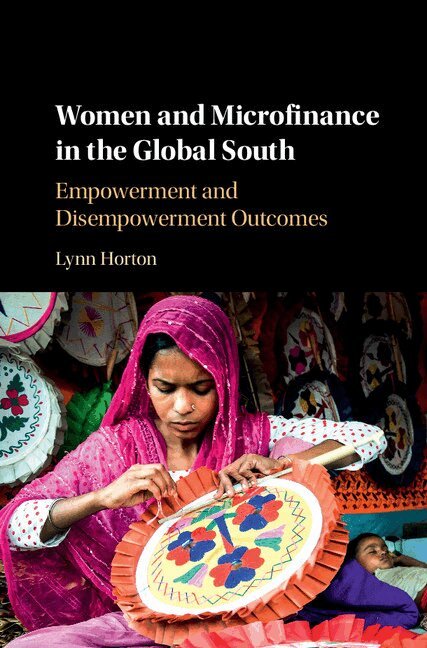
Women and Microfinance in the Global South
Empowerment and Disempowerment Outcomes
Inbunden, Engelska, 2017
1 271 kr
Skickas inom 7-10 vardagar
Originally conceived as small-scale loans allowing impoverished women to invest in informal sector economic opportunities, microfinance programs have grown rapidly across the globe over the past two decades to become the most common development tool used to empower women in low- and middle-income countries. Women and Microfinance in the Global South incorporates a meta-synthesis of thirty qualitative empirical cases from Asia, Africa, and Latin America to explore the links between microfinance and women's empowerment, questioning how microfinance facilitates the economic and socio-political empowerment of women. The theoretical framework assesses both positive and negative outcomes of microfinance at the grassroots level, considering how such market-based interventions intersect with patriarchal beliefs and practices, and analyses the different mechanisms through which microfinance can empower or disempower women. It will interest scholars of developmental studies and women's issues, as well as practitioners, NGOs, and policymakers.
1 343 kr
Skickas inom 10-15 vardagar
In this book, sociologist Lynn Hortonexplores how the most dynamic sectors of the global economy—finance and technology—are shaping new forms of elite masculinity. She offers fresh insights into the often overlooked links between economic inequalities and the identity politics of gender and race. Through analysis of the lives and discourse of utra-visible male billionaires, Horton examines how extreme accumulations of wealth are both imbued with gendered celebrity and moral authority and harshly contested. She identifies the ways neoliberalism as an ideological project, advanced by elite-funded networks of think tanks and advocacy groups, draws on such masculinities to amplify and naturalize market-centered assumptions, values, and practices. Gender systems—relational and ranked constructs of masculinity/femininity—permeate neoliberal discourse of markets, the state, and the household. Horton also details the tensions and ties between technocratic elite masculinities which eschew open sexism and discrimination and rightwing populist mobilization of gendered and racialized anti-elite discourse.
515 kr
Skickas inom 10-15 vardagar
In this book, sociologist Lynn Hortonexplores how the most dynamic sectors of the global economy—finance and technology—are shaping new forms of elite masculinity. She offers fresh insights into the often overlooked links between economic inequalities and the identity politics of gender and race. Through analysis of the lives and discourse of utra-visible male billionaires, Horton examines how extreme accumulations of wealth are both imbued with gendered celebrity and moral authority and harshly contested. She identifies the ways neoliberalism as an ideological project, advanced by elite-funded networks of think tanks and advocacy groups, draws on such masculinities to amplify and naturalize market-centered assumptions, values, and practices. Gender systems—relational and ranked constructs of masculinity/femininity—permeate neoliberal discourse of markets, the state, and the household. Horton also details the tensions and ties between technocratic elite masculinities which eschew open sexism and discrimination and rightwing populist mobilization of gendered and racialized anti-elite discourse.