Lynne Viola – författare
Visar alla böcker från författaren Lynne Viola. Handla med fri frakt och snabb leverans.
22 produkter
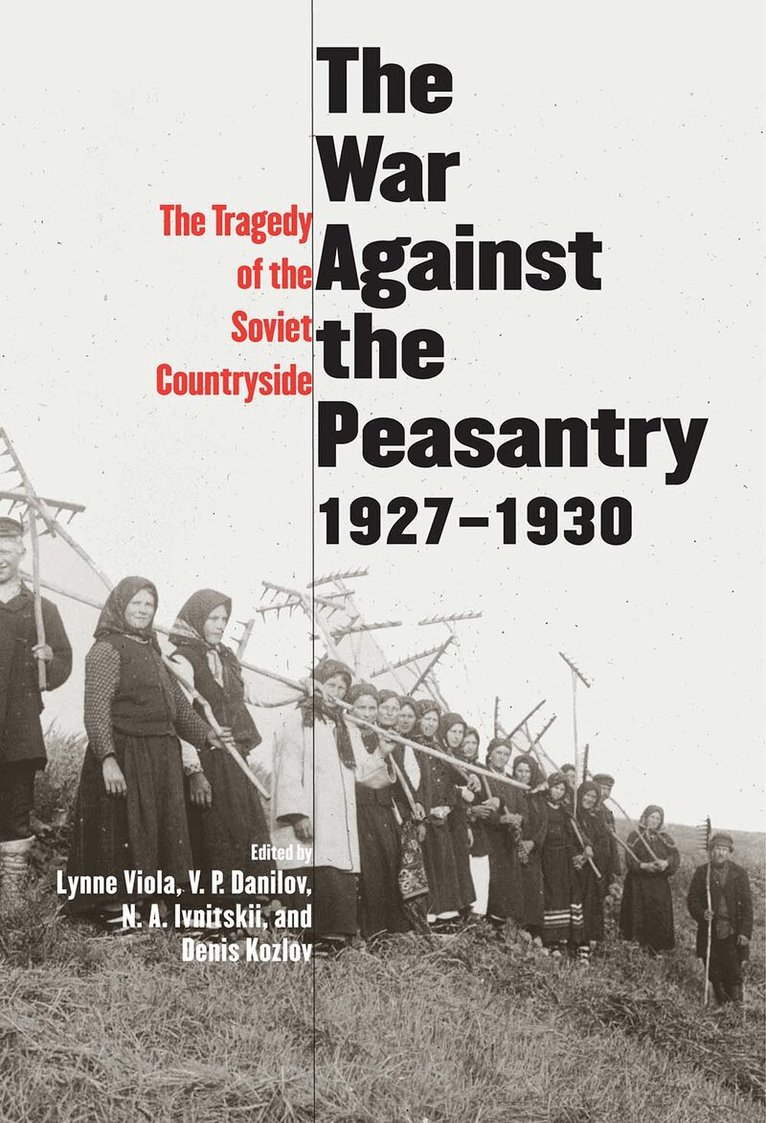
War Against the Peasantry, 1927-1930
The Tragedy of the Soviet Countryside, Volume one
Av Denis Kozlov, Lynne Viola m. fl.
Inbunden, 2005
1073 kr
Lägg i varukorg
The collectivization of Soviet agriculture in the late 1920s and 1930s forever altered the country’s social and economic landscape. It became the first of a series of bloody landmarks that would come to define Stalinism. This revelatory book presents—with analysis and commentary—the most important …
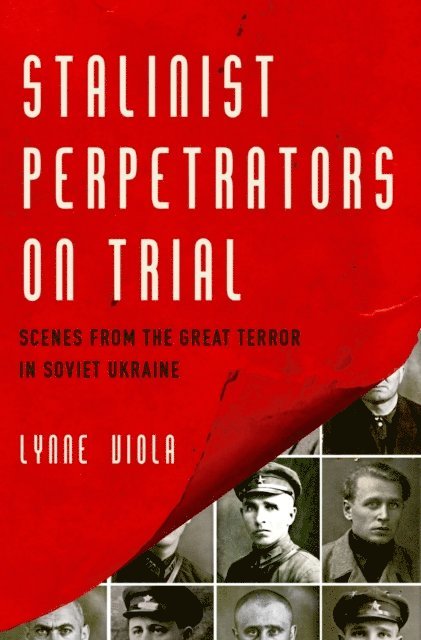
Stalinist Perpetrators on Trial
Scenes from the Great Terror in Soviet Ukraine
Av Lynne Viola
Häftad, 2019
544 kr
Lägg i varukorg
Between the summer of 1937 and November 1938, the Stalinist regime arrested over 1.5 million people for "counterrevolutionary" and "anti-Soviet" activity and either summarily executed or exiled them to the Gulag. While we now know a great deal about the experience of victims of the Great Terror, we …
Stalinist Perpetrators on Trial
Scenes from the Great Terror in Soviet Ukraine
Av Lynne Viola
Inbunden, 2018
485 kr
Lägg i varukorg
Between the summer of 1937 and November 1938, the Stalinist regime arrested over 1.5 million people for "counterrevolutionary" and "anti-Soviet" activity and either summarily executed or exiled them to the Gulag. While we now know a great deal about the experience of victims of the Great Terror, we …
Stalinist Perpetrators on Trial
Scenes from the Great Terror in Soviet Ukraine
Av Lynne Viola
E-bok, 2017
189 kr
Lägg i varukorg
Between the summer of 1937 and November 1938, the Stalinist regime arrested over 1.5 million people for "counterrevolutionary" and "anti-Soviet" activity and either summarily executed or exiled them to the Gulag. While we now know a great deal about the experience of victims of the Great Terror, we …
Stalinist Perpetrators on Trial
Scenes from the Great Terror in Soviet Ukraine
Av Lynne Viola
E-bok, 2017
189 kr
Lägg i varukorg
Between the summer of 1937 and November 1938, the Stalinist regime arrested over 1.5 million people for "counterrevolutionary" and "anti-Soviet" activity and either summarily executed or exiled them to the Gulag. While we now know a great deal about the experience of victims of the Great Terror, we …
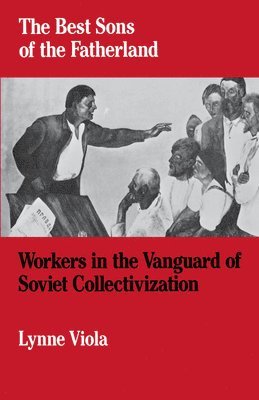
The Best Sons of the Fatherland
Workers in the Vanguard of Soviet Collectivization
Av Lynne Viola
Häftad, 1989
1391 kr
Lägg i varukorg
In this ground- breaking study, Lynne Viola - the first Western scholar to gain access to the Soviet state archives on collectivization - brilliantly excavates a lost chapter in the history of the Stalin revolution. This book affords an intimate look at the campaign of the `25,000ers', the …
Best Sons of the Fatherland
Workers in the Vanguard of Soviet Collectivization
Av Lynne Viola
E-bok, 1989
982 kr
Lägg i varukorg
In this ground-breaking study Lynne Viola--the first Western scholar to gain access to the Soviet state archives on collectivization--brilliantly examines a lost chapter in the history of the Stalin revolution. Looking in detail at the backgrounds, motivations, and mentalities of the 25,000ers, …
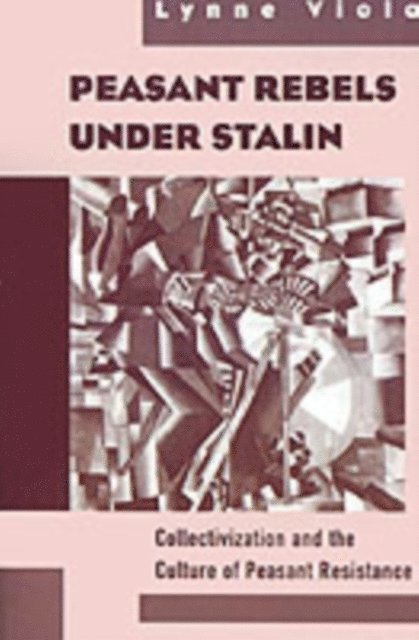
Peasant Rebels Under Stalin
Collectivization and the Culture of Peasant Resistance
Av Lynne Viola
E-bok, 1999
548 kr
Lägg i varukorg
The first book to document the peasant rebellion against Soviet collectivization, Peasant Rebels Under Stalin retrieves a crucial lost chapter from the history of Stalinist Russia. The peasant revolt against collectivization, as reconstructed by author Lynne Viola, was the most violent and …
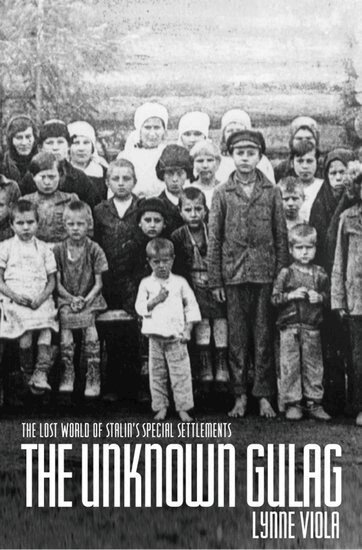
The Unknown Gulag
The Lost World of Stalin's Special Settlements
Av Lynne Viola
Häftad, 2009
376 kr
Lägg i varukorg
One of Stalin's most heinous acts was the ruthless repression of millions of peasants in the early 1930s, an act that established the very foundations of the gulag. Solzhenitsyn barely touched upon this brutal episode in his magisterial Gulag Archipelago and subsequent writers passed over the …
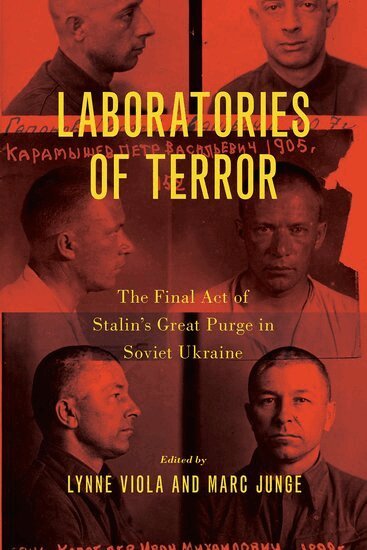
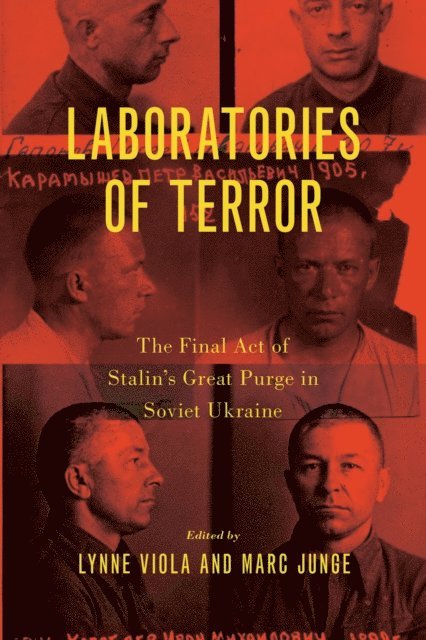
Laboratories of Terror
The Final Act of Stalin's Great Purge in Soviet Ukraine
Av Lynne Viola, Marc-Stephan Junge
Inbunden, 2022
1373 kr
Lägg i varukorg
Laboratories of Terror explores the final chapter of Stalin's Great Terror in Soviet Ukraine. When the Communist Party Central Committee and the Council of People's Commissars of the USSR halted mass operations in repression in November 1938, large numbers of mainly Communist purge victims whose …
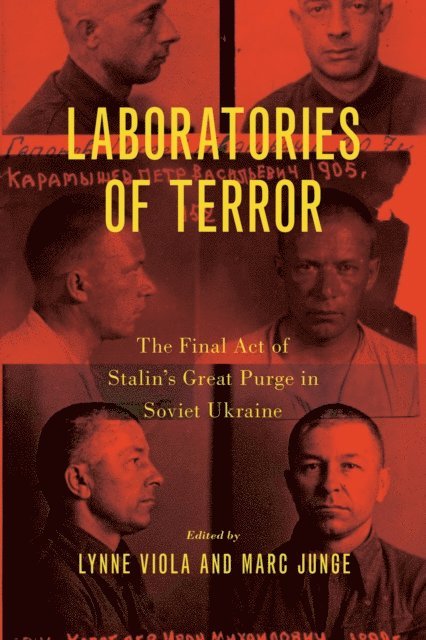
Laboratories of Terror
The Final Act of Stalin's Great Purge in Soviet Ukraine
Av Lynne Viola, Marc-Stephan Junge
Häftad, 2023
418 kr
Lägg i varukorg
Laboratories of Terror explores the final chapter of Stalin's Great Terror in Soviet Ukraine. When the Communist Party Central Committee and the Council of People's Commissars of the USSR halted mass operations in repression in November 1938, large numbers of mainly Communist purge victims whose …
Laboratories of Terror
The Final Act of Stalin''s Great Purge in Soviet Ukraine
Av Marc-Stephan Junge, Lynne Viola
E-bok, 2022
378 kr
Lägg i varukorg
Laboratories of Terror explores the final chapter of Stalin''s Great Terror in Soviet Ukraine. When the Communist Party Central Committee and the Council of People''s Commissars of the USSR halted mass operations in repression in November 1938, large numbers of mainly Communist purge victims whose …
Laboratories of Terror
The Final Act of Stalin''s Great Purge in Soviet Ukraine
Av Marc-Stephan Junge, Lynne Viola
E-bok, 2022
378 kr
Lägg i varukorg
Laboratories of Terror explores the final chapter of Stalin''s Great Terror in Soviet Ukraine. When the Communist Party Central Committee and the Council of People''s Commissars of the USSR halted mass operations in repression in November 1938, large numbers of mainly Communist purge victims whose …
Contending with Stalinism
Soviet Power and Popular Resistance in the 1930s
Av Lynne Viola
Inbunden, 2002
1695 kr
Lägg i varukorg
Resistance has become an important and controversial analytical category for the study of Stalinism. The opening of Soviet archives allows historians an unprecedented look at the fabric of state and society in the 1930s. Researchers long spellbound by myths of Russian fatalism and submission as …
Contending with Stalinism
Soviet Power and Popular Resistance in the 1930s
Av Lynne Viola
Häftad, 2002
473 kr
Lägg i varukorg
Resistance has become an important and controversial analytical category for the study of Stalinism. The opening of Soviet archives allows historians an unprecedented look at the fabric of state and society in the 1930s. Researchers long spellbound by myths of Russian fatalism and submission as …
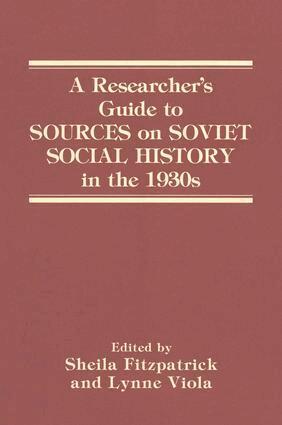
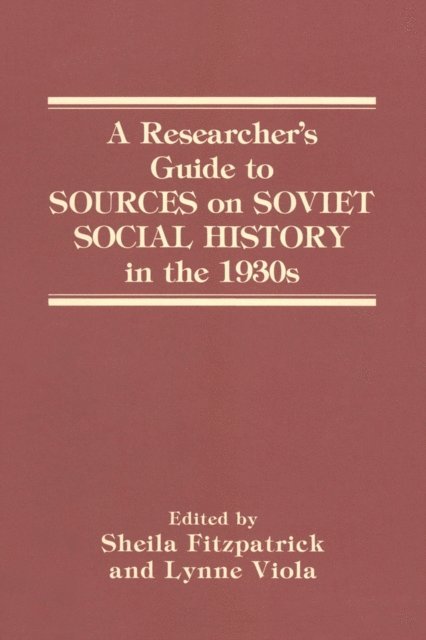
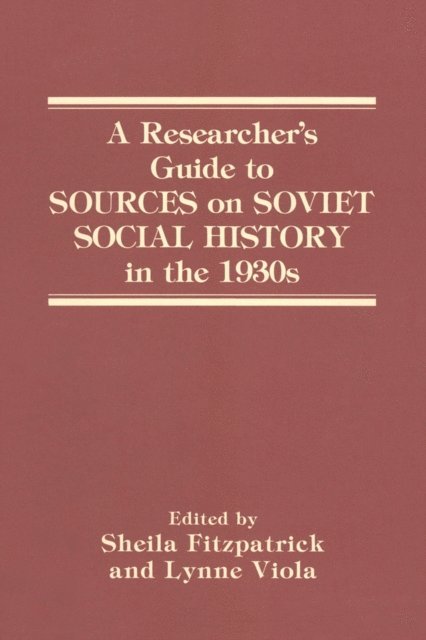
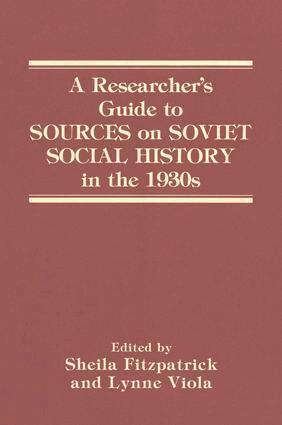
Researcher's Guide to Sources on Soviet Social History in the 1930s
Av Sheila Fitzpatrick, Lynne Viola
Inbunden, 1990
2586 kr
Lägg i varukorg
The Stalin era has been less accessible to researchers than either the preceding decade or the postwar era. The basic problem is that during the Stalin years censorship restricted the collection and dissemination of information (and introduced bias and distortion into the statistics that were …
Researcher's Guide to Sources on Soviet Social History in the 1930s
Av Lynne Viola, Sheila Fitzpatrick
E-bok, 2016
554 kr
Lägg i varukorg
The Stalin era has been less accessible to researchers than either the preceding decade or the postwar era. The basic problem is that during the Stalin years censorship restricted the collection and dissemination of information (and introduced bias and distortion into the statistics that were …
Researcher's Guide to Sources on Soviet Social History in the 1930s
Av Lynne Viola, Sheila Fitzpatrick
E-bok, 2016
571 kr
Lägg i varukorg
The Stalin era has been less accessible to researchers than either the preceding decade or the postwar era. The basic problem is that during the Stalin years censorship restricted the collection and dissemination of information (and introduced bias and distortion into the statistics that were …
Researcher's Guide to Sources on Soviet Social History in the 1930s
Av Sheila Fitzpatrick, Lynne Viola
Häftad, 2006
489 kr
Lägg i varukorg
The Stalin era has been less accessible to researchers than either the preceding decade or the postwar era. The basic problem is that during the Stalin years censorship restricted the collection and dissemination of information (and introduced bias and distortion into the statistics that were …
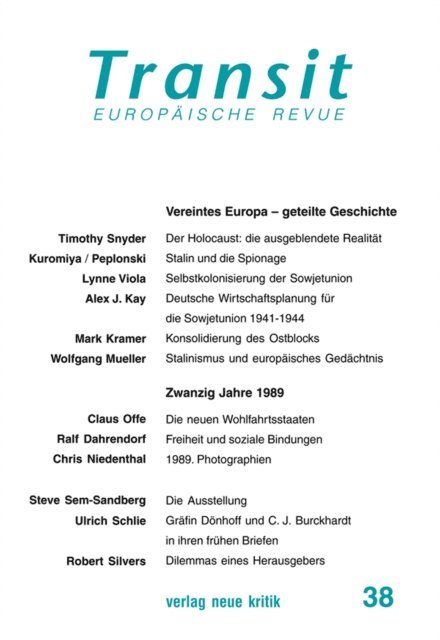
Transit 38. Europäische Revue
Vereintes Europa – geteilte Geschichte
Av Claus Offe, Lynne Viola m. fl.
E-bok, 2009
121 kr
Lägg i varukorg
"Eigentlich sollte es selbstverständlich sein, das ganze Gewicht von Nazi- und Sowjetterror anzuerkennen.", schreibt Timothy Snyder in Transit 28. Dass wir nach wie vor noch weit davon entfernt sind, zeigen ein Essay Snyders, der das vorliegende Heft eröffnet, sowie die anschließenden Beiträge. Bis …
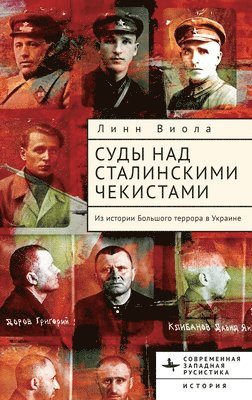
Stalinist Perpetrators on Trial
Av Lynne Viola
Inbunden, 2025
502 kr
Lägg i varukorg
Почти тысяча сотрудников НКВД были привлечены к ответственности советскими военными судами в ходе так называемой «чистки чистильщиков». Они были обвинены в фабрикации доказательств, фальсификации протоколов допросов, применении пыток для получения признаний и убийствах в ходе процессуальных …