Lynnette Young Overby - Böcker
Visar alla böcker från författaren Lynnette Young Overby. Handla med fri frakt och snabb leverans.
5 produkter
5 produkter
539 kr
Skickas inom 10-15 vardagar
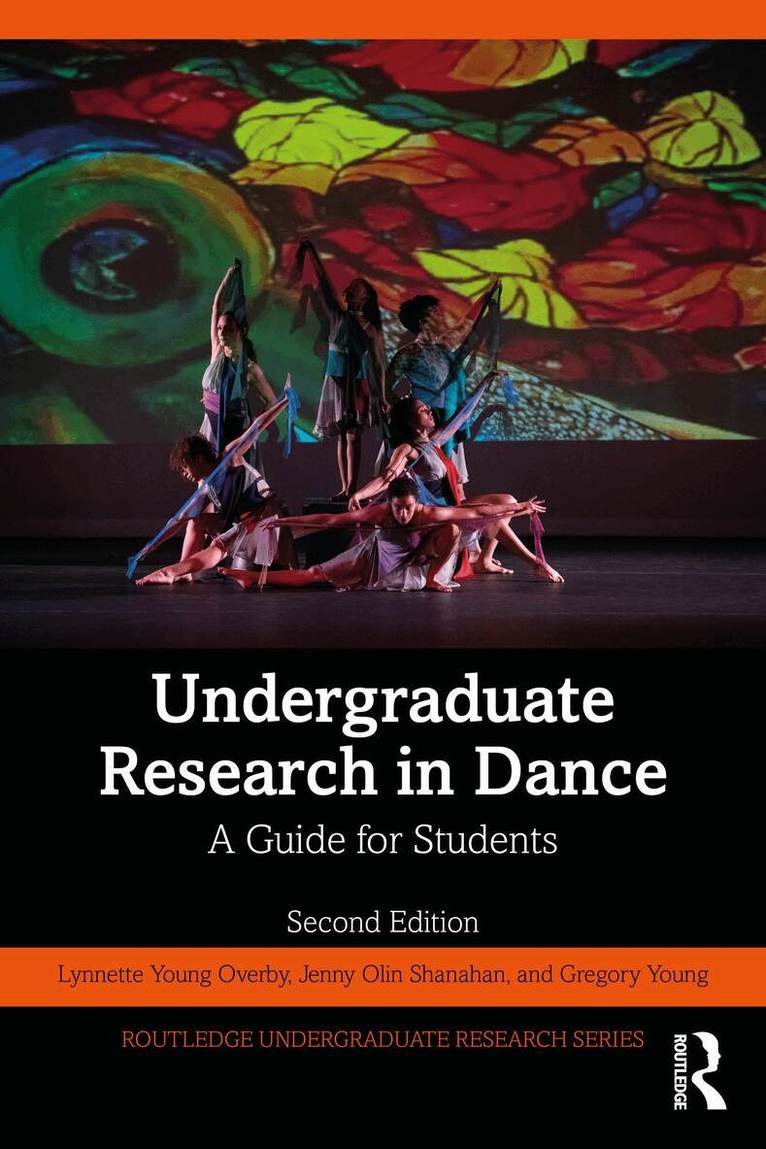
Undergraduate Research in Dance: A Guide for Students supplies tools for scaffolding research skills, alongside examples of undergraduate research in dance scholarship. This second edition has been updated throughout for current students, with new chapters on mentoring and dance studies.Dance can be studied as an expressive embodied art form with physical, cognitive, and affective domains, and as an integral part of society, history, and vast areas of interdisciplinary content. To this end, the guidance provided by this book will equip future dance professionals with the means to move the field of dance forward. Chapters 1–9 guide students through the fundamentals of research methods, providing a foundation to help students get started in understanding research protocols and processes. A new chapter 10 provides guidelines for mentoring undergraduate students in dance. Chapters 11–21 detail forms of undergraduate research in a rich diversity of fields within dance that are taught in many collegiate dance programs including dance therapy, history, science, psychology, education, and technology, in addition to public scholarship, choreography, and interdisciplinary topics. A new chapter on dance studies has been added to this second edition. The book also includes annotated online resources, and many of its chapters are supported by examples of abstracts of capstone projects, senior theses, and conference presentations by undergraduate researchers across the United States and globally.Suitable for both professors and students, this book is an ideal reference book for dance studies as well as humanities and arts courses intersecting with dance.
2 036 kr
Skickas inom 10-15 vardagar
Undergraduate Research in Dance: A Guide for Students supplies tools for scaffolding research skills, alongside examples of undergraduate research in dance scholarship. This second edition has been updated throughout for current students, with new chapters on mentoring and dance studies.Dance can be studied as an expressive embodied art form with physical, cognitive, and affective domains, and as an integral part of society, history, and vast areas of interdisciplinary content. To this end, the guidance provided by this book will equip future dance professionals with the means to move the field of dance forward. Chapters 1–9 guide students through the fundamentals of research methods, providing a foundation to help students get started in understanding research protocols and processes. A new chapter 10 provides guidelines for mentoring undergraduate students in dance. Chapters 11–21 detail forms of undergraduate research in a rich diversity of fields within dance that are taught in many collegiate dance programs including dance therapy, history, science, psychology, education, and technology, in addition to public scholarship, choreography, and interdisciplinary topics. A new chapter on dance studies has been added to this second edition. The book also includes annotated online resources, and many of its chapters are supported by examples of abstracts of capstone projects, senior theses, and conference presentations by undergraduate researchers across the United States and globally.Suitable for both professors and students, this book is an ideal reference book for dance studies as well as humanities and arts courses intersecting with dance.
1 502 kr
Tillfälligt slut
455 kr
Tillfälligt slut
2 100 kr
Skickas
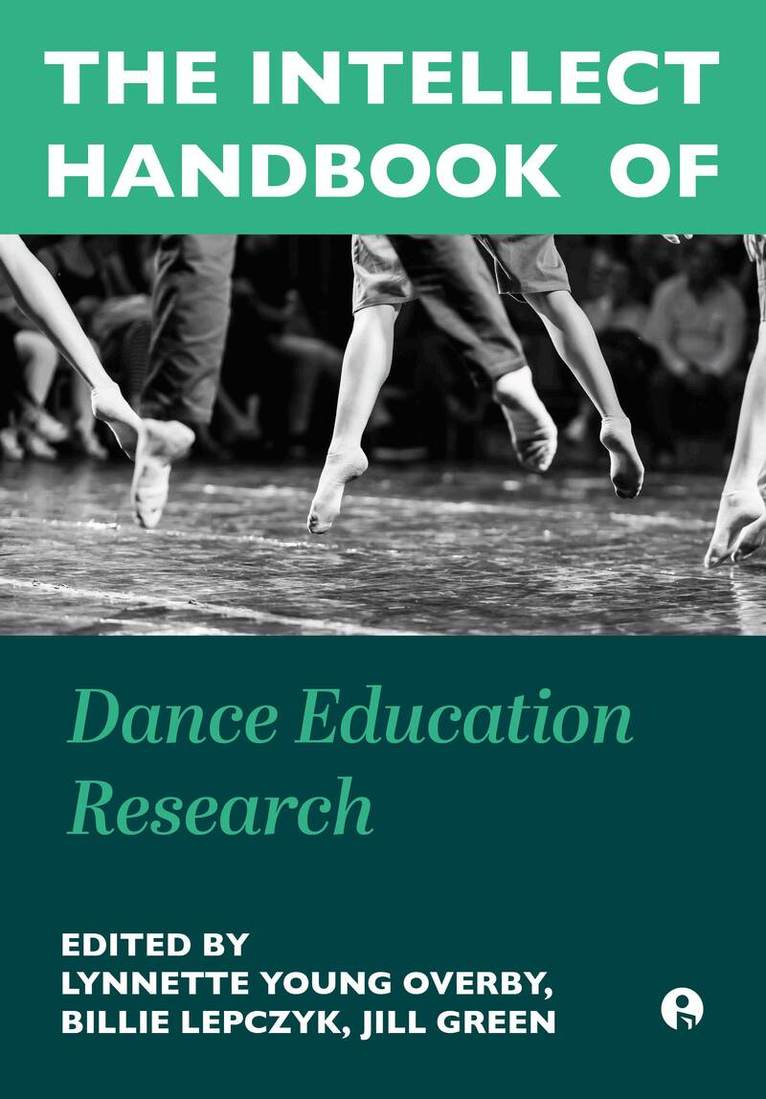
A review of dance education research methodologies with examples and exemplars from the field and an important resource for dance students, professionals, and advocates.The editors recognized the need for a book of this type – one that would not only provide examples of a variety of dance education research projects, but also present a broad look at methodologies. In addition, the book would not only focus on Dance Education research in the U.S, but more broadly with examples of dance research from several different countries. The curated book includes the voices of both seasoned professionals and newer scholars in the field, with examples of dance research from a number of different countries. The contributions represent several countries including Korea, South Africa, United States of America, Jamaica, India, United Kingdom, Brazil, and Slovenia, underscore the global relevance and significance of research in dance education.This book is divided into 5 parts. The first part focuses on dance education research and methodologies and is divided into three sections. With an introduction by Jill Green, the chapters that follow provide an overview of research types including the more traditional, qualitative, quantitative and mixed, and other methods such as portraiture and a/r/tography.Part II, introduced by Lynnette Young Overby, includes examples of dance education research that incorporate qualitative, quantitative, and/or mixed methods. Three sections covering dance education research applications in the areas of history and culture, dance teaching and choreography, and community based research follow. Part III of the Handbook of Dance Education Research provides insight into dance education that takes place in several countries. This part is introduced by Peter Cook, Associate Deputy Chancellor, Southern Cross University, Australia. The collection of chapters within this part of the Handbook of Dance Education Research provides snapshots of research practices from contrasting international areas, and with a variety of approaches and paradigms. The final Part IV includes chapters focused on Social Justice dance education practice and research. This part is introduced by Alfdaniel Mivule Basibye Mabingo, Makerere University, Uganda. These chapters push the boundaries of dance education research to promote meaning and social change. They provide substantive examples of the impact dance education research can have in response to social and cultural issues.This book will be a key resource for university students, professors, practitioners and policy makers in organizations and in school systems. It will inspire future dance education researchers to conduct research that is collaborative, impactful, inclusive and diverse– research that will solidify the place of dance as an integral part of each person’s education.