6 361 kr
Läs direkt efter köp
6 361 kr
Läs direkt efter köp
6 361 kr
Läs direkt efter köp
4 438 kr
Läs direkt efter köp
Biotechnology is the use of living systems and organisms to develop or make useful products, or “any technological application that uses biological systems, living organisms or derivatives there of, to make or modify products or processes for specific use”. For thousands of years, humankind has used biotechnology in agriculture, food production and medicine The term itself is largely believed to have been coined in 1919 by Hungarian engineer Karl Ereky. In the late 20th and early 21st century, biotechnology has expanded to include new and diverse sciences such as genomics, recombinant gene technologies, applied immunology, and development of pharmaceutical therapies and diagnostic tests. The book includes various research areas of Microbiology and Biotechnology. This would synchronize the development in the fields of Basic and applied Science.
4 639 kr
Läs direkt efter köp
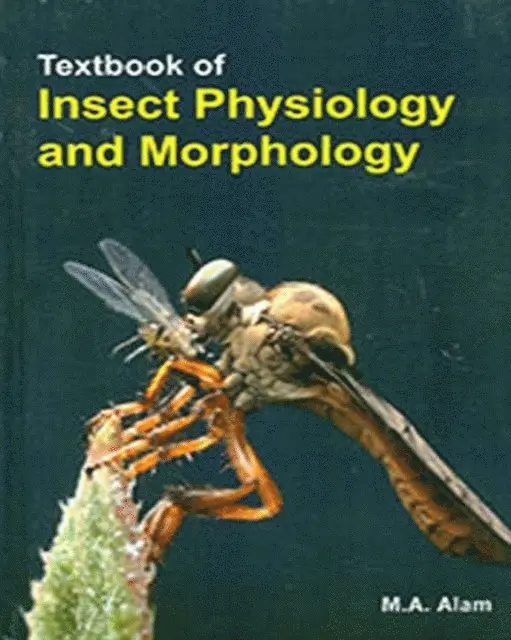
An insect uses its digestive system to extract nutrients and other substances from the food it consumes. Most of this food is ingested in the form of macromolecules and other complex substances which must be broken down by catabolic reactions into smaller molecules before being used by cells of the body for energy, growth, or reproduction. This break-down process is known as digestion. Insect blood or haemolymph’s main function is that of transport and it bathes the insect’s body organs. Making up usually less than 25% of an insect’s body weight, it transports hormones, nutrients and wastes and has a role in, osmoregulation, temperature control, immunity, storage and skeletal function. The present book give descriptive material on morphological and taxonomical diversity of insects. A thorough knowledge on insects is provided by effective manner in this book. Hence, the book is useful guide to students and teachers in the field of entomology and environmental sciences.
4 438 kr
Läs direkt efter köp
Diseases in plants are caused by either non-living environmental factors or living agents. Plant diseases may also be grouped based on the causal agent involved, the plant part affected or the type of symptoms. The non-living or environmental causes of plant disease can be divided into- unfavourable temperature, lack or excess moisture, lack of aeration, air pollution, nutrient deficiencies, mineral toxicities, unfavourable soil pH, pesticide toxicity, and improper cultural practices. The living agents that most commonly cause diseases in plants can be classified into five groups. That are fungi, bacteria and phytoplasmas, viruses and viroids, nematodes, and parasitic higher plants. This textbook in two volumes has been intended primarily for the students in undergraduate and postgraduate courses in plant diseases. It fulfill not only the need of the students to find literature on the diseases and other pathological conditions difficult to obtain and access, but also provide complete systematic treatment of the subject from their point of view. Arrangement of chapters and topics is such that it is easily followed by the students.
4 639 kr
Läs direkt efter köp
Integrated pest management requires an understanding of the ecology of the cropping system including that of the pests and their environment. For example, temperature is the primary factor determining the rate at which insects develop; higher temperatures increase the rate of development. Temperature can be important when determining the frequency of insecticide applications. In sweet corn for example, the interval between insecticide applications for the European corn borer can be increased when the weather is cool because eggs are not hatching as rapidly and the rate of larval development is slower; with warmer temperatures the situation is reversed. The book contains a wealth of information on all aspects of insect pest management in agriculture under Indian conditions and would prove indispensable for students, teachers and researchers in agricultural entomology in India and other Asian countries.
3 698 kr
Läs direkt efter köp
6 378 kr
Läs direkt efter köp
4 639 kr
Läs direkt efter köp
Insects occur in different ecological niches of mangrove forest. They may be permanent residents or only transient visitors. They are either harmful or beneficial and plays an important role in ecology of mangrove systems. Most of the insect species in mangrove habitats are only temporal visitors and they do visit many other habitats. insects like honeybees are beneficial to man. But several other types of insects occur as pests causing damage to the vegetation. A few others are biting types causing irritation and pain to the human beings but they live on other vertebrate animals living or frequenting the mangrove forests. The book will be of immense help to students, researchers, and professionals engaged in agricultural insect activities. Contents: introduction; The Relevance of Background Odor in Resource Location by insects; Biological insect Controls; insects as Pests; Natural Enemies of Field Crop insect Pests in Alberta; Natural Enemies in Organic Farming Systems; Management of Rice insect Pests; Pecan Pest Management: insects and Diseases; The Biology of Some important Primary, Secondary and Associated Species; Bacteriophage Ecology and Plants.
4 438 kr
Läs direkt efter köp
Entomology is the scientific study of insects, a branch of arthropod logy. At some 1.3million described species, insects account for more than two-thirds of all known organisms, date back some 400 million years, and have many kinds of interactions with humans and other forms of life on earth. it is a specialty within the field of biology. Though technically incorrect, the definition is sometimes widened to include the study of terrestrial animals in other arthropod groups or other phyla, such as arachnids, myriapods, earthworms, and slugs. This book aims at to provide a comprehensive, well illustrated, up to date, general and applied account of entomology which is written in a simple and lucid language. This book will serve as a valuable reference source on this subject and would be of great importance for the students, teachers and researchers and those interested in protecting the pulses and oilseed crops from insect pests. Contents: introduction; Whiteflies in Commercial Greenhouse Poinsettia Production; introduction to in sect Anatomy; Physiology and Biochemistry of the insect Fat Body; Forensic Entomological Decomposition; Use of DNA in Forensic Entomology; Morphology and Circuitry of Ganglion Cells.
4 639 kr
Läs direkt efter köp
Some insects damage crops by feeding on sap, leaves or fruits, a few bite humans and livestock, alive and dead, to feed on blood and some are capable of transmitting diseases to humans, pets and livestock. Nevertheless, without insects to pollinate flowering plants, a necessary process in their reproduction, the terrestrial portion of the biosphere (including humans) would be devastated as a great many organisms rely on flowering plants. Many other insects are considered ecologically beneficial as predators and a few provide direct economic benefit. Silkworms and bees have been used extensively by humans for the production of silk and honey, respectively. Insects have segmented bodies supported by an exoskeleton, a hard outer covering made mostly of chitin. The segments of the body are organized into three distinctive but interconnected units, or tagmata: a head, a thorax, and an abdomen. The head supports a pair of sensory antennae, a pair of compound eyes, and, if present, one to three simple eyes (or ocelli) and three sets of variously modified appendages that form the mouthparts. The thorax has six segmented legs—one pair each for the prothorax, mesothorax and the metathorax segments making up the thorax—and, if present in the species, two or four wings. The abdomen consists of eleven segments, though in a few species of insects these segments may be fused together or reduced in size. The abdomen also contains most of the digestive, respiratory, excretory and reproductive internal structures. The insect outer skeleton, the cuticle, is made up of two layers: the epicuticle, which is a thin and waxy water resistant outer layer and contains no chitin, and a lower layer called the procuticle. The procuticle is chitinous and much thicker than the epicuticle and has two layers: an outer layer known as the exocuticle and an inner layer known as the endocuticle. This encyclopaedia is fed with the information of this subject. This encyclopaedia will be very useful for a wide range of interested groups.
4 639 kr
Läs direkt efter köp
Some insects damage crops by feeding on sap, leaves or fruits, a few bite humans and livestock, alive and dead, to feed on blood and some are capable of transmitting diseases to humans, pets and livestock. Nevertheless, without insects to pollinate flowering plants, a necessary process in their reproduction, the terrestrial portion of the biosphere (including humans) would be devastated as a great many organisms rely on flowering plants. Many other insects are considered ecologically beneficial as predators and a few provide direct economic benefit. Silkworms and bees have been used extensively by humans for the production of silk and honey, respectively. Insects have segmented bodies supported by an exoskeleton, a hard outer covering made mostly of chitin. The segments of the body are organized into three distinctive but interconnected units, or tagmata: a head, a thorax, and an abdomen. The head supports a pair of sensory antennae, a pair of compound eyes, and, if present, one to three simple eyes (or ocelli) and three sets of variously modified appendages that form the mouthparts. The thorax has six segmented legs—one pair each for the prothorax, mesothorax and the metathorax segments making up the thorax—and, if present in the species, two or four wings. The abdomen consists of eleven segments, though in a few species of insects these segments may be fused together or reduced in size. The abdomen also contains most of the digestive, respiratory, excretory and reproductive internal structures. The insect outer skeleton, the cuticle, is made up of two layers: the epicuticle, which is a thin and waxy water resistant outer layer and contains no chitin, and a lower layer called the procuticle. The procuticle is chitinous and much thicker than the epicuticle and has two layers: an outer layer known as the exocuticle and an inner layer known as the endocuticle. This encyclopaedia is fed with the information of this subject. This encyclopaedia will be very useful for a wide range of interested groups.