M. Amin Hariri-Ardebili - Böcker
Visar alla böcker från författaren M. Amin Hariri-Ardebili. Handla med fri frakt och snabb leverans.
3 produkter
3 produkter
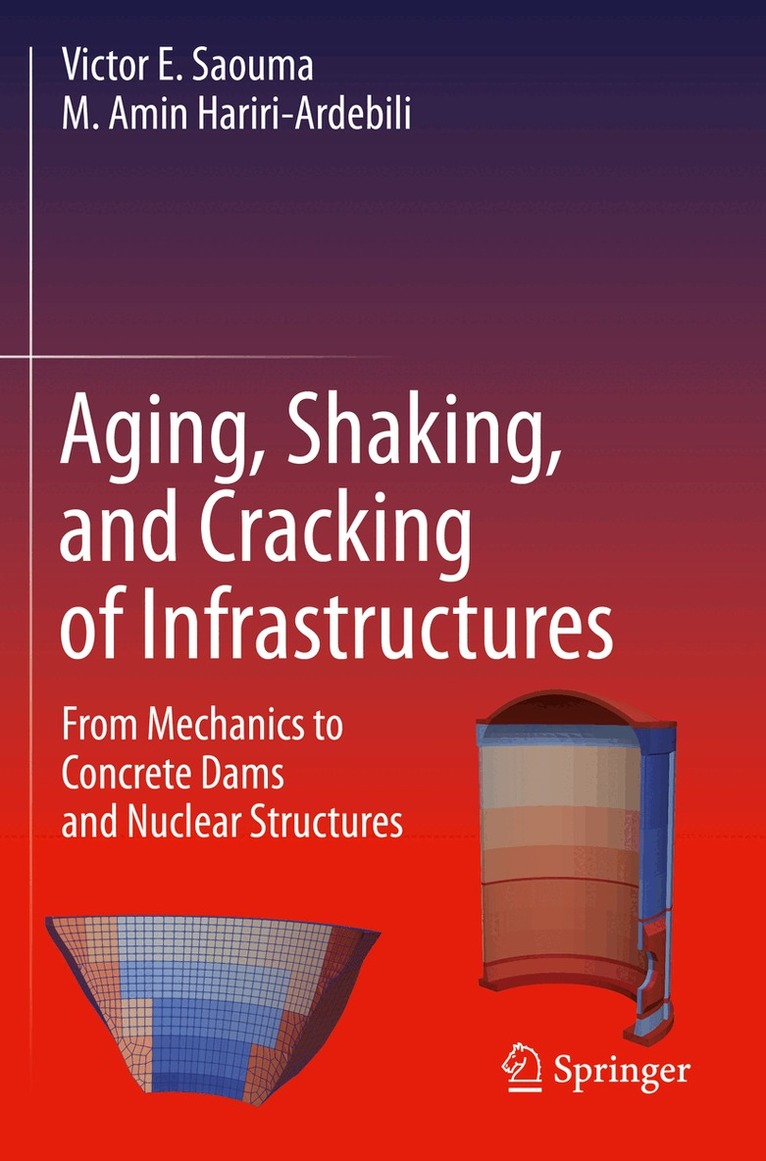
Aging, Shaking, and Cracking of Infrastructures
From Mechanics to Concrete Dams and Nuclear Structures
Inbunden, Engelska, 2021
2 117 kr
Skickas inom 10-15 vardagar
This self-contained book focuses on the safety assessment of existing structures subjected to multi-hazard scenarios through advanced numerical methods. Whereas the focus is on concrete dams and nuclear containment structures, the presented methodologies can also be applied to other large-scale ones.The authors explains how aging and shaking ultimately lead to cracking, and how these complexities are compounded by their random nature. Nonlinear (static and transient) finite element analysis is hence integrated with both earthquake engineering and probabilistic methods to ultimately derive capacity or fragility curves through a rigorous safety assessment.Expanding its focus beyond design aspects or the state of the practice (i.e., codes), this book is composed of seven sections:Fundamentals: theoretical coverage of solid mechnics, plasticity, fracture mechanics, creep, seismology, dynamic analysis, probability and statisticsDamage: that can affect concrete structures, such as cracking of concrete, AAR, chloride ingress, and rebar corrosion,Finite Element: formulation for both linear and nonlinear analysis including stress, heat and fracture mechanics,Engineering Models: for soil/fluid-structure interaction, uncertainty quantification, probablilistic and random finite element analysis, machine learning, performance based earthquake engineering, ground motion intensity measures, seismic hazard analysis, capacity/fragility functions and damage indeces,Applications to dams through potential failure mode analyses, risk-informed decision making, deterministic and probabilistic examples,Applications to nuclear structures through modeling issues, aging management programs, critical review of some analyses,Other applications and case studies: massive RC structures and bridges, detailed assessment of a nuclear containment structure evaluation for license renewal. This book should inspire students, professionals and most importantly regulators to rigorously apply the most up to date scientific methods in the safety assessment of large concrete structures.
Aging, Shaking, and Cracking of Infrastructures
From Mechanics to Concrete Dams and Nuclear Structures
Häftad, Engelska, 2022
1 378 kr
Skickas inom 10-15 vardagar
This self-contained book focuses on the safety assessment of existing structures subjected to multi-hazard scenarios through advanced numerical methods. Whereas the focus is on concrete dams and nuclear containment structures, the presented methodologies can also be applied to other large-scale ones.The authors explains how aging and shaking ultimately lead to cracking, and how these complexities are compounded by their random nature. Nonlinear (static and transient) finite element analysis is hence integrated with both earthquake engineering and probabilistic methods to ultimately derive capacity or fragility curves through a rigorous safety assessment.Expanding its focus beyond design aspects or the state of the practice (i.e., codes), this book is composed of seven sections:Fundamentals: theoretical coverage of solid mechnics, plasticity, fracture mechanics, creep, seismology, dynamic analysis, probability and statisticsDamage: that can affect concrete structures, such as cracking of concrete, AAR, chloride ingress, and rebar corrosion,Finite Element: formulation for both linear and nonlinear analysis including stress, heat and fracture mechanics,Engineering Models: for soil/fluid-structure interaction, uncertainty quantification, probablilistic and random finite element analysis, machine learning, performance based earthquake engineering, ground motion intensity measures, seismic hazard analysis, capacity/fragility functions and damage indeces,Applications to dams through potential failure mode analyses, risk-informed decision making, deterministic and probabilistic examples,Applications to nuclear structures through modeling issues, aging management programs, critical review of some analyses,Other applications and case studies: massive RC structures and bridges, detailed assessment of a nuclear containment structure evaluation for license renewal. This book should inspire students, professionals and most importantly regulators to rigorously apply the most up to date scientific methods in the safety assessment of large concrete structures.
1 434 kr
Skickas inom 11-20 vardagar
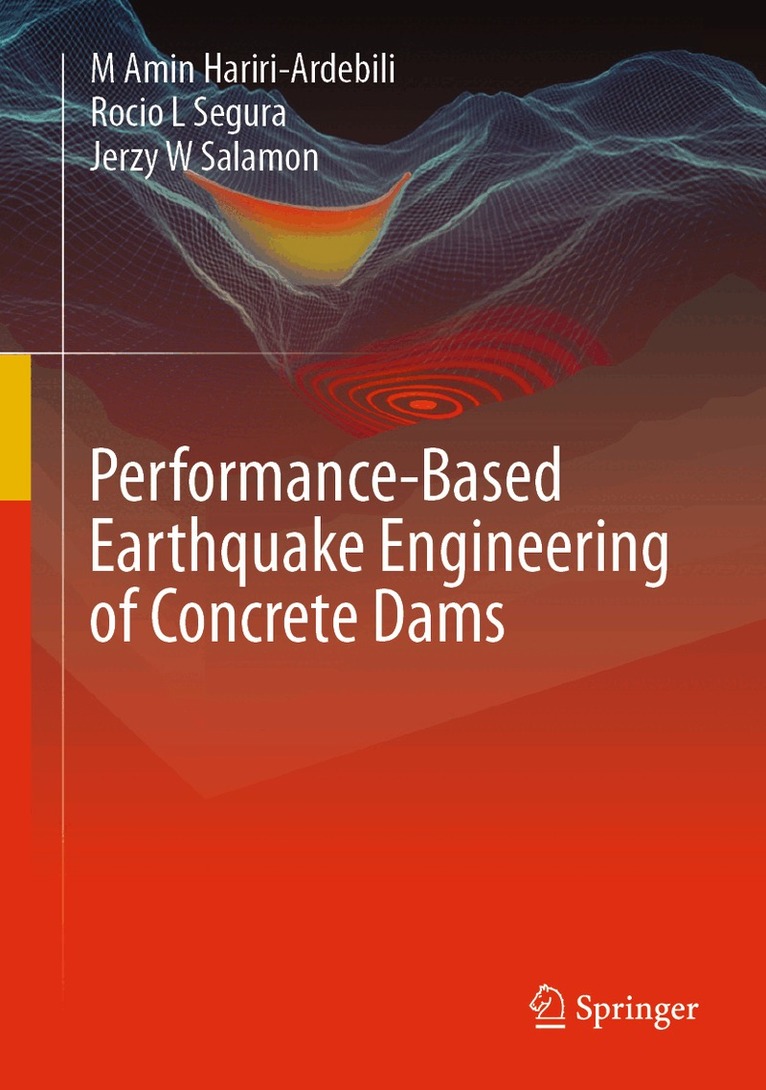
The seismic safety of dams is a critical concern worldwide, especially in seismically active regions where aging concrete infrastructure poses serious risks to communities, ecosystems, and economies. In recent years, there has been a growing shift toward Performance-Based Earthquake Engineering (PBEE)—a modern, risk-informed approach that allows for more realistic modeling, damage prediction, and decision-making in infrastructure resilience.Performance-Based Earthquake Engineering of Concrete Dams presents a unified and practical framework for the seismic evaluation and risk assessment of large-scale dam infrastructure. The book integrates classical engineering mechanics with modern computational techniques to assess seismic demands, predict damage states, quantify uncertainty, and support decision-making under risk. It builds upon established PBEE principles and adapts them specifically for the unique challenges of dam-reservoir-foundation systems, including nonlinear response, fluid-structure interaction, and potential failure modes.Structured as a step-by-step technical guide, the book is divided into six major parts covering failure mode identification, seismic hazard analysis, coupled numerical modeling, nonlinear simulations, fragility assessment, and risk-based safety evaluation. It incorporates case studies, regulatory perspectives, and hands-on modeling examples. While designed for practicing engineers and dam safety professionals, the book is equally valuable for graduate students and researchers seeking a clear entry point into seismic dam analysis. The concise format ensures focused, actionable content without unnecessary complexity.