M. Aschbacher – författare
Visar alla böcker från författaren M. Aschbacher. Handla med fri frakt och snabb leverans.
5 produkter
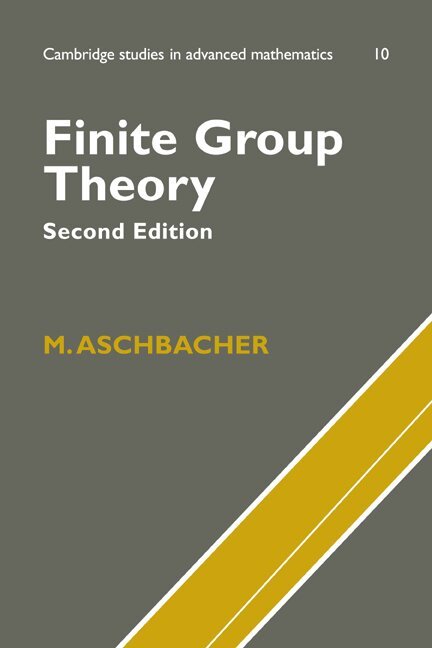
Finite Group Theory
Inbunden, 2000
1905 kr
Lägg i varukorg
During the last 40 years the theory of finite groups has developed dramatically. The finite simple groups have been classified and are becoming better understood. Tools exist to reduce many questions about arbitrary finite groups to similar questions about simple groups. Since the classification …
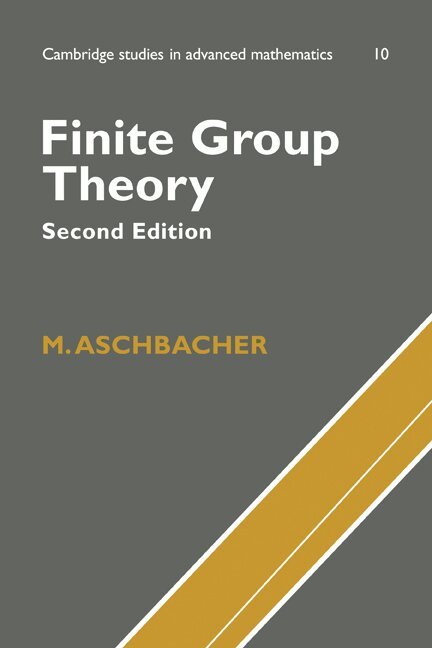
Finite Group Theory
Häftad, 2000
797 kr
Lägg i varukorg
During the last 40 years the theory of finite groups has developed dramatically. The finite simple groups have been classified and are becoming better understood. Tools exist to reduce many questions about arbitrary finite groups to similar questions about simple groups. Since the classification …
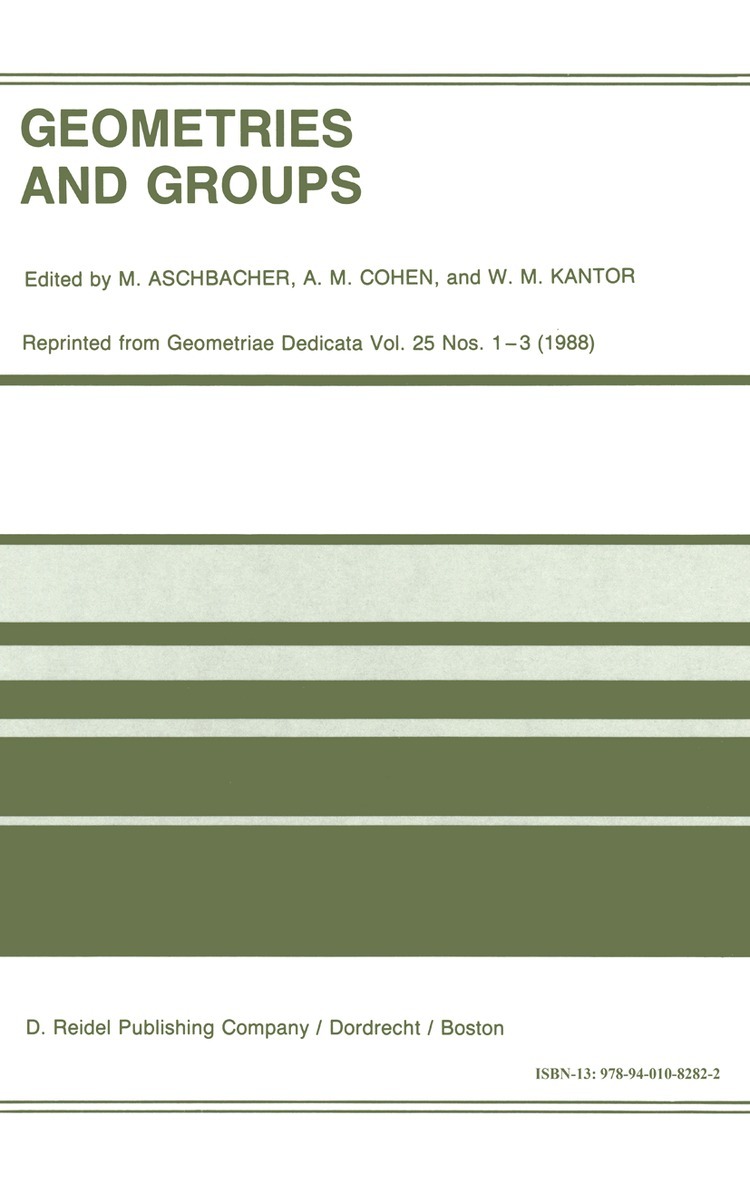
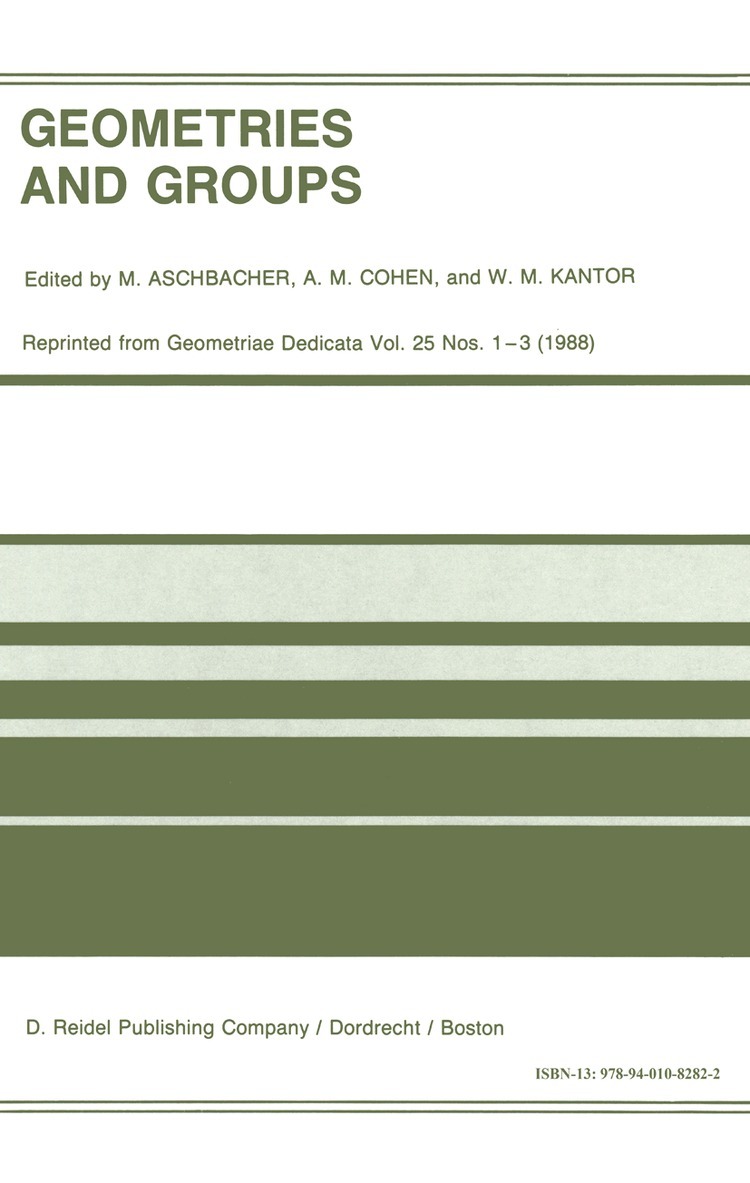
Geometries and Groups
Proceedings of the Workshop Geometries and Groups, Finite and Algebraic, Noorwijkerhout, Holland, March 1986
Av M. Aschbacher, A.M. Cohen m. fl.
Inbunden, 1988
2182 kr
Lägg i varukorg
The workshop was set up in order to stimulate the interaction between (finite and algebraic) geometries and groups. Five areas of concentrated research were chosen on which attention would be focused, namely: diagram geometries and chamber systems with transitive automorphism groups, geometries …
Geometries and Groups
Proceedings of the Workshop Geometries and Groups, Finite and Algebraic, Noorwijkerhout, Holland, March 1986
Av W.M. Kantor, A.M. Cohen m. fl.
E-bok, 2012
2925 kr
Lägg i varukorg
The workshop was set up in order to stimulate the interaction between (finite and algebraic) geometries and groups. Five areas of concentrated research were chosen on which attention would be focused, namely: diagram geometries and chamber systems with transitive automorphism groups, geometries …
Geometries and Groups
Proceedings of the Workshop Geometries and Groups, Finite and Algebraic, Noorwijkerhout, Holland, March 1986
Av M. Aschbacher, A.M. Cohen m. fl.
Häftad, 2011
2182 kr
Lägg i varukorg
The workshop was set up in order to stimulate the interaction between (finite and algebraic) geometries and groups. Five areas of concentrated research were chosen on which attention would be focused, namely: diagram geometries and chamber systems with transitive automorphism groups, geometries …