M. Balkanski - Böcker
Visar alla böcker från författaren M. Balkanski. Handla med fri frakt och snabb leverans.
12 produkter
12 produkter
1 510 kr
Skickas inom 7-10 vardagar
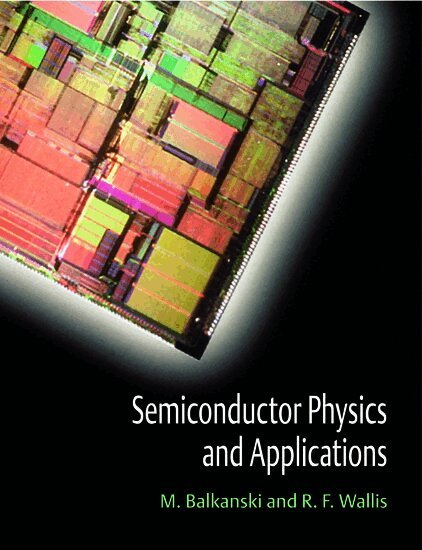
This textbook combines a thorough theoretical treatment of the basic physics of semiconductors with applications to practical devices by putting special emphasis on the physical principles upon which these devices operate. Topics treated are the detailed band structure of semiconductors, the effect of impurities on electronic states, and semiconductor statistics. Also discussed are lattice dynamical, transport, and surface properties as well as optical, magneto-optical, and electro-optical properties. The applied part of the book treats p-n junctions, bipolar junction transistors, semiconductor lasers and photodevices, after which the subject of heterostructures and superlattices is taken up with coverage of electronic, lattice dynamical, optical, and transport properties. The book concludes with treatments of metal-semiconductor devices such as MOSFETs and devices based on heterostructures. Graduate students and lecturers in semiconductor physics, condensed matter physics, electromagnetic theory, and quantum mechanics will find this a useful textbook and reference work.
3 608 kr
Skickas inom 7-10 vardagar
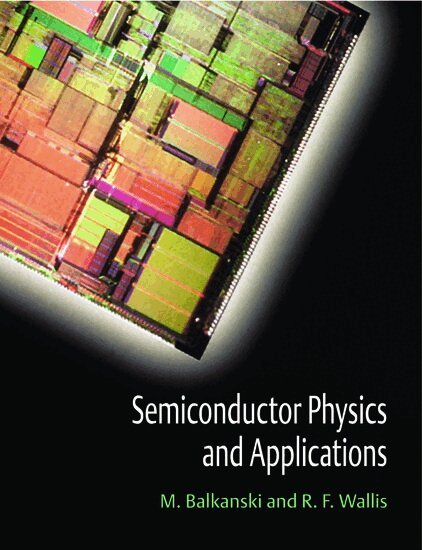
This textbook combines a thorough theoretical treatment of the basic physics of semiconductors with applications to practical devices by putting special emphasis on the physical principles upon which these devices operate. Topics treated are the detailed band structure of semiconductors, the effect of impurities on electronic states, and semiconductor statistics. Also discussed are lattice dynamical, transport, and surface properties as well as optical, magneto-optical, and electro-optical properties. The applied part of the book treats p-n junctions, bipolar junction transistors, semiconductor lasers and photodevices, after which the subject of heterostructures and superlattices is taken up with coverage of electronic, lattice dynamical, optical, and transport properties. The book concludes with treatments of metal-semiconductor devices such as MOSFETs and devices based on heterostructures. Graduate students and lecturers in semiconductor physics, condensed matter physics, electromagnetic theory, and quantum mechanics will find this a useful textbook and reference work.
1 593 kr
Skickas inom 10-15 vardagar
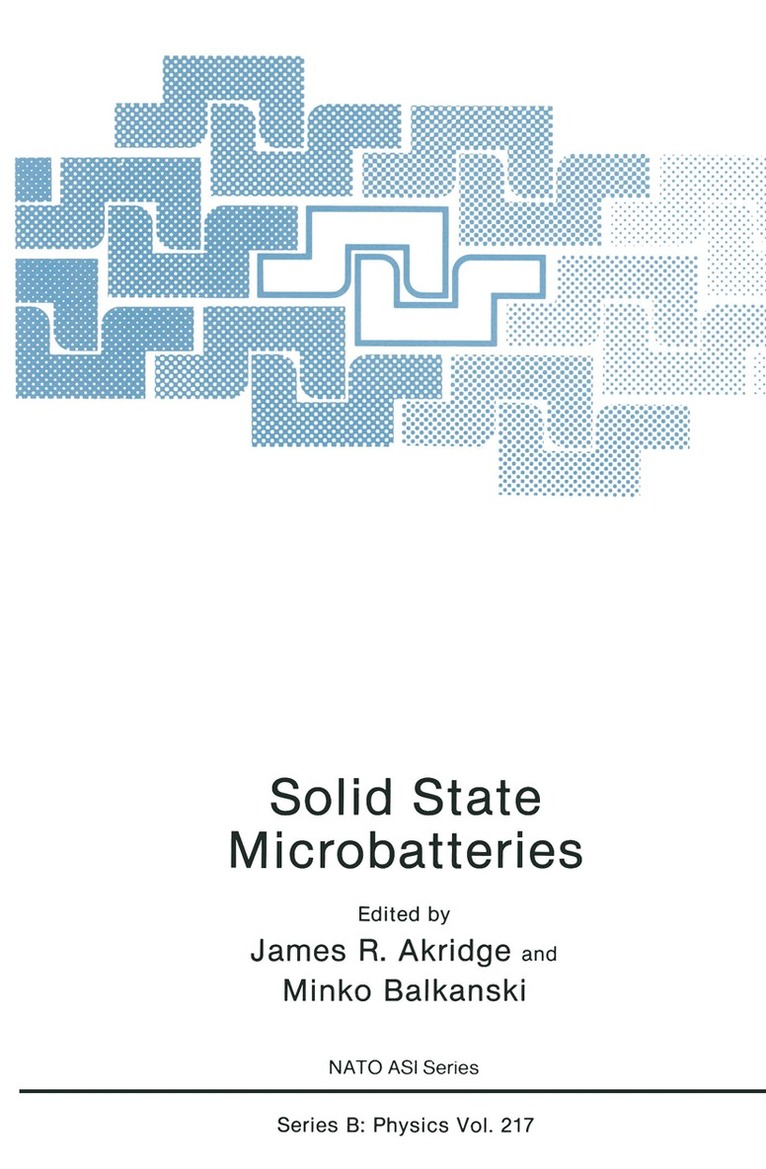
This Advanced Study Institute on the topic of SOLID STATE MICROBATTERIES is the third and final institute on the general theme of a field of study now termed "SOLID STATE IONICS". The institute was held in Erice, Sicily, Italy, 3 - 15 July 1988. The objective was to assemble in one location individuals from industry and academia expert in the fields of microelectronics and solid state ionics to determine the feasibility of merging a solid state microbattery with microelectronic memory. Solid electrolytes are in principle amenable to vapor deposition, RF or DC sputtering, and other techniques used to fabricate microelectronic components. A solid state microbattery 1 1 mated on the same chip carrier as the chip can provide on board memory backup power. A solid state microbattery assembled from properly selected anode/solid electrolyte/cathode materials could have environmental endurance properties equal or superior to semiconductor memory chips. Lectures covering microelectronics, present state-of-art solid state batteries, new solid electrolyte cathode materials, theoretical and practical techniques for fabrication of new solid electrolytes, and analytical techniques for study of solid electrolytes were covered. Several areas where effort is required for further understanding of materials in pure form and their interactions with other materials at interfacial contact points were identified. Cathode materials for solid state batteries is one particular research area which requires attention. Another is a microscopic model of conduction in vitreous solid electrolytes to enhance the thermodynamic macroscopic Weak ~lectrolyte Iheory (WET).
3 178 kr
Skickas inom 10-15 vardagar
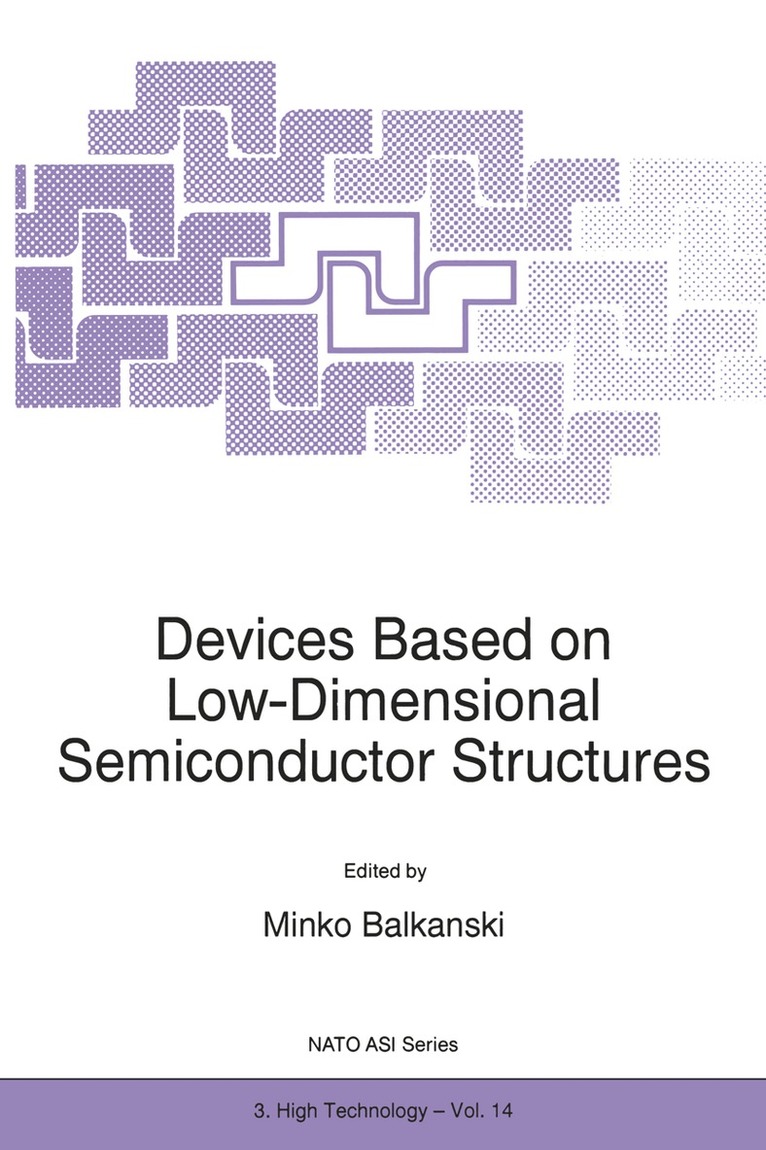
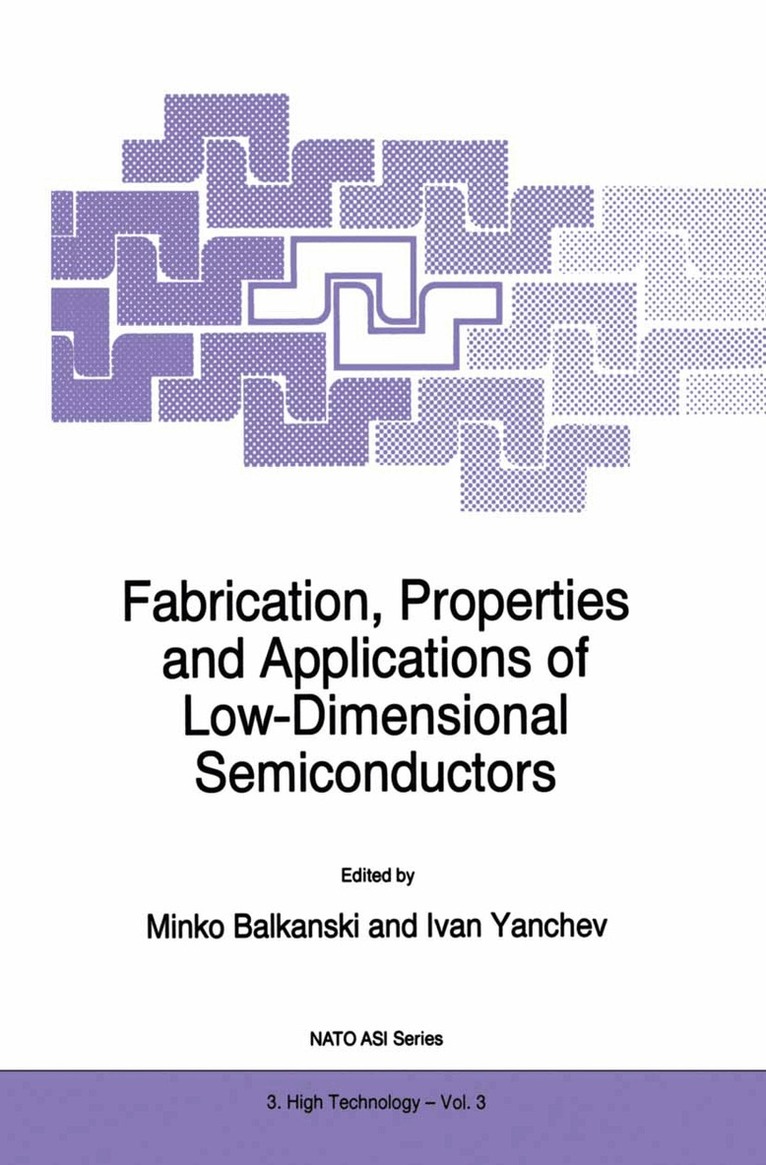
A recent major development in high technology, and one which bears considerable industrial potential, is the advent of low-dimensional semiconductor quantum structures. The research and development activity in this field is moving fast and it is thus important to afford scientists and engineers the opportunity to get updated by the best experts in the field. The present book draws together the latest developments in the fabrication technology of quantum structures, as well as a competent and extensive review of their fundamental properties and some remarkable applications. The book is based on a set of lectures that introduce different aspects of the basic knowledge available, it has a tutorial content and could be used as a textbook. Each aspect is reviewed, from elementary concepts up to the latest developments. Audience: Undergraduates and graduates in electrical engineering and physics schools. Also for active scientists and engineers, updating their knowledge and understanding of the frontiers of the technology.
2 121 kr
Skickas inom 10-15 vardagar
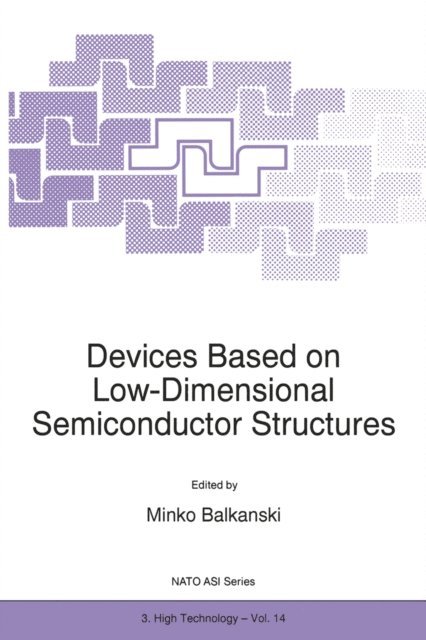
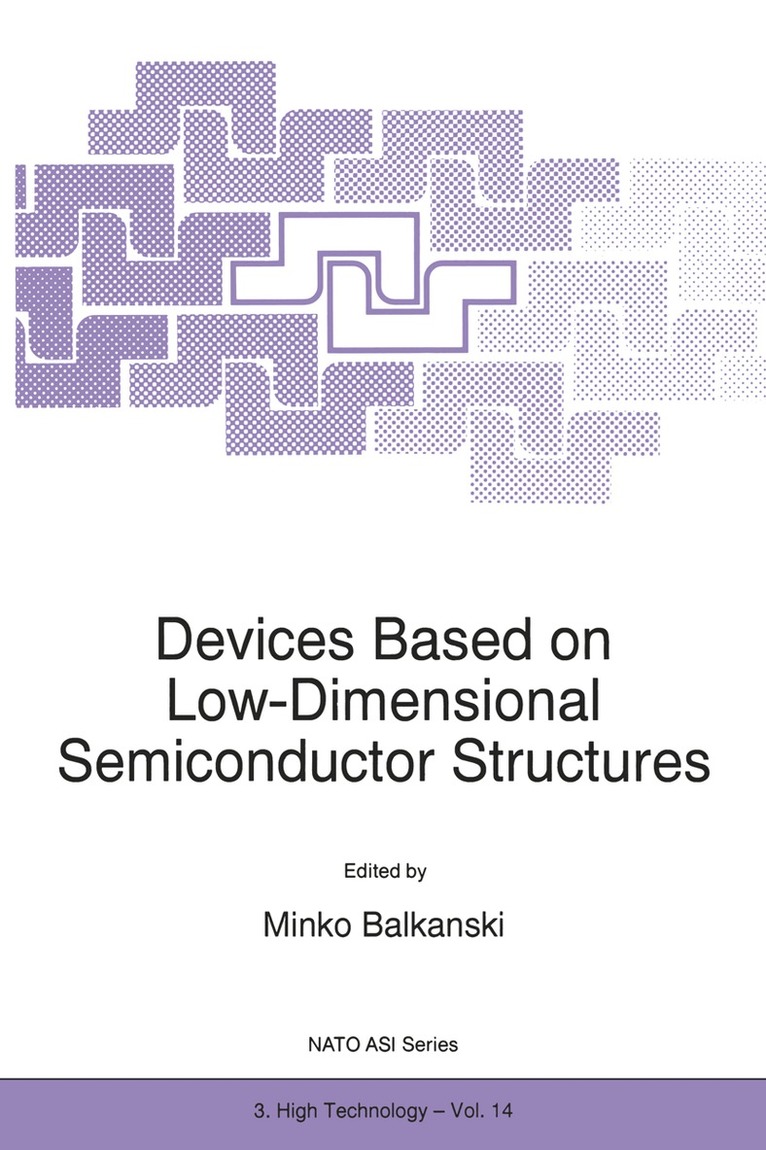
Low-dimensional semiconductor quantum structures are a major, high-technological development that has a considerable industrial potential. The field is developing rapidly and this work represents a guide to developments in device technology, fundamental properties, and some remarkable applications. The content is largely tutorial, and the book could be used as a textbook. It deals with the physics, fabrication, characteristics and performance of devices based on low-dimensional semiconductor structures. It opens with fabrication procedures. The fundamentals of quantum structures and electro-optical devices are dealt with extensively. Nonlinear optical devices are discussed from the point of view of physics and applications of exciton saturation in MQW structures. Waveguide-based devices are also described in terms of linear and nonlinear coupling. The basics of pseudomorphic HEMT technology, device physics and materials layer design are presented. Each aspect is reviewed from the elementary basics up to the latest developments. It should be of interest to undergraduates in electrical engineering, and graduates in physics and engineering schools.Useful for active scientists and engineers wishing to update their knowledge and understanding of recent developments.
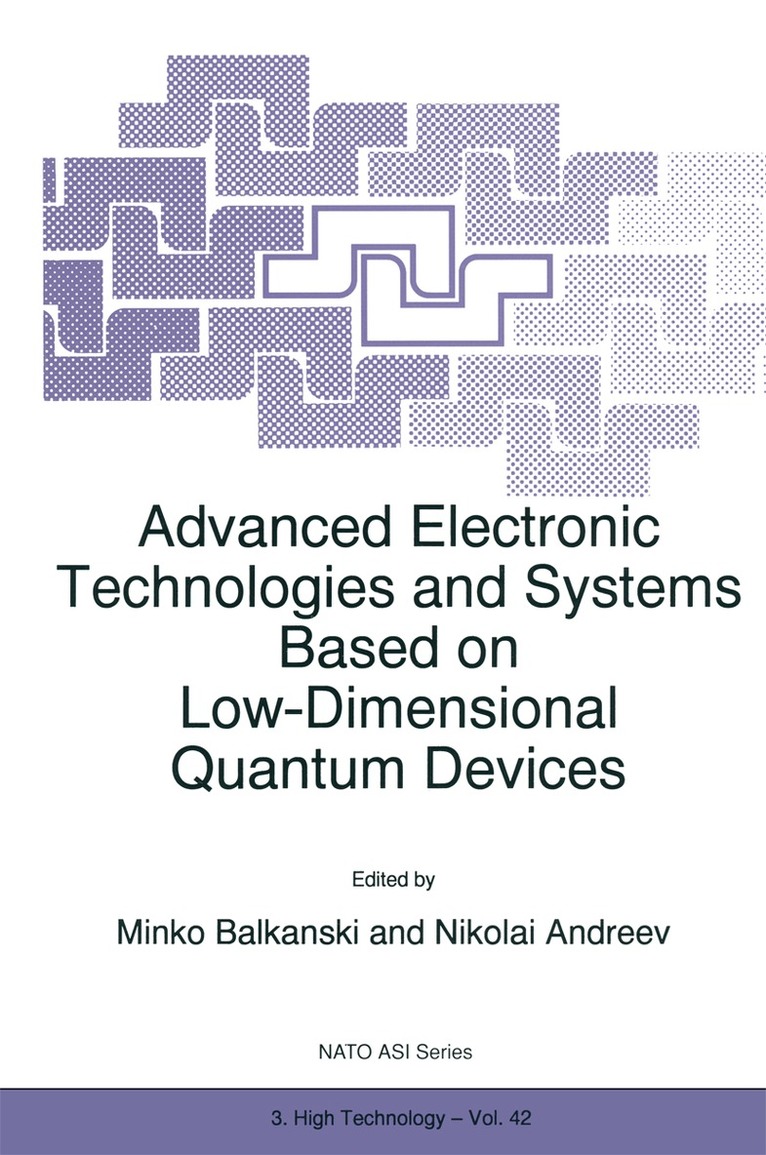
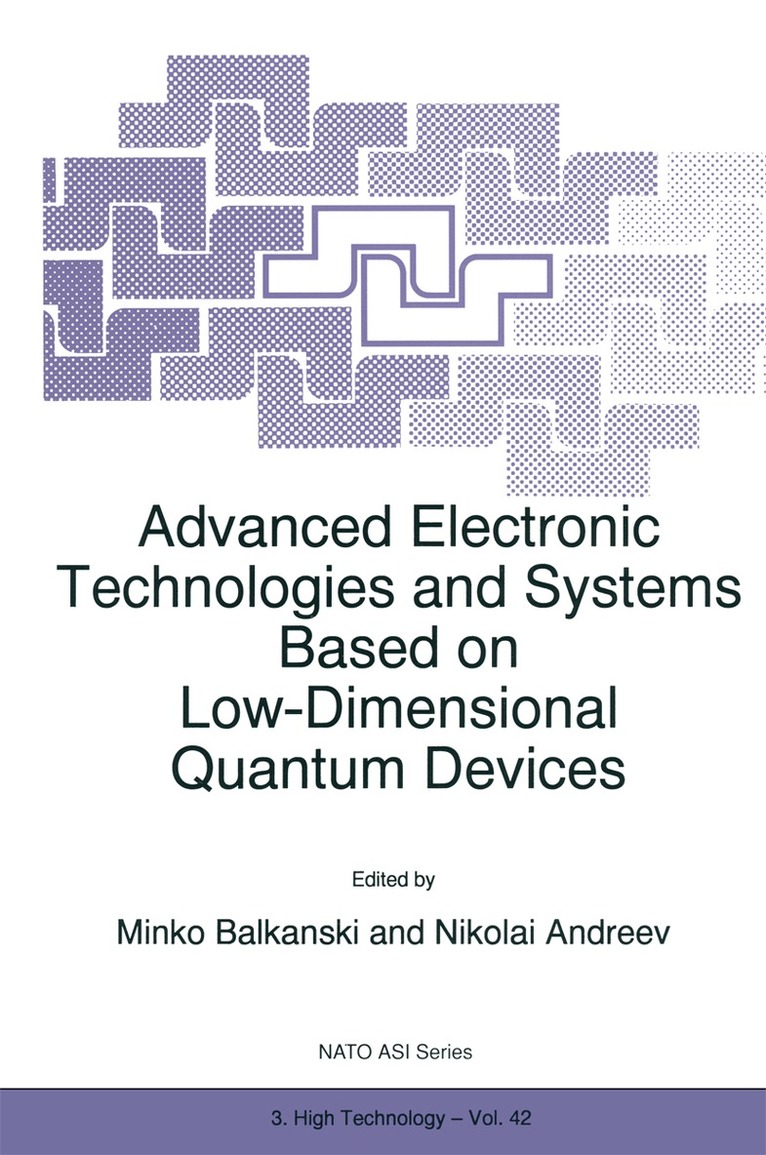
Advanced Electronic Technologies and Systems Based on Low-Dimensional Quantum Devices
Inbunden, Engelska, 1997
2 121 kr
Skickas inom 10-15 vardagar
The major thrust of this book is the realization of an all-optical computer. To that end it discusses optoelectronic devices and applications, transmission systems, integrated optoelectronic systems, and all-optical computers. The chapters on heterostructure light-emitting devices and quantum well-carrier transport optoelectronic devices present the recent advances in device physics, together with modern devices and their applications. The chapter on microcavity lasers discusses present and future developments in solid-state laser physics and technology, and puts into perspective the present state of research into, and the technology of, optoelectronic devices, within the context of their use in advanced systems. A significant part of the book deals with problems of propagation in quantum structures. The chapter on soliton-based switching, gating and transmission systems deals with the basics of controlling the propagation of photons in solids and the use of this control in devices.The chapters on optoelectronic processing using smart pixels and on all-optical computers are preceded by introductory material on the fundamentals of quantum structures for optoelectronic devices and systems, and on linear and non-linear absorption and reflection in quantum-well structures.
536 kr
Skickas inom 10-15 vardagar
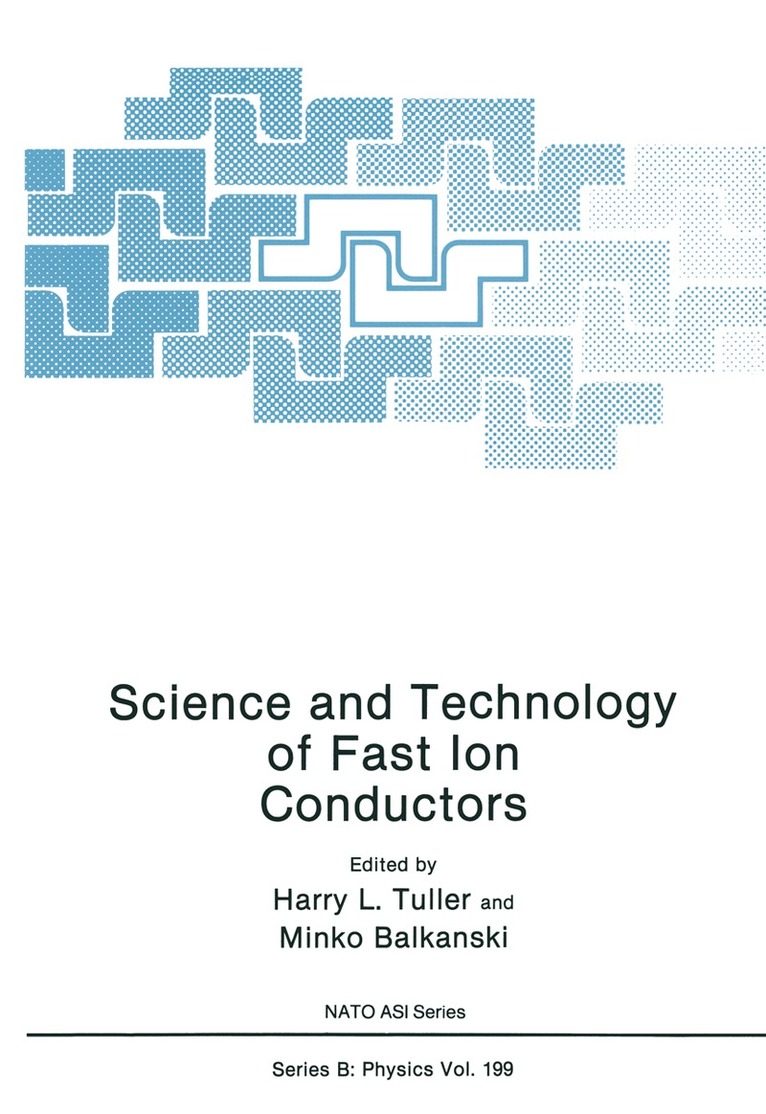
The rediscovery of fast ion conduction in solids in the 1960's stimulated interest both in the scientific community in which the fundamentals of diffusion, order-disorder phenomena and crystal structure evaluation required re-examination, and in the technical community in which novel approaches to energy conversion and chemical sensing became possible with the introduction of the new field of "Solid State Ionics. " Because of both the novelty and the vitality of this field, it has grown rapidly in many directions. This growth has included the discovery of many new crystalline fast ion conductors, and the extension to the fields of organic and amorphous compounds. The growth has involved the extension of classical diffusion theory in an attempt to account for carrier interactions and the development of sophisticated computer models. Diffraction techniques have been refined to detect carrier distributions and anharmonic vibrations. Similar advances in the application of other techniques such as NMR, Raman, IR, and Impedance Spectroscopies to this field have also occurred. The applications of fast ion conducting solid electrolytes have also developed in many directions. High energy density Na/S batteries are now reaching the last stages of development, Li batteries are being implanted in humans for heart pacemakers, and solid state fuel cells are again being considered for future power plants. The proliferation of inexpensive microcomputers has stimulated the need for improved chemical sensors--a major application now being the zirconia auto exhaust sensor being sold by the millions each year.
Del 55 - Ettore Majorana International Science Series
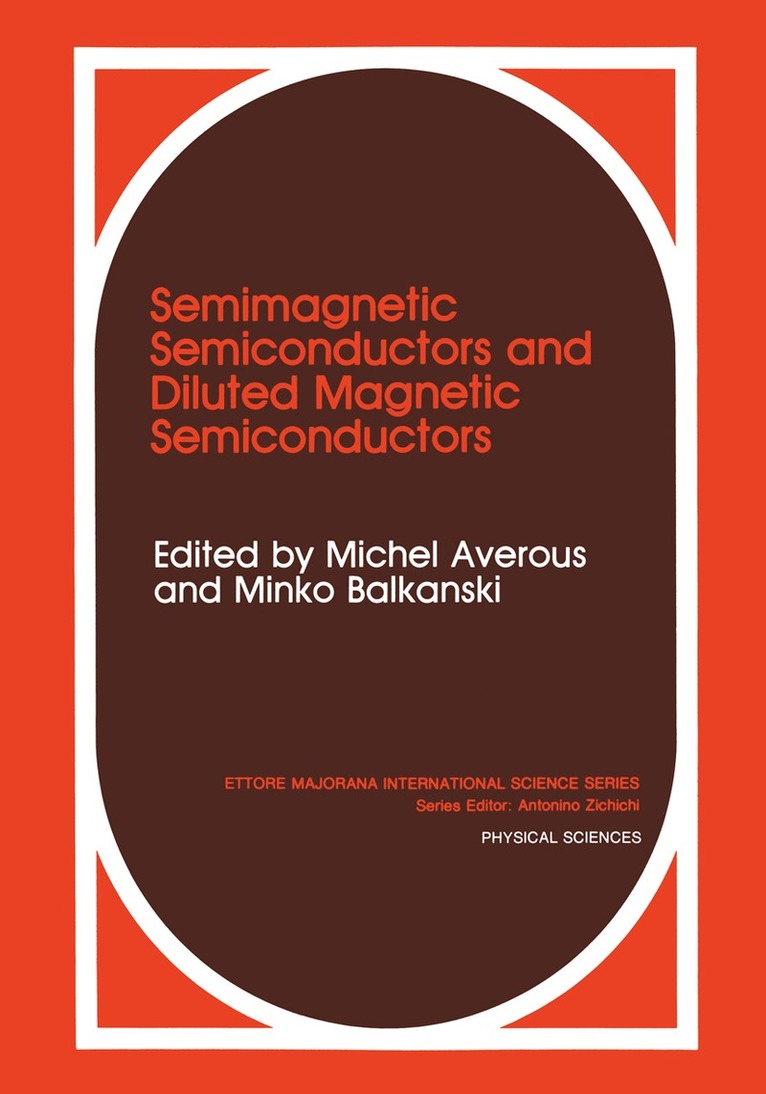
Semimagnetic Semiconductors and Diluted Magnetic Semiconductors
Häftad, Engelska, 2012
536 kr
Skickas inom 10-15 vardagar
Semimagnetic semiconductors (SMSC) and diluted magnetic semiconductors (DMS) have in the past decade attracted considerable attention because they confer many new physical properties on both bulk materials and heterostructures. These new effects are due either to exchange interactions between magnetic moments on magnetic ions, or to exchange interactions between magnetic moments and the spin of the charge carrier. These effects vary with the transition metal (Mn, Fe, Co) or rare earth (Eu, Gd, etc) used and thus provide a range of different situations. The field is very large (zero gap, small gap, wide gap), and the magnetic properties also are very rich (paramagnetic spin glass, antiferromagnetism). These materials are very convenient for studying the magnetism (the magnetism is diluted) or the superlattices (SL) with a continuous change from type II SL to type III SL. This Course attempted to provide a complete overview of the topic. The participants of this summer school held in Erice came from ten countries and were from various backgrounds and included theoreticians, experimentalists, physicists, and chemists. Consequently, an attempt was made to make the Course as thorough as possible, but at the same time attention was devoted to basic principles. The lecturers, drawn from all the groups in the world involved in the field, were asked to be very didactic in their presentation. After two introductory lectures, Dr.
1 593 kr
Skickas inom 10-15 vardagar
This Advanced Study Institute on the topic of SOLID STATE MICROBATTERIES is the third and final institute on the general theme of a field of study now termed "SOLID STATE IONICS". The institute was held in Erice, Sicily, Italy, 3 - 15 July 1988. The objective was to assemble in one location individuals from industry and academia expert in the fields of microelectronics and solid state ionics to determine the feasibility of merging a solid state microbattery with microelectronic memory. Solid electrolytes are in principle amenable to vapor deposition, RF or DC sputtering, and other techniques used to fabricate microelectronic components. A solid state microbattery 1 1 mated on the same chip carrier as the chip can provide on board memory backup power. A solid state microbattery assembled from properly selected anode/solid electrolyte/cathode materials could have environmental endurance properties equal or superior to semiconductor memory chips. Lectures covering microelectronics, present state-of-art solid state batteries, new solid electrolyte cathode materials, theoretical and practical techniques for fabrication of new solid electrolytes, and analytical techniques for study of solid electrolytes were covered. Several areas where effort is required for further understanding of materials in pure form and their interactions with other materials at interfacial contact points were identified. Cathode materials for solid state batteries is one particular research area which requires attention. Another is a microscopic model of conduction in vitreous solid electrolytes to enhance the thermodynamic macroscopic Weak ~lectrolyte Iheory (WET).
Advanced Electronic Technologies and Systems Based on Low-Dimensional Quantum Devices
Häftad, Engelska, 2010
2 121 kr
Skickas inom 10-15 vardagar
The major thrust of this book is the realisation of an all optical computer. To that end it discusses optoelectronic devices and applications, transmission systems, integrated optoelectronic systems and, of course, all optical computers. The chapters on 'heterostructure light emitting devices' 'quantum well carrier transport optoelectronic devices' present the most recent advances in device physics, together with modern devices and their applications. The chapter on 'microcavity lasers' is essential to the discussion of present and future developments in solid-state laser physics and technology and puts into perspective the present state of research into and the technology of optoelectronic devices, within the context of their use in advanced systems. A significant part of the book deals with problems of propagation in quantum structures. 'soliton-based switching, gating and transmission systems' presents the basics of controlling the propagation of photons in solids and the use of this control in devices.The chapters on 'optoelectronic processing using smart pixels' and 'all optical computers' are preceded by introductory material in 'fundamentals of quantum structures for optoelectronic devices and systems' and 'linear and nonlinear absorption and reflection in quantum well structures'. It is clear that new architectures will be necessary if we are to fully utilise the potentiality of electrooptic devices in computing, but even current architectures and structures demonstrate the feasibility of the all optical computer: one that is possible today.
3 178 kr
Skickas inom 10-15 vardagar
A recent major development in high technology, and one which bears considerable industrial potential, is the advent of low-dimensional semiconductor quantum structures. The research and development activity in this field is moving fast and it is thus important to afford scientists and engineers the opportunity to get updated by the best experts in the field. The present book draws together the latest developments in the fabrication technology of quantum structures, as well as a competent and extensive review of their fundamental properties and some remarkable applications. The book is based on a set of lectures that introduce different aspects of the basic knowledge available, it has a tutorial content and could be used as a textbook. Each aspect is reviewed, from elementary concepts up to the latest developments. Audience: Undergraduates and graduates in electrical engineering and physics schools. Also for active scientists and engineers, updating their knowledge and understanding of the frontiers of the technology.
2 121 kr
Skickas inom 10-15 vardagar
Low-dimensional semiconductor quantum structures are a major, high-technological development that has a considerable industrial potential. The field is developing extremely rapidly and the present book represents a timely guide to the latest developments in device technology, fundamental properties, and some remarkable applications. The content is largely tutorial, and the book could be used as a textbook. The book deals with the physics, fabrication, characteristics and performance of devices based on low-dimensional semiconductor structures. It opens with fabrication procedures. The fundamentals of quantum structures and electro-optical devices are dealt with extensively. Nonlinear optical devices are discussed from the point of view of physics and applications of exciton saturation in MQW structures. Waveguide-based devices are also described in terms of linear and nonlinear coupling. The basics of pseudomorphic HEMT technology, device physics and materials layer design are presented. Each aspect is reviewed from the elementary basics up to the latest developments. Audience: Undergraduates in electrical engineering, graduates in physics and engineering schools. Useful for active scientists and engineers wishing to update their knowledge and understanding of recent developments.