M. Fletcher - Böcker
Visar alla böcker från författaren M. Fletcher. Handla med fri frakt och snabb leverans.
6 produkter
6 produkter
5 293 kr
Skickas inom 10-15 vardagar
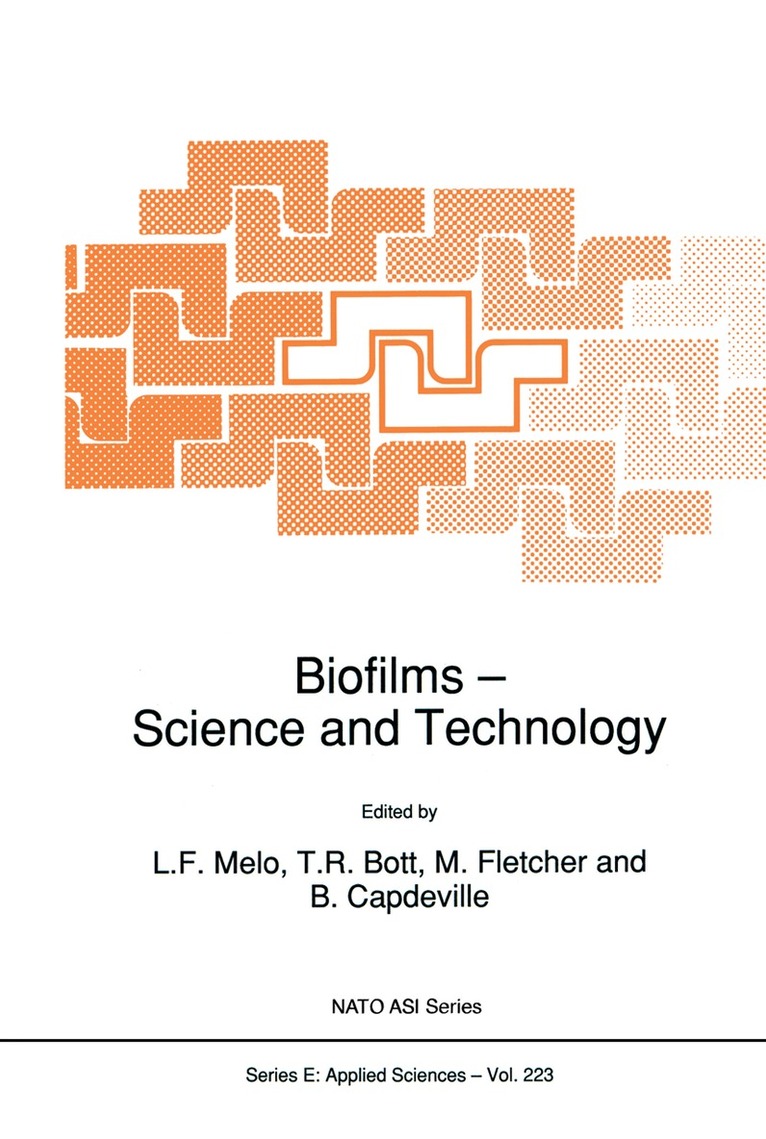
Biofilms -- Science and Technology covers the main topics of biofilm formation and activity, from basic science to applied aspects in engineering and medicine. The book presents a masterly discussion of microbial adhesion, the metabolism of microorganisms in biofilms, modelling of mass transfer and biological reaction within biofilms, as well as the behaviour of these microbial communities in industry (waste water treatment, heat exchanger biofouling, membranes, food processing) and in medicine (teeth, implants, prosthetic devices). Laboratory techniques and industrial monitoring methods are also presented. The book is directed at readers at the postgraduate level and is organised as a textbook, containing 11 chapters, a glossary, and a detailed subject index.
Professional Learning in Higher Education and Communities
Towards a New Vision for Action Research
Inbunden, Engelska, 2015
1 034 kr
Skickas inom 10-15 vardagar
By integrating neuroscience and social science, this book introduces a bold new vision of Participatory Action Learning and Action Research (PALAR). The authors explain and enhance the art of action research through PALAR as a philosophy, methodology and theory of learning and as a facilitation process for professional learning and social justice.
Professional Learning in Higher Education and Communities
Towards a New Vision for Action Research
Häftad, Engelska, 2015
1 034 kr
Skickas inom 10-15 vardagar
By integrating neuroscience and social science, this book introduces a bold new vision of Participatory Action Learning and Action Research (PALAR). The authors explain and enhance the art of action research through PALAR as a philosophy, methodology and theory of learning and as a facilitation process for professional learning and social justice.
1 625 kr
Skickas inom 10-15 vardagar
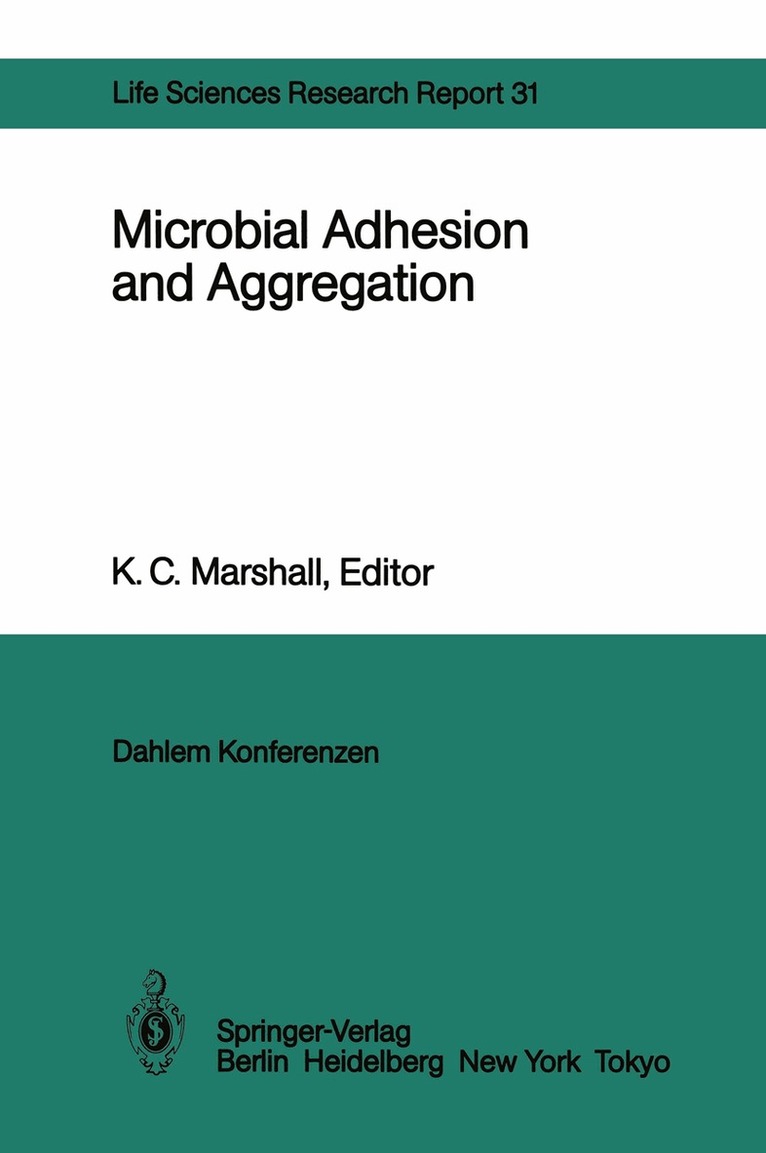
Study of the phenomena of bacterial adhesion to surfaces has accelerated considerably over the past 10 to 15 years. During this period, microbiologists have become increasingly aware that attachment to a substratum influences considerably the activities and structures of microbial cells. Moreover, in many cases attached communities of cells have important effects on their substratum and the surrounding environment. Such phenomena are now known to be important in plant and animal hosts, water and soil ecosystems, and man-made structures and industrial processes. Much work on microbial adhesion in the early 1970s was descriptive. Those studies were important for detecting and describing the phenomena of bacterial adhesion to substrata in various environments; the findings have been presented in numerous recently published, excellent books and reviews. In some studies, attempts were made to elucidate some funda mental principles controlling adhesion processes in different environments containing a variety of microorganisms. Common threads have been observed occasionally in different studies. Taken as a whole, however, the information has revealed that many disparate factors are involved in adhesion processes. Whether a particular microorganism can adhere to a certain substratum depends on the properties of the microbial strain itself and on charac teristics of the substratum and of the environment.
Microbial Adhesion and Aggregation
Report of the Dahlem Workshop on Microbial Adhesion and Aggregation Berlin 1984, January 15–20
Häftad, Engelska, 2011
1 064 kr
Skickas inom 10-15 vardagar
usage of the terms substrate and substratum. A substrate (pI.: substrates) is a material utilized by microorganisms, generally as a source of energy. A substratum (pI.: substrata) is asolid surface to which a microorganism mayattach. REFERENCES (1) Marshall, K.C. 1976. Interfaces in Microbial Ecology. Cambridge, MA: Harvard University Press. (2) ZoBell, C.E. 1943. The effect of solid surfaces upon bacterial activity. J. Bacteriol. 46: 39-56. Standing, left to right: Paul Rutter, Rolf Freter, Mike Silverman, lan Robb, Hinrich Mrozek, Frank Dazzo, David Gingell Seated, left to right: Garth Jones, Stanislawa Tylewska, Staffan Kjelleberg, Ellen Rades-Rohkohl, Kevin Marshall Microbial Adhesion and Aggregation, ed. K.C. Marshall, pp. 5-19. Dahlem Konferenzen 1984. Berlin, Heidelberg, New York, Tokyo: Springer-Verlag. Mechanisms of Adhesion Group Report P.R. Rutter, Rapporteur F.B. Dazzo H. Mrozek R. Freter E. Rades-Rohkohl D. GingeIl I.D. Robb G.W. Jones M. Silverman 8. Kjelleberg 8. Tylewska K.C. Marshall INTRODUCTION The subject, Mechanisms of Microbial Attachment, has proved to be a fertile sour ce of argument between both microbiologists and physical chemists.In order to find common ground for discussion, the group endeavored to come to a consensus regarding a number of definitions pertinent to the subject. Some of these are described in the text and others will be found at the end of this report.
5 293 kr
Skickas inom 10-15 vardagar
Biofilms -- Science and Technology covers the main topics of biofilm formation and activity, from basic science to applied aspects in engineering and medicine. The book presents a masterly discussion of microbial adhesion, the metabolism of microorganisms in biofilms, modelling of mass transfer and biological reaction within biofilms, as well as the behaviour of these microbial communities in industry (waste water treatment, heat exchanger biofouling, membranes, food processing) and in medicine (teeth, implants, prosthetic devices). Laboratory techniques and industrial monitoring methods are also presented. The book is directed at readers at the postgraduate level and is organised as a textbook, containing 11 chapters, a glossary, and a detailed subject index.