M. J. Trow – författare
Visar alla böcker från författaren M. J. Trow. Handla med fri frakt och snabb leverans.
92 produkter
92 produkter
Inbunden, Engelska, 2016
59 kr
Skickas
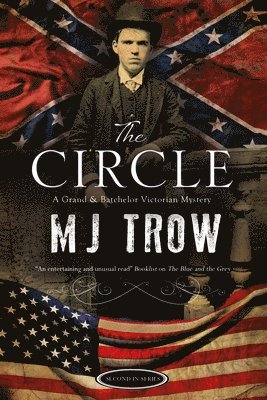
July, 1868. On receiving a commission to look into the suspicious death of Lafayette Baker, Head of the US National Detective Police, private investigators Matthew Grand and James Batchelor leave London for Washington DC, where they find a country still scarred by the Civil War, and unearth a surprising number of suspects who wanted Baker dead.
Häftad, Engelska, 2016
210 kr
Skickas inom 3-6 vardagar
Inbunden, Engelska, 2025
265 kr
Skickas
They were often half-starved, marching through an alien land with few signposts and no maps. They were often suffering from dysentery, their legwear rolled down and they sometimes fought naked from the waist down. They were paid 6d a day – the same as a civilian craftsman – and they swore like the troopers they were. That was why the French called them the Goddamns and king and peasant alike were terrified of them. With their yew wood bows and ash arrows a clothyard long, they were the victors in countless clashes during the Hundred Years War and in the three great battles of Crecy, Poitiers and Agincourt.They robbed, pillaged, raped and murdered, often in their king’s name. Yet they won battles and it is no exaggeration to say that England became a powerful nation state because of them. If they were caught in action by the enemy, they would have their bow fingers cut off and their throats slit. We know the names of very few of them. They were not worthy of ransom, unlike the knights they fought for. Most of them ended up in mass burial pits or some unmarked plot beside a French road. The vast majority was illiterate, so we have no firsthand accounts of their campaigns from the bowmen themselves. For all they won battles and renown, for all they helped indirectly to increase the power of the common man, they are like ghosts drifting over the battlefield.They were the bowmen.
Inbunden, Engelska, 2026
270 kr
Skickas
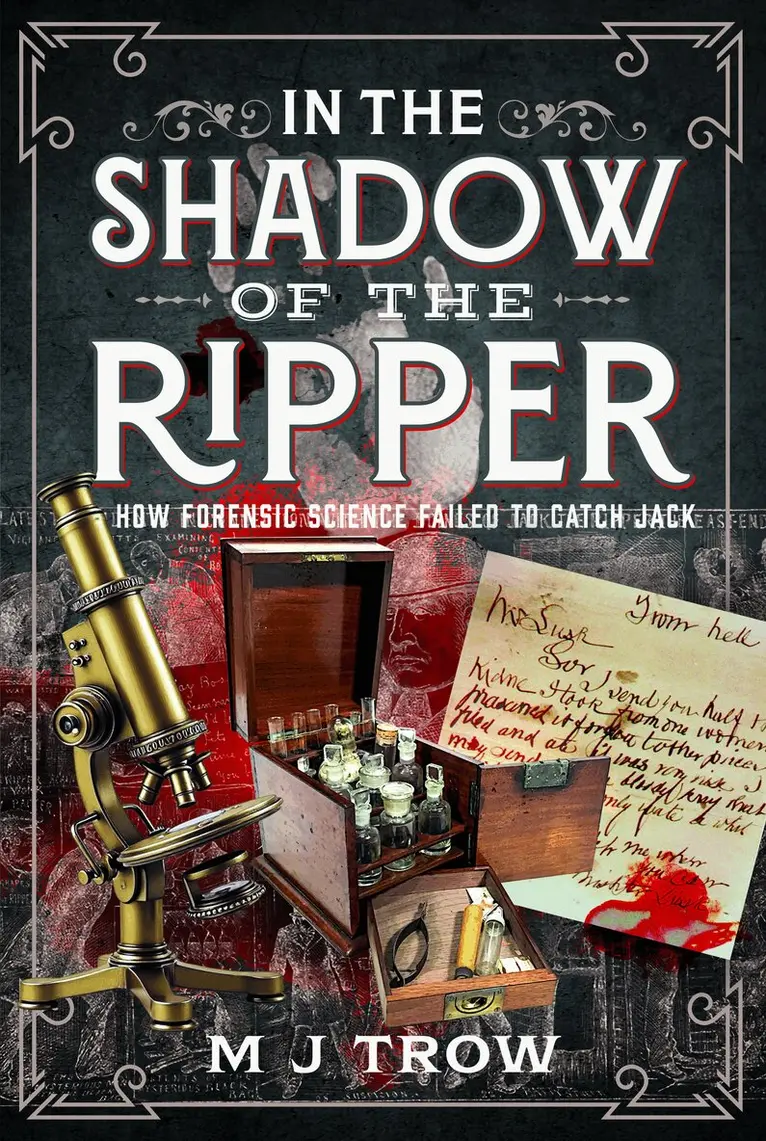
For centuries, it was believed that a corpse would ‘bleed anew’ in the presence of its murderer. Chaucer wrote about it; so did Shakespeare. Only slowly, as the Renaissance and the Age of Reason drove away the shadows of superstition, did forensic science find its feet.From the Ratlciffe Highway murders of 1811 to the first murder trial with fingerprint technology (the Stratton brothers in 1905), In the Shadow of the Ripper charts the grisly history of crime and focuses on the technological developments that brought real justice just a little closer.General practitioners, police surgeons, anatomists, chemists and many others argued with each other in spectacular cases like the Ripper murders in 1888, the poisonings of William Palmer, Florence Maybrick and the axe frenzy of Lizzie Borden. And if the expert witnesses disagreed, how were juries, ‘twelve men and true’, with no scientific knowledge supposed to come to a verdict at a murder trial?Today, we take forensic science with all its brilliance for granted. In the Shadow of the Ripper looks at how it all began. The Ripper case is a shining example of the fact that it does not matter how many forensic advances are made, a killer in the shadows can sometimes outwit the police and science for over 135 years … and counting.
Inbunden, Engelska, 2026
239 kr
Kommande
In the journalese of the time, he was called ‘the fiend’ and ‘the monster’. That was before an anonymous journalist invented the ‘trade name’ Jack the Ripper. In the 140 years since the Whitechapel murders, a whole industry has grown up discussing the tortuous issues of the case, spawning countless books, articles, documentaries, movies and even musicals.Hunting Jack has become a parlour game, today played out online and is a conspiracy theorists’ paradise. Ever more bizarre and unlikely theories are put forward to explain why one serial killer was never caught. The reality was that the police were inept, the public unhelpful and the murderer himself was extraordinarily lucky.Jack the Ripper: The First Suspects ignores the industry and goes back to basics. What was happening in the ‘autumn of terror’ 1888 when Jack struck? What sort of man were the police looking for? Who did they arrest, speak to, caution? Using police records from the time, the book pieces together the original investigation before fiction and make-believe took over.The Whitechapel murderer was not the first serial killer in history but his demented MO, his detailed knowledge of the killing fields, his speed and efficiency with the knife, left two major police forces floundering in his wake.
E-bok
Engelska11 kr
Läs direkt efter köp
E-bok
Engelska48 kr
Läs direkt efter köp
E-bok
Engelska48 kr
Läs direkt efter köp
E-bok
Engelska49 kr
Läs direkt efter köp
E-bok
Engelska48 kr
Läs direkt efter köp
E-bok
Engelska48 kr
Läs direkt efter köp
E-bok
Engelska48 kr
Läs direkt efter köp
11 kr
Läs direkt efter köp
E-bok
Engelska49 kr
Läs direkt efter köp
E-bok
Engelska48 kr
Läs direkt efter köp
48 kr
Läs direkt efter köp
E-bok
Engelska48 kr
Läs direkt efter köp
48 kr
Läs direkt efter köp
E-bok
Engelska54 kr
Läs direkt efter köp
Häftad, Engelska, 2021
160 kr
Skickas
On 1 May 1820, outside Newgate Prison, in front of a dense crowd, five of the Cato Street conspirators - Arthur Thistlewood, William Davidson, James Ings, Richard Tidd and John Brunt - were hanged for high treason. Then they were decapitated in the last brutal act of a murderous conspiracy that aimed to assassinate Prime Minister Lord Liverpool and his cabinet and destroy his government. The Cato Street conspirators matched the Gunpowder plotters in their daring - and in their fate - but their dark, radical intrigue hasnt received the attention it deserves. M.J. Trow, in this gripping fast-moving account of this notorious but neglected episode in British history, reconstructs the case in vivid detail and sets it in the wider context of the French Revolution and the Napoleonic Wars.
Häftad, Engelska, 2024
165 kr
Skickas
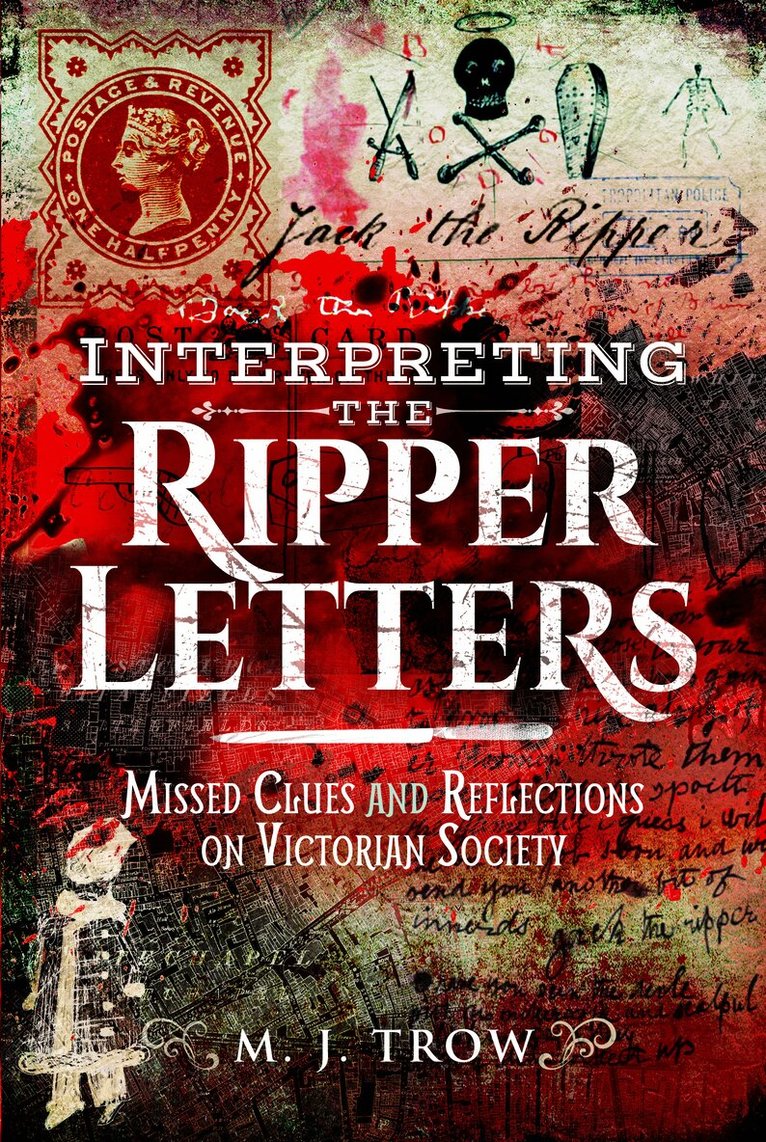
In the autumn of 1888, a series of grisly murders took place in Whitechapel in London’s East End, the Abyss, the Ghetto, the City of Eternal Night. The Whitechapel murderer, arguably the first of his kind, was never caught but the killings gave rise to the best known pen-name in criminal history – Jack the Ripper.The Whitechapel killer was terrifyingly real but Jack was the creation of Fleet Street, the gallows humour of a newspaper hack whose sole aim in life was to sell newspapers. And where the ‘Dear Boss’ letter, with its ‘trade name’ signature led, thousands followed.This book is not about the world’s first serial killer but about the sick, the perverted, the twisted souls who put pen to paper purporting to be the killer or suggested ever more lurid ways in which he could be caught. Innocent men were put in the frame by Victorian trouble-makers who would be perfectly at home with today’s Internet trolls, pointing cruel fingers in almost perfect anonymity.The book takes the lid off Victorian mindsets, exposing a dark and unnatural place as topsy-turvy as that inhabited by the killer himself.
Inbunden, Engelska, 2024
234 kr
Skickas
The assassination of John Fitzgerald Kennedy is one of the milestones of history. Everyone, it is said, remembers where they were when they heard the news. Because the official investigation, the Warren Commission, set up by Kennedy’s successor in the White House, Lyndon Johnson, was such a whitewashing travesty of justice, the world has felt itself free to speculate ever more wildly about what really happened in Dealey Plaza, Dallas, in November 1963.The killer, said the Warren Commission, was the peculiar loner, Lee Harvey Oswald, and he acted alone. Evidence, science and common sense have long ago proved that this was not possible. So it was the Russians. It was the Cubans. It was the Mafia. It was Lyndon Johnson. It was the Secret Service. It was the FBI. It was the CIA. It was that murky conspiratorial bunch, the Military-Industrial Complex.This book evaluates all the above and comes to another conclusion entirely. The reason that we are still arguing about who was responsible for a murder committed in front of a large crowd in broad daylight is that no one was prepared to put up their hands and admit their responsibility for not doing their jobs properly. Yes, there was a conspiracy, but the ‘cock-up’ element was even greater. Why was there inadequate Secret Service protection for the president in Dallas? Why was the motorcade route made public well in advance? Why was Lee Oswald identified on the word of a single witness? Why was Jack Ruby allowed to slip past dozens of policemen to kill Oswald? Why were the lawyers of the Warren Commission allowed to select witnesses and bully them into saying what they had not seen? Why did subsequent governmental enquiries fudge the physics of a headshot and a bungled autopsy? Why does the American mainstream media still cling to the lone gunman, single bullet theory?The answer is simple. Everybody in 1963 and for many years afterwards were far too concerned about covering their own backs. Truth and justice got lost somewhere in all of that.
Inbunden, Engelska, 2025
270 kr
Skickas
On 2 November 1952, two teenagers, Derek Bentley and Christopher Craig, tried to break into a warehouse in Croydon, Surrey. The police were called and in the minutes that followed, Craig wounded one policeman and shot another dead.At 16, Craig was too young to hang, but Bentley, at 19, was not. Even though he had not fired a shot or carried a gun and was under arrest at the time PC Sidney Miles died, Bentley was deemed to be guilty of murder. The law – of joint felonious enterprise – was unjust and Bentley had an IQ of 66 (the national average is 100). Even so, he was hanged at Wandsworth in February 1953.Nearly forty years later, PC Claude Pain, who was there at the time of the shooting, told a different story. He was on the warehouse rooftop and saw the whole thing. What really hanged Bentley were the words he allegedly used, ‘Let him have it, Chris’. And Pain did not hear those words.M.J. Trow's Let Him Have It, Chris, published in 1990, was based on Pain’s new evidence. Eight years later, the conviction against Bentley was overturned – not as a result of police corruption, but because of the appallingly partial performance of the trial judge, Lord Goddard.At the time, access to any material relating to the case was denied and only now, with the Freedom of Information Act, can Pain’s testimony be refuted. He was not on the roof. His original deposition is still in The National Archive.This book aims to put the record straight. There was indeed a dreadful miscarriage of justice in 1952 – one of many before and since – and, in a way, Claude Pain was part of it.
Inbunden, Engelska, 2023
211 kr
Skickas
Nobody expected a corpse in the tranquil Surrey countryside near Godalming, even though there was a war on and tanks churned the soil on manoeuvres.The body belonged to 19-year-old Joan Pearl Wolfe, a sweet, convent-educated girl who, according to her own mother, had gone bad. It was 1942 and England was swarming with British, Canadian and American troops building up to what would become D-Day two years later.The Surrey police, over-stretched as all forces were during the war, called in Scotland Yard, the experts, in the form of Superintendent Ted Greeno, one of the most famous and formidable detectives of his day. One of the Surrey detectives recognized the dead girl's dress - he had seen it on its owner weeks earlier and from that the body's identity came to light.Joan was a camp follower with a string of men interested in her, but her latest beau was the M tis Canadian August Sangret. He had slipped out to live with Joan in woods near to the camp and had built shacks - wigwams - as temporary homes. Charged with her murder, he gave the longest statement ever made to the police - seventeen pages of it - and Keith Simpson, the Home Office pathologist, became the first to produce a human skull in court. The distinctive wounds inflicted by Sangret's knife convinced the jury of his guilt and he was hanged by Albert Pierrepoint in Wandsworth gaol.An open and shut case? Far from it. For all the brilliance of forensic science and the dogged work of the police, the jury should still be out on August Sangret. As the judge said in his summing up, there is no blood on this man'.
Inbunden, Engelska, 2023
242 kr
Skickas
Astonishingly, The Hagley Wood Murder is the first book solely on the subject (other than a selection of privately printed/self published offerings) ever written on this murder, which too place eighty years ago.In April 1943, four teenaged boys discovered a corpse stuffed into the bole of a wych elm in a wood in the industrial Midlands. The body was merely bones and had been in the tree for up to two years. The pathologist determined that she was female, probably in her thirties, had given birth and was just under five feet tall. The cause of death was probably suffocation.Six months after the discovery, mysterious messages began to appear on walls in the area, variants of Who Put Bella Down the Wych Elm - Hagley Wood'. And the name Bella has stuck ever since.Local newspapers, then the national press, took up the story and ran with it, but not until 1968 was there a book on the case - Donald McCormick's Murder by Witchcraft - and that, like others that followed, tied Bella in with another supposedly occult murder, that of Charles Walton on Meon Hill in 1945.Any unsolved murder brings out the oddballs - the police files, only recently released, are full of them - and the nonsense still continues. The online versions are woeful - inaccuracy piled on supposition, laced with fiction. It did not help that a professional occultist, Dr Margaret Murray, expressed her belief, as early as 1953, that witchcraft was involved in Bella's murder. And ill-informed nonsense has been cobbled together to prove' that Dr Murray was right.McCormick's own involvement was in espionage and his book, slavishly copied by later privately printed efforts, have followed this tack too. It was wartime, so the anonymous woman in the wych elm had to be a spy, parachuted in by the Abwehr, the Nazi secret service.The Hagley Wood Murder is the first book to unravel the fiction of McCormick and others. It names Bella and her probable murderer. And if the conclusion is less over-the-top than the fabrications referred to above, it is still an intriguing tale of the world's oldest profession and the world's oldest crime!
E-bok
Engelska, 202315 kr
Läs direkt efter köp
Astonishingly, The Hagley Wood Murder is the first book solely on the subject (other than a selection of privately printed/self published offerings) ever written on this murder, which too place eighty years ago. In April 1943, four teenaged boys discovered a corpse stuffed into the bole of a wych elm in a wood in the industrial Midlands. The body was merely bones and had been in the tree for up to two years. The pathologist determined that she was female, probably in her thirties, had given birth and was just under five feet tall. The cause of death was probably suffocation. Six months after the discovery, mysterious messages began to appear on walls in the area, variants of ‘Who Put Bella Down the Wych Elm – Hagley Wood’. And the name Bella has stuck ever since. Local newspapers, then the national press, took up the story and ran with it, but not until 1968 was there a book on the case – Donald McCormick’s Murder by Witchcraft – and that, like others that followed, tied Bella in with another supposedly occult murder, that of Charles Walton on Meon Hill in 1945. Any unsolved murder brings out the oddballs – the police files, only recently released, are full of them – and the nonsense still continues. The online versions are woeful – inaccuracy piled on supposition, laced with fiction. It did not help that a professional occultist, Dr Margaret Murray, expressed her belief, as early as 1953, that witchcraft was involved in Bella’s murder. And ill-informed nonsense has been cobbled together to ‘prove’ that Dr Murray was right. McCormick’s own involvement was in espionage and his book, slavishly copied by later privately printed efforts, have followed this tack too. It was wartime, so the anonymous woman in the wych elm had to be a spy, parachuted in by the Abwehr, the Nazi secret service. The Hagley Wood Murder is the first book to unravel the fiction of McCormick and others. It names Bella and her probable murderer. And if the conclusion is less over-the-top than the fabrications referred to above, it is still an intriguing tale of the world’s oldest profession and the world’s oldest crime!
E-bok
PDF, Engelska, 202315 kr
Läs direkt efter köp
Astonishingly, The Hagley Wood Murder is the first book solely on the subject (other than a selection of privately printed/self published offerings) ever written on this murder, which too place eighty years ago. In April 1943, four teenaged boys discovered a corpse stuffed into the bole of a wych elm in a wood in the industrial Midlands. The body was merely bones and had been in the tree for up to two years. The pathologist determined that she was female, probably in her thirties, had given birth and was just under five feet tall. The cause of death was probably suffocation. Six months after the discovery, mysterious messages began to appear on walls in the area, variants of ‘Who Put Bella Down the Wych Elm – Hagley Wood’. And the name Bella has stuck ever since. Local newspapers, then the national press, took up the story and ran with it, but not until 1968 was there a book on the case – Donald McCormick’s Murder by Witchcraft – and that, like others that followed, tied Bella in with another supposedly occult murder, that of Charles Walton on Meon Hill in 1945. Any unsolved murder brings out the oddballs – the police files, only recently released, are full of them – and the nonsense still continues. The online versions are woeful – inaccuracy piled on supposition, laced with fiction. It did not help that a professional occultist, Dr Margaret Murray, expressed her belief, as early as 1953, that witchcraft was involved in Bella’s murder. And ill-informed nonsense has been cobbled together to ‘prove’ that Dr Murray was right. McCormick’s own involvement was in espionage and his book, slavishly copied by later privately printed efforts, have followed this tack too. It was wartime, so the anonymous woman in the wych elm had to be a spy, parachuted in by the Abwehr, the Nazi secret service. The Hagley Wood Murder is the first book to unravel the fiction of McCormick and others. It names Bella and her probable murderer. And if the conclusion is less over-the-top than the fabrications referred to above, it is still an intriguing tale of the world’s oldest profession and the world’s oldest crime!
Inbunden, Engelska, 2024
232 kr
Skickas
Film studios have been making historical movies now for over a century. In that time, thousands of films have been made covering not just centuries but millennia. Did Neanderthal woman really look like Raquel Welch in her bearskin bikini? Did 6,000 rebellious slaves claim that they were Spartacus? Did Berengaria complain to her husband, Richard the Lionheart, ‘War, war; that’s all you think about, Dick Plantagenet’? Was El Cid strapped to his horse’s saddle to lead his army after he was dead? These aren’t questions of history; they are questions of Hollywood.Charlton Heston was a foot too tall for General Charles Gordon. John Wayne was a tad too American for Genghis Khan. Eric von Stroheim’s bald head was an odd choice for the perfectly hirsute Erwin Rommel. And Warren Beatty and Fay Dunaway were far too gorgeous for bank robbers Bonnie and Clyde.Hollywood never gets it right. History and its characters are endlessly complicated, and producers, directors and screenwriters have a simple story to tell. They have a maximum of two hours to explain what happened over weeks or months or years and many of it give it their best shot.Yet for all Hollywood’s shortcomings in recreating the past, it has managed to evoke eras and people long dead in a magical way that has kept millions of us enthralled for generations.
E-bok
PDF, Engelska, 2024150 kr
Läs direkt efter köp
Film studios have been making historical movies now for over a century. In that time, thousands of films have been made covering not just centuries but millennia. Did Neanderthal woman really look like Raquel Welch in her bearskin bikini? Did 6,000 rebellious slaves claim that they were Spartacus? Did Berengaria complain to her husband, Richard the Lionheart, ‘War, war; that’s all you think about, Dick Plantagenet’? Was El Cid strapped to his horse’s saddle to lead his army after he was dead? These aren’t questions of history; they are questions of Hollywood.Charlton Heston was a foot too tall for General Charles Gordon. John Wayne was a tad too American for Genghis Khan. Eric von Stroheim’s bald head was an odd choice for the perfectly hirsute Erwin Rommel. And Warren Beatty and Fay Dunaway were far too gorgeous for bank robbers Bonnie and Clyde.Hollywood never gets it right. History and its characters are endlessly complicated, and producers, directors and screenwriters have a simple story to tell. They have a maximum of two hours to explain what happened over weeks or months or years and many of it give it their best shot.Yet for all Hollywood’s shortcomings in recreating the past, it has managed to evoke eras and people long dead in a magical way that has kept millions of us enthralled for generations.
140 kr
Läs direkt efter köp
An exploration of the moral blemishes that have dogged the leaders of Great Britain and the United States.Before Britain had a prime minister – and before they invented America – the dictator Oliver Cromwell urged the artist Lely to paint him ‘warts and all’. This book deals with some of the ‘all’, but is mostly about the warts, the moral blemishes that have dogged the leaders of two of the greatest countries on earth for 300 years.Scandalously, there are still no qualifications necessary for the job of prime minister or president, two of the most important positions in the world. And that lack of ability shows itself in spades throughout these pages. Robert Walpole knew that ‘every man has his price’ and bought people accordingly. Viscount Goderich broke down in tears, begging the king to fire him. George Washington, the revered saint of American creation, blew with the wind and owned slaves. Abraham Lincoln was prepared to send African Americans back to Africa to save the Union. William Gladstone popped out from Downing street to ‘save’ prostitutes. David Lloyd George gave people titles for money. Warren Harding had a string of mistresses, as did John Kennedy. And all this happened before Donald Trump!Thank God the fourth estate was there, the free press watching every move of politicians. Who was watching them, of course, is another story.If you thought – and prayed – that the occupants of No. 10 and the White House were honorable, competent people, you’re in for a bit of a shock.