M.-L. Barbier – författare
Visar alla böcker från författaren M.-L. Barbier. Handla med fri frakt och snabb leverans.
3 produkter
3 produkter
Inbunden, Engelska, 2002
1 123 kr
Skickas inom 10-15 vardagar
This title contains a description of psycholinguistic research being conducted internationally on better understanding second language (L2) writing. Such accounts are based on an experimental research tradition arising from recent progress made in methodology, technology and theory in both native and second language writing. There have been a number of recent volumes on the educational aspects of teaching a foreign or second language. However, there are relatively few published studies specifically geared to better understanding L2 writing and how it relates to L1 writing research in the psycholinguistic tradition. This tradition combines converging evidence from psychological experiments, case studies, linguistic interviews, field studies, correlation and other structural analyses of individual differences. The goal of all of these sources of evidence is to describe, predict, and ultimately explain L2 writing.
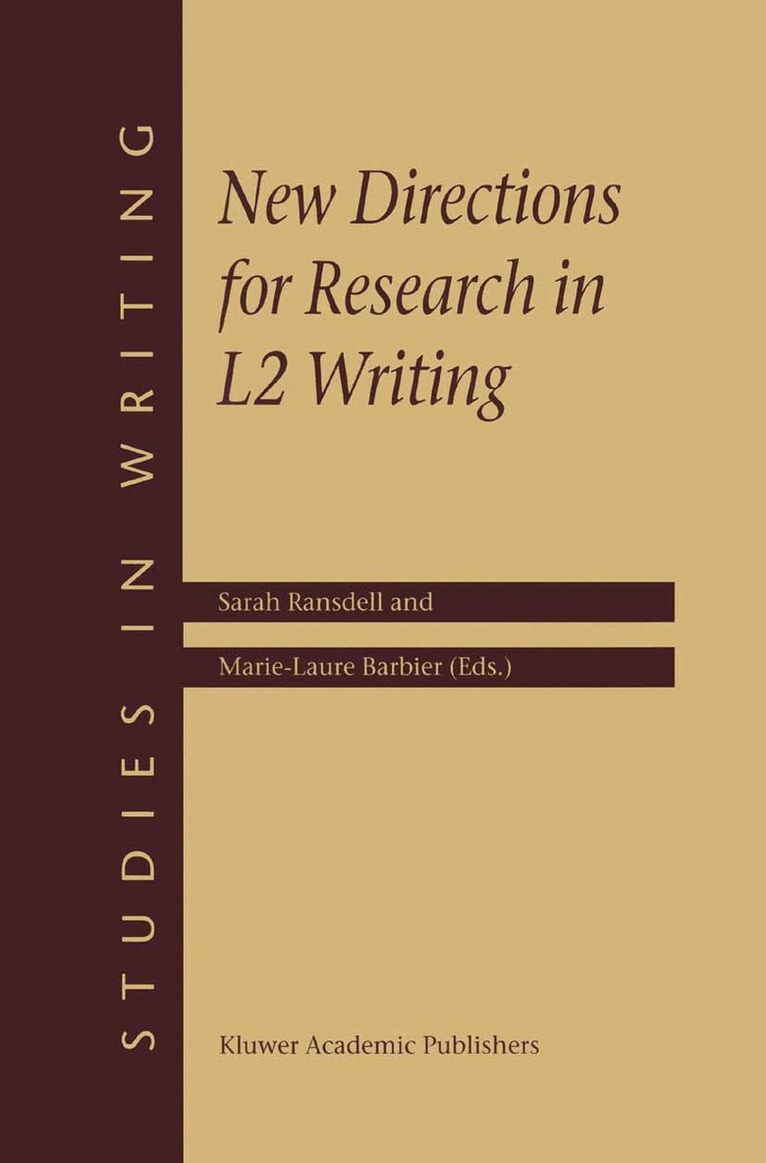
Del 11 - Studies in Writing
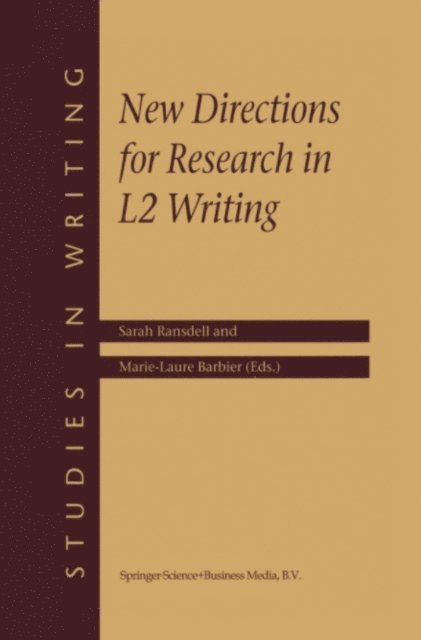
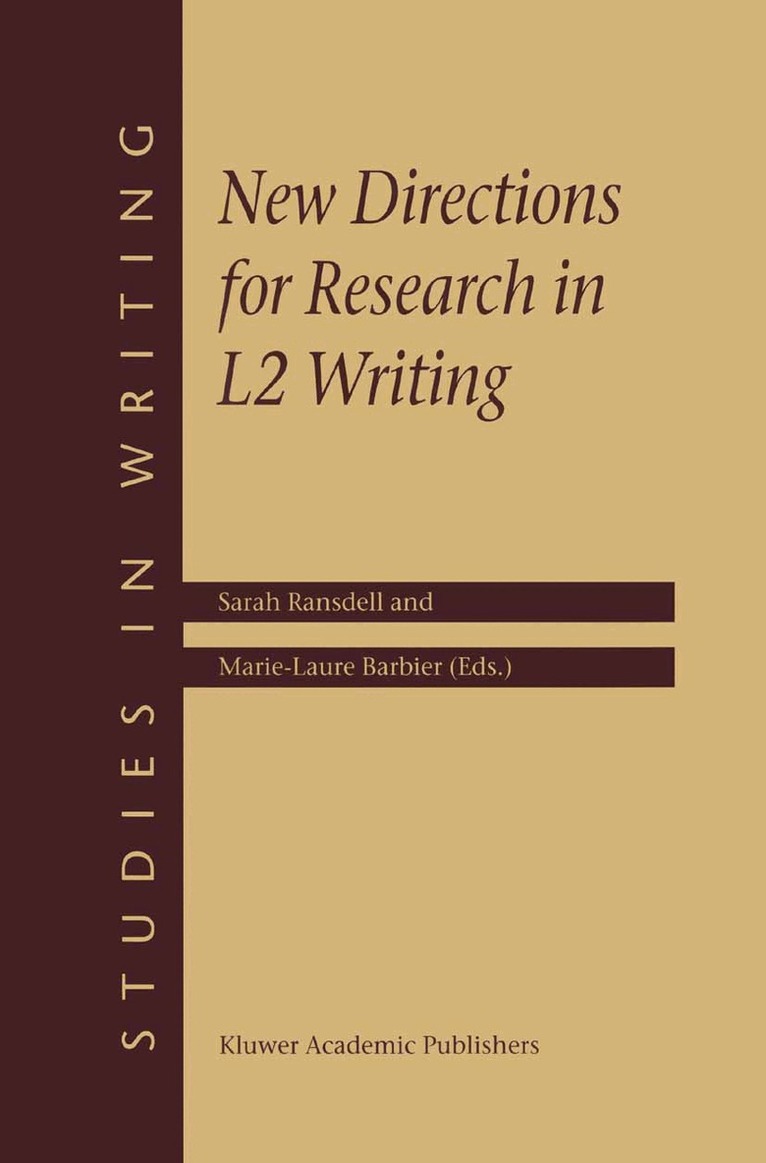
New Directions for Research in L2 Writing
Häftad, Engelska, 2002
1 123 kr
Skickas inom 10-15 vardagar
GERT RIJLAARSDAM UniversityofAmsterdam & Utrecht University, the Netherlands Multilingualism is becoming the default in our global world. The present-day global citizens use different languages in different situations. Apart from their mother tongue, they learn languages that give them access to other regions, nations, and worlds. In all countries ofthe European Union, for instance, at least one foreign lan guage is mandatory in secondary schools. Most students are taught English as a for eign language, the lingua franca in Europe. In large parts of the USA, students move from Spanish to English schooling. In parts of Canada, bilingual education is stan dard. In Catalonia (Spain) children learn Catalonian and Spanish, in Hong Kong English and Chinese. The smaller the world becomes, the more languages are used and learned. For writing process research, this development into multilingualism entails at least two challenges. First ofall, studying the relation between writing in L1 and L2 provides an opportunity for collaborative studies, in different language settings. Second, the issue ofgeneralization of findings comes to the fore. It becomes evident now that we have unjustly neglected this issue in writing process research. We for got to ask whether it is feasible to talk about 'writing processes' in general, without referring to the language of the written texts, and without taking into account the educational and linguistic culture in which these texts originate.
E-bok
PDF, Engelska, 20121 340 kr
Läs direkt efter köp
GERT RIJLAARSDAM UniversityofAmsterdam & Utrecht University, the Netherlands Multilingualism is becoming the default in our global world. The present-day global citizens use different languages in different situations. Apart from their mother tongue, they learn languages that give them access to other regions, nations, and worlds. In all countries ofthe European Union, for instance, at least one foreign lan guage is mandatory in secondary schools. Most students are taught English as a for eign language, the lingua franca in Europe. In large parts of the USA, students move from Spanish to English schooling. In parts of Canada, bilingual education is stan dard. In Catalonia (Spain) children learn Catalonian and Spanish, in Hong Kong English and Chinese. The smaller the world becomes, the more languages are used and learned. For writing process research, this development into multilingualism entails at least two challenges. First ofall, studying the relation between writing in L1 and L2 provides an opportunity for collaborative studies, in different language settings. Second, the issue ofgeneralization of findings comes to the fore. It becomes evident now that we have unjustly neglected this issue in writing process research. We for got to ask whether it is feasible to talk about ''writing processes'' in general, without referring to the language of the written texts, and without taking into account the educational and linguistic culture in which these texts originate.