M. Ozgur Kayalica – författare
672 kr
Läs direkt efter köp
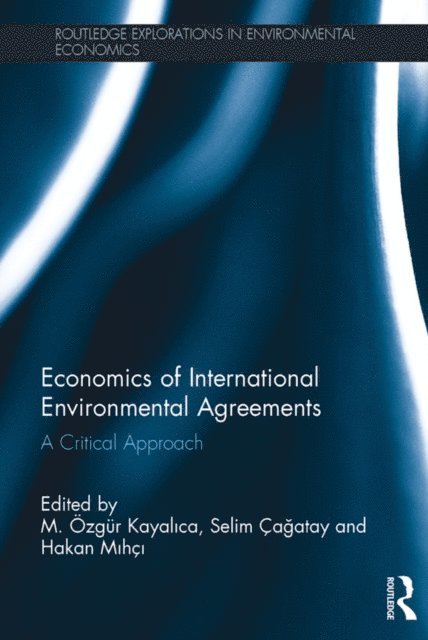
International environmental agreements provide a basis for countries to address ecological problems on a global scale. However, countries are heterogeneous with respect to their economic structures and to the problems relating to the environment that they encounter. Therefore, economic externalities and global environmental conflicts are common and can cause problems in implementation and compliance with international agreements.
Economics of International Environmental Agreements illuminates those issues and factors that might cause some countries or firms to take different positions on common problems. This book explores why international environmental agreements deal with some problems successfully but fail with others. The chapters address issues that are global in nature, such as: transboundary pollution, provision of global public goods, individual preferences of inequality- aversion, global cooperation, self-enforcing international environmental agreements, emission standards, abatement costs, environmental quota, technology agreement and adoption and international institutions. They examine the necessary conditions for the improved performance of international environmental agreements, how cooperation among countries can be improved and the incentives that can be created for voluntary compliance with international environmental agreements.
This text is of great importance to academics, students and policy makers who are interested in environmental economics, policy and politics, as well as environmental law.
672 kr
Läs direkt efter köp
International environmental agreements provide a basis for countries to address ecological problems on a global scale. However, countries are heterogeneous with respect to their economic structures and to the problems relating to the environment that they encounter. Therefore, economic externalities and global environmental conflicts are common and can cause problems in implementation and compliance with international agreements.
Economics of International Environmental Agreements illuminates those issues and factors that might cause some countries or firms to take different positions on common problems. This book explores why international environmental agreements deal with some problems successfully but fail with others. The chapters address issues that are global in nature, such as: transboundary pollution, provision of global public goods, individual preferences of inequality- aversion, global cooperation, self-enforcing international environmental agreements, emission standards, abatement costs, environmental quota, technology agreement and adoption and international institutions. They examine the necessary conditions for the improved performance of international environmental agreements, how cooperation among countries can be improved and the incentives that can be created for voluntary compliance with international environmental agreements.
This text is of great importance to academics, students and policy makers who are interested in environmental economics, policy and politics, as well as environmental law.
1 106 kr
Läs direkt efter köp
The 14 revised and extended papers presented together with an invited talk were carefully reviewed and selected for inclusion in this volume. They present new research and innovative aspects in the field of knowledge management and discuss methodological, technical and organizational aspects of artificial intelligence used for knowledge management.
*The workshop was held virtually.
2 435 kr
Läs direkt efter köp
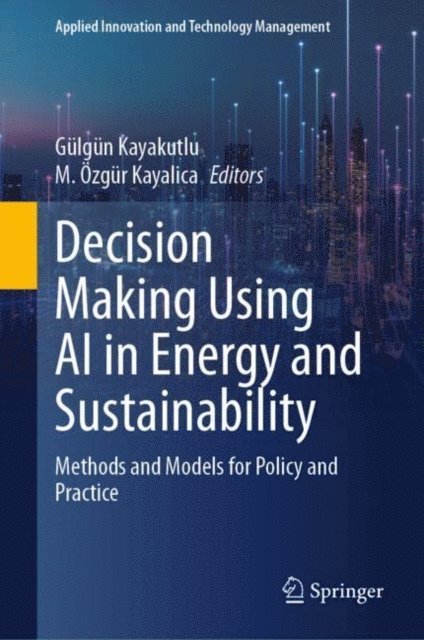
Artificial intelligence (AI) has a huge impact on science and technology, including energy, where access to resources has been a source of geopolitical conflicts. AI can predict the demand and supply of renewable energy, optimize efficiency in energy systems, and improve the management of natural energy resources, among other things. This book explores the use of AI tools for improving the management of energy systems and providing sustainability with smart cities, smart facilities, smart buildings, smart transportation, and smart houses. Featuring research from International Federation for Information Processing''s (IFIP) “AI in Energy and Sustainability” working group, this book provides new models and algorithms for AI applications in energy and sustainability fields. Any short-term, mid-term and long-term forecasting, optimization models, trend foresights and prescriptions based on scenarios are studied in the energy world and the smart systems for sustainability. The contents of this book are valuable for energy researchers, academics, scholars, practitioners and policy makers.
1 871 kr
Skickas inom 10-15 vardagar
2 367 kr
Läs direkt efter köp