M. Stoeppler – författare
Visar alla böcker från författaren M. Stoeppler. Handla med fri frakt och snabb leverans.
6 produkter
Hazardous Metals in the Environment
Av M. Stoeppler
E-bok, 1992
807 kr
Lägg i varukorg
The execution of detailed studies on the fate and levels of hazardous elements in the environment, foodstuffs and in human beings has become a major task in environmental research and especially in analytical chemistry. This has led to a demand to develop new methodology and optimize that already …
Trace Element Analysis in Biological Specimens
Av M. Stoeppler, R.F.M. Herber
E-bok, 1994
807 kr
Lägg i varukorg
The major theme of this book is analytical approaches to trace metal and speciation analysis in biological specimens. The emphasis is on the reliable determination of a number of toxicologically and environmentally important metals. It is essentially a handbook based on the practical experience of …
Hazardous Metals in the Environment
Av M. Stoeppler
Inbunden, 1992
572 kr
Lägg i varukorg
The execution of detailed studies on the fate and levels of hazardous elements in the environment, foodstuffs and in human beings has become a major task in environmental research and especially in analytical chemistry. This has led to a demand to develop new methodology and optimize that already …
Trace Element Analysis in Biological Specimens
Av Herber R. F. M. Herber, R. Ed. Herber m. fl.
Inbunden, 1994
3224 kr
Lägg i varukorg
The major theme of this book is analytical approaches to trace metal and speciation analysis in biological specimens. The emphasis is on the reliable determination of a number of toxicologically and environmentally important metals. It is essentially a handbook based on the practical experience of …
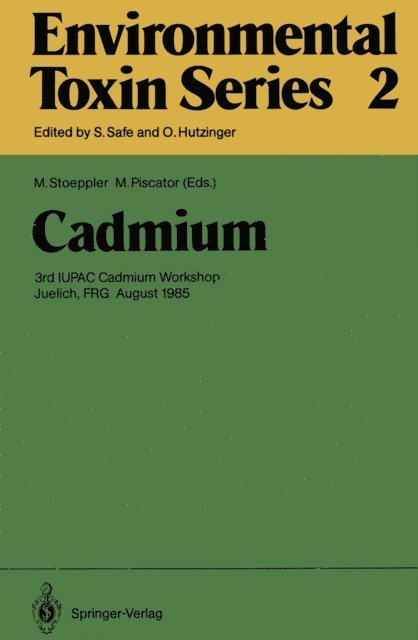
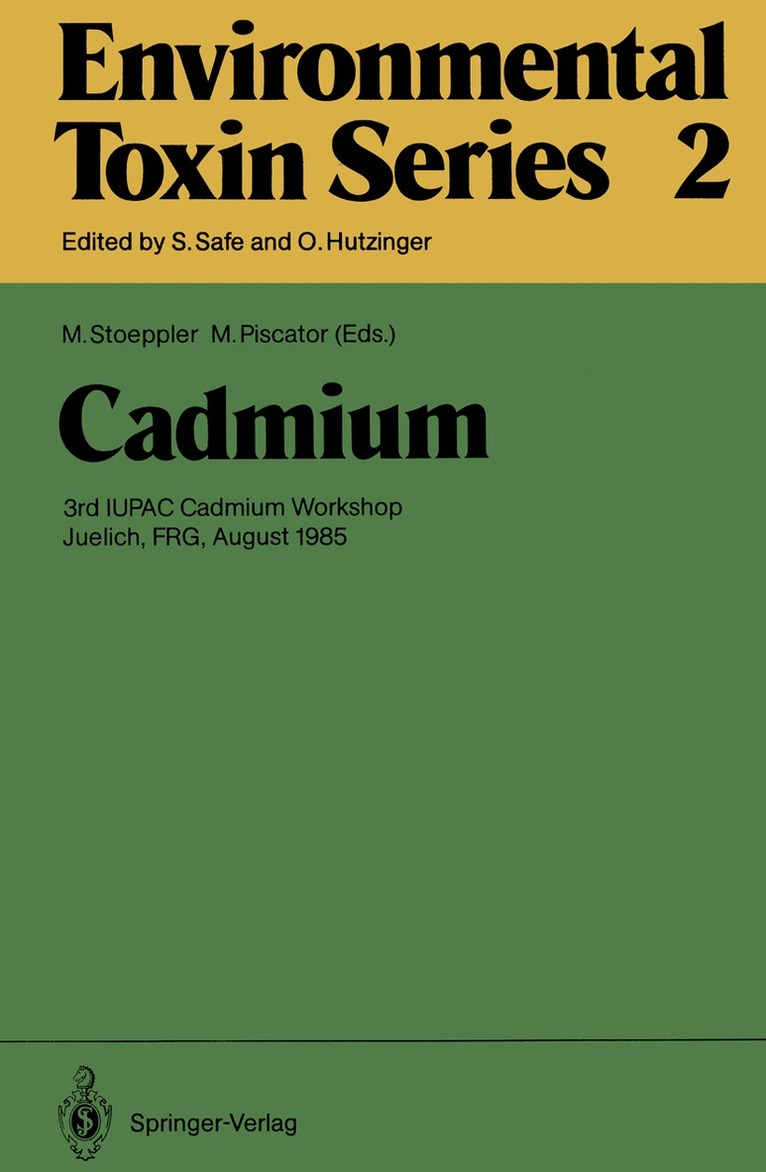
Cadmium
3rd IUPAC Cadmium Workshop Juelich, FRG, August 1985
E-bok, 2012
1459 kr
Lägg i varukorg
On May 25,1978, the Commission on Toxicology ofthe Division of Clinical Chemistry of the International Union of Pure and Applied Chemistry (IUPAC) established its Subcommittee on Environmental and Occupational Toxicology of Cadmium following aseries of Commission meetings in Kristiansand, Norway. I …
Cadmium
3rd IUPAC Cadmium Workshop Juelich, FRG, August 1985
Häftad, 2011
1095 kr
Lägg i varukorg
On May 25,1978, the Commission on Toxicology ofthe Division of Clinical Chemistry of the International Union of Pure and Applied Chemistry (IUPAC) established its Subcommittee on Environmental and Occupational Toxicology of Cadmium following aseries of Commission meetings in Kristiansand, Norway. I …