M. VanOverbeke – författare
Visar alla böcker från författaren M. VanOverbeke. Handla med fri frakt och snabb leverans.
3 produkter
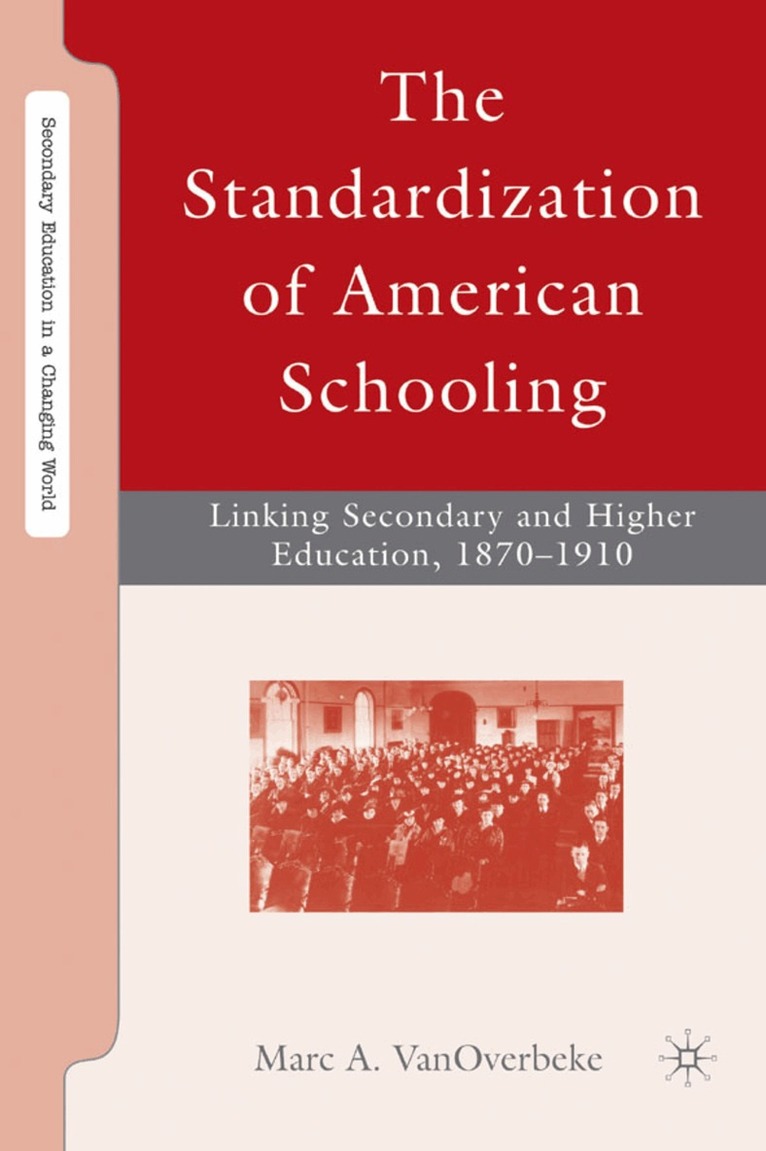
Standardization of American Schooling
Linking Secondary and Higher Education, 1870–1910
Inbunden, 2008
506 kr
Lägg i varukorg
This book explores the efforts of educational reformers who sought to link secondary and higher education in the decades after 1870. Through various state, regional, and national initiatives, these reformers created a hierarchical system, laid the foundation for a growing standardization in …
Standardization of American Schooling
Linking Secondary and Higher Education, 1870–1910
E-bok, 2008
757 kr
Lägg i varukorg
This book explores the efforts of educational reformers who sought to link secondary and higher education in the decades after 1870. Through various state, regional, and national initiatives, these reformers created a hierarchical system, laid the foundation for a growing standardization in …
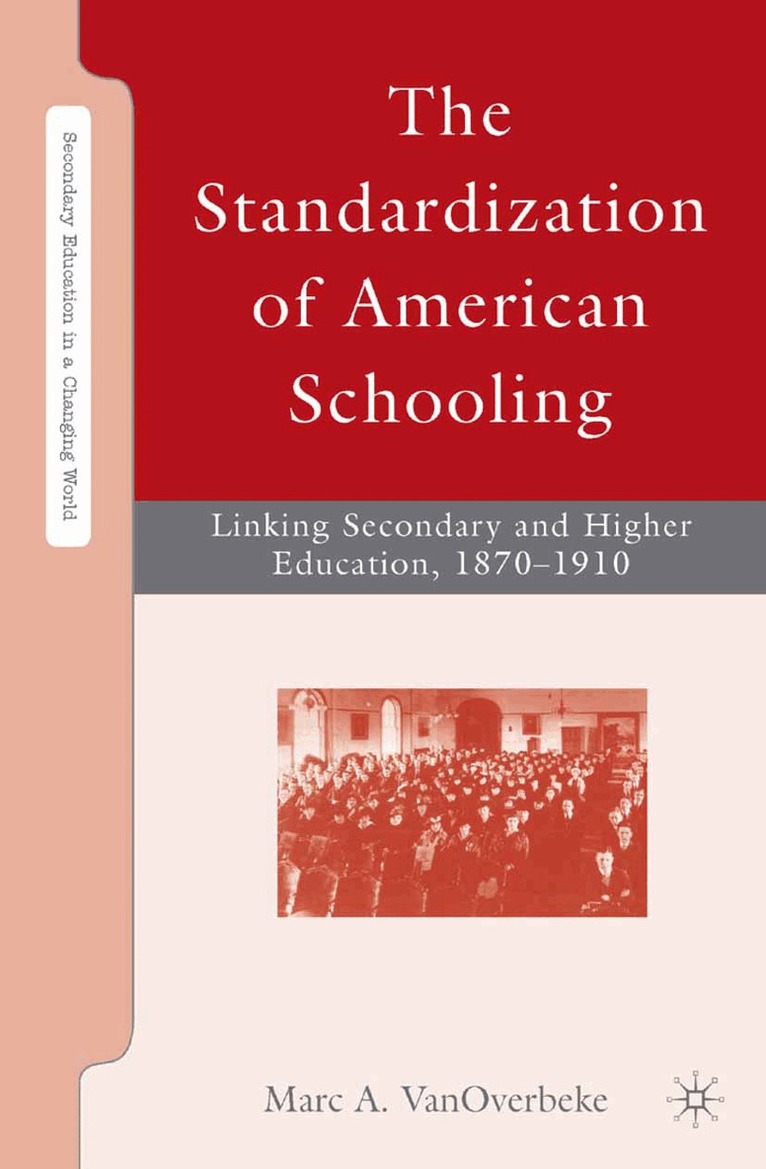
Standardization of American Schooling
Linking Secondary and Higher Education, 1870–1910
Häftad, 2008
506 kr
Lägg i varukorg
This book explores the efforts of educational reformers who sought to link secondary and higher education in the decades after 1870. Through various state, regional, and national initiatives, these reformers created a hierarchical system, laid the foundation for a growing standardization in …