M. Zamir - Böcker
Visar alla böcker från författaren M. Zamir. Handla med fri frakt och snabb leverans.
4 produkter
4 produkter
1 585 kr
Skickas inom 10-15 vardagar
The fields of biological and medical physics and biomedical engineering are broad, multidisciplinary and dyanmic. They lie at the crossroads of frontier - search in physics, biology, chemistry, and medicine. The Biological & Me- cal Physics/Biomedical Engineering Series is intended to be comprehensive, covering a broad range of topics important to the study of the physical, che- cal and biological sciences. Its goal is to provide scientists and engineers with textbooks, monographs, and reference works to address the growing need for information. Books in the series emphasize established and emergent areas of science - cluding molecular, membrane, and mathematical biophysics; photosynthetic - ergy harvesting and conversion; information processing; physical principles of genetics; sensory communications; automata networks, neural networks, and cellular automata. Equally important will be coverage of applied aspects of b- logical and medical physics and biomedical engineering such as molecular el- tronic components and devices, biosensors, medicine, imaging, physical prin- ples of renewable energy production, advanced prostheses, and environmental control and engineering. Elias Greenbaum Oak Ridge, TN M. Zamir Department of Applied Mathematics University of Western Ontario London, Ontario, N6A 5B7 CANADA zamir@uwo.ca Library of Congress Cataloging-in-Publication Data Zamir, M. (Mair) The physics of coronary blood flow / M. Zamir. p. cm. — (Biological and medical physics, biomedical engineering) Includes bibliographical references and index. 1. Coronary circulation. 2. Hemodynamics. 3. Blood flow. I. Title. II. Series. QP108.Z36 2005 612.1?7—dc22 2005042502 ISBN-10: 0-387-25297-5 e-ISBN: 0-387-26019-6 Printed on acid-free paper.
1 632 kr
Skickas inom 10-15 vardagar
Classic texts in the field of analysis of flow in blood vessels have been written over the years and what these say is still valid today. However, our knowledge of pathophysiological mechanisms has changed with increasing rapidity over the past 20 years, as has our ability to visualize the three dimensional geometry of blood flow and blood flow velocity distribution within the in vivo blood vessels. Consequently, with the increased need to fully exploit the new imaging capabilities and our additional biological knowledge, this book is a welcome addition to our armamentarium used to achieve those new goals. the past pulsatile flow (and consequent wave reflections) was Whereas in often seen as "frosting on the cake" of analysis of blood flow problems or perhaps as an issue that should be understood only in a general sense, our new capabilities and understanding require more accurate analyses of spe cific systems, not just of constructs based on statistical data describing a vascular tree. Examples of this new need include the situation where the detailed branching geometry of an arterial tree is known from imaging and it is desired to see to what extent local fluid dynamic characteristics can explain the specific localization of disease such as atherosclerosis, or of the extent to which the heterogeneity of perfusion throughout an organ can be attributed to the vascular tree branching geometry or to the mechani cal properties of the vascular walls.
1 164 kr
Skickas inom 10-15 vardagar
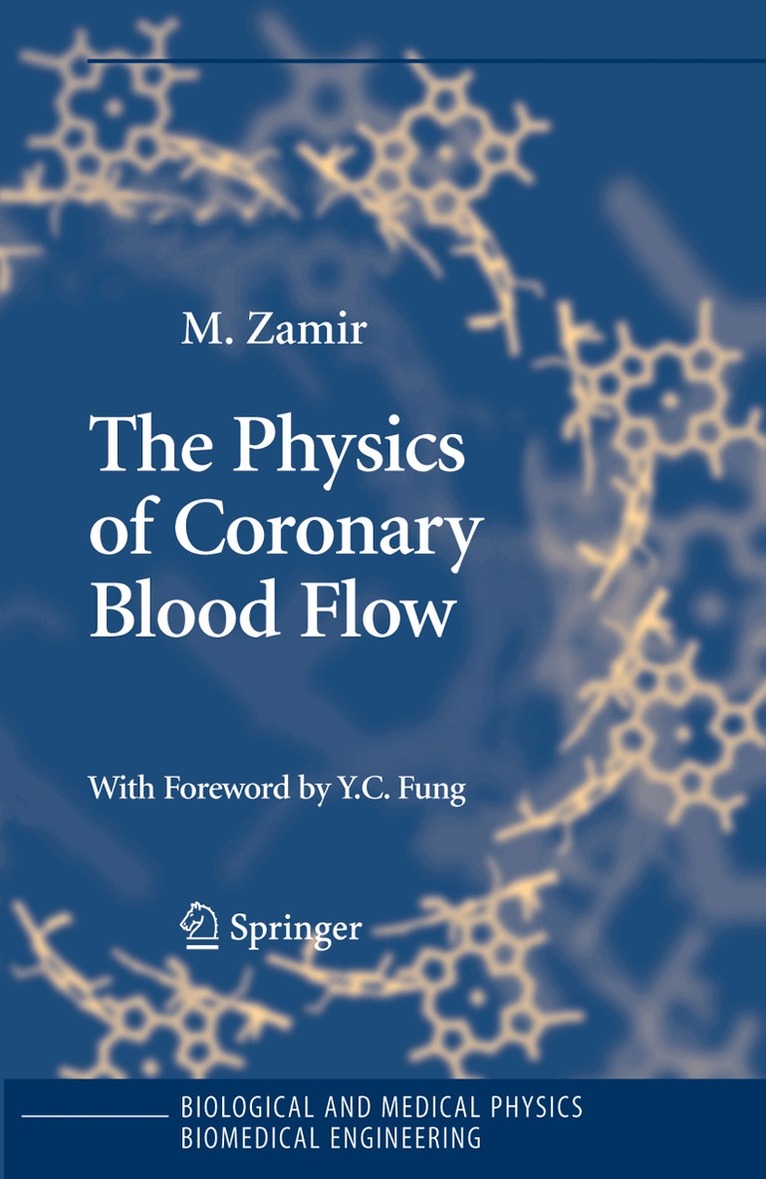
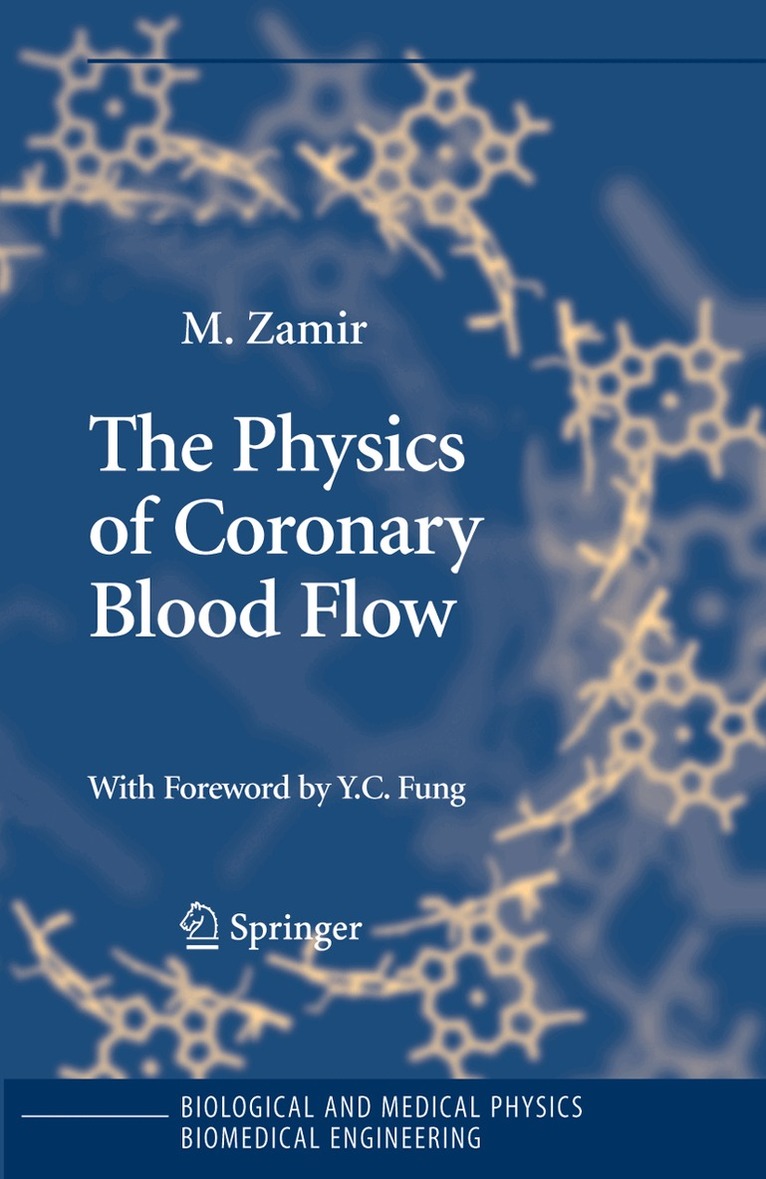
This book is devoted to the dynamics and physics of coronary blood flow. While it recognizes the range of clinical and pathophysiological issues involved, the book focuses on dynamics and physics, approaching the subject from a biomedical engineering viewpoint. With this approach, the book will complement other books on the subject that have so far focused largely on clinical and pathophysiological issues. The author, originally trained in fluid dynamics, has been teaching and working on the dynamics of blood flow in general and coronary blood flow in particular for the past thirty years and has produced a book that will appeal to physicians, physicists and engineers.
1 741 kr
Skickas inom 10-15 vardagar
Classic texts in the field of analysis of flow in blood vessels have been written over the years and what these say is still valid today. However, our knowledge of pathophysiological mechanisms has changed with increasing rapidity over the past 20 years, as has our ability to visualize the three dimensional geometry of blood flow and blood flow velocity distribution within the in vivo blood vessels. Consequently, with the increased need to fully exploit the new imaging capabilities and our additional biological knowledge, this book is a welcome addition to our armamentarium used to achieve those new goals. the past pulsatile flow (and consequent wave reflections) was Whereas in often seen as "frosting on the cake" of analysis of blood flow problems or perhaps as an issue that should be understood only in a general sense, our new capabilities and understanding require more accurate analyses of spe cific systems, not just of constructs based on statistical data describing a vascular tree. Examples of this new need include the situation where the detailed branching geometry of an arterial tree is known from imaging and it is desired to see to what extent local fluid dynamic characteristics can explain the specific localization of disease such as atherosclerosis, or of the extent to which the heterogeneity of perfusion throughout an organ can be attributed to the vascular tree branching geometry or to the mechani cal properties of the vascular walls.