Magdalena Lisińska – författare
Visar alla böcker från författaren Magdalena Lisińska. Handla med fri frakt och snabb leverans.
5 produkter
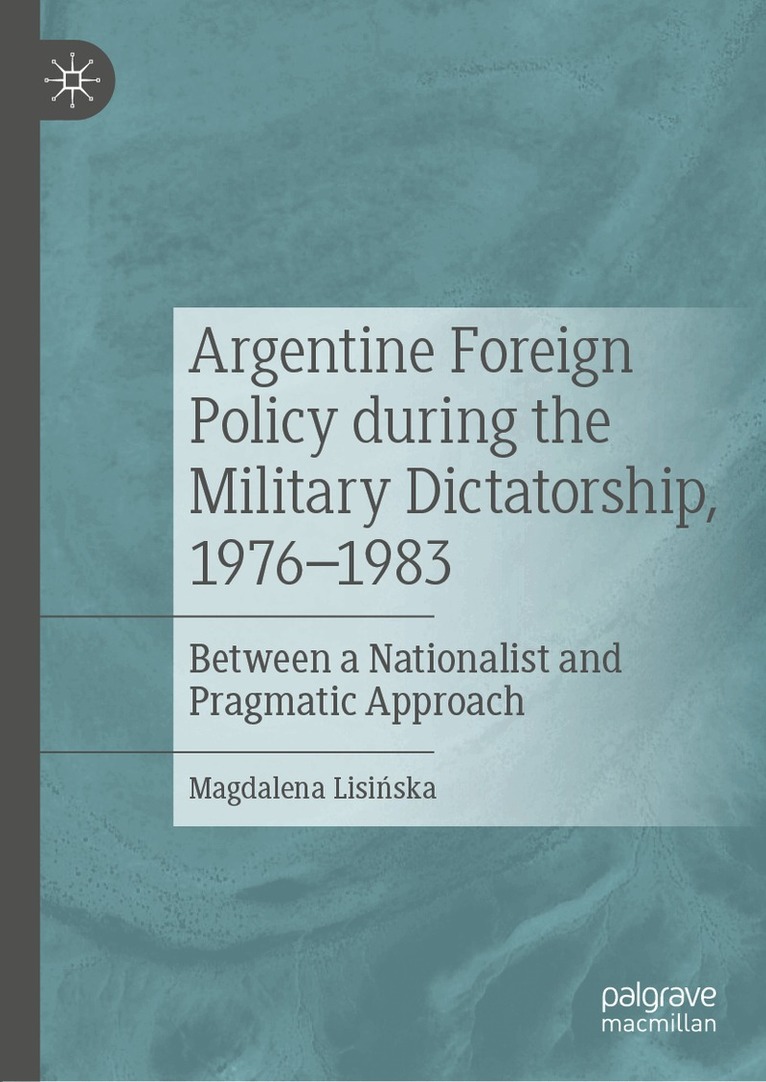
Argentine Foreign Policy during the Military Dictatorship, 1976–1983
Between a Nationalist and Pragmatic Approach
Inbunden, 2019
848 kr
Lägg i varukorg
This book examines Argentine foreign policy under the military dictatorship from 1976–1983, also known as the National Reorganization Process. It brings together case studies on the most distinctive decisions and key issues in the regime’s foreign relations, including the international response to …
Argentine Foreign Policy during the Military Dictatorship, 1976-1983
Between a Nationalist and Pragmatic Approach
E-bok, 2019
1037 kr
Lägg i varukorg
This book examines Argentine foreign policy under the military dictatorship from 1976–1983, also known as the National Reorganization Process. It brings together case studies on the most distinctive decisions and key issues in the regime’s foreign relations, including the international response to …
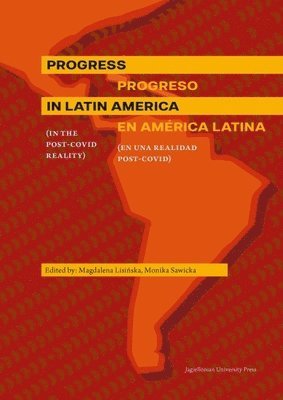
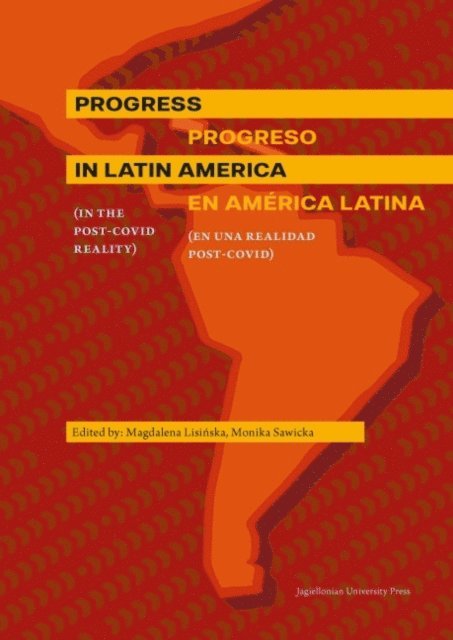
Progress in Latin America (in the Post-Covid reality)
Progreso en América Latina (en una realidad post-Covid)
Av Magdalena Lisińska, Monika Sawicka
Häftad, 2025
437 kr
Lägg i varukorg
The COVID-19 pandemic once again shed light on core and age-old challenges facing Latin America. They include governance, public health, economic progress, and social policies, as well as citizen participation in the search for solutions to pressing problems. New technologies which in recent years …
Progress in Latin America (in the Post-Covid reality)
Progreso en América Latina (en una realidad post-Covid)
Av Monika Sawicka, Magdalena Lisinska
E-bok, 2025
655 kr
Lägg i varukorg
The COVID-19 pandemic once again shed light on core and age-old challenges facing Latin America. They include governance, public health, economic progress, and social policies, as well as citizen participation in the search for solutions to pressing problems. New technologies which in recent years …
Progress in Latin America (in the Post-Covid reality)
Progreso en América Latina (en una realidad post-Covid)
Av Monika Sawicka, Magdalena Lisinska
E-bok, 2025
655 kr
Lägg i varukorg
The COVID-19 pandemic once again shed light on core and age-old challenges facing Latin America. They include governance, public health, economic progress, and social policies, as well as citizen participation in the search for solutions to pressing problems. New technologies which in recent years …