Mahesh Kumar Gaur - Böcker
Visar alla böcker från författaren Mahesh Kumar Gaur. Handla med fri frakt och snabb leverans.
8 produkter
8 produkter
2 449 kr
Kommande
This book offers an in-depth exploration of the Thar Desert, one of India's most unique and challenging arid environments. It delves into the intricate relationship between the natural environment and human existence within this arid region, focusing on its unique geo-environmental characteristics, the diverse communities inhabiting the region, and the developmental challenges and opportunities faced by the people and the environment. It also covers the spatial attributes of all the phenomena related to the environment, including the various biomes and human influences, patterns of biodiversity, and the spatial pattern of physical and anthropogenic degradation of the environment, highlighting the ongoing impact of climate change, desertification, and urbanization. By bringing together insights from geography, environmental science, ecology, and sustainable development, this book will serve as both a scientific reference and an essential resource for anyone interested in understanding the geo-environmental complexities of the Thar Desert.
Geo-environment, People and Development of Ladakh
An Ecologically Fragile Cold Arid Zone of India
Inbunden, Engelska, 2026
2 449 kr
Kommande
With a foreword by Padma Shri Dr. Shailesh Nayak—renowned Earth Scientist and former Secretary, Ministry of Earth Sciences—this volume brings together a comprehensive body of contemporary research contributed by leading experts and institutions across India. It serves as an indispensable resource for researchers, policymakers, students, and practitioners seeking holistic and in-depth knowledge on the geo-environmental landscape of Ladakh.Spanning four major thematic sections—Geo-environment of Ladakh, Water and Agriculture Scenario, Population and Livelihoods, and Developmental Challenges and Solutions—the book covers a broad spectrum of pressing issues: from glacier dynamics, tectonic stress, and groundwater crises to innovative climate-resilient agricultural practices, traditional knowledge systems, and disaster risk reduction strategies. The book presents a timely, multidisciplinary exploration into the fragile ecology, dynamic geology, and evolving human-environment interactions of one of India’s most remote and sensitive landscapes—the cold arid region of Ladakh.The volume highlights emerging opportunities in cold-arid agriculture and horticulture, focusing on crop diversification, high-value fruit production, and the promotion of indigenous farming systems. Prospects for renewable energy development are discussed as viable alternatives to fossil-fuel dependence in high-altitude ecosystems. Furthermore, it explores innovative community-based solutions, such as ice stupas and biomass recycling, that blend tradition with modern science to enhance sustainability.Combining scientific rigor with local contextual understanding, the book is an essential resource for researchers, policymakers, disaster managers, and development practitioners working in high-altitude regions. It also provides a valuable knowledge base for students and academics in the fields of geomorphology, climate science, geospatial technology, environmental planning, and Himalayan studies.
1 555 kr
Skickas inom 7-10 vardagar
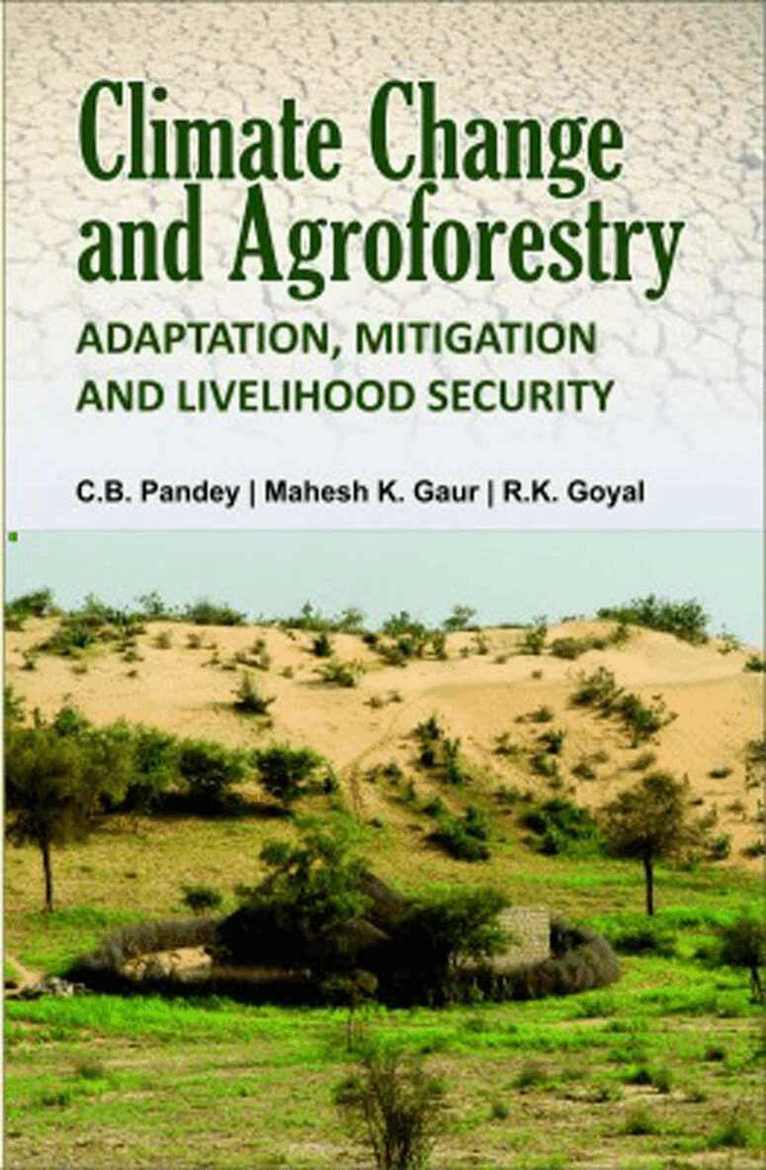
Natural climate change is a gradual process that takes millions of years and has made our planet habitable for living organisms. It is not limited to a particular country or continent, as evidenced by droughts in Texas and flooding along the Missouri River in the United States, as well as along the Red River in Canada. Climate change presents various challenges and interacts with numerous non-climatic stressors, making it difficult to predict its consequences in a general sense, other than the threats it poses to agriculture. Agroforestry can increase the level of diversity within agricultural lands, supporting numerous ecological and production services that bring resilience to the impact of climate change mitigation and adaptation.Climate change risk management is challenging in annual cropping systems due to the increasing uncertainty of inter-annual variability in rainfall and temperature. Mixing woody trees with crops, forage, and livestock operations provides greater resilience to inter-annual variability by diversifying crops and increasing resource use efficiency. Deep-rooted trees allow better access to nutrients and water during droughts and, when appropriately integrated into annual cropping systems, extract resources that would otherwise be lost from the system. Agroforestry increases soil porosity, reduces runoff, and increases soil cover, which improve water infiltration and reduce moisture stress in low rainfall years. During periods of excessive soil moisture, tree-based systems keep soils aerated by pumping out excess water and provide an economic return.The book contains 36 chapters, primarily focusing on agroforestry practices in India and their role in climate change mitigation and adaptation.
925 kr
Skickas inom 7-10 vardagar
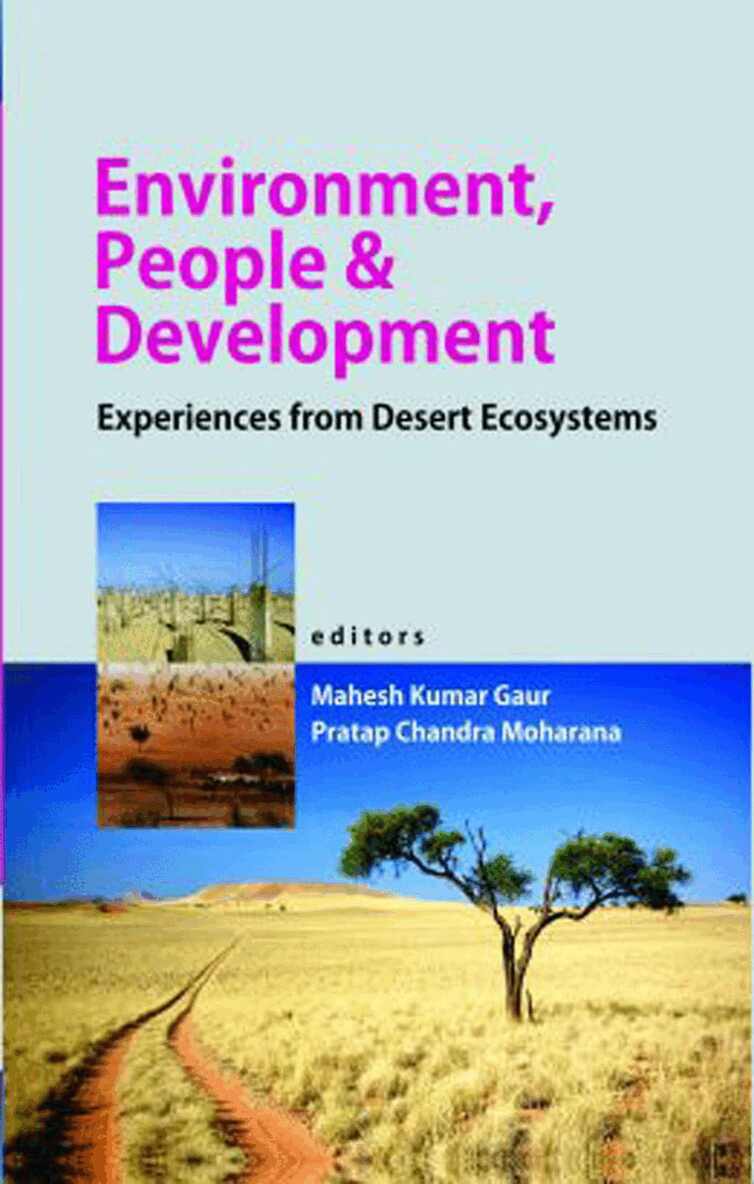
The desert regions have been a recurring presence throughout the annals of history. The birthplace of two of the worlds most significant religions and the location of some of the earliest civilizations, these arid landscapes have played a critical role in shaping humanitys development. In this publication, Environment, People and Development: Experiences from Desert Ecosystems, we are presented with a comprehensive overview of the fundamental and technologically advanced knowledge that has been gleaned from various desert ecosystems around the globe.
794 kr
Skickas inom 7-10 vardagar
The current crisis in arid and semi-arid regions is a complex issue that encompasses economic, food, and climate challenges. It is crucial to recognize the interconnectedness of these issues and the missed opportunities in addressing them in a comprehensive manner. This book aims to shed light on these challenges through detailed discussions of individual case studies. It is hoped that it will inspire a forward-looking debate that draws lessons from the past and suggests actions for the future. The book features expert opinions from scientists and eminent individuals at the national and state levels, along with futuristic remedial approaches to the challenges faced.
1 581 kr
Skickas inom 7-10 vardagar
The current situation in arid and semi-arid regions involves a multifaceted crisis that encompasses economic, food, and climate issues. It is crucial to recognize the interconnectedness of these crises and the missed opportunities that result from failing to address them comprehensively. This book aims to address these challenges by engaging in detailed discussions of each issue. It seeks to stimulate forward-looking debates that draw lessons from the past and suggest actions for the future. The book features expert opinions from scientists and distinguished individuals at both the national and state levels, along with futuristic remedial approaches to the challenges faced.
1 831 kr
Skickas inom 7-10 vardagar
The Desert Regions have long held a prominent position in the annals of human history. Not only were two of the worlds major religions born here, but also some of the earliest civilizations. This publication, Environment, People and Development: Experiences from Desert Ecosystems, provides a comprehensive overview of the basic and technologically advanced information gathered from various desert ecosystems across the globe. It serves as an essential resource for those interested in understanding the intricate relationship between the environment, people, and development in desert regions.
Climate Change and Agroforestry
Adaptation, Mitigation and Livelihood Security
Inbunden, Engelska, 2017
3 090 kr
Skickas inom 7-10 vardagar
Climate change is a natural process that occurs over millions of years, making our planet habitable for life. This phenomenon is not confined to a particular country or continent, as evidenced by droughts in Texas and flooding along the Missouri River in the United States, as well as along the Red River in Canada. Climate change presents multiple challenges and interacts with various non-climatic stressors, making it difficult to predict the consequences in a general sense, except for the threats to agriculture. Agroforestry can help mitigate these challenges by increasing biodiversity within agricultural lands, which supports various ecological and production services that enhance resilience to climate change.Managing the risks associated with climate change in annual cropping systems is complicated due to the increasing uncertainty of inter-annual variability in rainfall and temperature. Agroforestry, which involves mixing woody trees with crops, forage, and livestock operations, provides greater resilience to these fluctuations through crop diversification and improved resource use efficiency. Deep-rooted trees allow better access to nutrients and water during droughts and can enhance resource utilization when integrated appropriately into annual cropping systems. Agroforestry also increases soil porosity, reduces runoff, and increases soil cover, which improve water infiltration and reduce moisture stress during periods of low rainfall. In times of excessive soil moisture, tree-based systems keep soils aerated by pumping out excess water, offering an economic return.The book comprises 36 chapters, primarily focusing on agroforestry practices in India and their role in climate change mitigation and adaptation.