Mainak Mukhopadhyay – författare
2 243 kr
Läs direkt efter köp
1 577 kr
Skickas inom 10-15 vardagar
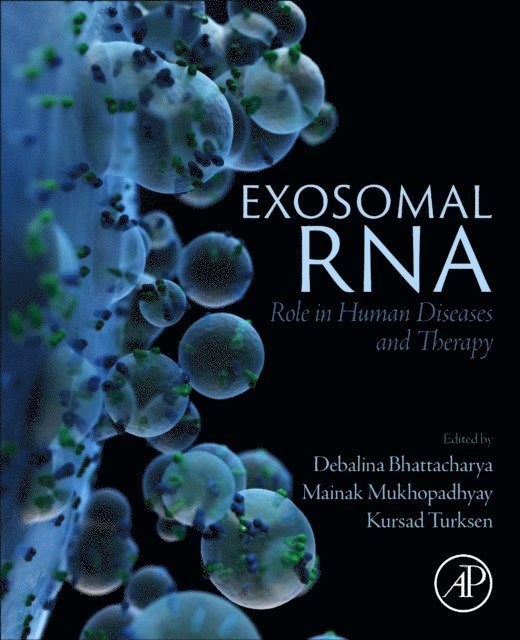
Exosomal RNA: Role in Human Diseases and Therapy provides an in-depth study of exosomes and their RNA in the context of a variety of diseases. The book explores the diagnostic and therapeutic potential of exosomal RNA as biomarkers across a range of different conditions, including cancer, type 2 diabetes, cardiovascular and renal disease, as well as bacterial infections and tissue repair. The link between exosomal RNA expression and neurodegenerative disease is also explored. The book goes on to share the significance of exosomal RNA in preserving cellular function, with special attention given to their role in the autophagy process.This book also gives an overview of the isolation, characterization, and potential applications of exosomal RNA, providing researchers with an understanding of how they can be manipulated and utilized for the treatment of various diseases and conditions. This is an ideal reference for researchers in the field of molecular biology, cell biology, and related fields, as well as those involved in the development of therapeutics and personalized medicine.
Provides an introduction into exosomal RNA and their potential as predictive and diagnostic biomarkers for various conditionsConsiders exosomal RNA in a variety of human disorders, including metabolic diseases, inflammatory diseases, and cancerDiscusses the role of exosomal RNA in preserving the cellular environment and its role in the autophagy process1 881 kr
Skickas inom 10-15 vardagar
2 599 kr
Läs direkt efter köp
2 506 kr
Skickas inom 5-8 vardagar
2 870 kr
Läs direkt efter köp
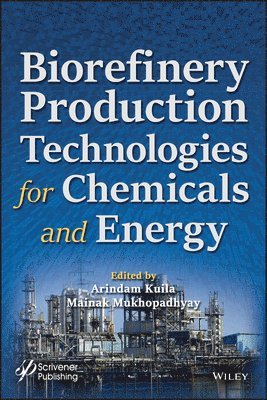
This book covers almost all of the diverse aspects of utilizing lignocellulosic biomass for valuable biorefinery product development of chemicals, alternative fuels and energy.
The world has shifted towards sustainable development for the generation of energy and industrially valuable chemicals. Biorefinery plays an important role in the integration of conversion process with high-end equipment facilities for the generation of energy, fuels and chemicals.
The book is divided into four parts. The first part, "Basic Principles of Biorefinery," covers the concept of biorefinery, its application in industrial bioprocessing, the utilization of biomass for biorefinery application, and its future prospects and economic performance. The second part, "Biorefinery for Production of Chemicals," covers the production of bioactive compounds, gallic acid, C4, C5, and C6 compounds, etc., from a variety of substrates. The third part, "Biorefinery for Production of Alternative Fuel and Energy," covers sustainable production of bioethanol, biodiesel, and biogas from different types of substrates. The last part of this book discusses sequential utilization of wheat straw, material balance, and biorefinery approach.
The approaches presented in this book will help readers/users from different areas like process engineering and biochemistry to plan integrated and inventive methods to trim down the expenditure of the industrial manufacture process to accomplish cost-effective feasible products in biorefinery.
2 974 kr
Läs direkt efter köp
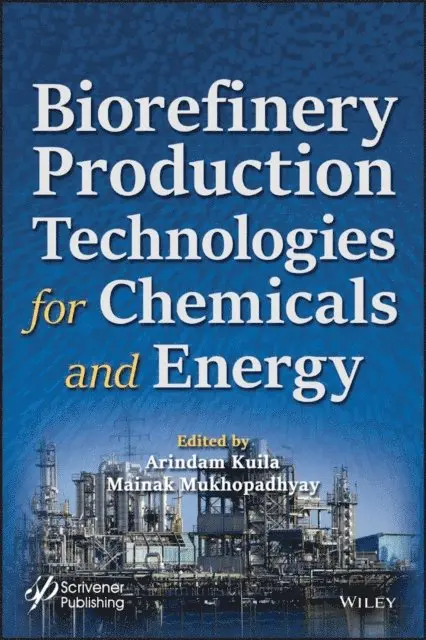
This book covers almost all of the diverse aspects of utilizing lignocellulosic biomass for valuable biorefinery product development of chemicals, alternative fuels and energy.
The world has shifted towards sustainable development for the generation of energy and industrially valuable chemicals. Biorefinery plays an important role in the integration of conversion process with high-end equipment facilities for the generation of energy, fuels and chemicals.
The book is divided into four parts. The first part, "Basic Principles of Biorefinery," covers the concept of biorefinery, its application in industrial bioprocessing, the utilization of biomass for biorefinery application, and its future prospects and economic performance. The second part, "Biorefinery for Production of Chemicals," covers the production of bioactive compounds, gallic acid, C4, C5, and C6 compounds, etc., from a variety of substrates. The third part, "Biorefinery for Production of Alternative Fuel and Energy," covers sustainable production of bioethanol, biodiesel, and biogas from different types of substrates. The last part of this book discusses sequential utilization of wheat straw, material balance, and biorefinery approach.
The approaches presented in this book will help readers/users from different areas like process engineering and biochemistry to plan integrated and inventive methods to trim down the expenditure of the industrial manufacture process to accomplish cost-effective feasible products in biorefinery.
2 760 kr
Skickas inom 5-8 vardagar
3 022 kr
Läs direkt efter köp
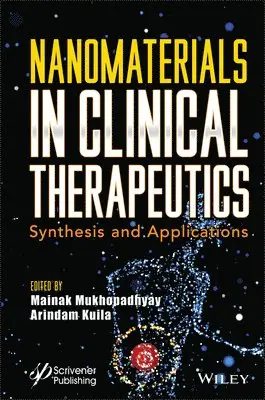
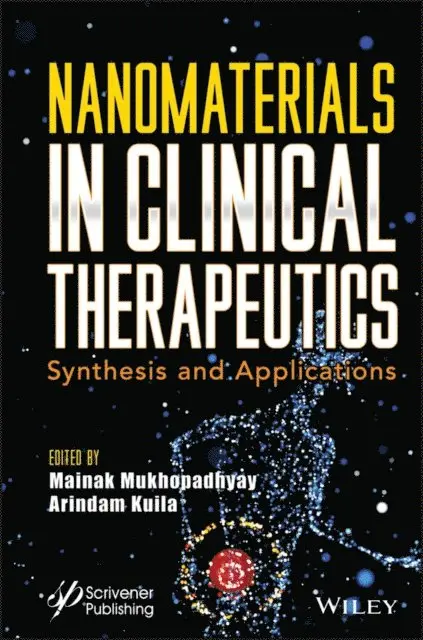
In this rapidly developing field, the book focuses on the practical elements of nanomaterial creation, characterization, and development, as well as their usage in clinical research.
Nanotechnology-based applications is a rapidly growing field encompassing a diverse range of disciplines that impact our daily lives. Nanotechnology is being used to carry out large-scale reactions in practically every field of biotechnology and healthcare. The incredible progress being made in these applications is particularly true for the healthcare sector, where they are used in cancer detection and treatment, medical implants, tissue engineering, and so forth. Expansions in this discipline are expected to continue in the future, resulting in the creation of a variety of life-saving medical technology and treatment procedures.
The primary goal of this book is to disseminate information on nanotechnology’s applications in the biological sciences. A broad array of nanotechnological approaches utilized in different biological applications are highlighted in the book’s 17 chapters, including the employment of nanotechnology in drug delivery. The first three chapters provide an overview of the history and principles of nanotechnology. The synthesis, characterization, and applications of nanomaterials are covered in the next 10 chapters. The last four chapters discuss the use of nanomaterials in clinical research.
Audience The book will be useful for researchers and graduate students in the many areas of science such as biomedicine, environmental biotechnology, bioprocess engineering, renewable energy, chemical engineering, nanotechnology, biotechnology, microbiology, etc.
3 132 kr
Läs direkt efter köp
In this rapidly developing field, the book focuses on the practical elements of nanomaterial creation, characterization, and development, as well as their usage in clinical research.
Nanotechnology-based applications is a rapidly growing field encompassing a diverse range of disciplines that impact our daily lives. Nanotechnology is being used to carry out large-scale reactions in practically every field of biotechnology and healthcare. The incredible progress being made in these applications is particularly true for the healthcare sector, where they are used in cancer detection and treatment, medical implants, tissue engineering, and so forth. Expansions in this discipline are expected to continue in the future, resulting in the creation of a variety of life-saving medical technology and treatment procedures.
The primary goal of this book is to disseminate information on nanotechnology’s applications in the biological sciences. A broad array of nanotechnological approaches utilized in different biological applications are highlighted in the book’s 17 chapters, including the employment of nanotechnology in drug delivery. The first three chapters provide an overview of the history and principles of nanotechnology. The synthesis, characterization, and applications of nanomaterials are covered in the next 10 chapters. The last four chapters discuss the use of nanomaterials in clinical research.
Audience The book will be useful for researchers and graduate students in the many areas of science such as biomedicine, environmental biotechnology, bioprocess engineering, renewable energy, chemical engineering, nanotechnology, biotechnology, microbiology, etc.
2 424 kr
Skickas inom 5-8 vardagar
2 424 kr
Skickas inom 5-8 vardagar
2 596 kr
Läs direkt efter köp
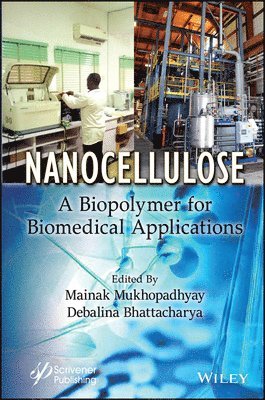
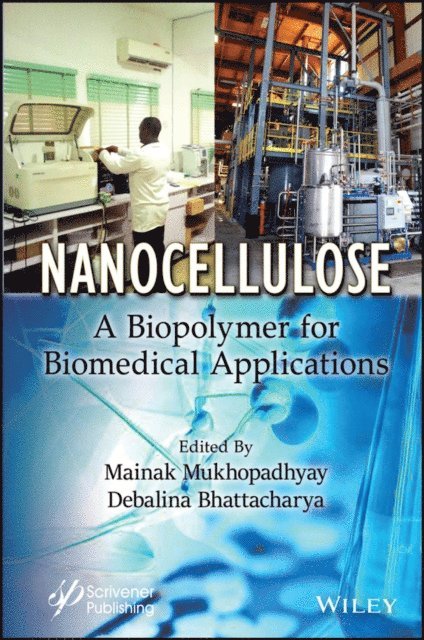
This book provides the latest up-to-date information on the exciting applications of nanocellulose in human diseases by giving in-depth explanations of their synthesis, characterization, and real-world applications in the biomedical sectors.
Nanocellulose is a promising nanomaterial with unique qualities including low cost, durability, non-toxicity, accessibility, etc. Cellulose can be classified into two types: nanocrystals and nanofibrils, depending on the way it is extracted from trees, plants, or other cellulose-containing species. Textiles, cosmetics, and food products are just a few of the commercial uses for nanocellulose. However, it also has strong potential for use in medicine.
The book presents the most recent scientific research on nanocellulose as a biopolymer and its potential uses in medicine. The reader will discover:
explains the synthesis of bacterial nanocellulose from different bacterial species and their characteristics; details processes and applications of electrospinning and the synthesis of novel nanocellulose-based nanocomposite materials; discusses the various surface functionalization processes of cellulose and their advantages and disadvantages; delves into the application of nanocellulose in tissue engineering and grafting, such as in wound dressing and implants; discusses nanocellulose as a carrier for drug delivery, as well as the synthesis of antibacterial nanocomposites for treating multi-drug-resistant bacteria; explores the role of nanocellulose in the treatment of renal failure, nanocellulose hydrogel for ophthalmic and dental applications.Audience
Researchers in areas including environmental biotechnology, bioprocess engineering, renewable energy, chemical engineering, nanotechnology, biotechnology, and microbiology will be interested in this book.
2 690 kr
Läs direkt efter köp
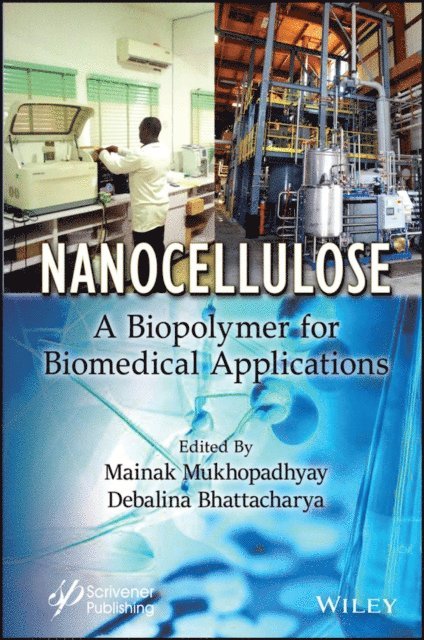
This book provides the latest up-to-date information on the exciting applications of nanocellulose in human diseases by giving in-depth explanations of their synthesis, characterization, and real-world applications in the biomedical sectors.
Nanocellulose is a promising nanomaterial with unique qualities including low cost, durability, non-toxicity, accessibility, etc. Cellulose can be classified into two types: nanocrystals and nanofibrils, depending on the way it is extracted from trees, plants, or other cellulose-containing species. Textiles, cosmetics, and food products are just a few of the commercial uses for nanocellulose. However, it also has strong potential for use in medicine.
The book presents the most recent scientific research on nanocellulose as a biopolymer and its potential uses in medicine. The reader will discover:
explains the synthesis of bacterial nanocellulose from different bacterial species and their characteristics; details processes and applications of electrospinning and the synthesis of novel nanocellulose-based nanocomposite materials; discusses the various surface functionalization processes of cellulose and their advantages and disadvantages; delves into the application of nanocellulose in tissue engineering and grafting, such as in wound dressing and implants; discusses nanocellulose as a carrier for drug delivery, as well as the synthesis of antibacterial nanocomposites for treating multi-drug-resistant bacteria; explores the role of nanocellulose in the treatment of renal failure, nanocellulose hydrogel for ophthalmic and dental applications.Audience
Researchers in areas including environmental biotechnology, bioprocess engineering, renewable energy, chemical engineering, nanotechnology, biotechnology, and microbiology will be interested in this book.
2 596 kr
Läs direkt efter köp
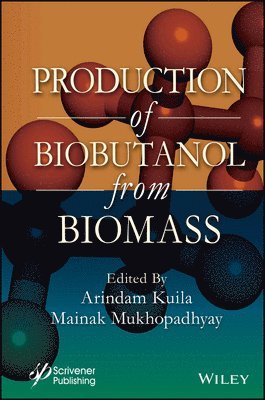
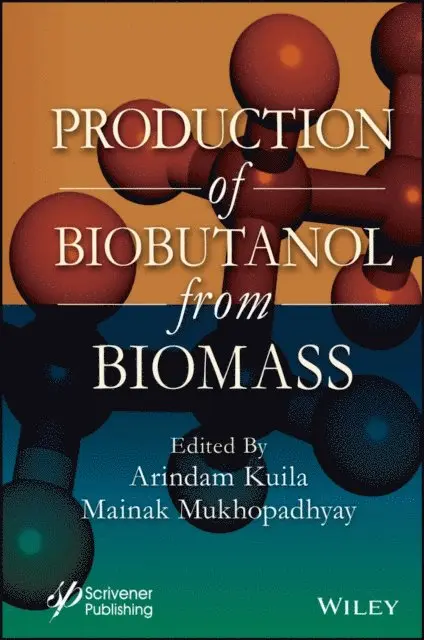
The book covers all current technologies of lignocellulosic biobutanol production as well as the environmental and socioeconomic impact assessment.
N-butanol is a bulk chemical that is used as an industrial solvent and as a component in paint, coatings, and adhesives, among other things. When compared to other biofuels, biobutanol has the advantages of being immiscible in water, having a higher energy content, and having a lower vapor pressure. There are various benefits to producing biobutanol from lignocellulosic biomass. However, there are challenges in producing butanol from lignocellulosic biomass, such as biomass’s complex structure, low butanol yield, and high cost of production, etc.
The 13 chapters comprising this book discuss the current technology and prospects of biobutanol production. The first four chapters provide an overview of the current technological status, while the next six chapters discuss different strategies for enhanced biobutanol production from lignocellulosic biomass. The last three chapters present the industrial status and techno-economic analysis of lignocellulosic biobutanol production.
Audience
The book will be useful for researchers in the areas of various branches of life sciences such as environmental biotechnology, bioprocess engineering, renewable energy, chemical engineering, nanotechnology, biotechnology, microbiology.
2 690 kr
Läs direkt efter köp
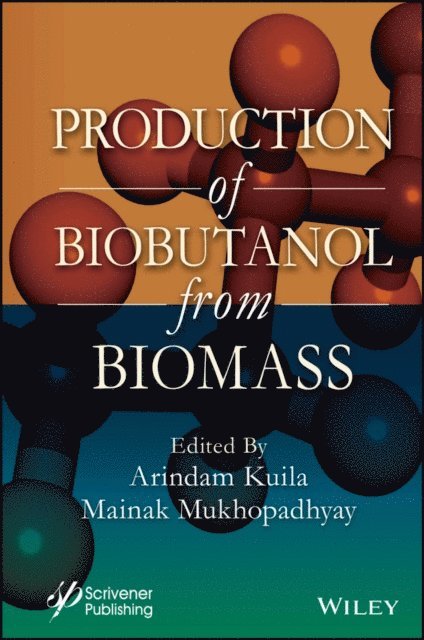
The book covers all current technologies of lignocellulosic biobutanol production as well as the environmental and socioeconomic impact assessment.
N-butanol is a bulk chemical that is used as an industrial solvent and as a component in paint, coatings, and adhesives, among other things. When compared to other biofuels, biobutanol has the advantages of being immiscible in water, having a higher energy content, and having a lower vapor pressure. There are various benefits to producing biobutanol from lignocellulosic biomass. However, there are challenges in producing butanol from lignocellulosic biomass, such as biomass’s complex structure, low butanol yield, and high cost of production, etc.
The 13 chapters comprising this book discuss the current technology and prospects of biobutanol production. The first four chapters provide an overview of the current technological status, while the next six chapters discuss different strategies for enhanced biobutanol production from lignocellulosic biomass. The last three chapters present the industrial status and techno-economic analysis of lignocellulosic biobutanol production.
Audience
The book will be useful for researchers in the areas of various branches of life sciences such as environmental biotechnology, bioprocess engineering, renewable energy, chemical engineering, nanotechnology, biotechnology, microbiology.