Maja Gori - Böcker
Visar alla böcker från författaren Maja Gori. Handla med fri frakt och snabb leverans.
7 produkter
7 produkter
731 kr
Skickas inom 10-15 vardagar
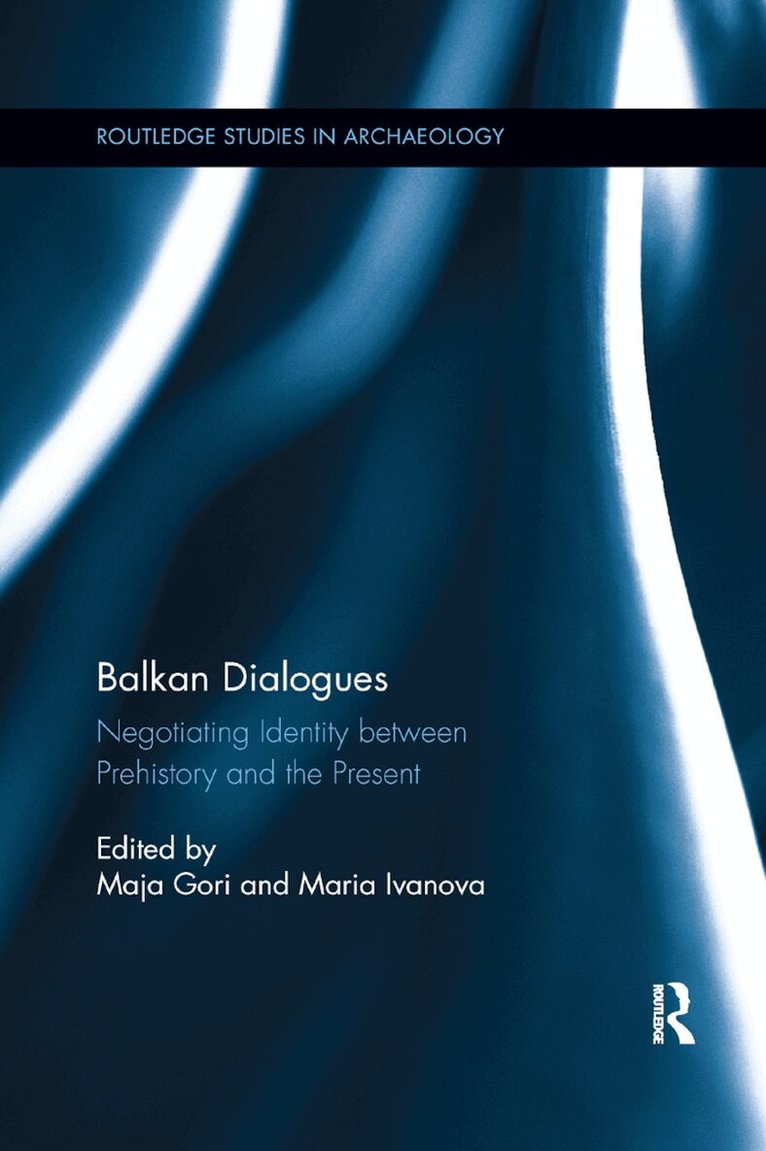
Spatial variation and patterning in the distribution of artefacts are topics of fundamental significance in Balkan archaeology. For decades, archaeologists have classified spatial clusters of artefacts into discrete “cultures”, which have been conventionally treated as bound entities and equated with past social or ethnic groups. This timely volume fulfils the need for an up-to-date and theoretically informed dialogue on group identity in Balkan prehistory. Thirteen case studies covering the beginning of the Neolithic to the Middle Bronze Age and written by archaeologists conducting fieldwork in the region, as well as by ethnologists with a research focus on material culture and identity, provide a robust foundation for exploring these issues. Bringing together the latest research, with a particular intentional focus on the central and western Balkans, this collection offers original perspectives on Balkan prehistory with relevance to the neighbouring regions of Eastern and Central Europe, the Mediterranean and Anatolia. Balkan Dialogues challenges long-established interpretations in the field and provides a new, contextualised reading of the archaeological record of this region.
480 kr
Skickas inom 7-10 vardagar
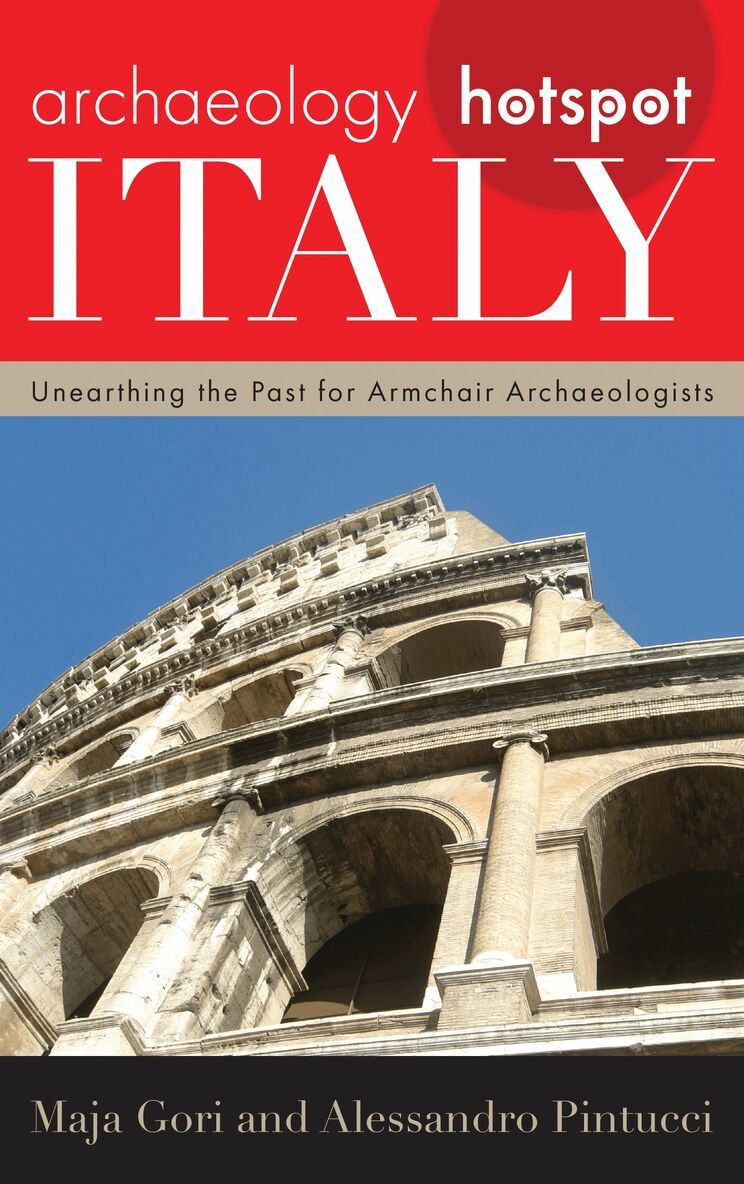
A full-color guide to Italy's archeology and treasures.Archaeology Hotspot Italy presents a comprehensive overview of the Italian archaeology. The main archaeological epochs – from Paleolithic to the Middle Ages – and sites and the discoveries made in the last twenty years, as well as past and present great archaeologists are thoroughly explored. Archaeology Hotspot Italy gives also insights into the way in which archaeology is practiced today, dealing with controversies over interpretation of the past connected to different theoretical approaches and present-day social and political contingencies. One of the aims of Archaeology Hotspot Italy is to give to the reader the idea that archaeology is by no means a static discipline, and that our knowledge of the past is continuously challenged by new discoveries and new approaches as well as by national and international heritage politics. It can be read either while staying comfortably at home or while traveling through Italy. Indeed, it was conceived as a handbook on Italian archaeology for armchair archaeologists as well as an archaeological guide for those visiting Italy. It provides key information on unconventional and not well-known archeological sites, which are outside of the mass tourism circuits, as well as insights on must-see sites and monuments in Italy, such as Pompeii or the Ancient city of Rome. The reader will find insights into the actual work of Italian archaeologists in current excavations, and on the challenges that they have to face. This perspective is quite unique. By combining information on archaeological sites with insights into archaeological practice, this book enables the reader to fully understand the archaeological profession in Italy. This beautiful full-color book features 44 photographs and 3 maps.
2 445 kr
Skickas inom 10-15 vardagar
Spatial variation and patterning in the distribution of artefacts are topics of fundamental significance in Balkan archaeology. For decades, archaeologists have classified spatial clusters of artefacts into discrete “cultures”, which have been conventionally treated as bound entities and equated with past social or ethnic groups. This timely volume fulfils the need for an up-to-date and theoretically informed dialogue on group identity in Balkan prehistory. Thirteen case studies covering the beginning of the Neolithic to the Middle Bronze Age and written by archaeologists conducting fieldwork in the region, as well as by ethnologists with a research focus on material culture and identity, provide a robust foundation for exploring these issues. Bringing together the latest research, with a particular intentional focus on the central and western Balkans, this collection offers original perspectives on Balkan prehistory with relevance to the neighbouring regions of Eastern and Central Europe, the Mediterranean and Anatolia. Balkan Dialogues challenges long-established interpretations in the field and provides a new, contextualised reading of the archaeological record of this region.
Del 2 - Ex Novo: Journal of Archaeology
Who Owns the Past?
Archaeological Heritage between Idealism and Destruction
Häftad, Engelska, 2018
381 kr
Skickas
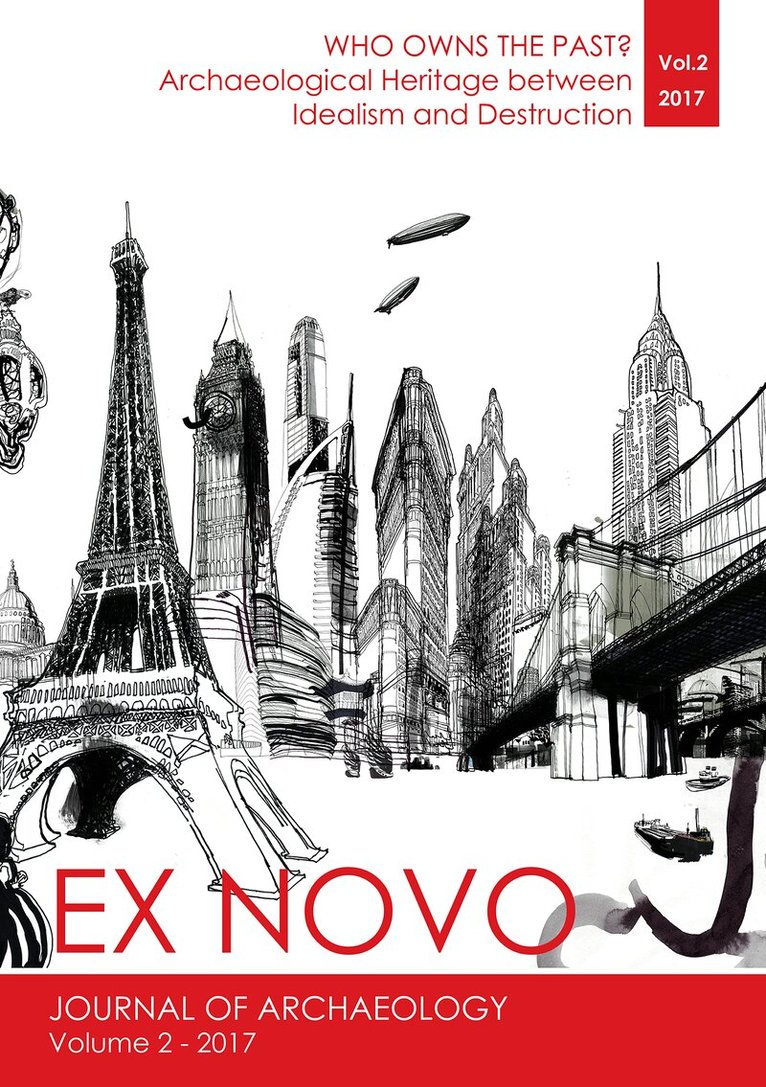
Who owns the past? Archaeological heritage between destruction and idealization. This volume, part of the wider Ex Novo series, hosts papers exploring the various ways in which the past is remembered, recovered, created and used. In particular, contributions discuss the role of archaeology in present-day conflict areas and its function as peacekeeping tool or as trigger point for military action.
Del 3 - Ex Novo: Journal of Archaeology
Human Mobility in Archaeology: Practices, Representations and Meanings
Häftad, Engelska, 2019
680 kr
Skickas
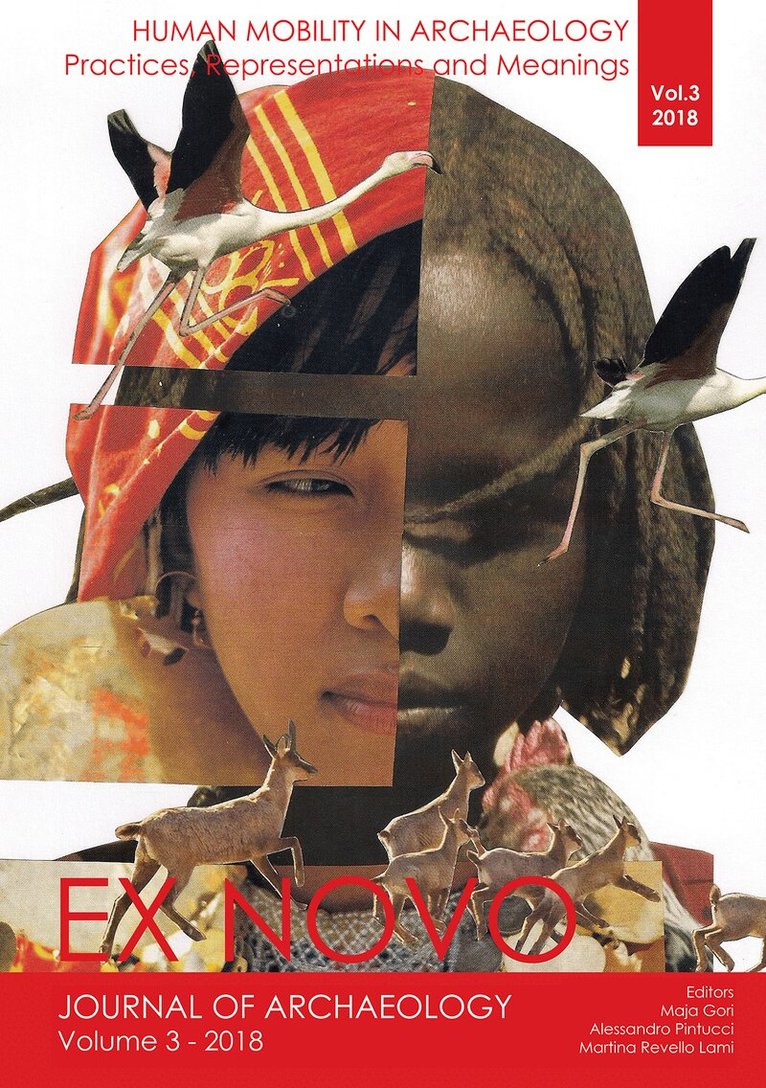
It has been abundantly demonstrated that theories and paradigms in the humanities are influenced by historical, economic and socio-cultural conditions, which have profoundly influenced archaeology’s representation of migration. This was mostly conceived as the study of the movement of large and homogenous population groups, whose identity was often represented as ethnically characterized. The present-day shift of attention from collective to individual agency and the countless facets of migration goes hand in hand with new socio-political and cultural scenarios such as the extraordinary migratory flows into Europe, shifting boundaries, alternative forms of citizenship and identity, and the emergence of emotive reactionism. The third volume of Ex Novo gathers multidisciplinary contributions addressing mobility to understand patterns of change and continuity in past worlds; reconsider the movement of people, objects, and ideas alongside mobile epistemologies, such as intellectual, scholarly or educative traditions, rituals, practices, religions and theologies; and provide insights into the multifaceted relationship between mobile practices and their shared meanings and how they are represented socially and politically.
Del 6 - Ex Novo: Journal of Archaeology
Making Archaeology Public: A View from the Mediterranean, Eastern Europe and Beyond
Häftad, Engelska, 2021
755 kr
Skickas
The sixth issue of Ex Novo explores how ‘peripheral’ regions currently approach both the practice and theory of public archaeology placing particular emphasis on Eastern and Southern Europe and extending the analysis to usually underrepresented regions of the Mediterranean.
Del 9 - Ex Novo: Journal of Archaeology
Learning, Teaching, Changing African Archaeology
Ex Novo: Journal of Archaeology 9 (2024)
Häftad, Engelska, 2025
905 kr
Skickas
Ex Novo Issue 9 explores the diverse, dynamic, and often contested landscapes of African archaeology. Moving beyond long-standing colonial and Eurocentric frames, this volume highlights how African pasts are interpreted, represented, and sustained today. From the Sebou Basin in Morocco—where natural and cultural heritage intertwine—to the lived experiences of early-career African archaeologists navigating structural inequalities, the thematic core addresses both the material and institutional conditions shaping the field. A study of Roman Africa on screen interrogates enduring orientalist stereotypes, while reflections on the ATLAS project and the “Invisible Cities” exhibition showcase collaborative approaches to connectivity and urbanism across North Africa and southern Spain. Complementing the African focus, our Off-Topic section tackles broader disciplinary concerns: the limits of citation metrics, academic responsibility amid political crisis, and the epistemological foundations of archaeology. Together, these contributions reaffirm archaeology’s entanglement with the ethical and political urgencies of the present.