Majid Sarrafzadeh - Böcker
Visar alla böcker från författaren Majid Sarrafzadeh. Handla med fri frakt och snabb leverans.
5 produkter
5 produkter
1 064 kr
Skickas inom 10-15 vardagar
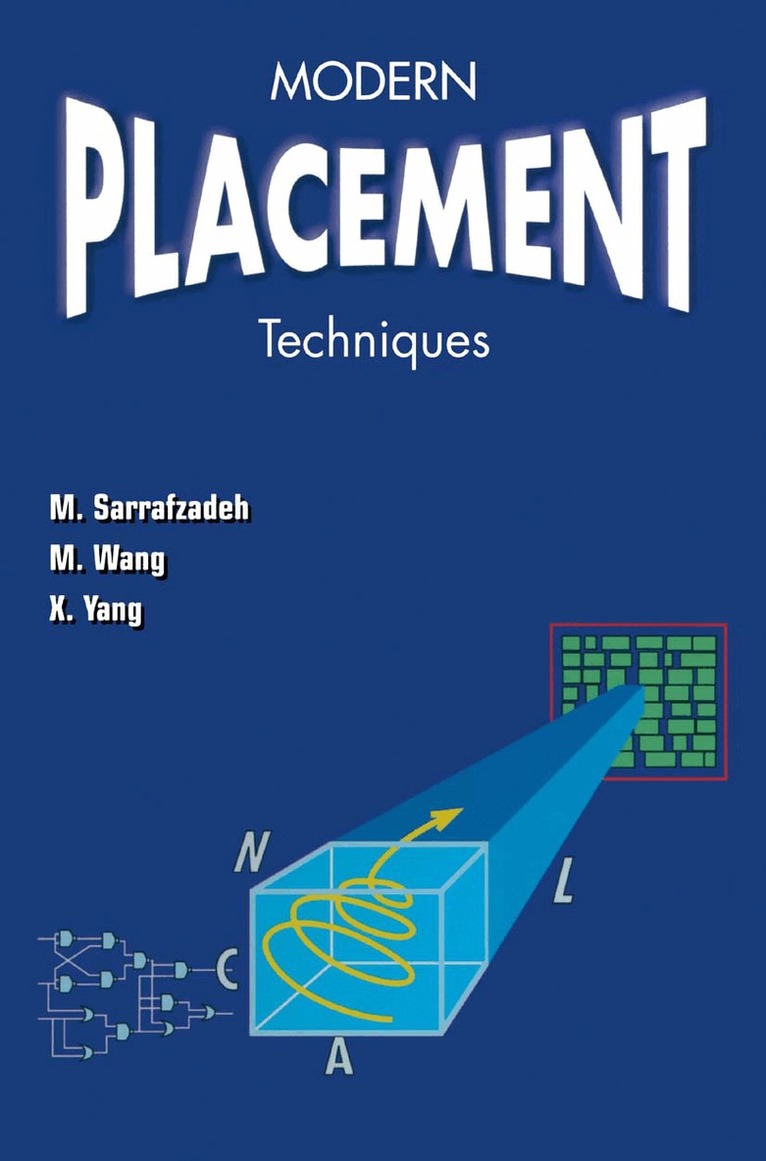
This title explains physical design and VLSI/CAD placement to the professional engineer and engineering student. Along with explaining the problems that are associated with placement, the book gives an overview of existing placement algorithms, techniques and methodologies. It emphasizes advances in addressing the placement problem, including congestion-driven, timing driven, mixed macro-cell and standard cell placement. The book presents the "Dragon" placement tool, with detailed algorithm descriptions for wire length, congestion and timing optimization. Placement benchmarks and results produced by "Dragon" are explained in detail.
1 064 kr
Skickas inom 10-15 vardagar
This work discusses methods used to model reconfigurable applications at the system level, many of which could be incorporated directly into modern compilers. The book also discusses a framework for reconfigurable system synthesis, which bridges the gap between application-level compiler analysis and high-level device synthesis. The development of this framework (discussed in Chapter 5), and the creation of application analysis which further optimize its output (discussed in Chapters 7, 8, and 9), represent over four years of rigorous investigation within UCLA's Embedded and Reconfigurable Laboratory (ERLab) and UCSB's Extensible, Programmable and Reconfigirable Embedded SystemS (ExPRESS) Group. The research of these systems has not yet matured, and we continually strive to develop data and methods, which will extend the collective understanding of reconfigurable system synthesis. "Synthesis Techniques and Optimization for Reconfigurable Systems" assumes a basic understanding of logic design, hardware synthesis (from high-level architecture generation down to placement and routing), and the structure and form of high-level application constructs (such as loops and branches).However, this book may be read and used in the absence of such background knowledge. This text is aimed at researchers and system-level designers (both academic and industrial), but could easily be used as the text of graduate-level course on reconfigurable system synthesis techniques.
1 064 kr
Skickas inom 10-15 vardagar
Modern Placement Techniques explains physical design and VLSI/CAD placement to the professional engineer and engineering student. Along with explaining the problems that are associated with placement, the book gives an overview of existing placement algorithms, techniques and methodologies. Modern Placement Techniques emphasizes recent advances in addressing the placement problem, including congestion-driven, timing driven, mixed macro-cell and standard cell placement.The book presents the Dragon placement tool, with detailed algorithm descriptions for wire length, congestion and timing optimization. Placement benchmarks and results produced by Dragon are explained in detail.
1 064 kr
Skickas inom 10-15 vardagar
Synthesis Techniques and Optimization for Reconfigurable Systems discusses methods used to model reconfigurable applications at the system level, many of which could be incorporated directly into modern compilers. The book also discusses a framework for reconfigurable system synthesis, which bridges the gap between application-level compiler analysis and high-level device synthesis. The development of this framework (discussed in Chapter 5), and the creation of application analysis which further optimize its output (discussed in Chapters 7, 8, and 9), represent over four years of rigorous investigation within UCLA's Embedded and Reconfigurable Laboratory (ERLab) and UCSB's Extensible, Programmable and Reconfigirable Embedded SystemS (ExPRESS) Group. The research of these systems has not yet matured, and we continually strive to develop data and methods, which will extend the collective understanding of reconfigurable system synthesis.
2 531 kr
Tillfälligt slut
In the past two decades, research in VLSI physical design has been directed toward automation of layout process. Since the cost of fabricating a circuit is a fast growing function of the circuit area, circuit layout techniques are developed with an aim to produce layouts with small areas. Other criteria of optimality such as delay and via minimization need to be taken into consideration. This book includes 14 articles that deal with various stages of the VLSI layout problem. It covers topics including partitioning, floorplanning, placement, global routing, detailed routing and layout verification. Some of the chapters are review articles, giving the state-of-the-art of the problems related to timing driven placement, global and detailed routing, and circuit partitioning. The rest of the book contains research articles, giving recent findings of new approaches to the above-mentioned problems. They are all written by leading experts in the field. This book will serve as good references for both researchers and professionals who work in this field.